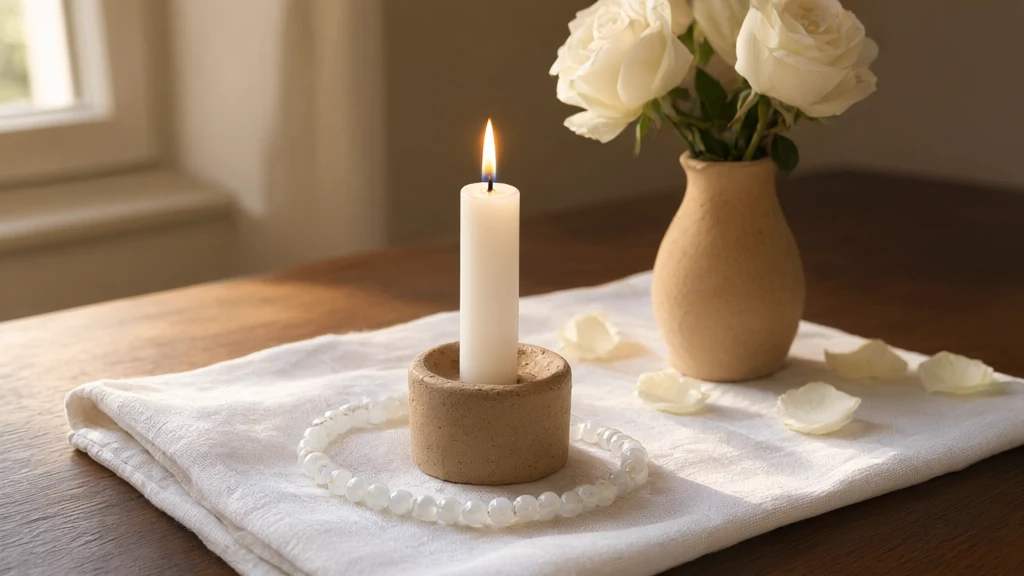
Lighting a candle for those who died is permitted at home, in church, or at the cemetery, and none of the traditions consulted prohibit the gesture. Use a white candle in a firm holder, away from curtains and outside the bedroom, and light it along with a prayer or a thought for the person. What gives meaning to the candle is the remembrance.
For the Catholic Church, the candle accompanies the prayer for the dead; for Spiritism, what counts is the prayer; in Umbanda, the leader provides guidance. If the loss is recent, start with the simple: a candle, a safe place, and the person's name.
Lighting a candle for those who died: the short answer
Can it be done at home? Yes, safely | Color: white, the one that appears in the sources; no fixed color | When: at any time; no consulted tradition marks a deadline | 7-day candle: can be, with someone nearby | Where: firm holder, away from fabric, outside the bedroom and bathroom
Here, the candle is for someone you knew. The candle for the souls in general, the one for Monday, is in lighting a candle for the souls. And what each tradition does on November 2 is in the guide for All Souls Day in Umbanda.
Can you light a candle for those who died inside the house?
You can. No consulted source prohibits it. It circulates on the internet that Spiritists and Umbandistas do not light candles for the dead at home, but the texts of the traditions do not say that.
In popular devotion, the home is also a place to remember the dead. Michelle Ferreira Maia, in the Mneme magazine, from UFRN, records intentions for the souls celebrated "in churches, but equally at home".
In Spiritism, doubt has a direct answer. Kardec asks if visiting the grave pleases the Spirit more than the prayer made at home, and the answer is in The Spirits' Book:
“The visit is the external representation of that thought. I have already told you that prayer is what sanctifies the act of remembrance. The place does not matter, as long as it is done with the heart.”
The Spirits' Book, question 323
If you are from a terreiro, ask your Pai or Mãe de santo before setting up a little corner for the deceased: the house rule comes first. At home, the care is for safety, as shown in the list below.
Is it a sin to light a candle for the dead?
For the Catholic Church, no. The Catechism teaches that praying for the dead is ancient and good: “Our prayer for them can not only help them, but also make their intercession on our behalf more effective.”
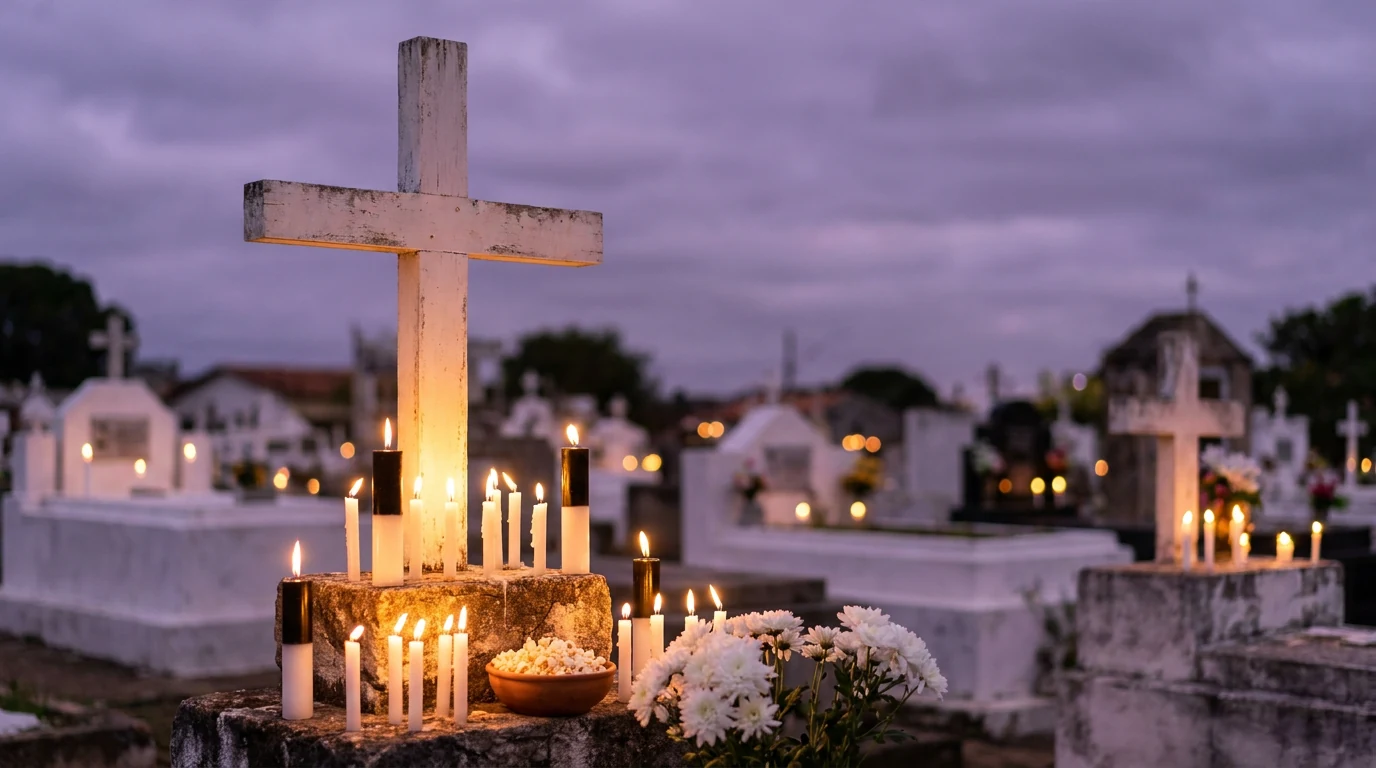
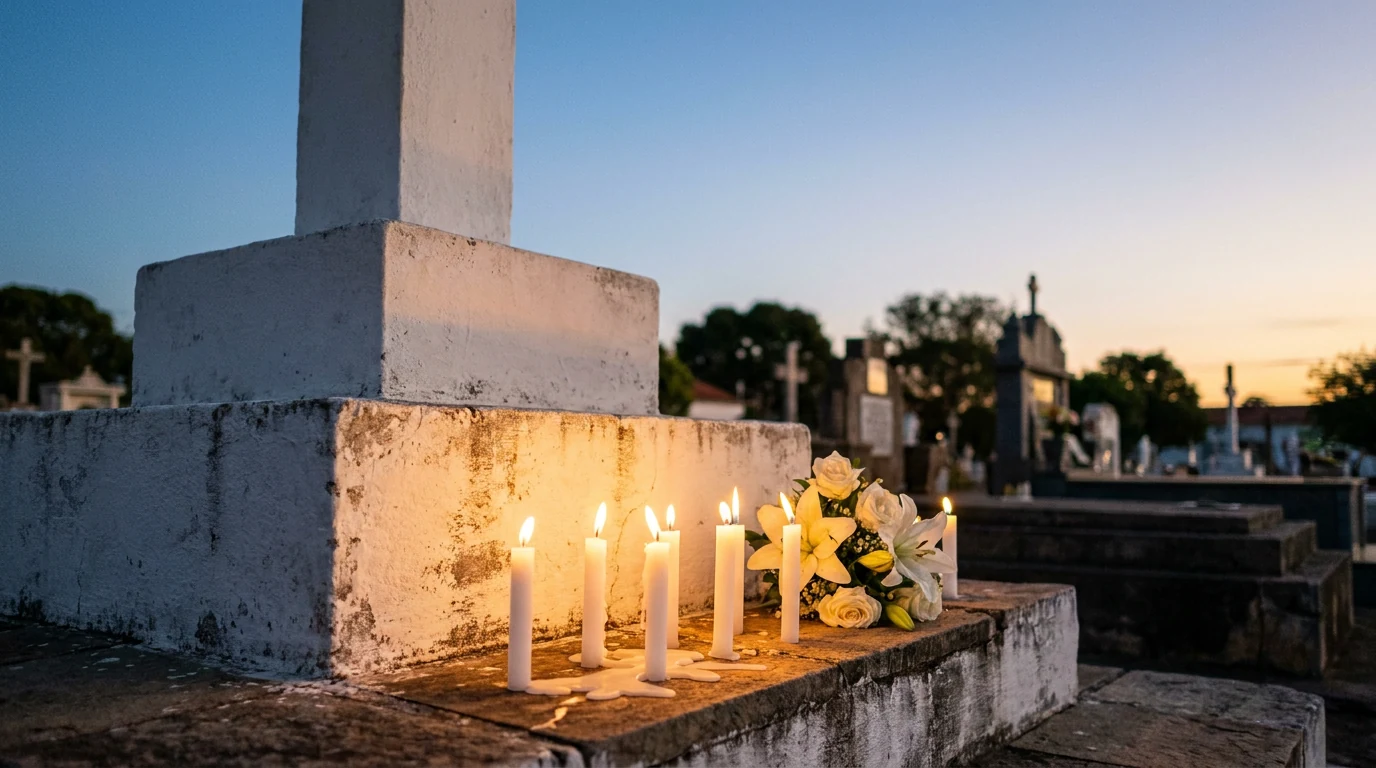
The candle enters as a sign. For the Archdiocese of Rio, the candles lit in graves symbolize faith in the resurrection of the dead and the hope that the souls rest in peace with God.
What the Bible says about candles for the dead
The biblical passage that the Catechism uses is 2 Maccabees 12,46. In it, Judas Maccabeus “asked for an expiatory sacrifice so that the dead would be freed from their faults.” The verse speaks of prayer and sacrifice, not of candles.
In everyday Catholicism, the gesture gained another layer. In an anthropology study by UFC in the sertão of Ceará, a devotee explains why she lights one: “Light for the dead. The dead must have light.” Regarding offerings to the dead, another devotee says that “the Church does not forbid nor does it command.”
Lighting a candle for those who died in Umbanda
There are terreiros of Umbanda that also remember the family's dead. In a house in Ribeirão Preto studied by USP, researcher Rafael de Nuzzi Dias describes the house of souls as "a devotion of the preto-velho line." It manifests, above all, reverence "to the ancestors, to the 'family' dead".
There, the leader replaces a white candle every day. It is what a house does, with a foundation that only it knows. Those who work in this line, and why it changes from house to house, are in the line of souls in Umbanda.
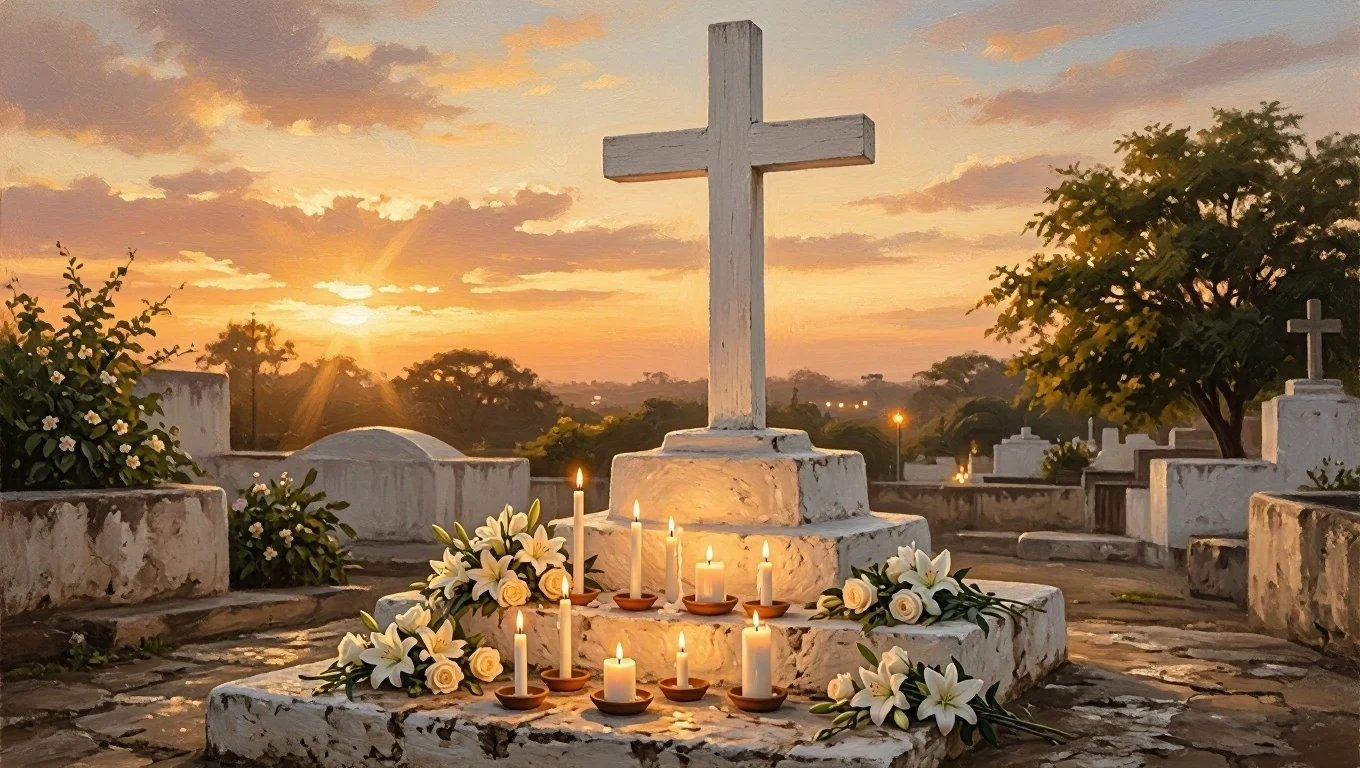
The cross is also a place to remember the relative. The National Sanctuary of Umbanda, in Santo André (SP), links the cross to the one placed where someone died, for "prayers to the deceased." There, the Cross of Souls (Cruzeiro das Almas) is "a place of prayer for disincarnate people".
In the cemetery of Vitória (ES), studied by Barbara Thompson, Catholics and Umbandistas share the cross. There are those who remember there the "souls of loved ones by lighting candles and sending light to all spirits." The cross also allows remembering those who were buried in another cemetery. The history of this cross is in the Cross of Souls (Cruzeiro das Almas).
In Candomblé, the rite of the initiated dead is the axexê, which according to Reginaldo Prandi "varies from terreiro to terreiro and from nation to nation." More on egum in Candomblé.
In Spiritism, the candle stands for the prayer
Kardec does not speak of candles in the questions about the remembrance of the dead. He speaks of thought and of prayer. Asked if the Spirits feel the remembrance of those who stayed behind, the answer is: "Much more than you can suppose. If they are happy, this fact increases their happiness. If they are miserable, it serves as a sedative."
Those who are Spiritists can light the candle as support for the prayer.
| Tradition | What the candle is | What counts | Where |
|---|---|---|---|
| Catholicism | sign of faith in the resurrection | the prayer for the dead | grave, church, house |
| Spiritism | support, not a requirement | the prayer made with the heart | anywhere |
| Umbanda | reverence to the family's deceased, according to the house | the rule of the terreiro | house of the souls, crossroads, house |
How to light the candle for someone who died
The color of the candle
No consulted source fixes a mandatory color for a relative's candle. White is the one that appears in the sources: it is the one the leader replaces in the house of the souls studied by USP. If your house asked for another color, follow the house. To know the colors, the which candle to light test helps to start.
7-day candle for someone who died
It can. No consulted source prohibits it, but they are days of a lit flame and someone needs to be nearby. The step by step, from the plastic to the plate, is in how to light a 7-day candle.
How long after death
At any time: on the day of death, in the first week, or years later. None of the traditions consulted set a deadline. In The Spirits' Book, the Spirits answer the call on All Souls Day "as they do on any other day." The Church, according to the Catechism, offers suffrages for the deceased "from the earliest times."
Care with the lit candle
- Firm support. The candle goes in a saucer or cup that will not tip over.
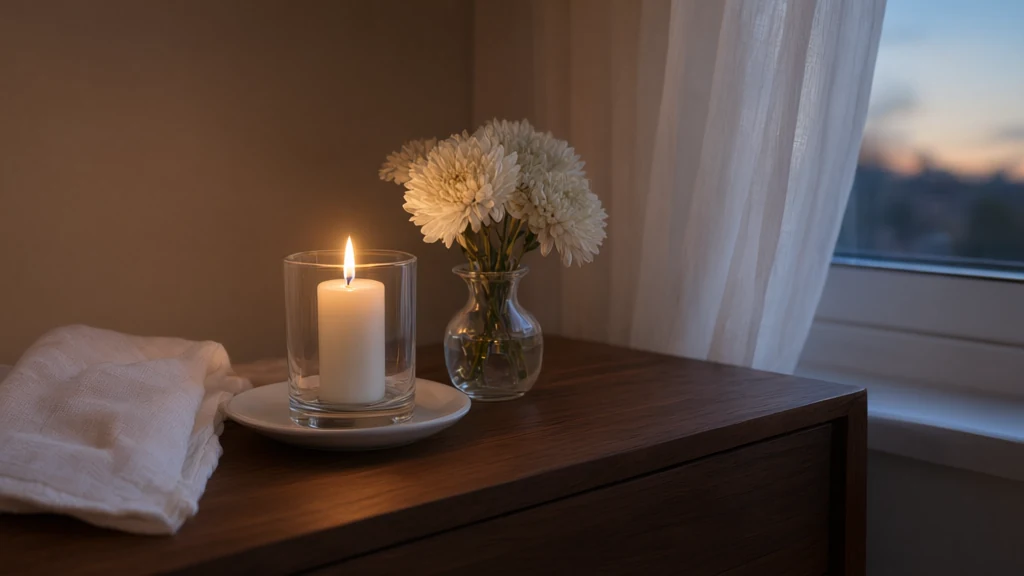
- Away from fabric. About 30 cm away from anything that burns, as requested by the U.S. Fire Administration, the United States fire department agency. Away from curtains, rugs, and tablecloths, reinforces the Goiás Fire Department guidelines.
- Outside the bedroom and bathroom. No lit candles where one sleeps.
- Turn off when leaving or sleeping. Then, light it again. The remembrance continues.
When it is not possible to go to the cemetery
Distance does not prevent remembrance: for Kardec, the place of prayer does not matter, and a lit candle at home, with the person's name, already fulfills the gesture.
Those who are far away and prefer to see the candle on an altar can light the virtual white candle on the Joia Mística Laroyê altar and follow through the link. The other colors are on the virtual candle altar.
Frequently asked questions
Can a Spiritist light a candle for someone who died?
They can, as support for prayer. In the questions of The Spirits' Book about the remembrance of the dead, Kardec does not speak of a candle: he says that prayer sanctifies the remembrance and that the place does not matter. The candle is neither required nor forbidden.
How long after death can I light the candle?
At any time: on the day of death, in the first week, or years later. None of the traditions consulted set a deadline. For Kardec, the Spirits attend to the call of those who think of them on any day, and the Catechism does not fix a date for the prayer for the dead.
Can I leave the candle for the deceased lit all night?
It is not safe. The United States fire department orders the candle to be extinguished when leaving the room and before going to sleep, and asks for no lit candles in the bedroom and bathroom. Extinguishing and relighting it the next day does not break the remembrance. For the 7-day candle, arrange with whoever is nearby.
References
- Holy See: Catechism of the Catholic Church, §§ 958 and 1032
- Archdiocese of São Sebastião do Rio de Janeiro: All Souls Day in the Catholic Church
- KARDEC, Allan. The Spirits' Book, questions 320 to 329: Commemoration of the dead. Funerals (KardecPedia)
- PEREIRA, Antonio Renaldo Gomes. Eternal seat: relations with the dead in the village of Almas. Dissertation, UFC/Unilab, 2020: full text
- DIAS, Rafael de Nuzzi. Ancestral chains: the pretos-velhos of Rosário. Dissertation, USP Ribeirão Preto, 2011: full text
- THOMPSON, Barbara. Proceedings of the IV Seminar of Social Sciences PGCS-UFES, 2019: At the gates, headstones and crosses of the souls
- MAIA, Michelle Ferreira. Mneme (UFRN), 2011: Between the request and the received
- PRANDI, Reginaldo. FFLCH USP: Concepts of life and death in the axexê ritual
- National Sanctuary of Umbanda: Cross of Souls (Cruzeiro das Almas)
- U.S. Fire Administration (FEMA): Candle fire safety
- Military Fire Department of the State of Goiás: Home accident prevention guide