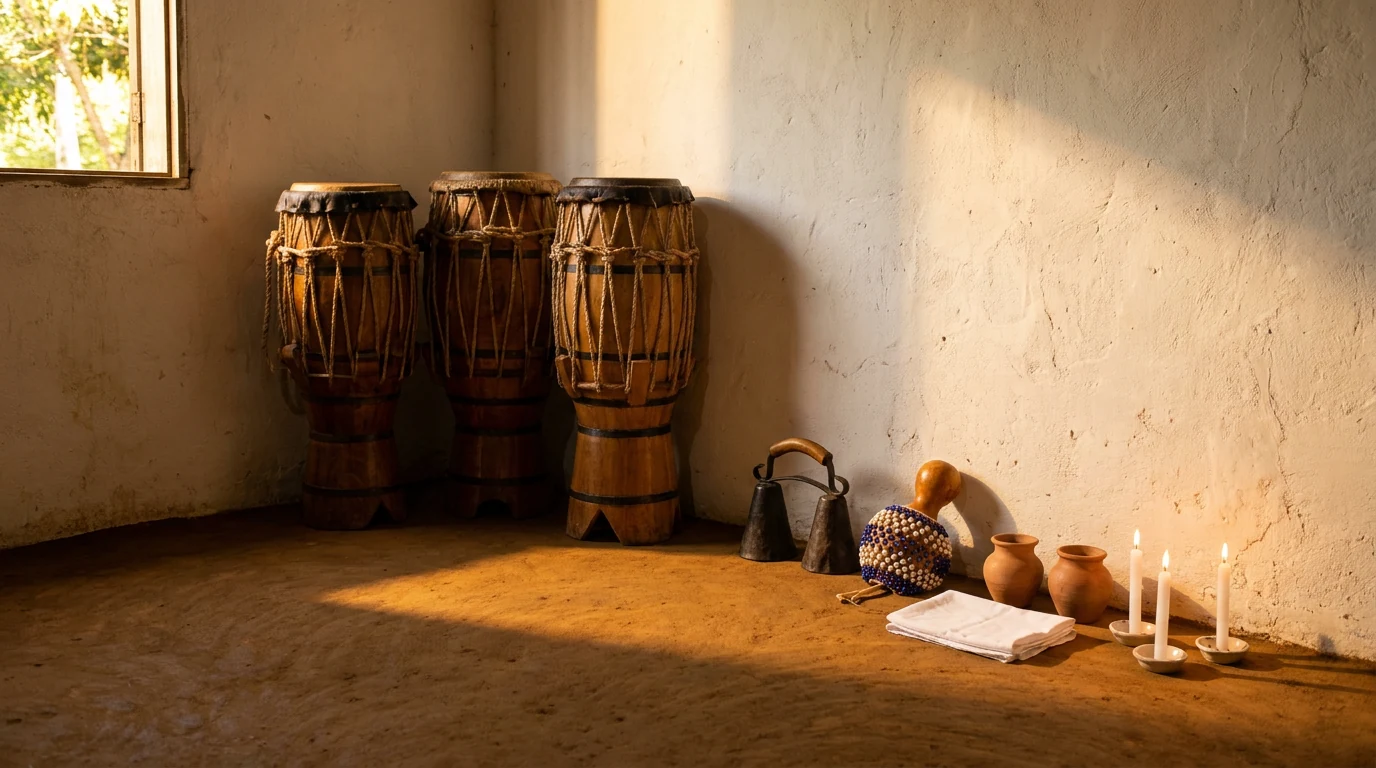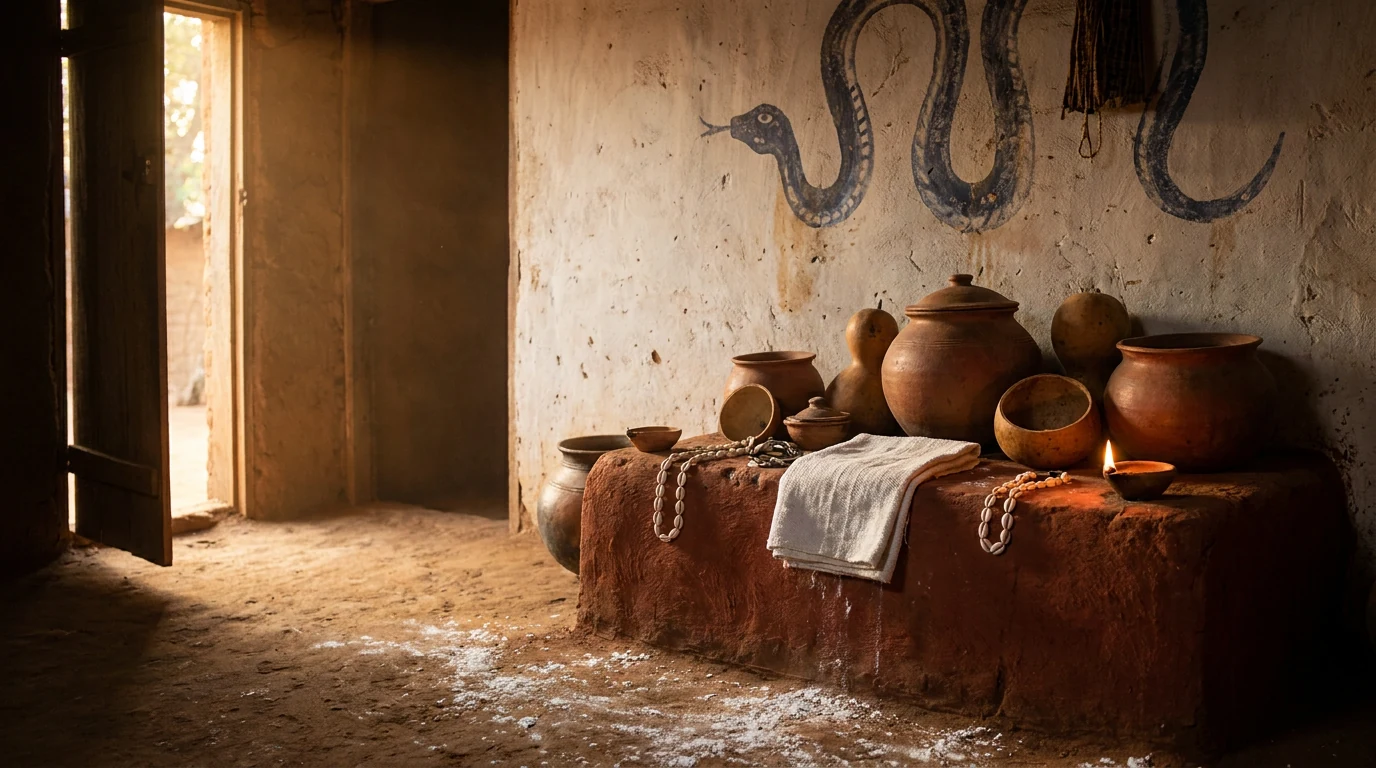
Vodu is an African-rooted religion born among the Fon and Ewe peoples of the ancient kingdom of Daomé, where Benin and Togo are located today. In the Fon language, the word means spirit or divinity. It is these divinities, the voduns, that the worship serves, alongside the family ancestors, who remain present after death. The Vodu page on the site brings a summary of this tradition.
What does the word vodu mean
Vodun means spirit or divinity, and the dictionary points to the origin of the word in the Fon language spoken in the ancient kingdom of Dahomey. The word names the entire religion and each of its divinities.
Around 1900, the doctor and researcher Raimundo Nina Rodrigues registered it in Brazil. For him, vodu was the Jeje word for divinity, with the meaning that orixá (orisha) has among the Nagos. The record is from that era and carries the scientific racism of the period, but the linguistic data holds up.
Vodu or vodum: both spellings are correct
Both forms are in the dictionary and change in function. Vodu names the religion and also the divinity. Vodum, in the plural voduns, is what the divinity of Jeje origin is called in Brazil. Each house has its own spelling of use, and neither of the two is an error. How the three matrices organized themselves here is in nations of Candomblé.
Where Vodu comes from: the kingdom of Daomé and the city of Ouidah
Vodu comes from West Africa. The cradle is the kingdom of Daomé, in the south of what is now Benin. The country was called Daomé until 1975, and the Fon live there and in parts of Togo.
In Abomé, the capital, twelve kings succeeded each other between 1625 and 1900. King Agajá conquered Alada in 1724 and the port of Uidá in 1727. Uidá was the main port of the kingdom. It is the spiritual capital of Vodun to this day, with an annual festival in January.
The territory of the cult was always larger than that of the kingdom. Anthropologist Luis Nicolau Parés calls this space the área vodum: it included peoples such as the mahi and the savalu, who suffered Daomean incursions without belonging to the kingdom.
Vodun today in Benin and Togo
Vodun is not a museum religion. The government of Benin officially presents itself as the "land of origin of Vodun" and organizes the Vodun Days in Uidá. The second edition was in January 2025, near the Door of No Return. The State also promotes the Vodun Convent Route and a future International Vodun Museum.
The national holiday was established in the 1990s, under the government of Nicéphore Soglo. And the date changed recently. In 2024, Benin approved Law n. 2024-32, which moved the festival of traditional religions to the second Friday of January. President Patrice Talon promulgated the text on September 2 of that year, and the 1997 norm that organized the holiday fell away. Much of what circulates in Portuguese still repeats the old date.
In neighboring Togo, the United States Department of State estimates that 36.9% of the population follows a traditional religion. The same report says that Vodun practitioners follow their faith freely, with festivals supported by the authorities.
Who are the voduns
Each vodum has its domain. In the Jeje pantheon that arrived in Bahia, three names come to the front:
- Bessém, the serpent vodun, from the Dan family
- Sogbo, the thunder vodun, from the Hevioso family
- Azonzu, the smallpox vodun, from the Sakpata family
Nanã (Nana Buruku) is the oldest female vodun and Loko is the vodun of the gameleira. Lisa, Aizan and Elegba complete the most remembered names.
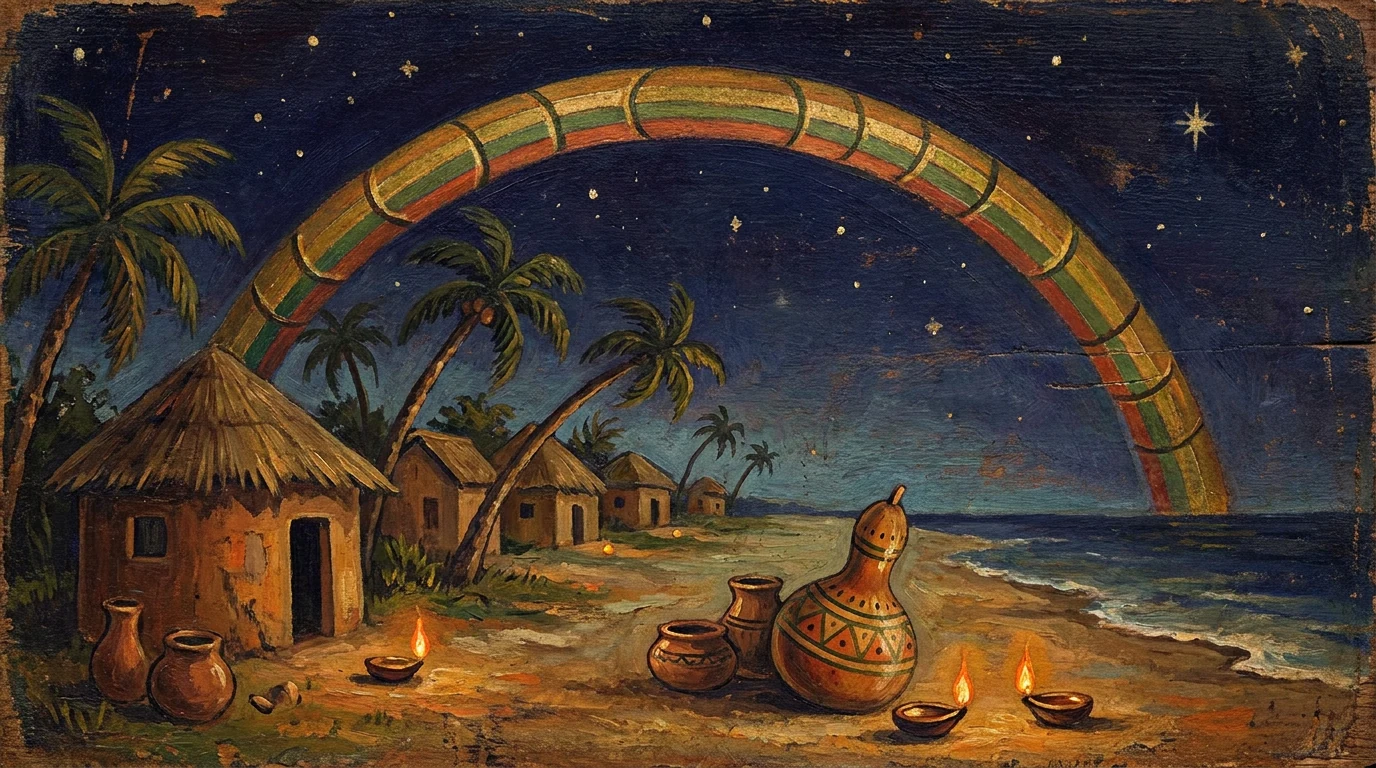
Many people from the terreiro recognize these names in a different way. Nina Rodrigues' 1900 record already showed the Africans from Bahia bringing the voduns closer to the orixás: Hevioso near Xangô (Shango), Legba near Elegbá, Loko near Iroko.
The proximity is historical, it is not equality. Vodum, orixá and inquice are deities of different peoples, with their own language, toque and fundamento, and each house keeps its own.
The nagô side of these encounters is in who is Nanã, who is Oxumaré, who is Obaluaê and who is Iroko.
Vodou in Haiti
The Haitian vodu and Jeje Candomblé have the same origin. Both come from the old Slave Coast, where Benin is located today.
In Haiti, the deities are called lwa and are organized into nations, the nanchon. The two most well known are Rada, of lwa linked to healing and protection, coming from Ginen, and Petwo, of harsh temperament, which was born in Haiti itself, within the conditions of slavery.
The vocabulary is recognizable for those from the terreiro. The temple is the ounfò and the priest is the oungan, the priestess is the manbo. The Gede festival begins on November 2, the same day as All Souls' Day in Brazil.
On April 4, 2003, a decree by President Jean-Bertrand Aristide recognized Vodu as a full religion in Haiti. From then on, marriages celebrated in the cult began to have the same registration as a Catholic one. Even so, many practitioners do not call Vodu a religion, but rather a spirituality lived alongside Catholicism: that is why those who declare themselves Vodouists in official surveys are only 2%. The house, the priesthood, and the calendar there are counted in Haitian Vodu.
The voduns in Brazil
In Brazil, the voduns arrived with the African jeje, the Ewe peoples of the Slave Coast. The division is the one the terreiro repeats to this day: the fon worship voduns, the Yoruba worship orixás, and the Bantu worship inquices.
The weight of the jeje is greater than the number of houses suggests. Parés' central argument is that the organizational model of today's Candomblé came from the jeje religious specialists at the end of the 18th and beginning of the 19th century. This model includes initiation, the priestly hierarchy, the ritual calendar, and the worship of various deities in the same terreiro.
Today, the worship is in Bahia and Rio, where Jeje Mahi expanded from the 1930s. Maranhão is the main center of preservation of the jeje-daomean culture in the country. In São Luís, the Casa das Minas continues the worship of the voduns of ancient Daomé and is the main reference for it in Brazil. The Tambor de Mina and Candomblé preserve, each in its own way, what came from there.
The material is the same as that of Candomblé of any nation: pottery, quartinha, cloth, candle, dendê, and herbs, as the house requires. If in doubt about the list that the pai or mãe de santo gave, you can check item by item via the shop's WhatsApp. Who each vodum worshiped here is and what changes on the floor of the barracão is in voduns in Brazil.
What cinema invented
The image of the staked doll and the zombie has a date and an address. The United States invaded Haiti in 1915 and occupied the country until 1934. It was during this period that Vodu became the subject of American best-sellers.
In 1929, William Seabrook reported his travels through Haiti in The Magic Island. It was he who imported the zombie, as it is known today, to the American public. Three years later came White Zombie (1932), the first zombie feature film, inspired by his reports. Military occupation, book, film: the timeline closes itself.
The damage lasted longer than the films. The mechanism that turned Haitian Vodu into a horror plot is the same one that calls Exu (Eshu) a devil in Brazil. Both things come from the same place: those who do not want to understand the other's religion prefer to fear. The history of the object, the pin, and the African figure that truly exists is in the vodu doll. On the other side of the Gulf of Mexico, the same heritage became what hoodoo is, and the most famous priestess of this story is Marie Laveau.
Frequently asked questions
When did Vodu emerge?
The cult is older than the kingdom of Daomé, which flourished in the 18th and 19th centuries in the south of present-day Benin. In Abomé, twelve kings succeeded each other between 1625 and 1900. There is no founding date: the religion comes from the family and ancestral life of the fon and ewe peoples.
Which religion practices Vodun?
Vodu is a religion in itself, practiced in Benin, Togo, and Haiti. In Brazil, its deities are worshipped in the jeje nation of Candomblé and in the Tambor de Mina of Maranhão. It is not a sect or a branch of another religion.
Vodu or vodum: which is correct?
Both are correct and do not mean the same thing. Vodu names the religion and also the deity. Vodum, in the plural voduns, is what the deity of jeje origin is called in Brazil. Each house has its own spelling of use.
Is there Vodun in Brazil?
It exists, under another name. The voduns arrived with the Jeje Africans and are worshipped in Bahia, in Rio since the 1930s, and in Maranhão. There, the Casa das Minas maintains the worship of the voduns of ancient Daomé.
References
- Interactions (PUC Minas): Haitian Vodu and Candomblé Jeje have the same origin on the Slave Coast
- eScholarship (University of California): glossary of the lwa, the Rada and Petwo nations, and the worship vocabulary
- The Globe and Mail: the 2003 decree that made Vodun a religion in Haiti
- Priberam Dictionary: the vodu and vodum entries in Portuguese
- UNESCO: file of the Royal Palaces of Abomé, in Benin
- Assemblée Nationale du Bénin: adoption of Law n. 2024-32, which changes the festival of traditional religions
- Banouto: the promulgation of the Beninese law and the text of article 2
- U.S. Department of State: 2023 religious freedom report on Togo
- U.S. Department of State: 2023 religious freedom report on Haiti
- Afro-Ásia (UFBA): review of The Formation of Candomblé, by Luis Nicolau Parés
- Social Sciences and Religion: Mundicarmo Ferretti on African nations in Tambor de Mina
- Museum of the Moving Image: the racialized origins of the zumbi myth, by Kelli Weston