Marie Laveau was a free Black woman from New Orleans, born on September 10, 1801, and died on June 15, 1881. She became known as the queen of the city's Voodoo and was Catholic her entire life, baptized, married, and with her children baptized in the cathedral of Saint Louis. Two things in the same life, without contradiction.
Who was Marie Laveau
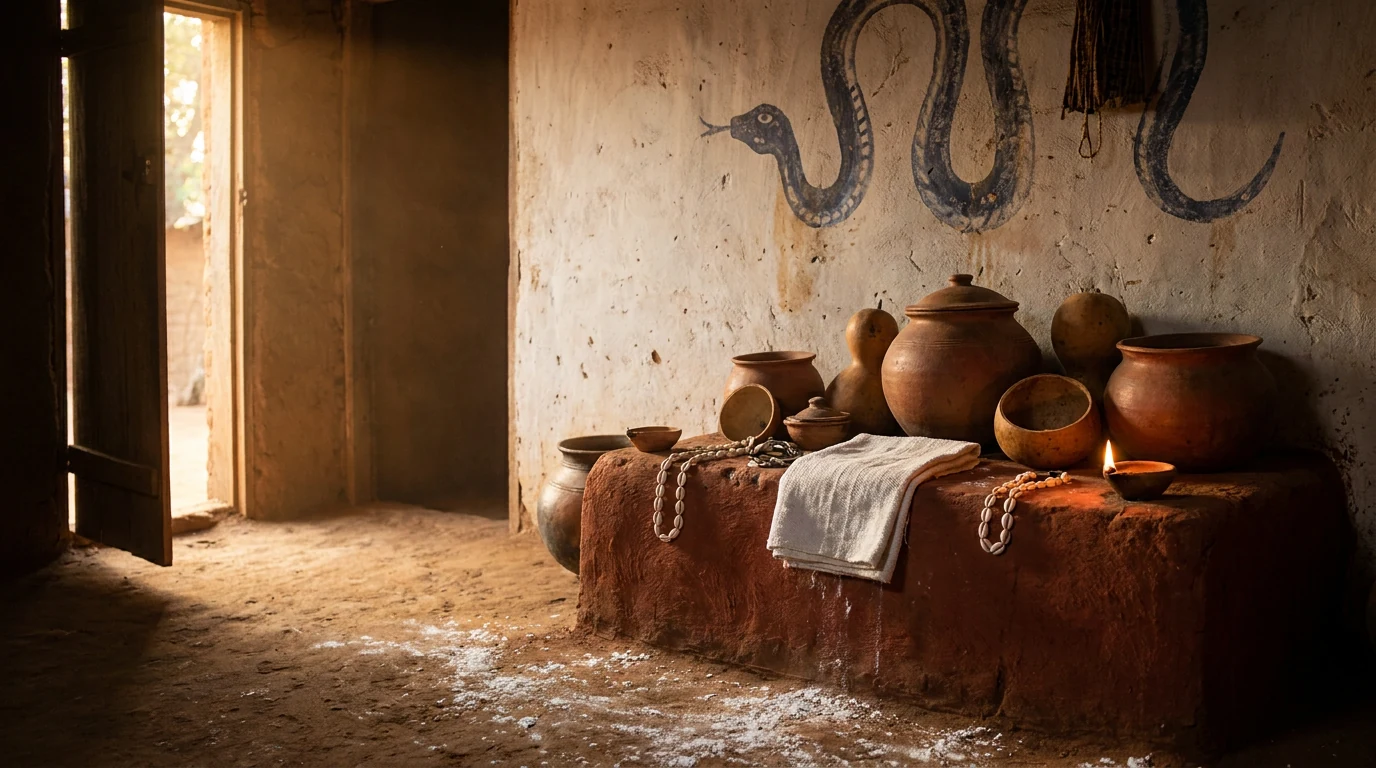
She was the first of the maternal line of the family to be born free, daughter of Marguerite Henry and Charles Laveaux. In the 1830s, she already led a multiracial religious community, gave consultations, and conducted weekly ceremonies at the house on St. Ann Street.
The New Orleans Voodoo that she conducted is a relative of the cult that was born in ancient Daomé and crossed the Atlantic, as told in the article about what vodu is. The Vodu page on the site shows the other branches of this same tree.
She lived with modesty, contrary to the legend of great fortune. She had no property in her own name, and the house on St. Ann Street legally belonged to her partner, Christophe Glapion.
The dates that are on paper
Her life is documented, and this is the point that almost every popular version ignores:
- 1801: birth, on September 10. Six days later, Père Antoine baptizes her in the cathedral of Saint Louis, and the record classifies her as mulatresse
- 1819: marriage with Jacques Paris, a free man of color coming from Haiti
- 1824: around this year Paris disappears, and she begins to live with Christophe Glapion
- 1881: death at home, on June 15, just a few months before she turned eighty. The funeral was conducted by a priest from the cathedral on the afternoon of the next day, and five city newspapers, plus the New York Times, published an obituary
Note the detail: the priest who baptized her is the same type of record that buried her. The church accompanied her entire life.
The two Maries and why the accounts get mixed up
The most persistent legend says she was succeeded by her daughter, the so-called Marie II. There is no proof of this. The eldest daughter, Marie Héloïse Euchariste Glapion, died in 1862. In other words, nineteen years before her mother, which debunks the stories that place the two acting together.
Another known story says she won the house on St. Ann Street as payment for a ritual work that supposedly saved her son from a wealthy man. The documentation shows something else: the house was built and purchased in a different way.
And there is the case of the portrait. The most reproduced image of her is a painting by Frank Schneider made from another painting of a woman previously identified as Marie Laveau. In other words, the face the whole world knows might not even be hers.
What the newspapers wrote, and when she became something else
During her life, she was almost never a news topic. The first known mention is from 1850, in an article from the Picayune that calls her the head of the Voudou women.
When she died, most obituaries described her as a woman who cared for the sick, helped the needy, assisted prisoners, and dedicated herself to the Catholic church. The obituary in the New York Times, in that same year, is the moment her story went national.
The legend came later, in layers. In 1886, the writer George Washington Cable published the first piece about her after the obituary. Between 1894 and 1946, her fame grew. It was an addition in 1894 that began to present her as a hairdresser and procuress.
Those who are from terreiro know this plot. A black woman of Afro-diasporic religion whom the press turned into a character, and the character became better known than the person.
It is worth a caution even today: no official document places Marie Laveau in Congo Square. The image of her leading Sunday dances comes from interviews conducted in the 1930s and 1940s, decades after her death.
The grave in St. Louis Cemetery No. 1
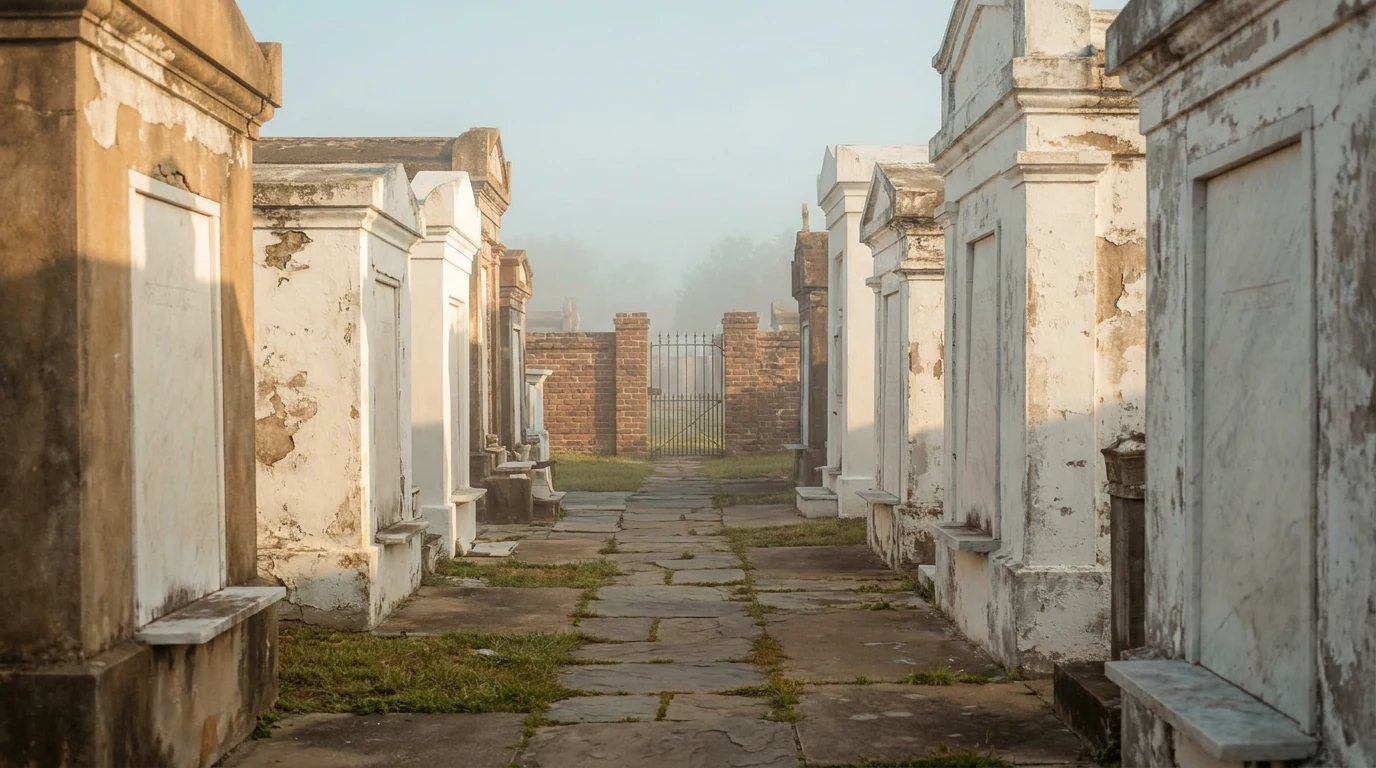
She is buried in the middle drawer of the Laveau-Glapion family grave, in St. Louis Cemetery No. 1. The grave has three drawers and the inscription Famille Vve Paris née Laveau. The Archdiocese of New Orleans, owner of the cemetery, recognizes the grave as hers, and the burial record in the book from 1881 to 1883 confirms the burial.
The story that the family would have moved the body to a wall drawer in St. Louis Cemetery No. 2, the so-called Wishing Vault, has no documentary support.
And the xis riscados on the stone, which appear in every tourist photo? The oldest recorded practice is the sign of the cross. The crossed mark has an evident Christian reading. In African religious tradition, crossed lines mark a point of concentrated power. In a 1940 interview, the cemetery caretaker said that people would go almost every day to leave an offering there.
What this turned into was not beautiful. In December 2013, someone jumped the wall at night and painted the grave pink with latex paint. The complete restoration was done in partnership between the organization Save Our Cemeteries and the archdiocese.
If you are visiting: since March 1, 2015, no one enters St. Louis cemetery n. 1 without a licensed and registered tour guide. It is one of the most visited tombs in the United States, and marking the stone is not devotion, it is damage to heritage.
Voudou and Catholicism in the same life
She did not choose between the two things. And that is the most interesting part of her story. She led weekly ceremonies in her own home and, at the same time, was the godmother of her nephew and granddaughter at the cathedral.
Anyone from Candomblé or Umbanda recognizes the arrangement. Catholic saint in the front, African foundation in the back, and life moving forward. Her husband, Jacques Paris, was a free man of color coming from Haiti, the land where the same root became Haitian Vodou.
It is worth separating two things that are often confused. New Orleans Voodoo is a religion, with a congregation. Hoodoo, on the other hand, is a system of magic practiced by specialists for clients. Gris-gris, a word that appears in every story about her, names a set of magical ingredients in New Orleans, and the name comes from the term gregries, from the Mende language.
Marie Laveau on television and in tourism
She is a character in American Horror Story: Coven, played by Angela Bassett, in a version that incorporates several exaggerations of the legend. That is how most of the Brazilian public reaches her name.
In New Orleans, the casual visitor finds a sensationalist tour and a souvenir shop. Meanwhile, Voudou congregations remain active in the city, away from the storefront. The French Quarter museum, open since 1972, sells tickets, souvenirs, and guided tours: it serves as an example of the phenomenon, not as a source.
The industry of fear surrounding this religion has a birth date, and it is the same as the voodoo doll: the United States occupied Haiti from 1915 to 1934, and it was during this period that cinema manufactured the cliché.
Frequently asked questions
Who was Marie Laveau?
A free Black woman from New Orleans, born in 1801 and died in 1881, known as the queen of Voodoo in the city. She led a multiracial religious community since the 1830s and was a practicing Catholic, baptized and married in the cathedral of Saint Louis.
How did Marie Laveau die?
She died at home, of natural causes, on June 15, 1881, just a few months before turning eighty. The funeral was conducted by a priest from the cathedral the next day, and five city newspapers published an obituary.
Was there a Marie Laveau II?
There is no proof. The succession by the daughter is a persistent legend without documentary support. The eldest daughter, Marie Héloïse, died in 1862, nineteen years before her mother.
Is Marie Laveau worshipped in Brazil?
No. She is a historical figure from New Orleans, and not a spirit of a Brazilian terreiro. She has no ponto (sacred chant), no gira, and is not part of the pantheon of Candomblé or Umbanda. Anyone who wants the spirits from here can find them in Candomblé.
References
- 64 Parishes (Louisiana Endowment for the Humanities): the Marie Laveau entry, by Carolyn Morrow Long
- Carolyn Morrow Long: the study on the grave of Marie Laveau in the St. Louis cemetery n. 1
- Xavier University of Louisiana: study on how the legend of Marie Laveau was constructed by the press
- New Orleans Historical: the baptismal record and the documentation of the house on St. Ann Street
- New Orleans Historical: where Marie Laveau is buried, according to the archive records