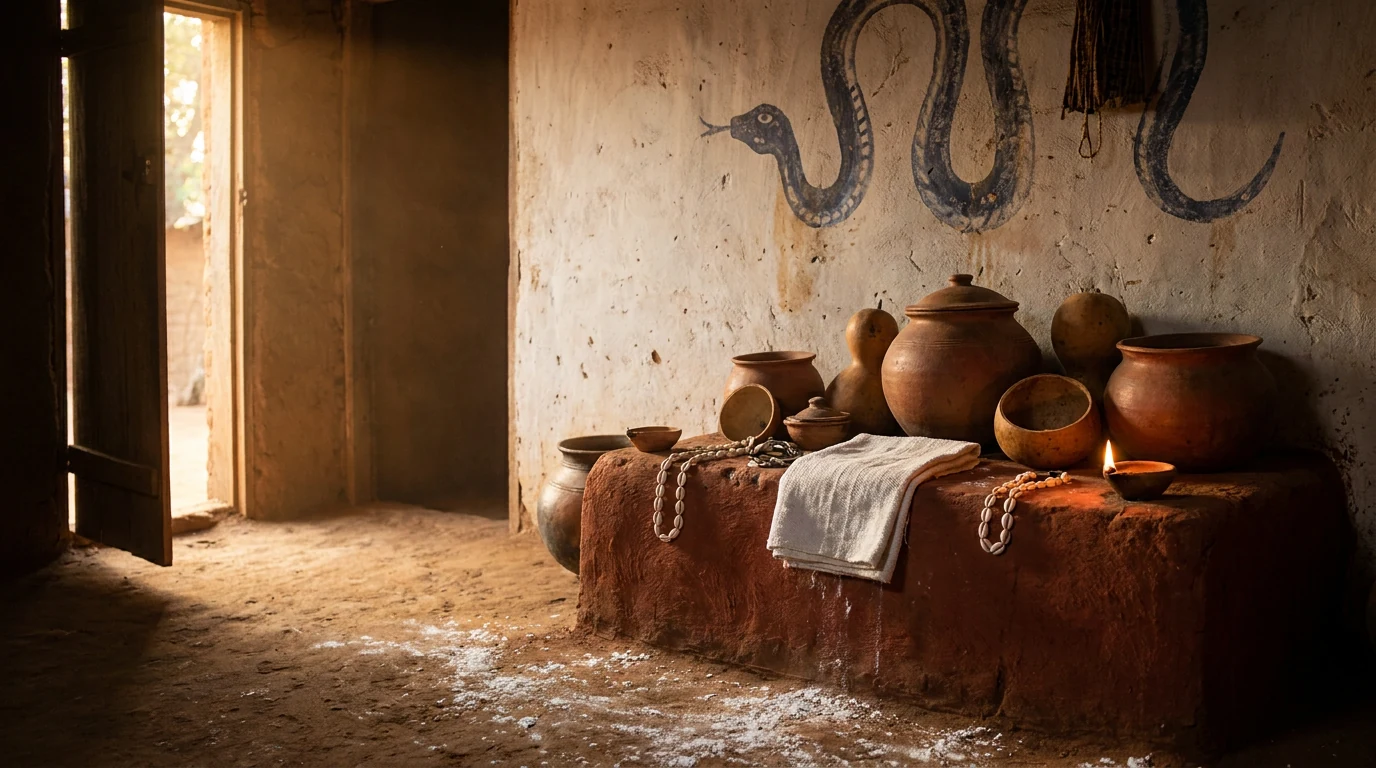
Hoodoo is the set of magic practices of African Americans in the southern United States, with Central African and Congo roots, also called conjure or rootwork. The one who works is a specialist who serves a client and prepares mojo bags, baths, and fumigations for them. It is the practice of someone who knows, not of a house with a congregation.
What is hoodoo, in one sentence
It is a system of African American magic, and the word names the practice, the work, and the one who works at the same time. Conjure is the common synonym and roots became another name because almost every hoodoo doctor heals with roots.
Here is a caveat that the bibliography does not resolve. The National Park Service, a US government agency, defines hoodoo as a religious tradition created by enslaved African Americans. Meanwhile, researcher Carolyn Morrow Long treats hoodoo as a magic system distinct from the Voudou religion of New Orleans. Both readings are sustained, and this article does not choose one: it records that hoodoo functions without a congregation and without a priesthood, and that some scholars still call it religious.
Before continuing, a map. The religion that was born in ancient Daomé is covered in what is vodu, and hoodoo is something else, on the other side of the Caribbean.
Where did hoodoo come from
From people forced to walk. The people who brought hoodoo to Louisiana arrived through the internal slave trade between the 1830s and 1850s, coming from Maryland, Virginia, and the Carolinas, with origins predominantly from Congo. It is not the same group nor the same route that formed the Voudou of New Orleans in the previous century.
That is why Louisiana ended up with two things at the same time. The magical component of Voudou became a variant of hoodoo in the city, and this New Orleans hoodoo resembles the African-based magical practices of the rest of the southern United States.
Voodoo and hoodoo share a kinship with our word. They stem from the same root, the vodun of the language of the Ewe and Fon peoples, in the country that is now called Benin. The origin of the word hoodoo itself is disputed: some link it to roots, others link it to West African terms. What can be stated is the common root of vodun.
Why does hoodoo use psalms
Because the Bible was the only permitted book. Hoodoo was born from the forced encounter of African practices with the Christianity imposed on the enslaved, and slave codes prohibited gathering and criminalized the practice of traditions brought from Africa. What could not happen in the terreiro began to happen inside the black church, hidden in plain sight.
The result is in the survey that the writer and anthropologist Zora Neale Hurston published in 1931: all the practitioners she heard from treated the Bible as the greatest book of spells in the world, and Moses as the greatest conjurer. From there comes the use of psalms that appears even today in Portuguese searches.
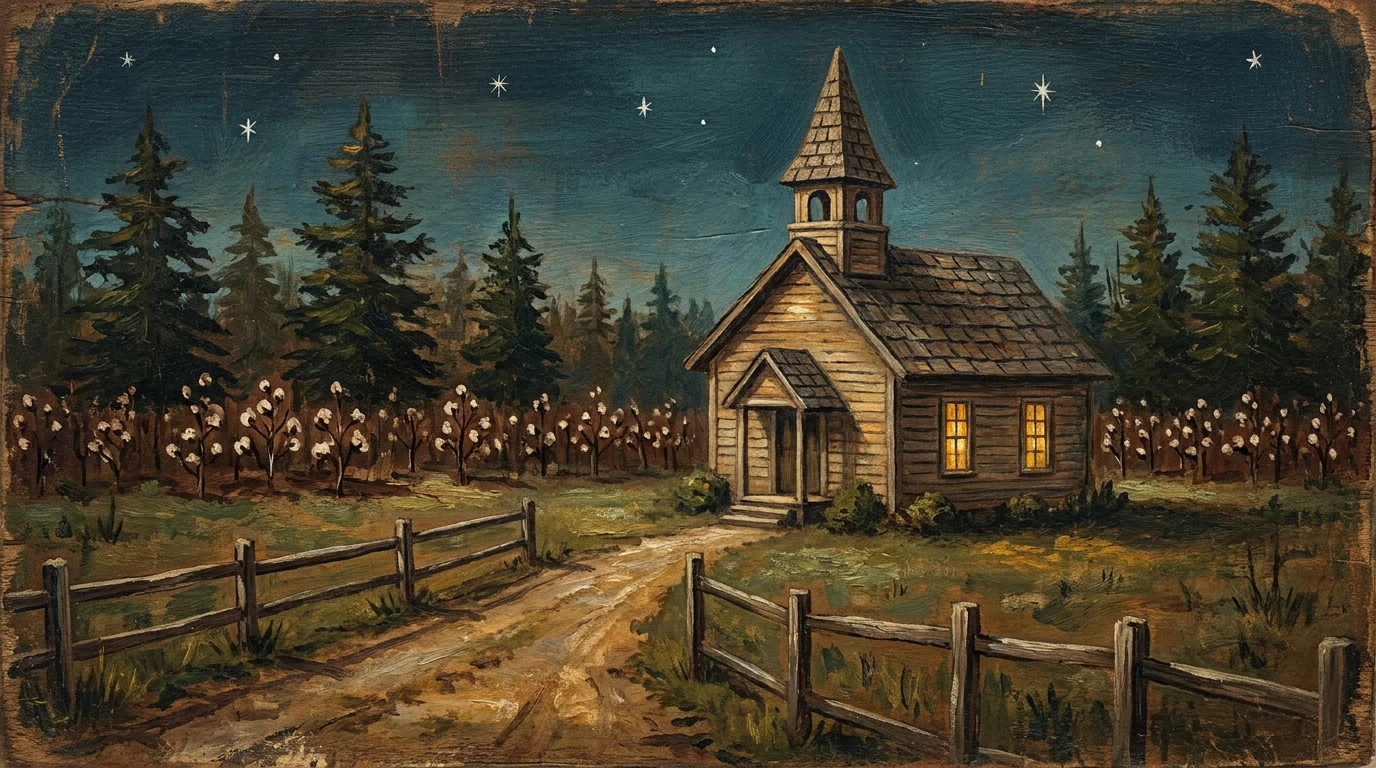
Anyone from a terreiro recognizes the movement. Here, a Catholic saint in front of the consecrated foundation (assentamento) was also a way to continue existing while the police knocked on the door.
Professor Yvonne Chireau, from Swarthmore College, shows that conjuring and Christianity, which seem opposite, have crossed paths since the beginning. It is not a random mixture: it is a survival strategy.
Hoodoo and Vodou are not the same thing
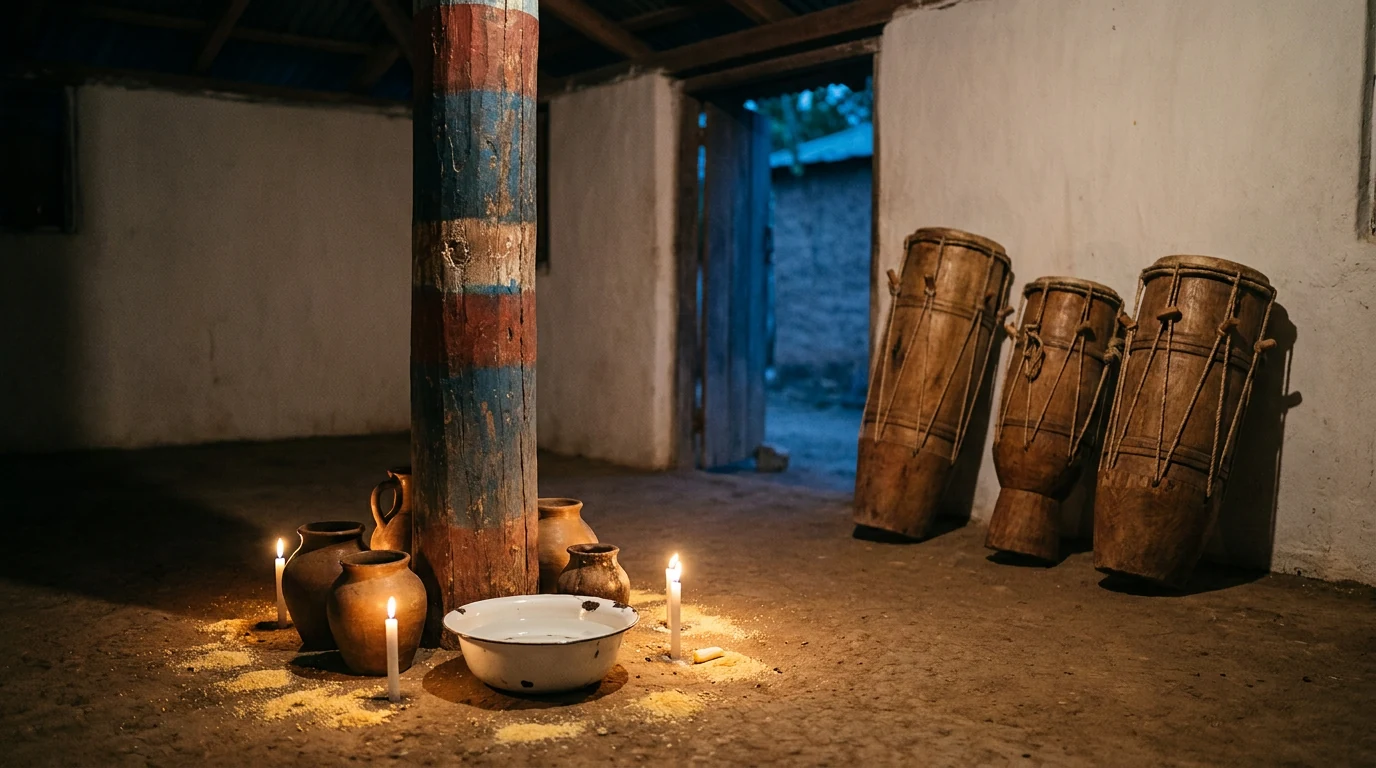
The most useful difference is in structure. Haitian Vodou has a temple, hall, central pillar, priest, priestess, initiation, and a calendar of festivals. Hoodoo has none of that: it has the specialist, the client, and the ritual work.
New Orleans Voodoo, on the other hand, is a religion, with a congregation, and remains active in the city, even if the casual visitor only finds sensationalist tours and souvenir shops. Its most well-known priestess was Marie Laveau. The confusion between the three things is old and makes money for those who sell scares, as the article about the vodu doll states.
In practice, the vocabulary helps to separate:
- hoodoo, conjure, rootwork: the magical practice, performed by a specialist for a client
- root doctor: who works with root and medicine. Not every root doctor is a hoodoo doctor, because there were those who only made medicine
- mojo bag: the small bag that the specialist prepares for a person
- gris-gris: in New Orleans, the set of magical ingredients. The name comes from the term gregries, from the Mende language, and already appeared among enslaved Africans in Louisiana at the beginning of the 18th century
From criminalization to the shelf
Hoodoo became a commodity early. The trade of products by catalog and mail already existed in the 1920s, and in 1927 a Nigerian Igbo man known as Dr. Pearce was arrested in St. Louis accused of using the mail for fraud. Persecution and the market grew together.
It was from there that the spiritual supply stores were born, the spiritual material stores that sustain the so-called hoodoo renaissance. The sociologist Katrina Hazzard-Donald, from Rutgers, separates the old tradition from what she calls over-the-counter hoodoo, which came later and is sold ready-made.
It is this commercial layer that the Brazilian reader usually finds first, in internet courses and in shops that promise a formula. The fundamento is not there.
And in Brazil?
Hoodoo is a tradition of the United States. There is no academic bibliography that records hoodoo practiced in Brazil, and what appears in Portuguese is commercial material. Those looking for Afro-diasporic magic with roots and fundamento from here have what our land has kept: the orixás (orishas) of Candomblé, the spirits of Umbanda, Jurema and the voduns in Brazil, which arrived with the Jeje and are worshipped in Bahia and Maranhão.
A note for those who landed here by mistake: Hoodoo Gurus is an Australian rock band formed in Sydney in 1981. Part of the searches for hoodoo in Portuguese are for them.
Frequently asked questions
What is hoodoo in Portuguese?
It is the name of the Afro-American magic system of the southern United States, also called conjure or rootwork. In Portuguese, it is written as hoodoo, which is the form people use and type. There is no consecrated translation.
Is Hoodoo a religion?
It depends on who answers. The National Park Service defines it as a religious tradition created by enslaved Afro-Americans. Researcher Carolyn Morrow Long treats it as a magic system distinct from the Voudou religion. What the two agree on is that there is no congregation or priesthood.
What is the difference between hoodoo and Vodun?
Vodu is a religion, with a temple, priesthood, initiation, and calendar. Hoodoo is a specialist practice for a client, without a house and without a congregation. Both words have a common root in the vodun of the Ewe and Fon peoples, but the structure is different.
Why does hoodoo use psalms from the Bible?
Because slave codes prohibited gathering and criminalized African traditions, the practice hid within the imposed Christianity. In Zora Neale Hurston's 1931 survey, practitioners treated the Bible as the greatest book of conjuration.
References
- 64 Parishes (Louisiana Endowment for the Humanities): the Voodoo entry, by Carolyn Morrow Long
- National Park Service: Hoodoo in St. Louis, on criminalization and mail order commerce
- Zora Neale Hurston, Journal of American Folklore, 1931: Hoodoo in America
- Swarthmore College: Yvonne Chireau's research on Conjure and Christianity
- University of Illinois Press: Mojo Workin, by Katrina Hazzard-Donald, on ancient tradition and counter hoodoo
- Revista Brasileira de História das Religiões (ANPUH): Silvio Ruiz Paradiso on hoodoo and voodoo in the diaspora