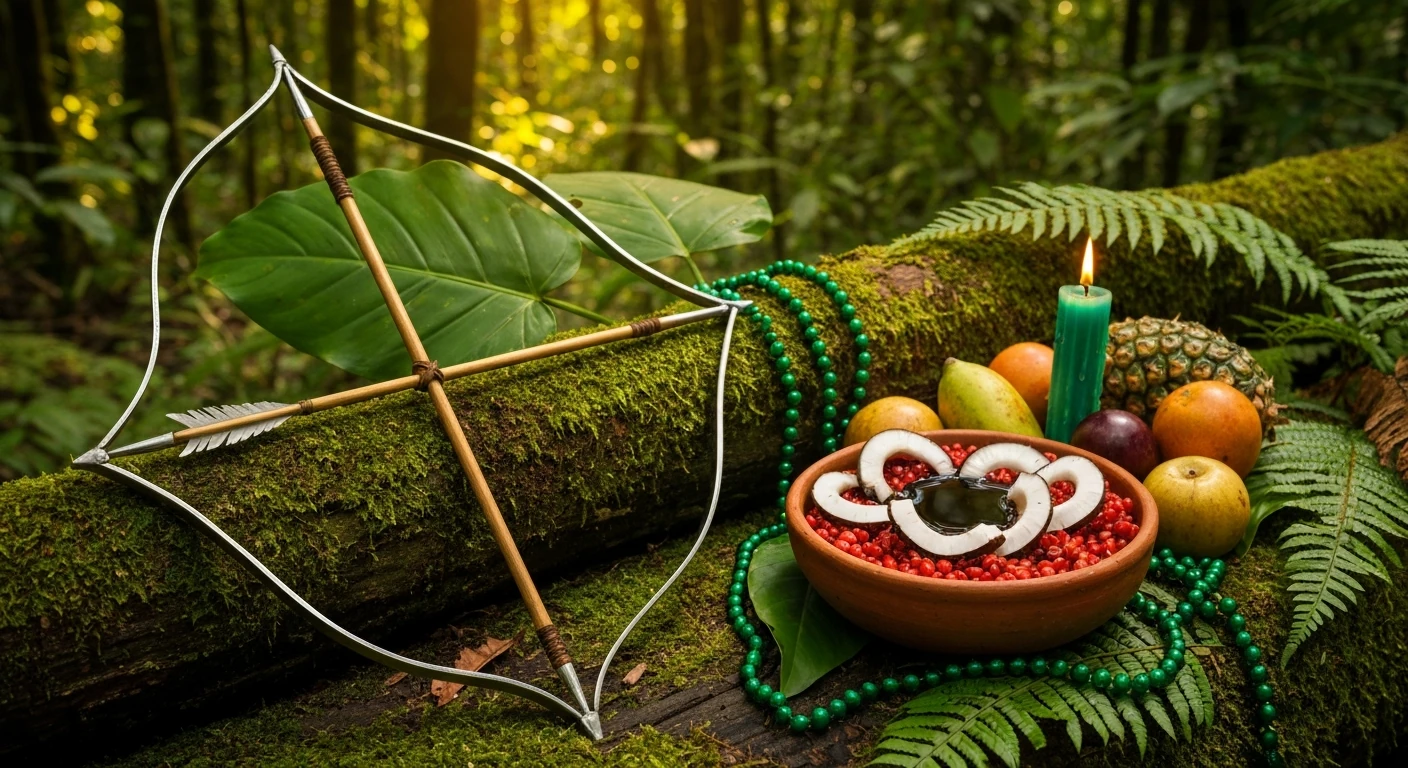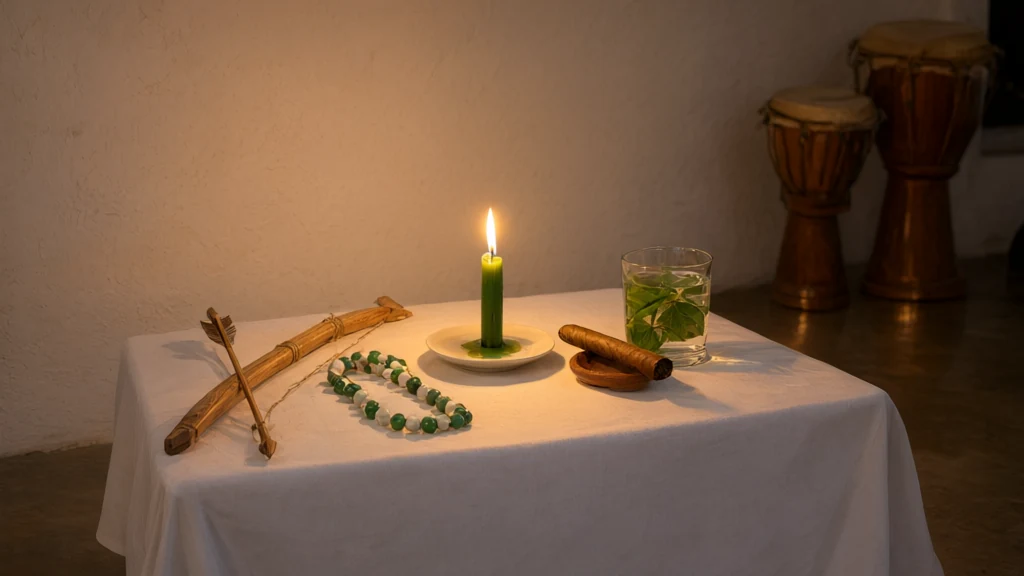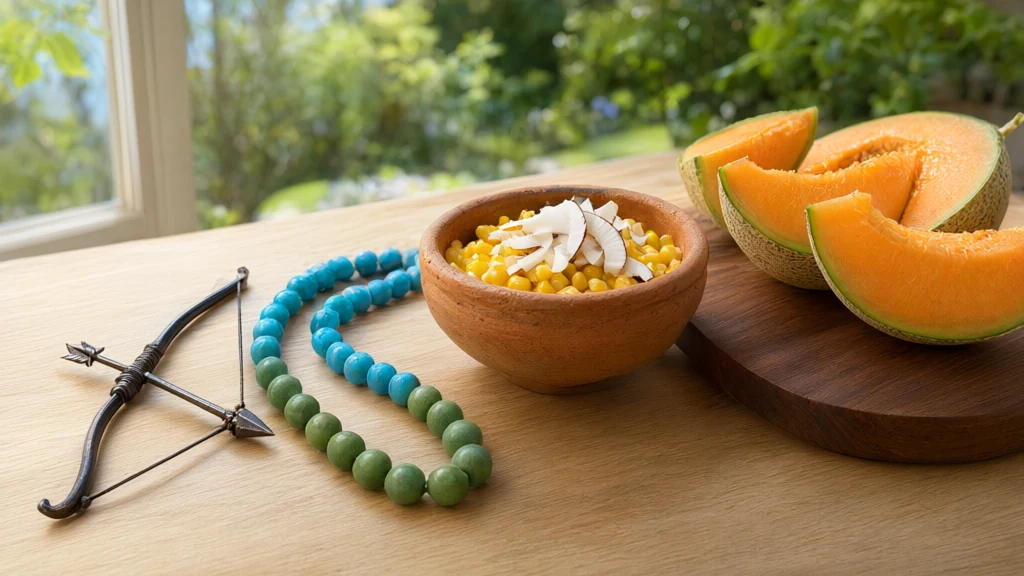
The children of Oxóssi are described as curious, attentive, and independent, but the portrait changes from author to author. The sociologist Reginaldo Prandi saw them as "elegant, graceful, nosy, curious, and solitary"; Pierre Verger, as people who are "smart, quick, always alert." In queto candomblé, the taboo for the children is eating honey.
These portraits are what candomblé says about the children of each orixá, not a report on anyone. Who confirms the head orixá is the house, in the reading.
What are the characteristics of the children of Oxóssi
The traits that repeat most are curiosity, attention, and a taste for freedom. The rest depends on who describes them. To know the orixá behind the children, see who is Oxóssi.
Prandi calls these portraits stereotypes, a term he adopts from anthropologist Claude Lépine (1981). He gathered them in "60 São Paulo candomblé terreiros" and says they coincide "in large part" with those in Salvador, Rio, and Africa. For him, the initiate can recognize themselves in the model, and "what counts is feeling close to the divine model."
The psychologist Monique Augras (FGV) warns that, among the orixás, "the temperament of Oxóssi is not so clearly delineated." She describes him as "prudent, suspicious, but with good relationships."
Three portraits that do not match, and why
Put the three side by side and they disagree on the point that interests the reader most: commitment.
- Prandi (candomblé queto, São Paulo, 1995): "Although they make good fathers and good mothers, they always have difficulty with the loved one." And more: "They cannot be monogamous. They have to hunt night and day. For this reason, they are considered irresponsible."
- Verger (1981): "They have a sense of responsibility and care for the family. They are generous, hospitable, and friends of the order."
- The houses: the São Paulo federation FUCESP says they are of "calm appearance" and "suspicious, cautious, intelligent, and attentive." The Terreiro de Umbanda Pai Maneco, in Curitiba, speaks of "a calm, loving, charming type."
Notice Prandi's verb: "are considered." He records what the Candomblé environment says, not a truth about the reader. Verger calls the portrait an "archetype," his word.
Why don't they match? Because each one heard different houses, in different places and decades. And because, according to Prandi, the son derives from a quality of the orixá, and the variations "are almost inexhaustible." Why these portraits do not serve as a personality test is in what your orixá says about you.
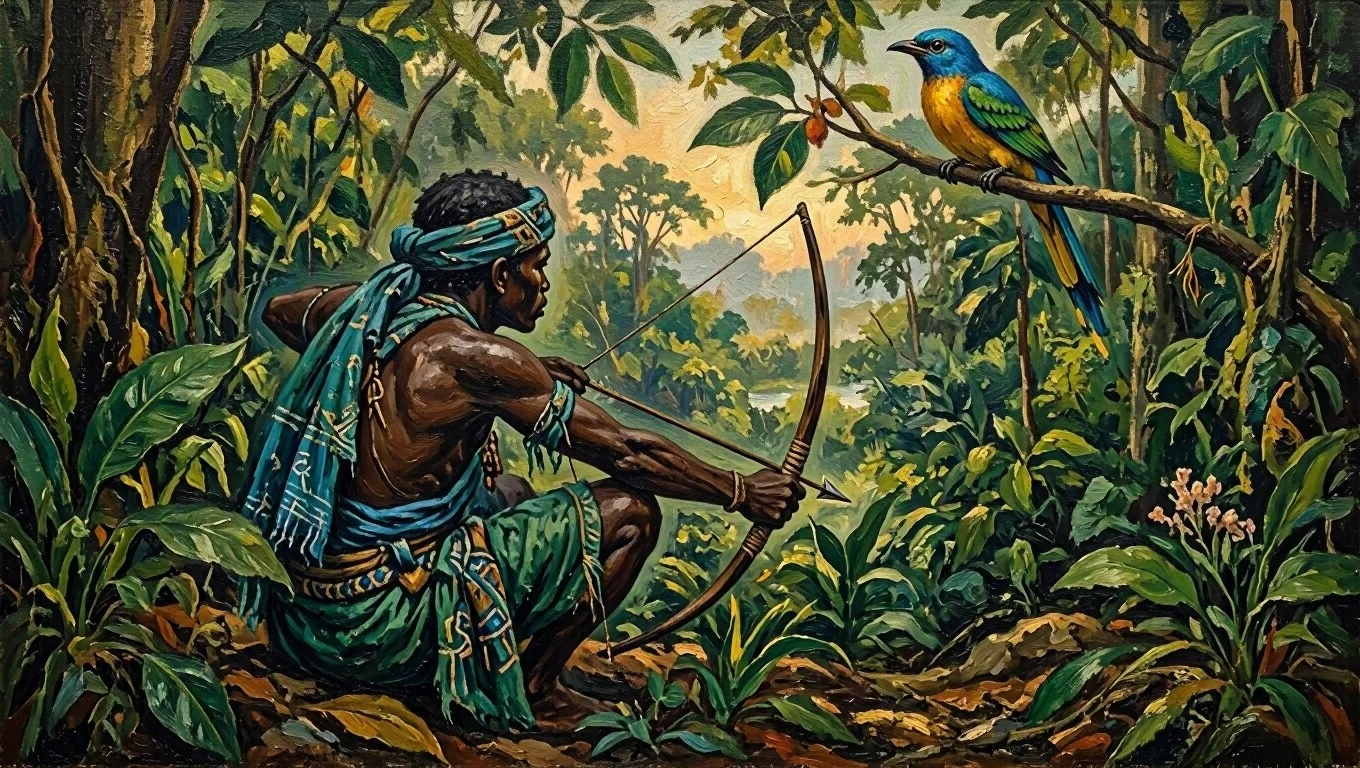
Can someone of Oxóssi eat honey?
In Queto Candomblé, no: in Prandi's table, the taboo for the children of Oxóssi is "eating honey." The taboo is in the children's column, meaning it applies to the person, not just to the offering.
A kedi from São Luís (MA), heard by the newspaper O Imparcial, remembers that "the children of santo are responsible for knowing all the repulsions of their orixás." The explanation of the taboo varies. She says Oxóssi "does not eat honey because he was raised inside a bee's cocoon." Other houses tell other stories, and none of them appear in Verger or in Prandi.
In Umbanda, the rule is from the house. The Terreiro Pai Maneco offers the orixá an amalá with "well-roasted moganga with corn inside covered with honey." The page says nothing about the honey in the child's food. If you are of Oxóssi and attend an Umbanda house, ask your leader.
The food of Oxóssi, with what goes and what does not, is in offering for Oxóssi.
Quality changes the child of Oxóssi
No one is a child of "Oxóssi in general". Prandi explains that each person's orixá "derives from a quality of the general orixá", which can be "the orixá in their youth or already elderly", "of peace or of war". The anthropologist Ordep Serra heard from an ogã: "there is always the old and the young".
Some qualities were, in Africa, separate orixás. Historian Lisa Earl Castillo gives the case of Inle, called Erinle among the Yorubas. In Africa, "despite being a hunter like Oxóssi, he is entirely distinct from him". In Bahia, he became a quality of Oxóssi. Verger also records Erinle as the god of hunting of Ijexá, "known by the name of Inlé" in Brazil. Gisèle Cossard, cited by Raphael de Jesus (UFJF), writes that "Ibualamo is a quality of Oxóssi".
How many are there? It depends on the house. Jesus notes that "some Orixás have 16 qualities while others sometimes have none". The relationship between the hunter and the owner of the leaves, who shares part of these names, is in Ossaim and Oxóssi.
Children of Oxóssi and Oxum (Oshun), Iemanjá (Yemoja) or Ogum (Ogun): the juntó
Those seeking "child of Oxóssi and Oxum" almost always speak of the juntó, the second orixá of the same person. Prandi explains that, besides the owner of the head, each person has "a second orixá, who acts as an associated divinity (juntó)". Researcher João Ferreira Dias gives an example: a juntó "formed by Ogum, Exu (Eshu) and Oxóssi".
No open source says that a child of Oxóssi "matches" with a child of another orixá in a couple. What exists is the mythical family. Verger tells us that Erinle "would have had, with Oxum Ipondá, a son named Logunedé (Logun Ede)". Jesus reminds us that this lineage "is not mythical unanimity", but that Logunedé "will always have a kinship bond with Oxum and Oxóssi in some quality". The child of the mythical couple is in who is Logunedé, and the juntó in general is in can one be a child of more than one orixá?.
How Oxóssi "chooses" his children: the divination confirms
Who says if you are of Oxóssi is the pai or mãe de santo. Prandi writes that "it is the religious prerogative of the pai or mãe de santo to discover this mythical origin through the cowrie-shell reading". Augras saw a babalorixá from Rio only define the orixá "after quite prolonged contact with the client and several hours of cowrie-shell reading".
Recognition comes later. In a study with 15 people from a Ketu terreiro, Augras found that identifying with one's own orixá was "almost a constant". And when the traits do not match, Prandi records that the Candomblé environment even doubts the lineage.
The portrait does not confirm the orixá. Who confirms is the house, in the divination; the portrait only helps the person to recognize themselves later.
And the birth month? There is no basis for this in any of the open sources. The test of orixá by birth date is a joke, and the discover your orixá is a starting point, not the answer of the divination. In daily life, those of Oxóssi usually wear a bead necklace in the colors that the house gives them. What each color means is in the Oxóssi bead necklace. If you want to check a bead necklace or a candle that your house requested, Joia Mística Laroyê can be reached via WhatsApp.
In Umbanda, the path is different: the child of Oxóssi receives a caboclo from his line, as shown in Oxóssi in Umbanda. And the day to honor the orixá is on the day of Oxóssi.
Frequently asked questions
What are the characteristics of the children of Oxóssi?
It depends on who describes them. Prandi records curious, solitary people with difficulty in love; Verger, sharp, generous, and responsible people with the family; the houses, calm and distrustful. Augras says that the temperament of Oxóssi is not so clear. These are Candomblé stereotypes, not a diagnosis.
Can someone of Oxóssi eat honey?
In Ketu Candomblé, eating honey is a taboo for the children of Oxóssi, according to Prandi's table. In Umbanda, the rule changes: there are houses that offer honey to the orixá himself. If you are of Oxóssi, the correct answer is that of your house.
How to know if I am a child of Oxóssi?
Through the game, performed by the pai or the mãe de santo of your house. Prandi says that discovering the head orixá is their prerogative. Online tests and personality portraits serve as curiosity, not as confirmation.
In what month is a child of Oxóssi born?
No open source links the head orixá to the birth month. Prandi and Augras record that the orixá is discovered in the game. The orixá test by birth date on the site is a declared joke.
Does a child of Oxóssi combine with a child of Oxum?
There is no source for compatibility between children of orixás. Those who ask this usually speak of the juntó, the second orixá of the same person, or the mythical couple: Verger records Erinle and Oxum Ipondá as parents of Logunedé.
References
- Prandi, Horizontes Antropológicos (UFRGS, 1995): Deuses africanos no Brasil contemporâneo
- Verger, book (Corrupio, 1981): Orixás: Yoruba gods in Africa and the New World
- Augras and Correa, Brazilian Archives of Psychology (FGV, 1979): The object of desire, the identification of the owner of the head in Candomblé
- Jesus, Sacrilegens (UFJF, 2024): The chromatics of the Orixás
- Castillo, in Africa, shores and oceans (Editora da Unicamp, 2021): The Ketu nation of Candomblé in a historical context
- Serra, book (Vozes, 1995): Waters of the King
- Dias, Instituto Ixéxé (2019): Juntó, modes and desmodos in Candomblé
- FUCESP: Oxóssi
- Terreiro de Umbanda Pai Maneco: Oxóssi, King of the forests
- O Imparcial (2017): Find out which foods the orixás consume