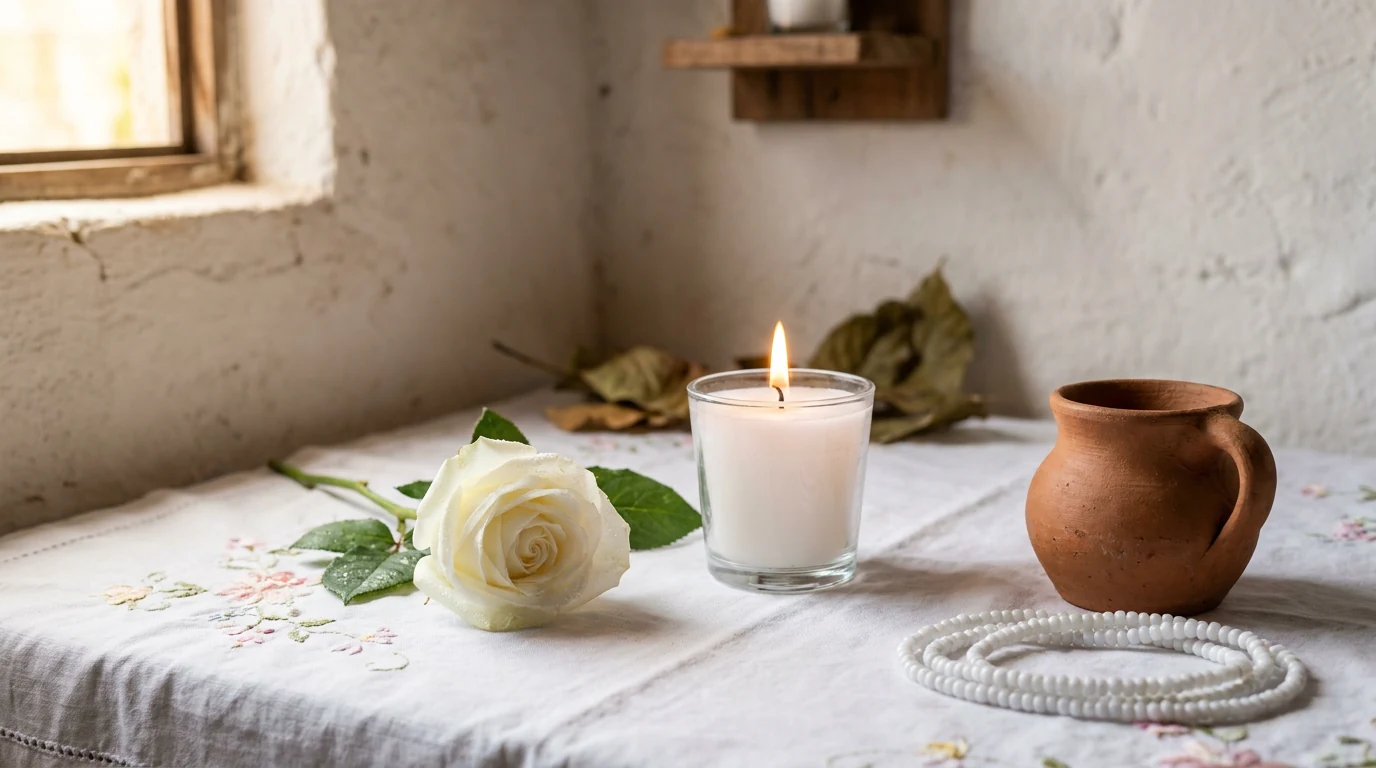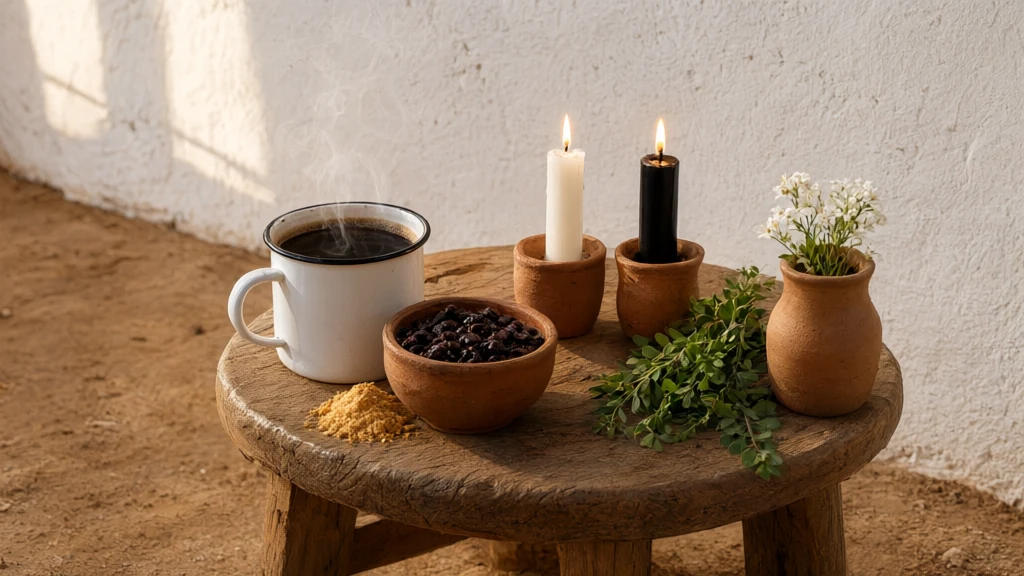
The Day of Preto Velho is May 13 in Umbanda, the date of the Golden Law, which declared slavery extinct in Brazil in 1888. November 20, the day of Zumbi dos Palmares, has been a proposed alternative since at least 2013. No open source records a house that has adopted it.
The same date is read as both a celebration and a critique. In 2026, November 20 falls on a Friday, and it is a national holiday.
What is the day of preto velho: May 13 or November 20?
The day of preto velho is May 13, the date that open sources record in Umbanda houses. The National Sanctuary of Umbanda describes it as the "Day of the Abolition of Slavery." November 20 is the date proposed by some Umbanda militants, and the proposal remains open.
Practiced date: May 13 | Proposed: November 20 | Day of the week: Monday
Those who have a house follow the house's date. Who the pretos-velhos are is in pretos-velhos in umbanda, and what their names mean is in names of preto velho.
Where does May 13 come from
May 13 comes from Law No. 3,353, of 1888, short and without a single word about rights, land, or reparation.
"Art. 1. Slavery in Brazil is declared extinct, from the date of this Law." (Law No. 3,353, original spelling)
The connection of the date with the pretos-velhos appears in writing, in open sources, in 1976. In a letter from CONDU transcribed in a blog of Umbanda records, May 13 is the date "consecrated to the Pretos Velhos," one of the candidates for National Umbanda Day. November 15 won unanimously, as the article of Umbanda Day states.
Where does the November 20 proposal come from
The proposal was born in the black movement of Porto Alegre. In 1971, the Grupo Palmares held an act on the night of November 20 as "a counterpoint to May 13, 1888," according to the UFRGS website. Agência Brasil confirms the year and states that the students and militants of the group "did not find the celebrations surrounding May 13 to be appropriate."
The TRT4 records that May 13 became the National Day of Denunciation Against Racism. Then came two laws:
- Law 12.519, of 2011: establishes the National Day of Zumbi and Black Awareness, "the date of the death of the black leader Zumbi dos Palmares".
- Law 14.759, of December 21, 2023: declares November 20 a national holiday.
What Umbanda says about exchange
In 2013, the historian Lourival Andrade Júnior, from UFRN, wrote that the change of the date was "one of the most current discussions" among Umbanda intellectuals and militants. He adds that, whatever the date may be, the sung chants (ponto cantado) "will not change": those who appear as liberators are the orixás (orishas), and not Zumbi. What research reads in these verses is in ponto de preto velho.
What open sources do not show is the adoption. No federation, tent, or terreiro with open publication says they celebrate the pretos-velhos on November 20. On November 20, 2024, the National Sanctuary of Umbanda published a Black Awareness note without the pretos-velhos. The same house gives May 13 as their day. Therefore, November 20 remains as an open question, and not as a change made.
What a federation in Belo Horizonte does with May 13th
In Belo Horizonte, a federation maintained May 13 and read it again. The Federação Espírita Umbandista de Minas Gerais (FEUMG) organized the first Night of Liberation, also called Festa do Preto Velho, in 1982, and coordinated it until 2013.
According to researcher Bianca Zacarias França, from UFMG, the festival received this name "to provoke a reflection on May 13, 1888." She reads the gesture as a "reflection and resignification of an official narrative."
The city square shows the same tension. Praça 13 de Maio was built in 1981, and the initial intention was to call it Praça do Preto Velho. In 1982, Municipal Decree No. 4325 registered it with the name of the date. It is the position of a federation and of houses in a city, and not of Umbanda as a whole.
What the houses do on preto velho day
The houses hold a festival, and the calendar and menu vary. What research and the press record:
- Vitória (ES): various umbanda groups hold a festival for preto velho at the terreiro on May 13.
- Ribeirão Preto (SP): in one house, the festival is the gira of the week of May 13, with bean and kale tutu, cornmeal cake, and red wine. The same house says that pretos-velhos do not drink during the giras, and that on this day everyone takes a sip of a mild red wine.
- Goiânia (GO): on Sunday, May 5, 2024, almost a thousand people from about 30 terreiros held a procession in honor of the pretos-velhos.
Feijoada is the dish that sources mention most, and Andrade describes it as the "Axé de Preto Velho." Wine and other drinks depend on the house, and what is brought as a gift is in what preto velho likes to receive.
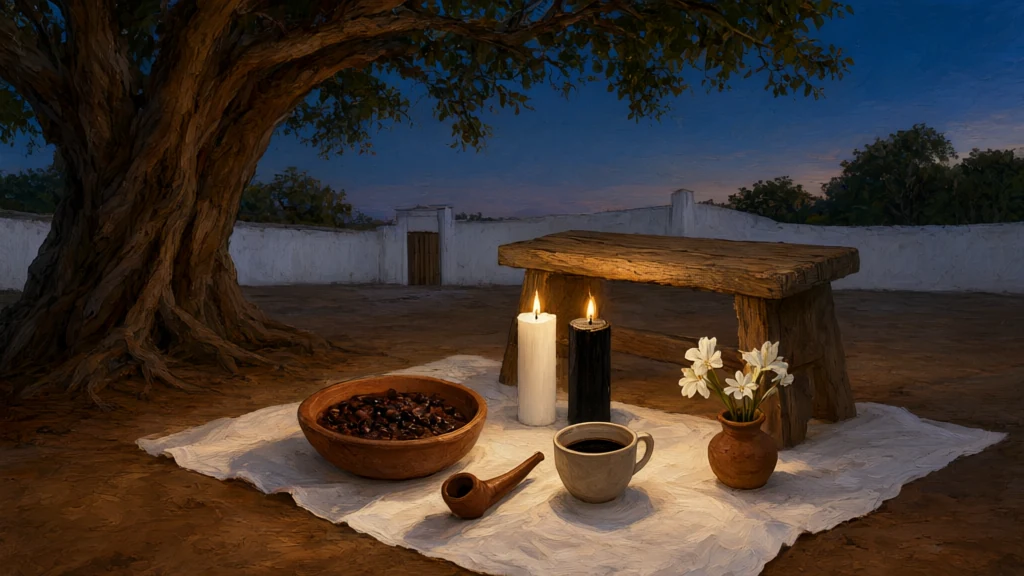
The candles for pretos-velhos are white and black, according to the Santuário Nacional da Umbanda. If your house requested this material and you have doubts, Joia Mística checks via WhatsApp.
Preto velho day of the week: Monday
During the week, the day of preto-velho is Monday, according to three open sources. The National Sanctuary of Umbanda describes it as "the same day as Exu and Abaluaiê." In a house in Ribeirão Preto, "the day of the pretos-velhos is Monday," linked to the energy of the souls. In Vitória, Monday is the day of offerings to the pretos-velhos, Exu, and the dead.
The day varies from house to house, and the one of your house matters more than any text. Monday is also the day of Exu, and if preto-velho is Exu, it is in preto velho is Exu. The dates of the year are in the calendar of the orixás, and the same question, week or year, appears in the day of the week of each orixá.
Frequently asked questions
What is the day of preto-velho?
The day of preto-velho is May 13, the date of the Golden Law, in the umbanda houses described by research. There is a proposal to change it to November 20, the day of Zumbi dos Palmares, registered in 2013, without documented adoption.
Why is the day of preto-velho May 13?
The date coincides with the Golden Law, of May 13, 1888. No open source says who chose the date for the pretos-velhos or why. The CONDU letter of 1976 already treats it as "consecrated to the Pretos Velhos."
What is the day of the week of preto-velho?
Monday, according to the National Sanctuary of Umbanda and two field studies, in Ribeirão Preto and in Vitória. It is also the day of Exu, and each house follows the day it received.
Is the day of preto-velho in Candomblé?
The text deals with Umbanda, and the open sources consulted do not deal with the subject in Candomblé. Each house and each nation follows its own foundations. In case of doubt, ask your leader.
References
- Presidency of the Republic: Law No. 3,353, of May 13, 1888
- Presidency of the Republic: Law No. 12,519, of 2011
- Presidency of the Republic: Law No. 14.759, of 2023
- Lourival Andrade Júnior, ANPUH: I worshiped the souls, Umbanda, preto-velho and slavery
- UFRGS: November 20, Oliveira Silveira website
- Agência Brasil: November 20, the origin of the date and who Zumbi was
- TRT4: May 13, National Day of Denunciation against Racism
- Bianca Zacarias França, Sociologias Plurais: Black Belo Horizonte, the Festas de Preto Velho and Iemanjá
- National Sanctuary of Umbanda: The House of the Pretos-Velhos
- National Sanctuary of Umbanda: note of November 20, 2024
- Umbanda Records: why November 15 is National Umbanda Day
- Barbara Thompson, UFES: preto velho festival in Capixaba Umbanda
- Rafael de Nuzzi Dias, USP: Ancestral chains, the pretos-velhos of Rosário
- Maria Sampaio do Nascimento, UFES: Giras of pretos-velhos in an Umbanda terreiro
- Jornal Opção: procession in honor of the Pretos Velhos in Goiânia