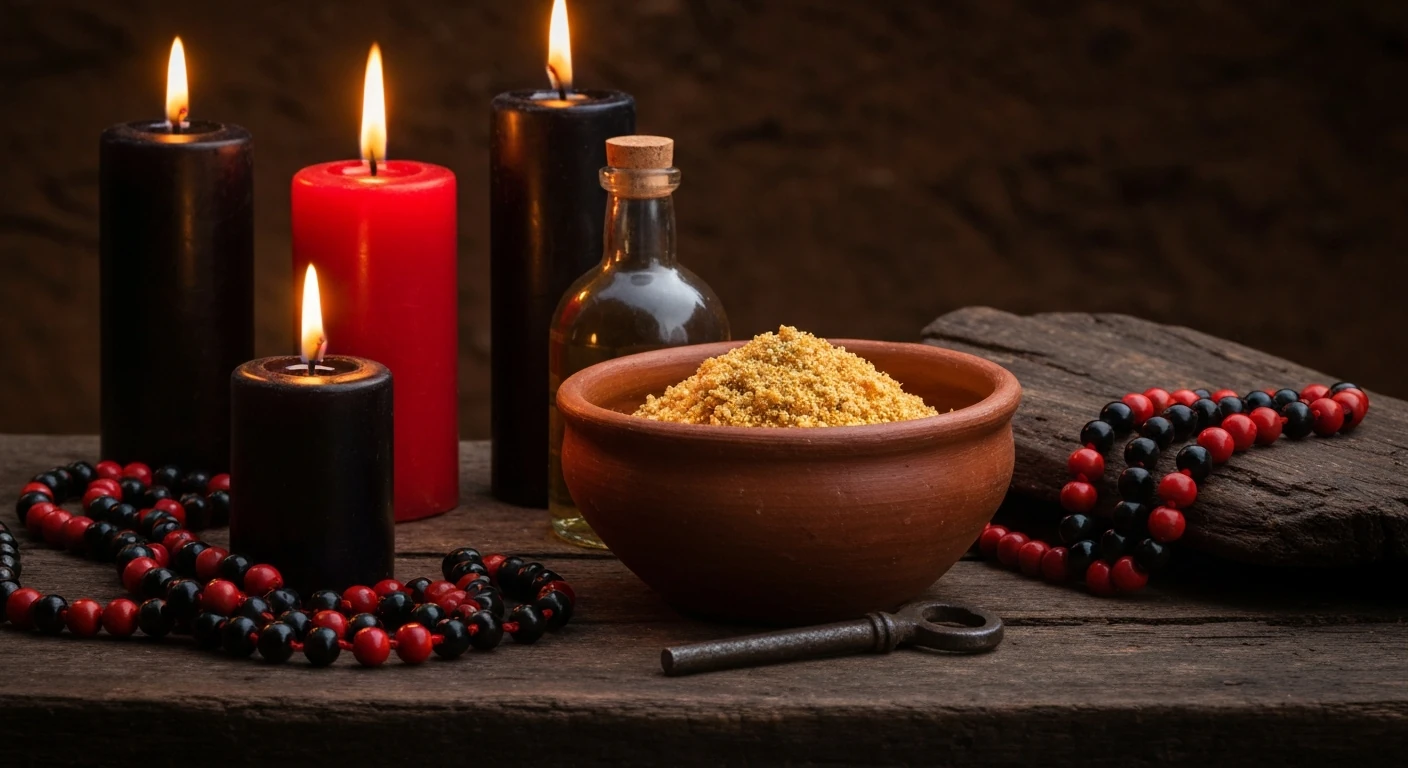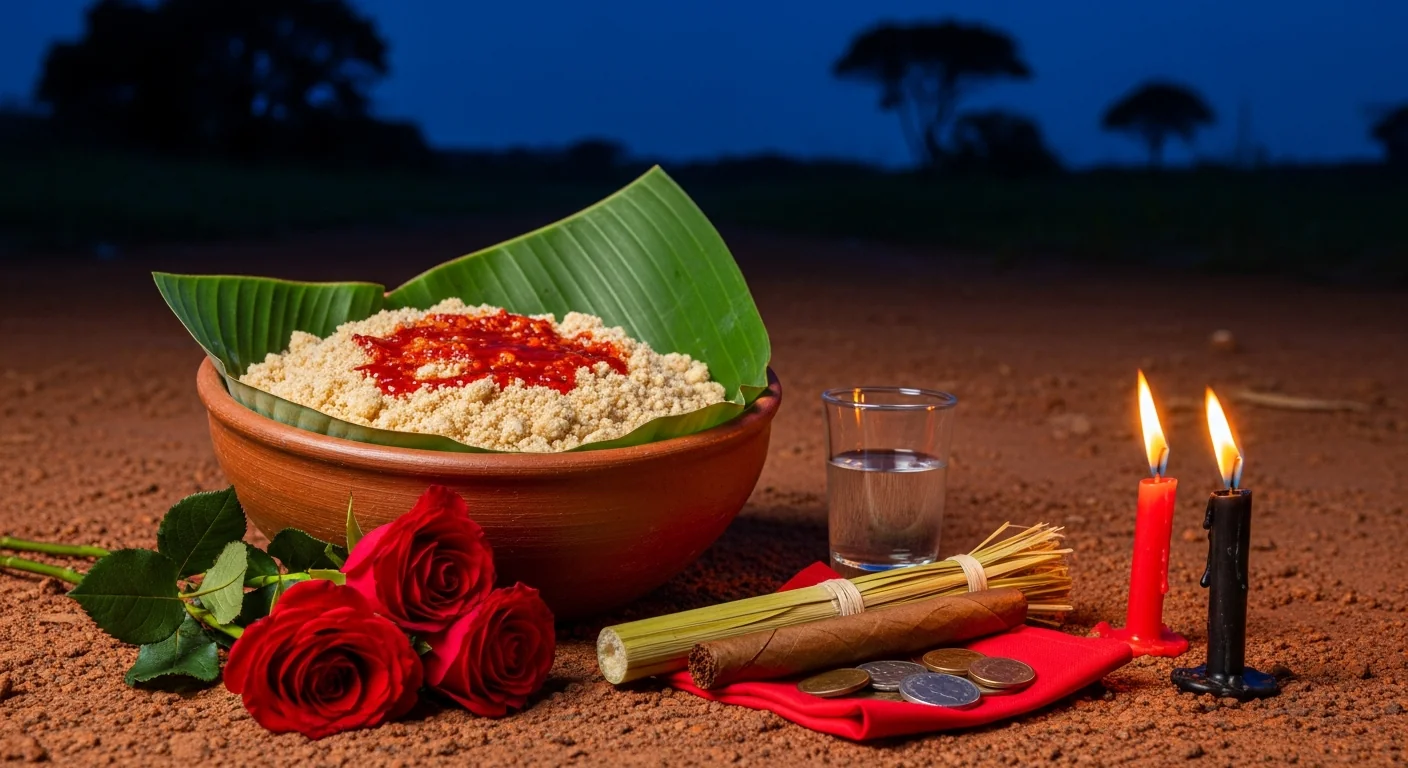
The prayer for Exu begins with the greeting Laroyê and asks for protection for the house and for the path, or thanks for what was received. Exu is greeted before any other orixá: in Candomblé, no ceremony begins without him. Below is a prayer to say at home, the end of year version, and the reason for each gesture.
There is no single terreiro text, and none of the prayers below promise results: they greet, ask, and give thanks.
Prayer for Exu: the protection text to say at home
The prayer below was written by Joia Mística Laroyê for those who pray alone, at home. It does not come from a tradition or from a terreiro: if your house has its own words, stick with the house words. The prayer request follows the sources. Pierre Verger calls Exu the "guardian of temples, houses, cities, and people." An Umbanda house teaches to ask him for "Spiritual protection and defense" and "Clarity in communication."
Laroyê, Exu! Exu is Mojubá! Before any other prayer request, I come to you, who comes first. Guard the door of this house and those who sleep inside it. Take care of my word, so that it reaches correctly those who need to hear it. Keep away from me what is not mine, without sending evil to anyone. Firm my step on the street, on the way there and on the way back. Receive this light as respect and as thanks. Laroyê!
Pray in a low voice or in thought and say, in your own words, what you need protection for. Who he is, in Candomblé and in Umbanda, is in who is Exu. To ask for an open path, the prayer is another: it is in prayer to open paths.
Why is Exu greeted first?
Exu is greeted first because he is the messenger. The prayer request to any orixá passes through him. In the portrait of Candomblé Ketu by Reginaldo Prandi, he is the messenger god and "In any ceremony, he is always the first to be honored." Roger Bastide, cited by Prandi, writes that every ceremony "must necessarily begin with a tribute to Exu," the padê, "for the role of intermediary, of messenger."
Verger reports that the offerings to Exu "are presented to him before those of the other orixás" and that, in the padê, he is "called, greeted, welcomed, and sent beyond." As the rite is, who conducts it and why he comes first is in what is padê.
The order is also in the Yoruba prayer. Síkírù Sàlámì, babalorixá, and Ronilda Iyakemi Ribeiro, ialorixá, recorded a Greeting to Exu in Nigeria. The review by Rodrigo Ribeiro Frias in the magazine Odeere, from UESB, opens with it:
“I greet Exu, who must be praised Before the other orixás. Standing, I greet Exu.”
Babalorixá Pai Rodney de Oxóssi (Oshosi) says the same in CartaCapital: Exu is "the first to be worshiped and without his permission nothing happens".
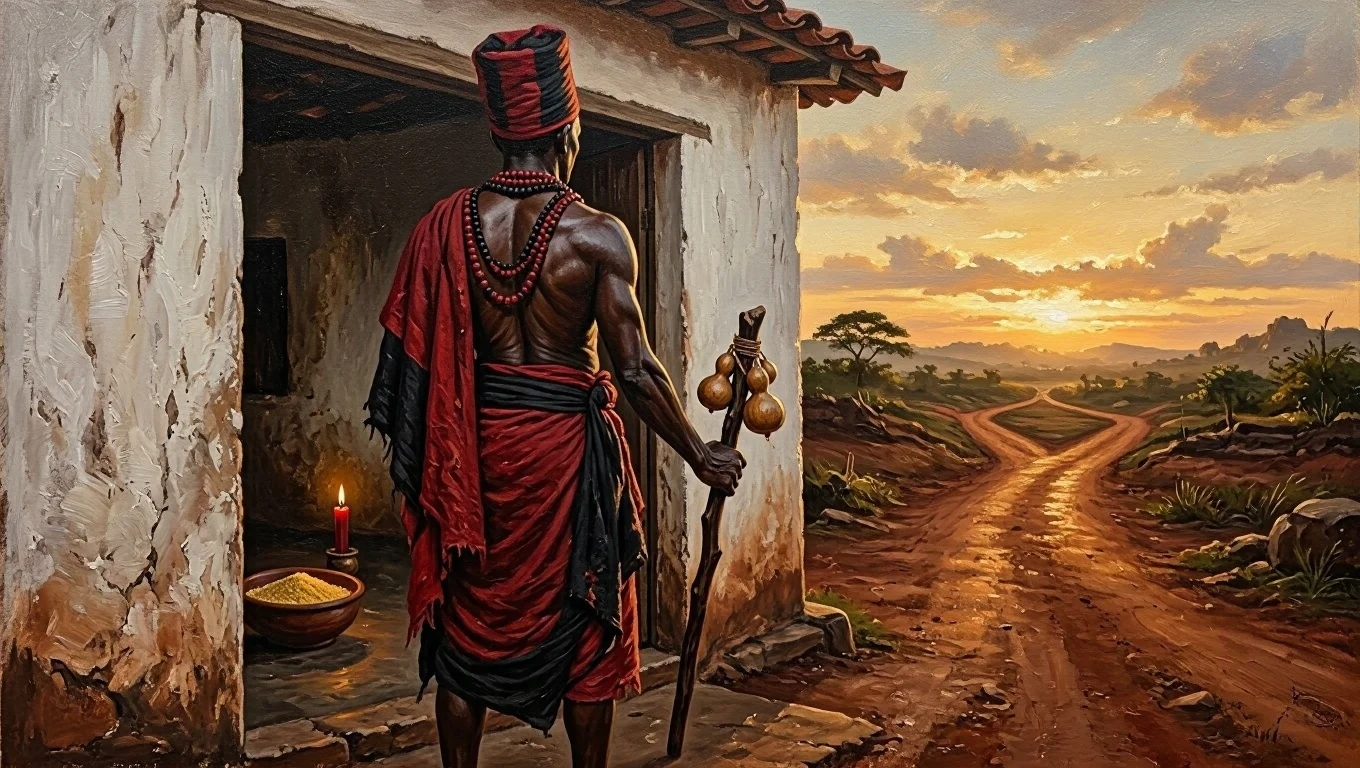
How to thank Exu at the end of the year?
To thank Exu at the end of the year, give thanks before asking, and to him before the other orixás, as in the padê. In a text where he gives voice to Exu, Pai Rodney writes: "If you thank me, I will return the favor."
This prayer of thanks was also written by Joia Mística:
Laroyê, Exu! The year ends and I come to give thanks before I ask. Thank you for the doors that opened and for those that remained closed to protect me. Thank you for the word that arrived at the right time and for the street that brought me back. What was left behind, I surrender. For the year that arrives, I ask permission to enter. Exu is Mojubá!
Two moments serve. The first is the last Monday of the year, the day of Exu: in 2026, December 28. The second is the turn of the year. Pray to Exu before the other prayers of the night, which are in prayer for the new year. The peace prayer for the incoming year is in prayer for Oxalá.
To thank for an achievement, pray the same prayer and say what was fulfilled. Gratitude with offering combines with your home.
What do Laroyê and Mojubá mean?
Laroyê is the greeting of Exu, and Mojubá usually comes right after: "Laroyê Exu! Exu is Mojubá!", in the form of TUCTVC, a house of Umbanda. Neither of the two has a fixed literal translation in open sources.
- Laroyê: in the reading of Sàlámì and Ribeiro, summarized by Frias, the invocation Láaróyè "highlights the communication power of Exu".
- Mojubá: the researcher Fábio da Silva Gonçalves recorded in Minas Gerais the form "Laroyê Tranca-Ruas, Tranca-Ruas is Mojubá!". For him, the two words come from Yoruba and say that the spirit is "great, respected".
The translation "hail the messenger", which circulates on the internet, does not appear in these sources.
The oriki of Exu. The oriki is the traditional praise of an orixá. Verger records these verses of Exu in the book Orixás:
Exu makes the error turn into a success and the success turn into an error." "He killed a bird yesterday, with a stone that he only threw today.
The chants of the gira are in chant to Exu (ponto de Exu).
Does the prayer serve for the Exu of Umbanda?
This prayer is to the orixá Exu. The exus of ritual work in Umbanda are another figure. Juliana Carvalho and José Bairrão, from USP, write: "In Umbanda, the exus are understood as spirits of deceased people". The orixá, in the Yoruba matrix, is "neither good nor bad". TUCTVC also separates the orixá from the Exus and Pombagiras of the phalange.
Whoever works with a guardian, such as Tranca-Ruas, follows what the house teaches. The names are in names of Exu, and the test which is your Exu points out which guardian or Pombagira you have an affinity with. The bead necklace in his colors is in Exu bead necklace.
The fear of the name comes from outside the religion. Prandi recalls that myths of Exu "that identify them with the devil" are not known. And, in the coexistence of giras, exus and pombagiras began to be seen as "compadres, friends and spirit guides ready to help those who seek them".
When to pray and with what candle?
The day to pray to Exu is Monday, in Prandi, in Verger and at TUCTVC; the São Paulo federation FUCESP adds Friday. The most remembered date of the year is June 13: the history is in Exu day.
Day: Monday | Colors: red and black | Candle: red and black, or just red | Greeting: Laroyê
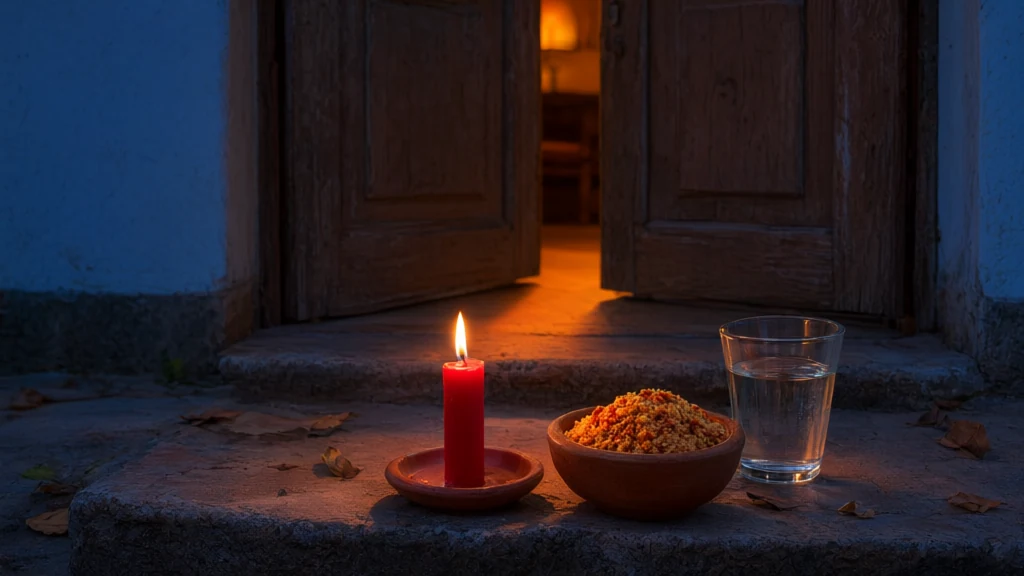
The red and black candle is the one from TUCTVC. A simple way to pray at home:
- Choose a firm corner near the door, away from curtains and children, and place a glass of water.
- Light the candle on a clay saucer and say Laroyê.
- Say the prayer and state your request or your thanks.
- Let the candle burn until the end and give thanks.
Exu's food in the Prandi table is farofa with dendê, and FUCESP lists farofa, dendê and marafo, the aguardente. In an Umbanda terreiro in Ceará, researcher Melina Gomes, from UFC, saw the cachaça go to the exus of ritual work. None of this is mandatory for praying. The offering is in offering for Exu.
Away from home? Light the virtual Exu candle. In doubt about the color, use the which candle to light. To check the candle your house requested, Joia Mística Laroyê can be reached via WhatsApp.
What does the prayer to Exu not do?
The prayer to Exu does not bind any person, does not send evil to another person, and does not guarantee money. It greets, asks for protection, and gives thanks. In the reading of Sàlámì and Ribeiro summarized by Frias, "It is not his role to solve problems or eliminate difficulties for his devotees," and achievements "depend primarily on personal efforts".
Prayers that promise to bring someone back, leave a person desperate, or make money arrive in seven days are not part of this article. Anyone who feels they need a ritual work should speak with the pai or mãe de santo of a serious house.
Frequently asked questions
Can I pray to Exu without being initiated?
You can. Greeting Exu, lighting a candle, and praying does not require initiation. The assentamento is something else: Verger notes that, in Brazil, it often stays behind the door of the house. What it is and who can do it is in assentamento de Exu.
Is there an official prayer for Exu?
There is no single text. The TUCTVC publishes its own prayer on the Exu page of the house, and Sàlámì and Ribeiro record Yoruba greetings.
Can I pray to Exu for another person?
You can pray for the protection of another person: say their name and ask for protection for them as you would for yourself. Praying for someone is asking for protection, not deciding their will.
References
- Reginaldo Prandi, Horizontes Antropológicos (1995): African gods in contemporary Brazil
- Reginaldo Prandi, Revista USP (2001): Exu, from messenger to the devil
- Pierre Verger, Orixás (Corrupio, 1981): Google Books entry
- Rodrigo Ribeiro Frias, Odeere, UESB (2017): review of Exu and the order of the universe, by Sàlámì and Ribeiro
- Carvalho and Bairrão, Psicologia USP (2019): Umbanda and Quimbanda: black alternative to white morality
- Fábio da Silva Gonçalves, UFMG and Unimontes (2017): food in the terreiros of Bocaiuva
- Melina Sousa Gomes, Reunião Brasileira de Antropologia (2016): drink in an umbanda terreiro
- Pai Rodney, CartaCapital (2017): I am not the devil. I am Exu
- TUCTVC, casa de umbanda: Exu
- FUCESP: Exu