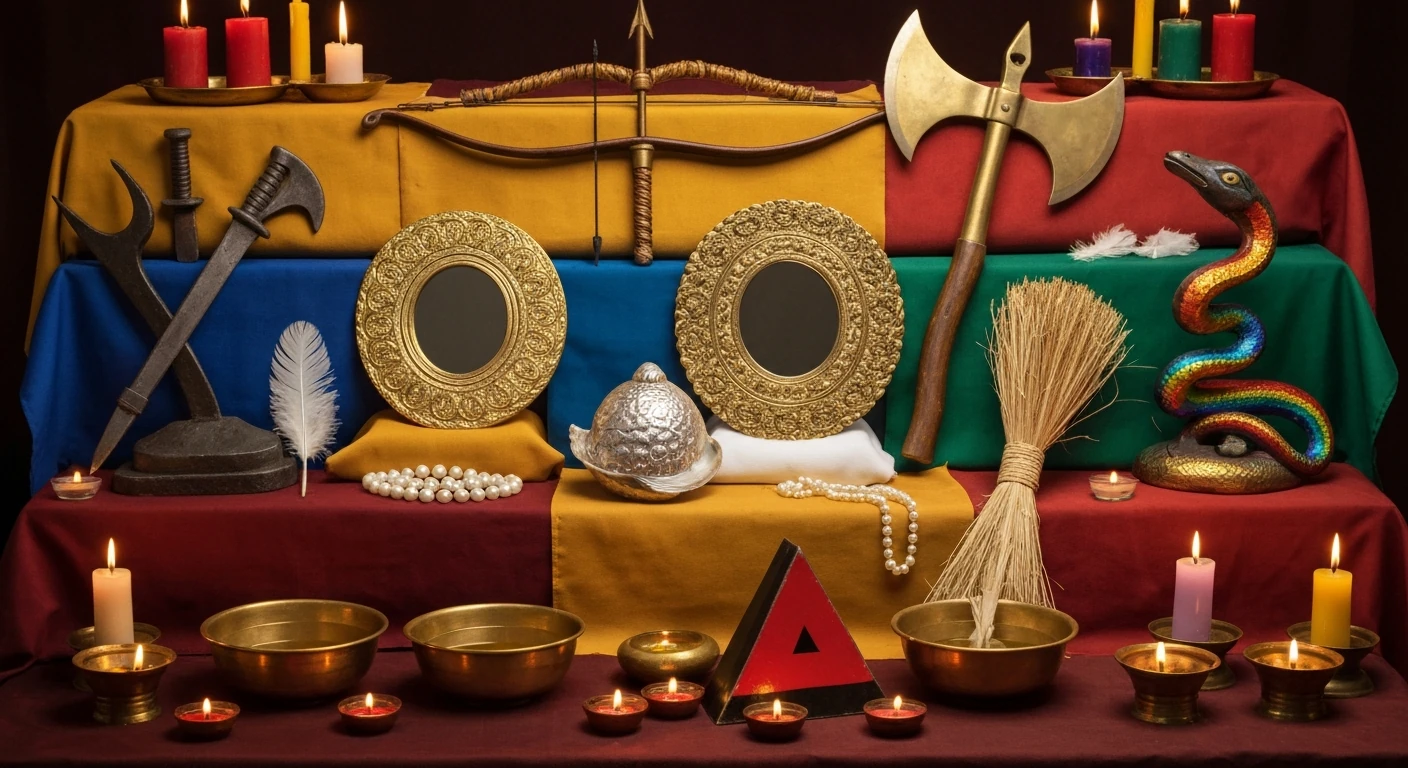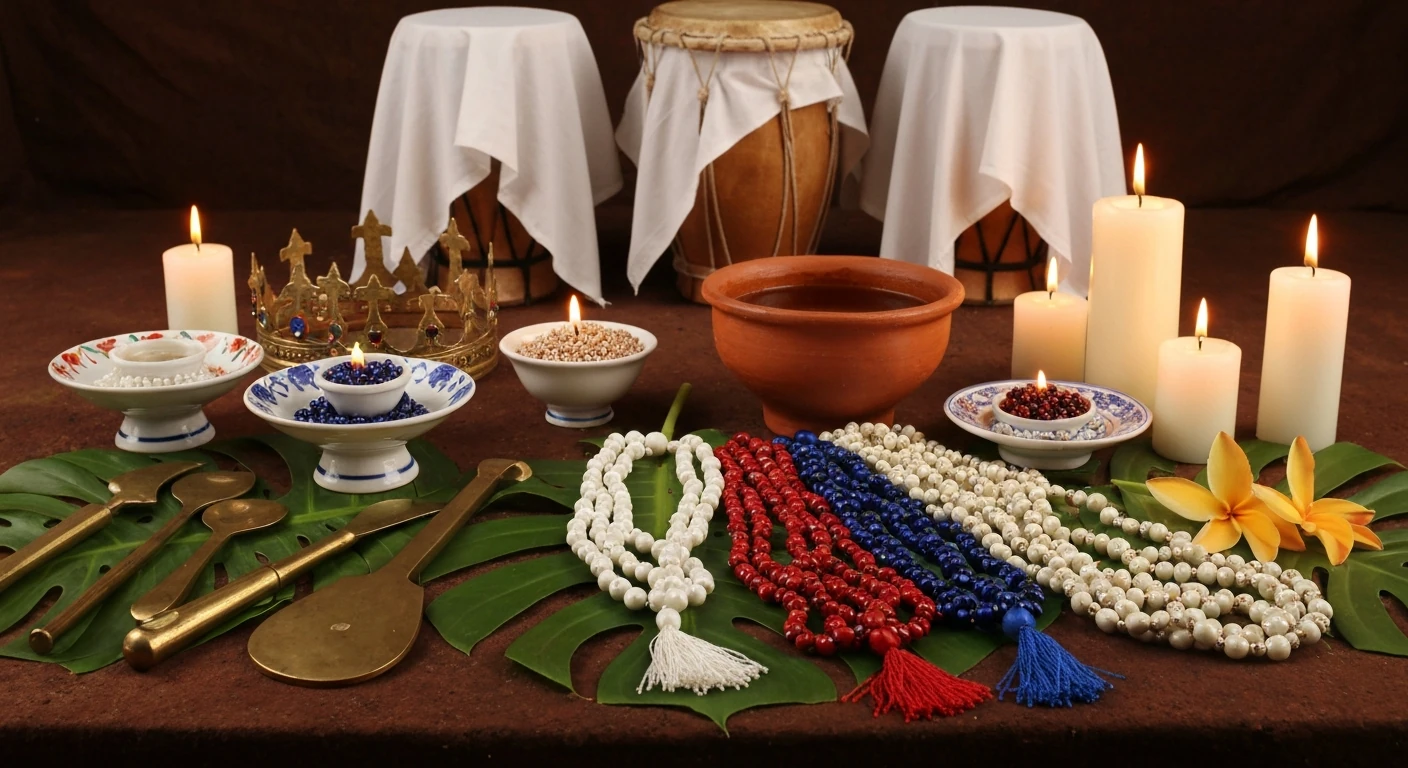
Candomblé is one of the largest Afro-Brazilian religions in Brazil, a living tradition that worships the orixás through song, dance, atabaques, and offering. More than a set of rituals, it is an entire way of seeing the world, in which each person carries the axé of a divinity that accompanies them since before they were born.
In this guide, you will understand what Candomblé is, how it was born in Bahia, what its nations are, how a terreiro works, and why it has nothing to do with "spell" or "something evil".
What is Candomblé
Candomblé is an Afro-Brazilian religion formed in Bahia throughout the 19th century, from the religious traditions that enslaved African peoples brought from West Africa. Its center is the worship of the orixás, divinities that represent, at the same time, forces of nature and archetypes of human personality.
Above all is Olodumare (also called Olorum), the supreme creator. He is not worshipped directly: he manifests in the world through the orixás, who function as intermediaries between heaven (orum) and earth (aiê). The foundation that links all of this is axé, the vital energy that sustains life, the rites, and the religious house itself.
The word "candomblé" itself refers to dance and party with atabaques, and this says a lot about the religion: here, the sacred is revered with the whole body, in songs and circular dances.
Origin: Bahia, 19th century | Supreme deity: Olodumare (Olorum) | Deities worshiped: orixás, voduns or inquices (depending on the nation) | Foundation: axé | Sacred space: terreiro, ilê or roça | Leadership: babalorixá / ialorixá
The origin of Candomblé in Bahia
Candomblé was born from pain and resistance. Between the 16th and 19th centuries, millions of Africans were torn from their Yoruba, Fon, Bantu and so many other lands and brought to Brazil as enslaved people. They lost almost everything, but they kept the memory of their gods in the leaves, in the waters, in the drums and in the chants.
In Salvador, throughout the 19th century, these traditions reorganized into their own houses. The oldest recognized is the Casa Branca do Engenho Velho (Ilê Axé Iyá Nassô Oká), the first terreiro listed by the federal government: the Advisory Council of IPHAN decided in 1984, and the inscription in the Livro do Tombo is from 1986. The list of houses is in the text about the terreiros listed by IPHAN.
To survive persecution, practitioners associated their orixás with Catholic saints. This syncretism was not a fusion of beliefs, but rather a strategy of resistance: behind the statue of a saint, the orixá continued to be worshiped. Iemanjá (Yemoja) could be revered under the name of Our Lady; Xangô (Shango), under that of Saint Jerome or Saint Barbara, depending on the region. The two traditions, however, remain distinct in their origin.
The nations of Candomblé: ketu, jeje and angola
Speaking of Candomblé in the singular is a simplification. There are nations segments that differ by African origin, by the deities worshiped, by the liturgical language and by the form of the rituals. The three most widespread are ketu, jeje and angola.
| Nation | African root | Divinities | Liturgical language |
|---|---|---|---|
| Ketu (nagô-yoruba) | Yoruba (Nigeria and Benin) | Orixás | Yoruba |
| Jeje | Daomé (current Benin), fon-ewe people | Voduns | Fon / Ewe |
| Angola | Bantu (Angola and Congo) | Inquices (nkisi) | Kimbundu / Kikongo |
The ketu nation is the most well known and the one that popularized the names of the orixás Oxum (Oshun), Ogum (Ogun), Iansã (Oya), Xangô. In the jeje nation, the same energies appear as voduns. In the angola Candomblé, the inquices are worshipped, spirits linked to nature, with a strong presence of herbs and healing. There are also smaller nations, such as ijexá, efã and xambá.
Therefore, among practitioners, mentioning the nation is not a detail: the same divinity can have different names, chants and offerings from one house to another. Treating Candomblé as a single block erases this real diversity.
The orixás and the head orixá
In Candomblé, each orixá governs a domain of nature and a set of human characteristics. Oxum is fresh water, love and fertility; Ogum is iron, work and war; Iansã is wind, lightning and courage; Oxalá (Obatala) is peace and creation. There is no universal fixed number, people popularly speak of sixteen or "twenty-one orixás", but the set effectively worshipped varies according to the nation and the house.
It is believed that each person has a head orixá (linked to the ori, the spiritual head), who accompanies them and influences their temperament and destiny. This regency is not discovered through internet tests or simple birth dates: it is revealed by the jogo de búzios, conducted by a babalorixá or an ialorixá inside the terreiro.
Contact with the orixás is made through the ebó ritual offering, which can include foods, herbs, candles, and specific elements of each deity.
Be wary of "tests of your orixá" made by apps or websites. In Candomblé, the head orixá is revealed through cowrie-shell divination, by a religious leader, within the foundation of the house.
How a Candomblé terreiro works
The terreiro (or ilê, or roça) is the religious house and the community at the same time. It is commanded by a babalorixá (pai-de-santo) or an ialorixá (mãe-de-santo), with the help of a hierarchy of roles: the ogã (who plays and watches over), the ekedi (who cares for the incorporated orixás), and the initiated filhos-de-santo.
The most well-known public celebration is the xirê a sequence of chants and dances in a circle, to the sound of three atabaques (rum, rumpi, and lé), in which the orixás are greeted one by one. At certain moments, an orixá may "descend," incorporating into their filho-de-santo to bless the community.
Becoming a filho-de-santo requires the feitura de santo, the initiation rite. In the ketu nation, the initial recolhimento usually lasts about 21 days (varies from house to house), a period in which the initiate, called iaô, withdraws from daily life for a profound spiritual preparation. Then come the obligations that confirm the commitment to the orixá over the years. The deepest fundamentals are reserved for initiates and this is part of the respect for tradition.
Candomblé and umbanda are not the same thing
It is very common to confuse the two, but candomblé and umbanda are distinct religions. Candomblé is of African origin and centers on the worship of the orixás, organized by nations of African origin. Umbanda was born in Brazil, at the beginning of the 20th century, and mixes elements of candomblé, popular Catholicism, Kardecist Spiritism, and indigenous traditions.
In umbanda, the work revolves around guides and spirits such as caboclos, pretos-velhos, exus, and pombagiras who manifest in the giras to guide and heal. In candomblé, the focus is the direct worship of the orixás and the maintenance of the house's axé. They are paths that respect each other and sometimes cross, but they have their own liturgies and structures.
Candomblé is not a spell nor something evil
Candomblé is a religion: it is not a spell, it is not "something evil" and it has no demon. This is the oldest and most unjust distortion that weighs upon Afro-Brazilian religions, the fruit of centuries of religious racism.
Candomblé worships life, nature, and ancestors. Its offerings do not "harm anyone": they are gestures of exchange and gratitude with the orixás. Terms like "witchcraft" and "black magic," when used to disqualify the religion, reproduce the same prejudice that, in the past, led terreiros to be invaded and destroyed.
Recognizing Candomblé as heritage and Casa Branca as a national monument is part of repairing this history. Respect is simple: treat Candomblé with the same naturalness with which you treat any other faith.
Frequently asked questions
What does the word candomblé mean?
The word has Bantu roots and is linked to the idea of dance or party with atabaques. It translates the spirit of the religion: reverencing the orixás with the body, in chants and circular dances to the sound of sacred drums, during celebrations at the terreiro.
How many orixás exist in Candomblé?
There is no universal number. Popularly, people speak of sixteen or "twenty-one orixás," but the set effectively worshipped changes according to the nation and the house. Some orixás are revered in almost all terreiros, while others are specific to certain regions or traditions.
What is the difference between Candomblé and Umbanda?
Candomblé is of African origin and worships the orixás, organized by nations (ketu, jeje, angola). Umbanda was born in Brazil and combines orixás, spirit guides such as caboclos and pretos-velhos, Catholicism, and Spiritism. They are distinct religions, with their own liturgies and origins.
How do I discover my orixá?
The head orixá is revealed by cowrie-shell divination, conducted by a babalorixá or ialorixá inside a terreiro. It is not discovered through internet tests or just by birth date. The path is to seek a trusted house and speak with the religious leadership.
Is Candomblé harmful or dangerous?
No. Candomblé is a religion recognized and protected by law, which worships nature, the orixás, and the ancestors. The idea that it "does harm" comes from religious racism, not from the actual practice. As in any faith, what matters is the seriousness and respect of the house you seek.
Where to buy items for Candomblé
At Joia Mística Laroyê, you find everything to honor the orixás with respect and foundation:
- Statues of orixás sculptures and figurines for your altar
- Bead strands (ilekes): bead necklaces in the colors of each orixá
- Ritual candles in the correct colors for each deity
- Herbs, baths, and incense sacred leaves for cleansing and offering
- Quartinhas, alguidares, and axé pottery for shrines (assentamentos) and offerings
Visit our physical store in Extrema-MG or talk to us via WhatsApp and we ship all over Brazil. In case of doubt about the correct use of each item, talk to us: we provide guidance, not just sales.
To go deeper: Candomblé on Wikipedia, the entry about Casa Branca do Engenho Velho (the first terreiro listed by IPHAN) and the concept of feitura de santo. Basic references: Prandi, R. (2001), Mitologia dos Orixás; Verger, P., Orixás: Deuses Iorubás na África e no Novo Mundo.
References
- Wikipedia: entry about Candomblé
- Wikipedia: entry about Casa Branca do Engenho Velho (Ilê Axé Iyá Nassô Oká)
- Wikipedia: article about the initiation of an orixá