Few spirits carry as much prejudice and, at the same time, as much devotion as Maria Mulambo. Pombagira of the souls and the forgotten, she is sought by those who have already knocked on many doors and were not answered. Far from the caricature of "bad thing" that the stigma invented, Maria Mulambo is feminine strength, welcoming, and justice for those whom society left aside.
This guide explains who the Pombagira Maria Mulambo is, the most told legend about her, how she works, her colors, offerings and greeting, and why, contrary to what many think, she does not do love binding ritual. Everything with respect to the foundation and the dignity of the spirit.
Who is Maria Mulambo
Maria Mulambo is not a single spirit, but a falange of Pombagiras, worshipped in both quimbanda and umbanda. She is a feminine Exu (Eshu), a spiritual force of a woman, and that is why many call her "Exu woman".
The name already tells the story. "Mulambo" means rag, scrap, that which society discards. Maria Mulambo is the Pombagira of the marginalized, of the poor, of the humiliated women, of those who were thrown in the trash by life and still stood up. It is in this forgotten people that her strength resides.
As a falange, she has several lines. Wikipedia records sub-falanges such as Maria Mulambo das Almas, da Kalunga, da Lixeira, da Encruzilhada and do Cruzeiro, each linked to different vibrations of orixás (orishas), such as Obaluaê, Nanã and Oxum. This shows that Maria Mulambo is an entire people, and not just a name.
The legend of Maria Mulambo
Every Pombagira holds a life story marked by struggle, and Maria Mulambo's is one of the most touching. It is worth remembering that there are various versions, told from house to house, and none should be taken as a closed historical fact.
The most widespread version tells that Maria was a young woman from a family, married very early to an older man in a loveless marriage. Mistreated and unjustly accused of being to blame for not having children, she never lost her kindness: she traveled through poor villages caring for the sick and the miserable. When she finally found love and joy, she was betrayed and killed by the one who should have protected her.
Dying humiliated, Maria returned as Pombagira to support exactly those who go through what she went through. For this reason, she understands like no one else the pain of rejection, betrayal, and misery. Her story is one of fall and of strength, which makes her a spirit of welcoming and life turnaround.
Pombagira is not what prejudice says
Here it is necessary to speak directly. Pombagira is not the demon, nor the "woman of the devil," nor a symbol of perdition. This reading comes from Christian prejudice and the machismo that always condemned the free woman and Afro-Brazilian religiosity at the same time.
Maria Mulambo is a spirit of feminine power. Elegant and firm, she represents the woman who suffered, resisted, and became mistress of her own path. Reducing her to a sensualized or evil image is repeating the same violence that her legend denounces.
Whoever seeks Maria Mulambo with respect finds frank advice and a warm embrace. She speaks the truth that hurts, points out the seeker's error without mincing words and, even so, welcomes. This loving firmness is the mark of the great Pombagiras, as also shown by the queen Maria Padilha.
How Maria Mulambo works
Maria Mulambo has a reputation for being a serious worker, especially in cases that seem lost. Among the fronts in which she acts are:
- Spiritual cleansing: removes dense energy and misery from the seeker's life.
- Unwinding of ritual work: undoes spells and heavy demands made against the person.
- Opening of paths: unlocks the financial and emotional life of those who are stagnant.
- Advice in love: guides those who suffer for love, helping them see the relationship with clarity.
One point deserves mention, because it undoes a common misunderstanding. Maria Mulambo does not do love binding ritual. As confirmed by the Terra report, she guides the lovers and helps undo spells, but respects free will. Forcing someone is not the work of a serious Pombagira.
A true spirit does not sell miracles nor bind anyone. Maria Mulambo opens paths, advises, and cleanses, but whoever promises to "bring the loved one in three days" is deceiving the seeker, not firming the Pombagira.
Colors, offerings, and greeting
Each house firms Maria Mulambo according to its foundation, but some traits repeat and help recognize the spirit:
Colors: red and black, with purple linked to the Maria Mulambo of the Cemetery | Day: Monday or Friday night, depending on the house | Symbols: the mirror, the rose, and the flared skirt
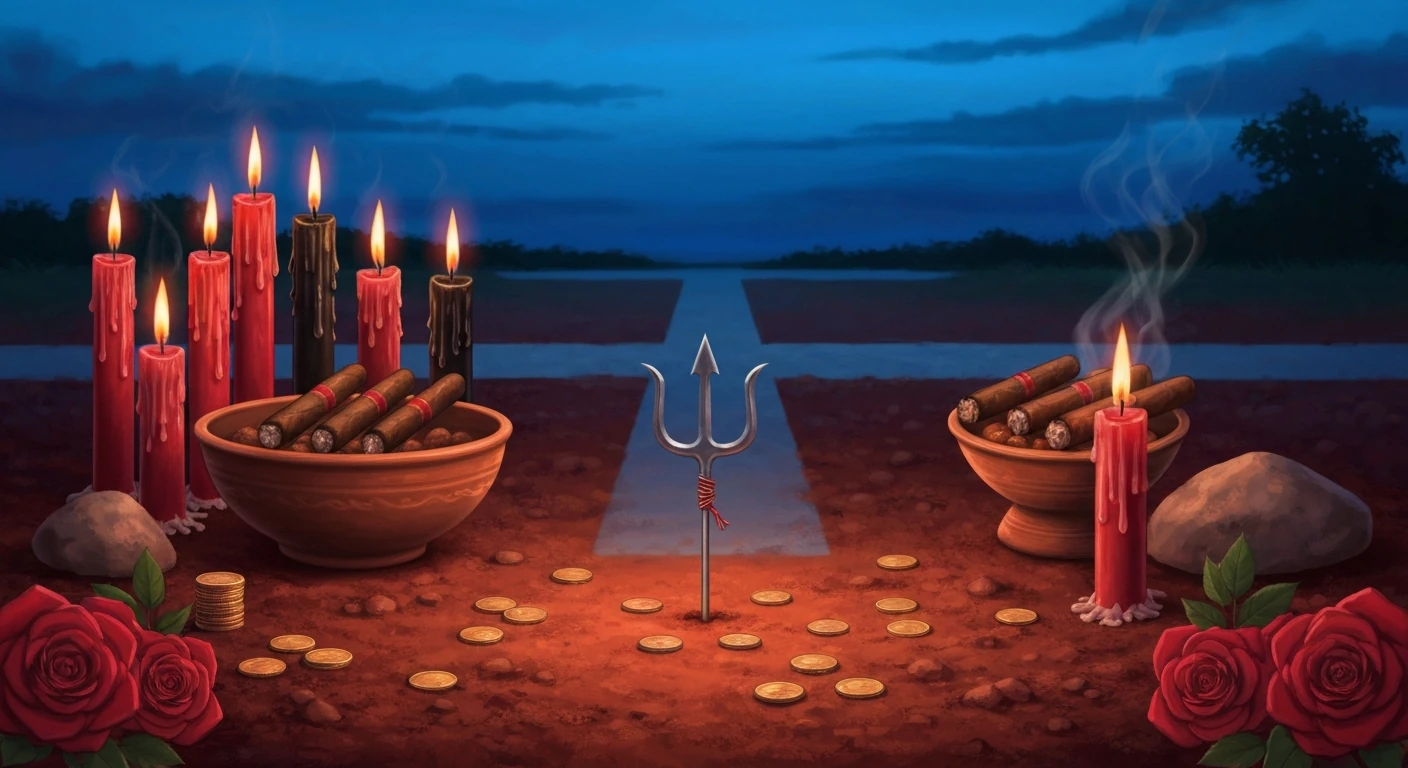
The most traditional offerings include seven red roses, marafo (cachaça), candles, a cigar and, in some houses, a satin skirt and a mirror. Everything is delivered on site and in the way the leader instructs, never on one's own. Those who like to work with flowers can also learn about the rose as the flower of Pombagira.
Greeting: “Laroyê, Dona Maria Mulambo!” This is how one greets the pombagira and the povo de Exu, with respect and joy for the arrival of the spirit in the gira.
Maria Mulambo in Umbanda and in Quimbanda
Maria Mulambo appears in both traditions, and it is worth understanding the difference without mixing them. In Umbanda, she arrives in the gira of the Pombagiras to provide consultation, spiritual pass, and counsel, within the spiritual charity liturgy of the house. It is the most welcoming and supportive face of her ritual work.
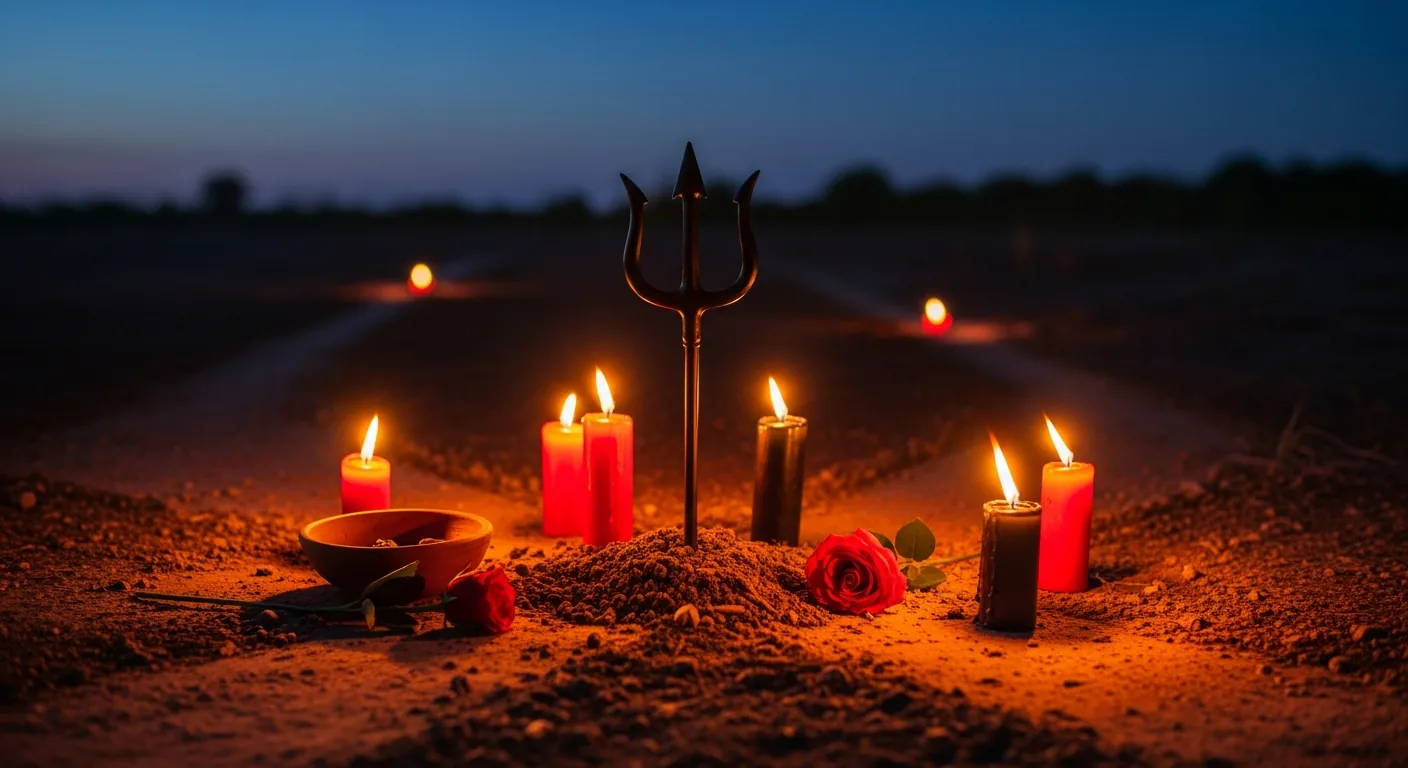
In Quimbanda, Maria Mulambo is worshipped within its own system of kingdoms and spiritual legions (falange), with foundations, points drawn on the ground, and specific obligations. It is an autonomous tradition, with a structure different from Umbanda, even though the two touch. To understand this universe, it is worth knowing the kingdoms of Quimbanda and the figure of Exu Tranca Ruas.
In both, what sustains the ritual work is respect. Maria Mulambo is not entertainment or a gamble: she is a spirit that establishes itself with faith, the guidance of those who have foundation, and the responsibility of those who seek her.
Frequently asked questions
Who is the pombagira Maria Mulambo?
Maria Mulambo is a spiritual legion (falange) of Pombagiras worshipped in Quimbanda and in Umbanda. She is a feminine Exu, linked to the marginalized, the poor, and women who have suffered. The name comes from “mulambo,” which means rag, and points to those whom society despised. She is a spirit of welcoming, cleansing, and life turning.
What is Maria Mulambo for?
Maria Mulambo works in spiritual cleansing, in undoing spells, in opening financial and emotional paths, and in counseling those who suffer for love. She guides and welcomes with frankness, pointing out the errors of the seeker without mincing words. She does not promise a miracle with a deadline, but rather a path and clarity.
What is the offering of Maria Mulambo?
The most traditional offerings are seven red roses, marafo, candles, a cigar and, in some houses, a satin skirt and a mirror. Her colors are red and black, with purple for the Maria Mulambo do Cemitério. The delivery must always follow the guidance of the house leader, never on your own.
What is the day and the colors of Maria Mulambo?
There is no fixed day for Maria Mulambo: the gira of Exu and Pombagira is on Monday or Friday night, and each terreiro chooses its own, as shown by Pombagira day. In Porto Alegre, Law 12.908/2021 marks July 7 as Pombagira Maria Mulambo Day, a municipal date. The colors most associated with her are red and black, and purple appears specifically linked to Maria Mulambo do Cemitério. The most remembered symbols are the mirror, the rose and the flared skirt.
Does Maria Mulambo do love binding ritual?
No. Contrary to what common sense imagines, Maria Mulambo does not do love binding ritual nor does she hold anyone by force. She guides those in love, helps undo spells and cleanses the love life, always respecting free will. A serious spirit does not manipulate another person's will.
Where to find items for Maria Mulambo
At Joia Mística Laroyê, you find what you need to consecrate your devotion to Maria Mulambo with respect to the foundation of your house:
- Candles in Pombagira colors: red, black and purple
- Statues of Maria Mulambo: for your sacred spot and your altar
- Bead necklaces and prayer beads: in Pombagira colors, for those with a connection to the line
- Cigars, mirrors and offering items: used in traditional devotion
- Herbs and incense: for baths and spiritual cleansing (descarrego)
Visit our physical store in Extrema, Minas Gerais and we ship to all of Brazil. For guidance on how to consecrate your devotion responsibly, and always with the guidance of the leader of your house, talk to us via WhatsApp.
References
- Wikipedia: entry about Maria Mulambo and her sub-falanges
- Cristiane Amaral de Barros, UFJF: Iemanjá and Pomba-gira, dissertation, 2006
- Porto Alegre: Law 12.908/2021, Day of Pombagira Maria Mulambo
- Terra: report about the Pombagira who protects couples in crisis