A bouquet of seven yellow roses placed on the damp stone of a waterfall for Oxum. Seven white ones returned to the sea on February 2nd, white dress wet by the surf, lit candle against the wind. Seven red ones at a clean crossroads, Friday after sunset, a glass of rosé sparkling wine and floral perfume delivered to Pombagira. Three scenes, three colors, three completely different forces and the same flower. This is the particularity of the rose in the Afro-Brazilian herbarium: no other herb changes orixá according to the color, and therefore none requires as much criteria when choosing. This article is the guide to getting the color right, understanding the tradition behind each one, and making the offering with clean axé.
The rule of colors: the core of this article
Most of the herbs in our herbarium have a fixed orixá. Rosemary is of Oxalá. Rue is of Ogum (Ogun) and Exu (Eshu). Basil is of Oxum. Wormwood is of Omulu. In all of them, the color is just one, or is a secondary detail. In the rose, color is everything because the color defines the regency.
| Color | Orixá or spirit | Energy | Ideal day |
|---|---|---|---|
| Yellow or golden | Oxum | Self-love, prosperity, sweetness | Saturday |
| White | Iemanjá and Oxalá | Devotion, peace, ancestry | Saturday (Iemanjá), Friday (Oxalá) |
| Red | Pombagira (left line) | Feminine strength, self-affirmation | Friday |
| Light pink | Delicate energy of Oxum, affective harmonization | Affection, tenderness, softening of conflicts | Saturday |
| Dark red or burgundy | Maria Padilha das Almas (spiritual legion of the Pombagiras) | Feminine justice, crossroads of the souls | Monday night or Friday |
| Mixed colorful | Greeting to Iansã (Oya) or open tribute | Movement, transformation | Wednesday |
The yellow rose in the waterfall is Oxum. The same flower, same botanical species, now red and at the crossroads, is Pombagira. The same white flower returned to the sea is Iemanjá. It is not the plant that changes, it is the vibration that each color carries within the Afro-Brazilian symbolic code. Therefore, buying roses for an offering is never a distracted purchase: the color is the prayer request.
Before any ritual, it is worth understanding who each of these forces is, and the spirit that carries the most stigma is the one that requires the most care when speaking.
Who is Pombagira (and why this section cannot be skipped)
Pombagira is not an orixá. Pombagira is a female spirit of the left line in Umbanda, a guardian, a spiritual worker, a counselor. The name comes from the Kimbundu Pambú Njila, which means "guardian of the paths and crossroads," worshipped in the Bantu nations of Angola and Congo before arriving in Brazil through the hands of the enslaved people.
Pombagira is not a demon. This association is an imposition of Christian demonization since the colonial period. The sociologist Reginaldo Prandi, from USP, in the study Pombagira and the unconfessed faces of Brazil, shows how she became a symbolic projection of a femininity repressed by Judeo-Christian morality. For this reason, she received the label of "dangerous," when in reality she performs a protective function, especially for women in vulnerable situations.
The left line is not the line of evil. Umbanda organizes its spirits into right (caboclos, pretos-velhos, children) and left (exus and pombagiras). Left deals with what is more earthly, more dense, more urgent: relationships, money, liberation from vices, protection against aggressors. Left means proximity to the material plane, not evil.
And Pombagira is not just one. It is a category that gathers various falanges:
- Maria Padilha the best known, with subdivisions such as Maria Padilha das Almas, das Encruzilhadas, and do Cabaré. She is not the only Pombagira, she is one of them.
- Pombagira Cigana wandering energy, linked to freedom and travels.
- Pombagira Sete Encruzilhadas or Rosa Vermelha: falanges among the most sung in Umbanda pontos (sacred songs).
- Maria Mulambo humility, abandonment, justice for the forgotten.
- Pombagira Menina young energy, combative sweetness.
Pombagira does not work love binding ritual (amarração). She does not steal anyone from anyone. She does not force a man to return. What she does, according to serious terreiros, is to liberate women from unhealthy relationships, to restore self-esteem to those who lost themselves, and to open paths for healthy love starting with self-love. Asking Pombagira to dominate another person is not tradition, it is sensationalism.
That being said, the flower that most represents her is the red rose, and understanding why involves recognizing the universal history of this flower before it reached the terreiro.
From Persia to the terreiro: the rose as a universal symbol
The rose is one of the oldest flowers in human symbolic culture. Fossils indicate wild rose bushes over thirty-five million years ago, and domestic cultivation is at least five thousand years old. Each culture projected a meaning onto it and was carried by this millennial layer that the rose arrived in Brazil with double potency: ancestral feminine strength and sacred love.
In Ancient Egypt, the rose was consecrated to Isis, mother goddess of waters and magic. Cleopatra covered entire halls with petals. In the Persian Empire, the first distillation of rose oil (the attar) sacred perfume of the Sufis, a symbol of divine love, emerged. In Rome, Greeks and Romans crowned brides with roses, the root of our wedding bouquet.
In medieval Christianity, the white rose became a symbol of the Virgin Mary and the red one of the blood of Christ. Devotion to Saint Rita of Cascia, the saint of impossible causes, arrived in colonial Brazil linked to the miracle of the roses that bloom in winter. When the people of santo consolidated Umbanda in the first decades of the 20th century, the rose entered the herbarium with force. Due to its versatility of colors, it was absorbed in multiple fronts of the pantheon: the yellow for the sweetness of Oxum, the white for the vast motherhood of Iemanjá and the peace of Oxalá, the red for the feminine strength of Pombagira. It is no exaggeration to say that the rose is the most used flower in Umbandista terreiros in Brazil, alongside the carnation and the sunflower.
When to use each rose
Each color requires a context. A red rose is not given at the waterfall of Oxum, and a yellow rose is not given at the crossroads of Pombagira. Getting the color wrong is like delivering a letter to the wrong address: the gesture loses its strength, and in some cases, it can even create noise in the vibration of the ritual work.
Yellow rose for Oxum. Seven fresh yellow roses at a waterfall or river of clean water, on Saturday morning. Typical prayer request: self-love, sweetness for oneself, fertility (of projects, of affections, of the womb), prosperity in what is requested, lightness. Accompanied by a yellow candle and, if possible, a little honey.
White rose for Iemanjá. Seven white roses in the sea, on any Friday or Saturday of devotion, and especially on February 2 (Iemanjá Festival in Rio Vermelho, Salvador) and December 31 (New Year's Eve in Rio de Janeiro). Typical prayer request: peace, gratitude, family protection, welcoming during a phase of mourning or loss. In a location without sea, a river or large lagoon also receives them.
White rose for Oxalá on the altar. Bouquet of white roses on the home altar, Friday, next to a white candle. Devotion, balance of the ori, peace in the home.
Red rose for Pombagira. Seven red roses on Friday after sunset, at a clean crossroads or at a fixed point in the terreiro with permission from the mãe or pai-de-santo. Accompanied by a glass of rosé sparkling wine or champagne, a striking floral perfume, a red and black candle. Typical prayer request: feminine self-affirmation, strength to set boundaries, liberation from an abusive relationship, opening of paths for healthy love.
Light pink rose for harmonization. Bouquet of three to five light pink roses in a vase in the living room or bedroom, to soften domestic conflicts, tenderness between those who already love each other, affective reconnection without manipulation.
Bordeaux rose for Maria Padilha das Almas. Firm ritual work, under the guidance of a mãe or pai-de-santo. Not recommended for beginners alone, because the falange of the Almas requires firm mediumship and the ritual context of the house.
Caution with pesticides: roses from commercial florists usually come loaded with chemical pesticides. Brazilian legislation allows pesticides in ornamental flowers that are prohibited for vegetables; after all, nobody eats a rose. But in a ritual bath, the skin receives it; in an offering, the orixá receives a poisoned flower. For baths and any more intimate ritual, prefer a rose from your garden, an organic market, a farm, or an artisanal producer. If the only option is the florist, wash well with water and vinegar before using.
Recipe: ritual bath of seven yellow roses for Oxum
This is the classic ritual bath of self-love and self-esteem in Umbanda. It is not to "attract a person" it is for you to find yourself again with your own sweetness, and from there walk with axé.
What you will need
- 7 fresh yellow roses, pesticide-free
- 1 liter of mineral or spring water
- 1 tablespoon of pure honey (optional, but traditional)
- 1 clean pot, dedicated to spiritual baths if possible
- 1 yellow candle (optional, to light while preparing)
Preparation
- Boil the liter of water over medium heat.
- Turn off the heat and add only the petals of the seven roses; discard the centers carefully, returning them later to running water.
- Cover the pot and let it rest until the water becomes lukewarm, about fifteen to twenty minutes.
- Add the honey and stir with your right hand, giving thanks: “Ora yeyê ô, Mãe Oxum, bring your sweetness to me.”
How to use
- First take your normal hygiene bath with soap. The herbal bath is later, over the already clean skin.
- Standing up, pour the rose water from the neck down, slowly, feeling the lukewarm temperature on your skin. The head (ori) does not receive an herbal bath without guidance from a Pai or Mãe-de-santo.
- Visualize your prayer request: self-esteem, self-love, sweetness in your relationships, lightness in your days. You can speak out loud or in your thoughts.
- Do not rinse. Let the body dry naturally, or dry without rubbing with a clean white or yellow towel, only touching lightly.
- Collect the used petals and take them to a waterfall or river Oxum receives in fresh water. In an urban environment without access, a houseplant pot from your own home is an alternative accepted by many houses. Petals used in ritual will never go into the common trash.
“Ora Yeyê ô! Mother of fresh waters, mother of gold and honey, I receive your axé and deliver what weighs on me. May I love myself with your sweetness.”
Variation: offering of seven white roses for Iemanjá
Bouquet of seven fresh white roses, one lit white candle, a little white basil if available. Deliver to the sea on a day of devotion, on February 2 or December 31. Walk barefoot to the shore, speak with the mother, thank, ask. Return the flowers to the surf Iemanjá receives in salt water. In a place without sea, a river or fresh water lagoon is also accepted by many umbandista houses.
Variation: offering of seven red roses for Pombagira
Seven open or almost open red roses, never in bud, a glass of rosé sparkling wine or champagne, a striking floral perfume, a lit red and black candle. Deliver at a clean crossroads on Friday after sunset, or at a fixed point in the terreiro with permission from the mother or pai-de-santo. Prandi records open red roses, “never buds”, and Cristiane Amaral de Barros, at UFJF, explains that the bud symbolizes purity and virginity and that the roses go without thorns. If your house does it differently, follow the house. The rest of the offering is in offering for Pombagira.
Speak with respect, thank before asking, ask with clarity and never ask to dominate another person. Pombagira liberates, she does not bind.
Rose, clove or jasmine: which to use in each case
| Flower | Main function | When to use |
|---|---|---|
| Rose | Love and devotion | Self-love offering, devotion to Oxum/Iemanjá/Pombagira, harmonization |
| Clove | Protection and courage | Defense against the evil eye, home protection, firmeza |
| Jasmine | Ethereal energy, environment | Peace smoke cleansing (defumação), scenting the room, meditation |
The rose is a terrestrial offering flower that goes to the water, to the altar, to the skin in a ritual bath. The carnation is for protection, more combative. The jasmine is more subtle, works the environment without a direct offering. When the prayer request is love (self-love or shared) or devotion, rose is the answer. When it is protection, carnation. When it is peace in the space, jasmine.
Within Oxum herself, the yellow rose and the basil have complementary functions: the rose is a visual offering and a sweet ritual bath, while the basil is a more active bath for attraction and welcoming. To get to know the orixá of fresh waters better, see our complete guide of the Orixás and the complete herbarium at /ervas.
Religious dates: faith, not tourism
The February 2nd in Salvador is the main day of Iemanjá in Brazil, with the Rio Vermelho procession recognized as Cultural Heritage of the city. The December 31st in Rio de Janeiro takes crowds dressed in white to the beach, with bouquets of white roses offered at the turn of the year.
These are dates that gain media visibility and tend to be treated as a popular festival or tourist event. It is worth remembering: these are religious dates of the Candomblé and Umbanda calendars. The offering of a white rose on those nights is an act of faith, not for a selfie. Going to the sea on those days with a flower in hand is entering a collective ritual: whoever participates takes part in a public prayer of centuries.
Other key dates for the rose in the Afro-Brazilian calendar: December 8th (Oxum, syncretized with Our Lady of the Conception), Friday (Oxalá, Pombagira, left line) and May 22nd (Saint Rita of Cascia, day of the blessing of the roses in integrated popular Catholic devotion).
Frequently asked questions about the rose
What is the rose for each orixá?
Yellow rose for Oxum. White rose for Iemanjá and Oxalá. Red rose for Pombagira (spirit of the left line, not orixá). Light pink rose for delicate emotional harmonization. Bordeaux rose for Maria Padilha das Almas, under house guidance.
Why are seven roses offered?
Seven is a number of movement, crossroads, and completeness in Umbanda axé. It is associated with the Seven Lines, the Seven Crossroads, and Iansã herself. Some houses work with nine for Iemanjá. Always check with your Pai or Mãe-de-santo.
Can I offer a rose with thorns to Pombagira?
Yes. The rose with thorns is traditionally accepted by Pombagira: the thorn is a symbol of strength and protection, part of the entity's nature. In specific ritual works, some houses remove the thorns as a gesture of delicacy. Both practices exist; follow your house.
What to do with the petals after the ritual bath or offering?
Return them to running water: river, waterfall (for Oxum), sea (for Iemanjá). In an urban environment without access, a houseplant in your own home is an accepted alternative. Never put them in common trash: petals used in ritual carry the vibration of the ritual work and deserve respectful disposal.
Who is Pombagira in Umbanda?
A female spirit of the left line: guardian, spiritual worker, and counselor. She is not an orixá and is not a demon. She works alongside the guardian Exus and has a special function of feminine protection and liberation from unhealthy relationships. More on the theme in Wikipédia Pombajira and in the study by Reginaldo Prandi cited above.
Where to buy roses, candles, and feminine items
At Joia Mística Laroyê you will find:
- Yellow candles for Oxum, white for Iemanjá and Oxalá, red and black-red for Pombagira
- Statues of Oxum, Iemanjá, and Pombagira for a home altar
- Ready-to-use Oxum ritual baths prepared with axé by Mãe Joice Mística
- Feminine tarot decks and items of spiritual femininity
- Rose scented waters to spray on the altar and in environments
- Fresh and dry herbs from the house's complete herb garden
Visit our shop in Extrema-MG (R. Benedito Zingari, 460). For questions and direct service, talk via WhatsApp.
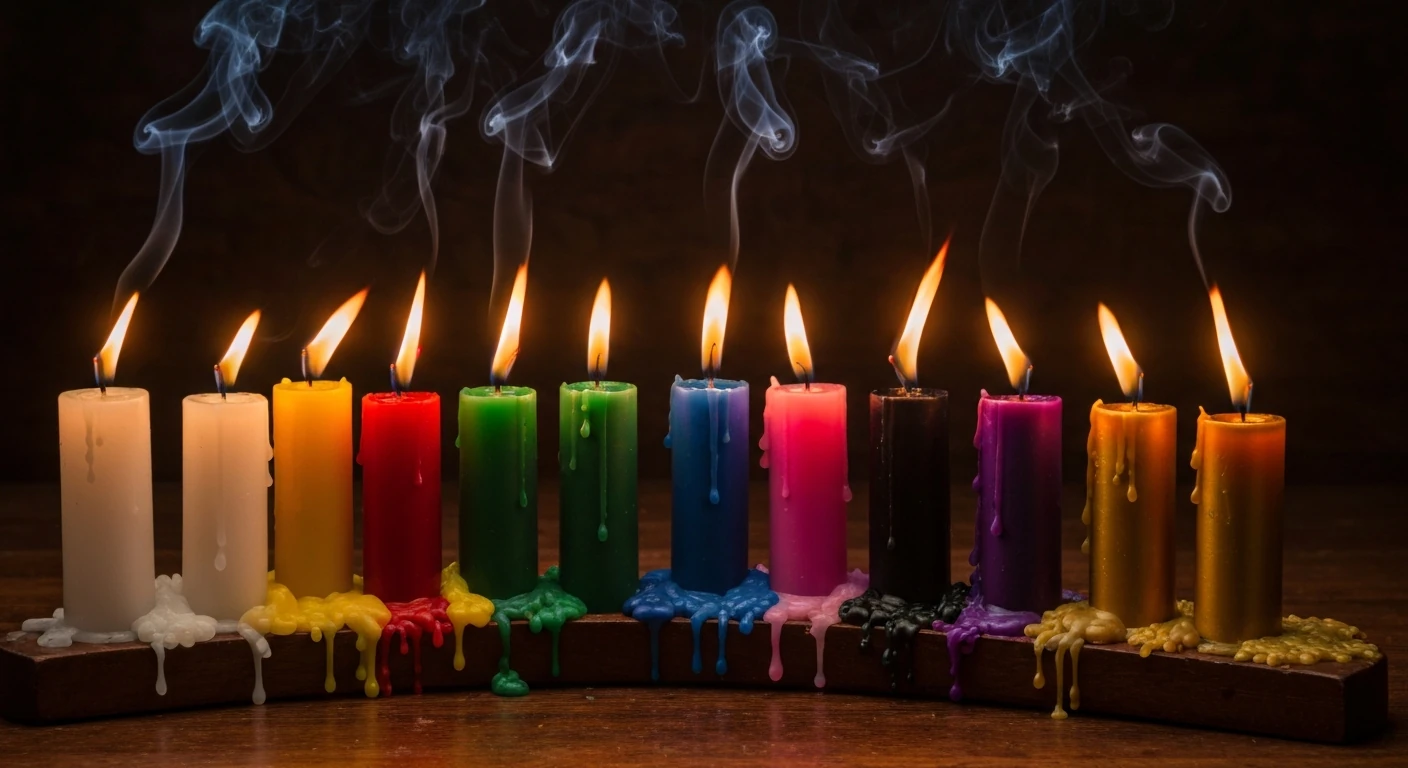
See also our complete guide on ritual candles and the meaning of colors knowing which candle color accompanies each rose color is the second natural step after learning the rule of the roses.
Hail quitanda. Ora yeyê ô for Oxum. Odoyá for Iemanjá. Laroyê for Pombagira.
References
- Reginaldo Prandi (USP): Pombagira and the unconfessed faces of Brazil
- Wikipedia: entry about Pombajira
- Cristiane Amaral de Barros, UFJF: Iemanjá and Pomba-gira, dissertation, 2006