They say a child of Iemanjá has the calm and strength of the sea, the instinct of a mother, and the stature of a Queen. The characteristics attributed to children of Iemanjá are among the most sought after when the subject is orixá, and the fame is justified: the Queen of the Sea is the Great Mother, owner of one of the most imposing archetypes of the pantheon. But it is worth understanding this portrait with care, because it inspires much more than it defines.
This article presents the archetype of Iemanjá, the physical and personality characteristics linked to her children, the influence of the second orixá and, mainly, how one actually discovers someone's head orixá. Without horoscopes, without self-tests, with respect to tradition.
The archetype of Iemanjá
Before the characteristics, it is necessary to understand the idea of archetype. The researcher Reginaldo Prandi, following Roger Bastide, popularized the reading that each orixá corresponds to a symbolic pattern of temperament, a tendency that inspires, for example, the personality of its children. It is a key for reading, not a sentence.
The Queen of the Sea is the Great Mother, lady of the salt waters, of motherhood, of family, and of protection. Tradition calls her the mother of almost all orixás. And there is an image that summarizes her archetype well: that of the sea. On the outside, vastness, calm, and horizon. On the inside, deep currents, immense power, and mystery. And, when it revolts, a force that nothing contains.
Here a distinction is important. If Oxum is the river of fresh water, of sweetness and gold, Iemanjá is the salt sea, of royalty, of motherhood, and of depth. They are two mothers, but of different natures, and confusing one with the other is losing what each archetype has of its own.
Keep this in mind from beginning to end: an archetype is a symbolic tendency, not a horoscope. No one is a cliché, and free will, life history, and upbringing weigh just as much as the head orixá.
The characteristics of the children of Iemanjá
The most cited characteristics of the children of Iemanjá revolve around motherhood, dignity, and calmness. But pay attention: they are generalizations of tradition, symbols of what the orixá represents, and not a composite sketch of every person.
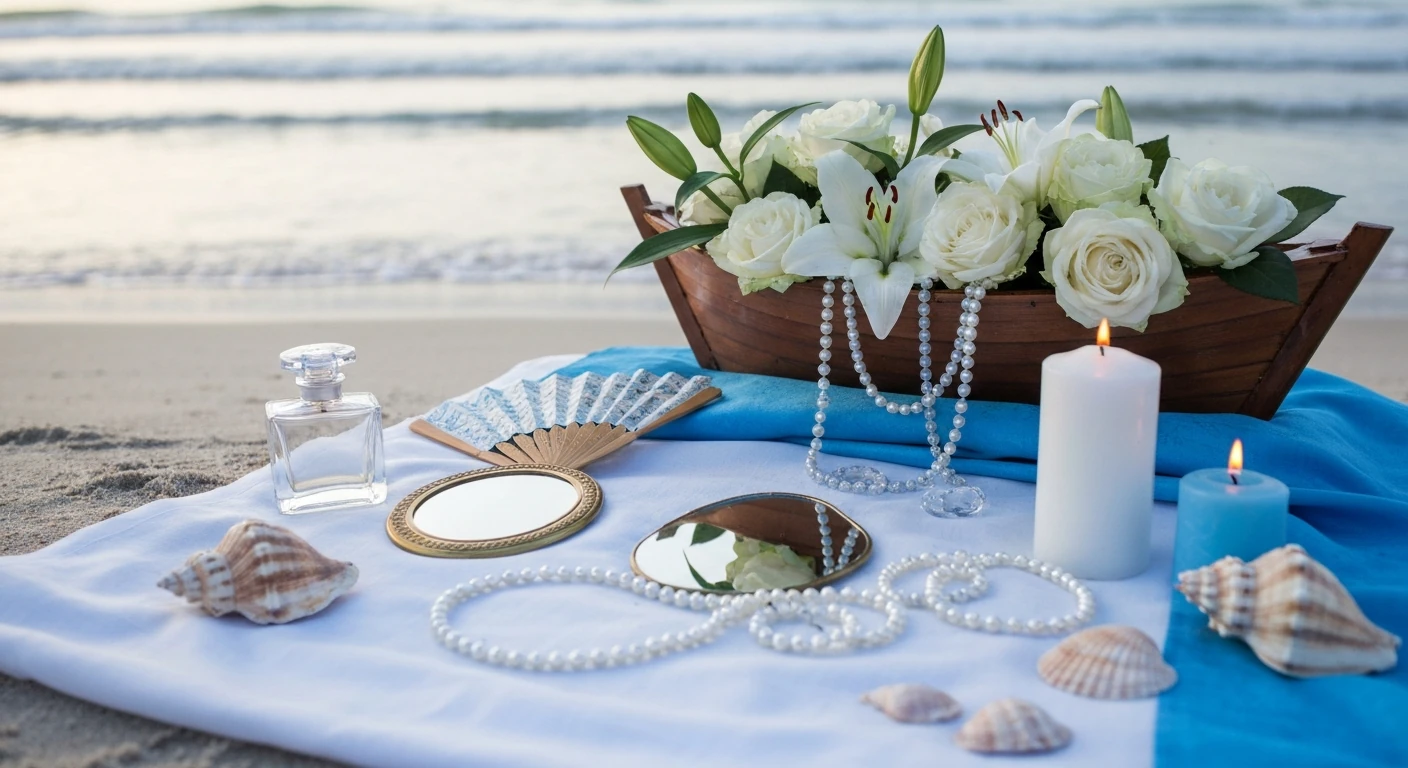
In terms of appearance, people speak of an imposing stature, a maternal presence, and an air of a Queen, in addition to a taste for cleanliness and the colors blue, white, and silver. All of this is, in fact, the symbolism of Iemanjá's royalty and the sea manifesting, not a rule about bodies or faces.
It is in personality, however, that the archetype appears with more clarity. And here it is worth looking at both sides, the light and the shadow, as with any human being.
Personality: light and shadow
Every archetype has a luminous side and a side to work on. Reducing the children of Iemanjá only to virtues, or only to flaws, would be unfair. And it is worth remembering that these traits apply to both men and women, and that no one possesses all of them.
On the side of light, these usually appear:
- Maternal and protective instinct: they are the safe harbor for those they love, always ready to care for and support.
- Welcoming and loyalty: generous, loyal, and faithful to the family, with a strong sense of responsibility.
- Emotional strength: a stability and dignity that inspire respect and trust.
- Calmness and mediation: the serenity of someone who soothes conflicts and offers a shoulder to lean on in difficult times.
On the shadow side, there are tendencies to balance, never character flaws:
- Possessiveness and overprotection: the desire to keep everyone under one's wing can suffocate.
- Jealousy and control in relationships, with difficulty dealing with disappointment.
- Pride and stubbornness, a certain attachment to one's own position and one's own way.
- Melancholy when contradicted, attachment to the past and difficulty forgiving a hurt.
Each of these shadows is the reverse of a light. The same protection that sometimes suffocates is the one that welcomes and saves. The same heart that is deeply hurt is the one that loves with loyalty. Working on the archetype is precisely making the light prevail.
The juntó and the qualities of Iemanjá
Here is the key to understanding why two children of Iemanjá can be so different from each other. No one is Iemanjá in a pure state.
Every person has a primary orixá, the owner of the head, and a second orixá, called an adjunct or juntó, which forms a pair with the first and modulates the temperament. A person of Iemanjá with Ogum (Ogun) as juntó tends to be more combative; with Oxum (Oshun), sweeter and more affectionate; with Oxalá (Obatala), more serene. These are examples of the concept, not a fixed table.
Furthermore, the orixá herself has several qualities, different paths within Iemanjá, recognized in tradition. There is Iemanjá Ogunté, the warrior who lives where the wave hits the rock, linked to Ogum; Iemanjá Assabá, the oldest spinner; Iemanjá Assessu, linked to pregnancy. Each quality gives a different tone to the archetype, and the names vary greatly from house to house. This is why the generic portrait never captures a real person.
How to work on the archetype of Iemanjá
The good news is that the archetype is not a prison. It is more of a mirror than a destiny. Recognizing your own tendencies, of light and of shadow, is the first step to growing with them, and not being carried away by them.
Those who carry the maternal instinct of Iemanjá can make it a source of care and generosity, while learning to give space and to trust, so that protection does not turn into control. Those who have the strength of the sea can use it as firmeza and welcoming, without letting pride or hurt harden the heart. The sea itself teaches: it is immense and powerful, but it also knows how to welcome those who surrender to it.
On the path of axé, this is what is done in a terreiro: polishing who you are, with the help of the orixá and the community. Therefore, the archetype should never serve to label anyone, nor oneself. It is an invitation to self-knowledge, always accompanied by respect, faith, and the guidance of those who care for the house.
How to know if you are a child of Iemanjá
Perhaps you recognized yourself in much of what you read. If so, keep this point, which is the most important of all: identifying with the archetype does not mean being a child of Iemanjá.
A person's head orixá can only be defined in one way: by the jogo de búzios, performed by a pai or mãe de santo, within a serious house. One does not discover the orixá by date of birth, by zodiac sign, by internet tests, or by self-identification with a list of characteristics. Those who associate Iemanjá with the sign of Pisces, for example, are mixing things that do not mix. To understand the right path, see how to know what your orixá is.
The tradition itself links Iemanjá to the formation of the ori, the spiritual head, a serious and foundational theme. View what you read here as an invitation to seek a house, and not as a conclusion about you. And to get to know the Queen of the Sea and her festival better, see the Day of Iemanjá.
Frequently asked questions
What are the characteristics of the children of Iemanjá?
The tradition associates the children of Iemanjá with maternal instinct, welcoming, loyalty, dignity, and calmness, with an imposing stature of a Queen. These are symbolic tendencies of the Great Mother archetype, the Queen of the Sea, and not a literal description of each person. The side to work on includes possessiveness and jealousy.
How to know if I am a child of Iemanjá?
The only safe way is cowrie-shell divination, performed by a Pai or Mãe de santo in a house of fundamento. The head orixá is not defined by date of birth, zodiac sign, or internet tests. Identifying with the characteristics of Iemanjá is only an invitation to seek a serious terreiro, never a conclusion.
How is the son of Iemanjá in love?
In affection, he tends to be dedicated, loyal, and protective, valuing family and stability. The side to work on is possessiveness and jealousy, which arise from a strong desire to care. As with everything, this is a tendency, not a rule, and the person's second orixá greatly influences this behavior.
What are the qualities of Iemanjá?
Iemanjá has various qualities, or paths, which vary according to the house and the nation. Among the best known are Ogunté, the warrior linked to Ogum, Assabá, the oldest spinner, and Assessu, linked to pregnancy. Each quality gives a different tone to the archetype of the orixá.
Is Iemanjá the same thing as Oxum?
No. Both are iabás of the waters, but they are different. Oxum reigns over the fresh waters, the rivers, and the waterfalls, linked to sweetness and gold. Iemanjá is the lady of the sea, of the salt waters, linked to motherhood and royalty. Each has her own archetype and her own domain.
Where to find items for Iemanjá
At Joia Mística Laroyê, you find what you need to honor the Queen of the Sea:
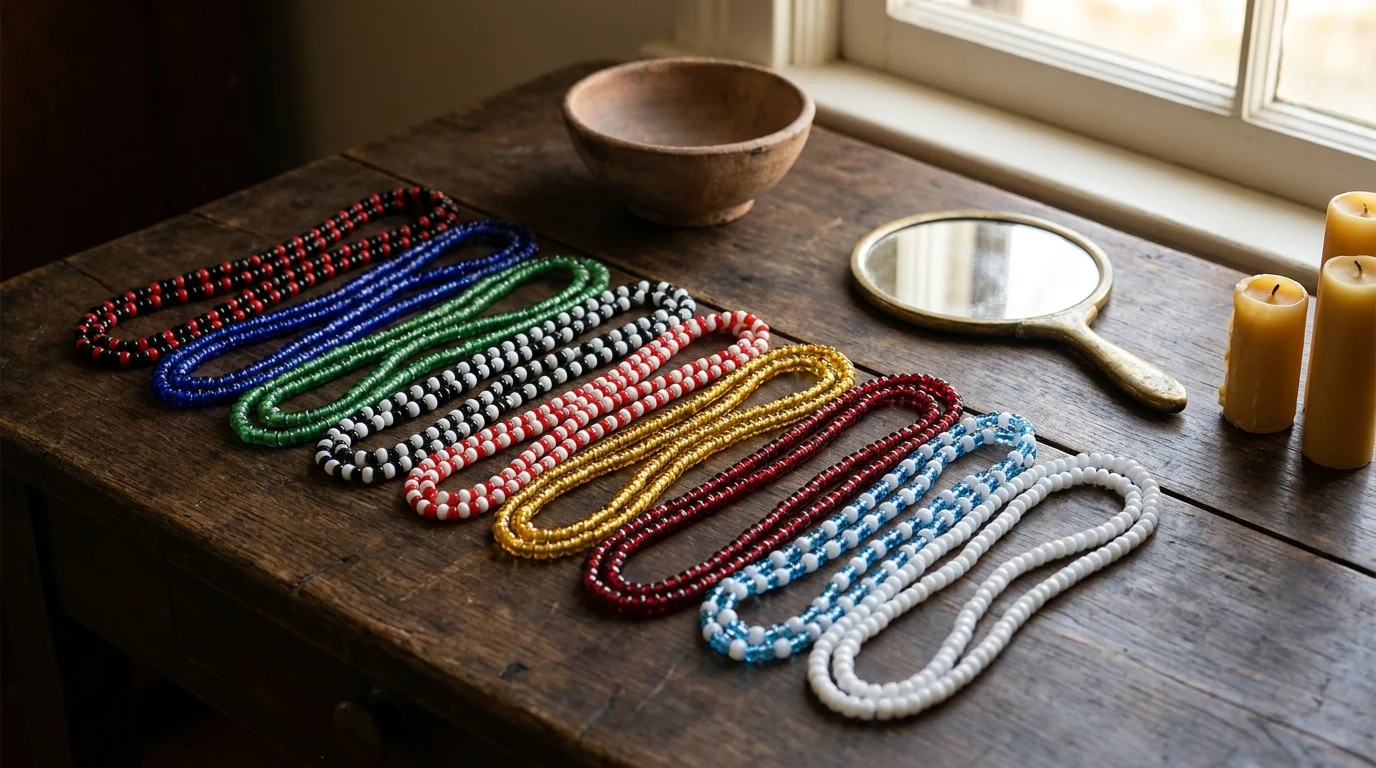
- Blue bead necklaces (guias), beads and crystals: the colors of Iemanjá
- Statues and abebês: for your altar
- Blue and white candles: for prayers and offerings
- Flowers and perfumes: traditional items for the agrado (offering)
Visit our shop in Extrema, Minas Gerais or talk to us via WhatsApp and we ship all over Brazil.
References
- Reginaldo Prandi: Mythology of the orixás, USP
- Wikipedia: entry about Iemanjá
- Candomblé: qualities and paths of Iemanjá