The new year ritual in the terreiro begins with thanks: first, one thanks the orixás and spirit guides for the year that is ending, then one asks for protection and prosperity for the next. Next come the cleansing of the house and the body, the candles, the water, and the white clothing. The game and the obligations remain with each house.
The terreiro new year ritual, step by step
The script for the turn that the houses describe follows a simple order: give thanks, cleanse, light, deliver, and dress. Each step comes from a terreiro practice, and none of them depend on a folk charm.
- Give thanks for the year. Before any prayer request, give thanks to Oxalá, Iemanjá (Yemoja), Oxum (Oshun), to your orixá, and to your spirit guides for what the year brought.
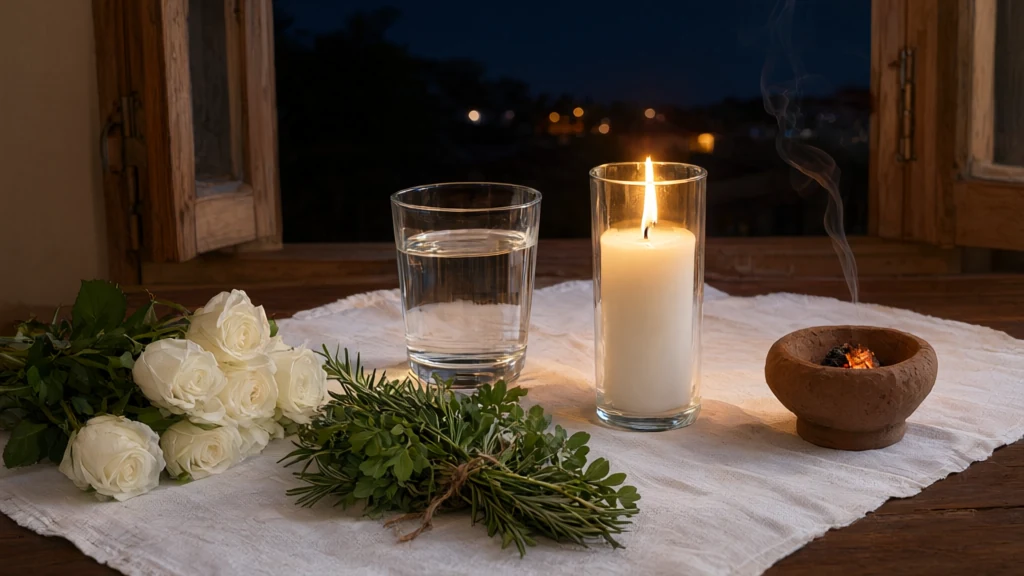
- Smoke cleanse the house. The smoke passes through all rooms, doors, and corners, as in the opening of a gira.
- Take the herbal bath. The scented bath comes before the turn, from the neck down.
- Light the candle. The white candle, which in the terreiro serves any entidade, goes to the Guardian Angel or to Oxalá.
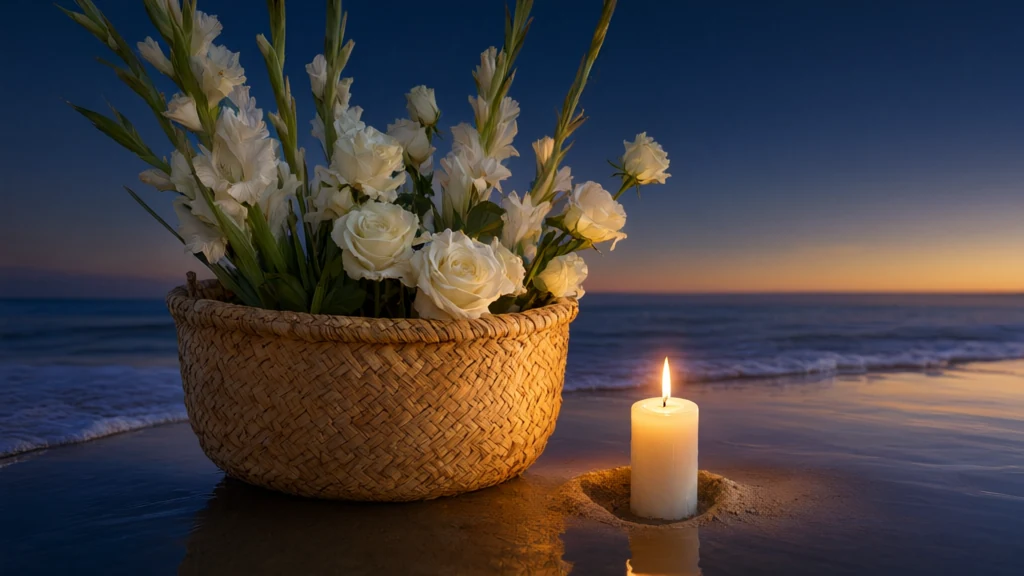
- Give flowers to the water. Those who go to the sea take flowers and perfume to Iemanjá, without plastic or glass.
- Wear white. For a babalorixá heard by Alma Preta, the white of the turn is peace and purification, linked to Oxalá.
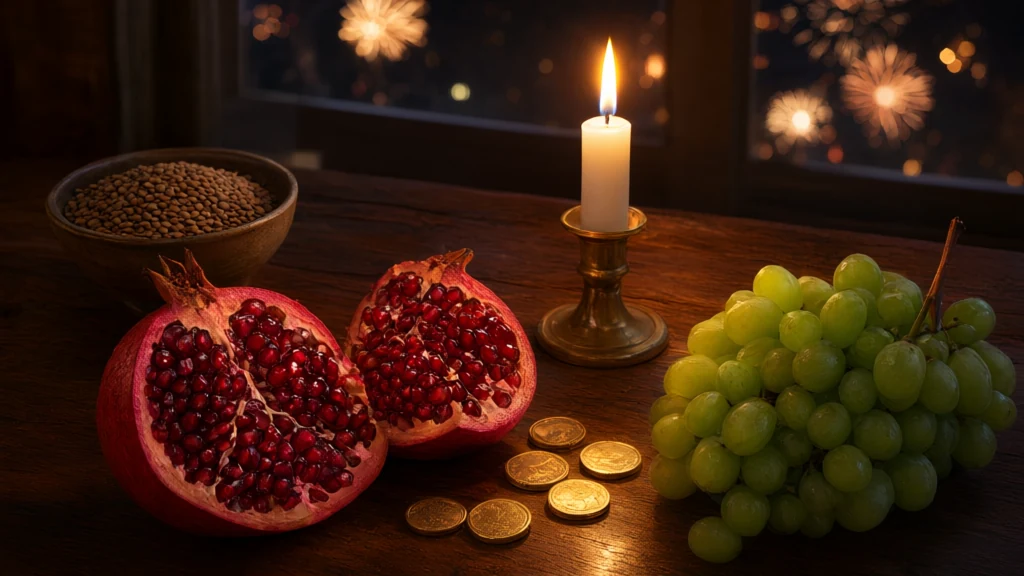
Table rituals, such as pomegranate, grapes, and lentils, are popular customs. They are in New Year's rituals and are not part of the terreiro rite.
How to thank for the year that passed?
To thank for the year that passed, do as the houses do on the turn. Name those who took care of you and thank them before asking. Mãe Baiana de Oya, from Candomblé, described to Correio Braziliense the turn of the year as a ritual of thanks to the entidades for the blessings of the previous year.
“This period is seen as a moment of renewal, reflection, and celebration of the divinities.” Mãe Baiana de Oya, to Correio Braziliense
Rafael Moreira, president of the Federation of Umbanda and Candomblé of Brasília and Entorno, said the same: New Year's is closing and restarting, and it is time to “thank for the blessings received.” At Prainha dos Orixás, in Brasília, the New Year's Eve begins with the Entardecer dos Ojás. Participants tie white cloths on the trees, and Bábà Joel de Osàgíyan speaks of thanking Oxalá, Iemanjá, and Oxum and asking for strength from the orixás.
At home, the thanks can be a prayer before the candle, spoken in your own words. A ready prayer is in prayer for the new year. Professor Juarez Xavier, from Unesp, summarizes the expectation of the date: to renew the axé, to have energy for the challenges of the year.
End of year cleaning: smoke cleansing of the house and herbal bath
The spiritual cleansing of the end of the year has two parts: the house, with smoke cleansing, and the body, with herbal bath. Both come before midnight. This is how one enters the new year clean.
Smoke cleansing the house on New Year's Eve
In the Umbanda terreiro studied by Pedro Carlessi, in São Paulo, smoke cleansing is the first act of opening the ceremonies. Dried herbs go over glowing charcoal, and everything is smoked: images, rooms, doors, and corners of the walls. For the Umbandistas of the house, the smoke cleanses, discharges, and purifies.
On New Year's Eve, follow the same path at home, room by room, with charcoal, smoke cleansing incense blend, and the herbs that your house indicates. The order of the rooms and the herbs are in how to do smoke cleansing for cleansing. To know which smoke cleansing combines with your prayer request, there is the tool which smoke cleansing to do.
The scent bath before midnight
Mãe Cicera da Oxum, from Umbanda, spoke to the newspaper at the Prainha dos Orixás. There, she says, the group lights the candles and takes a "scent and herbal bath, before the turn." It is to "receive the new year with a clean heart." In Carlessi's research, the herbal bath washes the body from the neck down. Some, especially those of Oxalá, also go to the head. Bath on the head, only with the guidance of your house.
The recipes, with the herbs for each prayer request, are in new year bath. Bath herbs, lavender, and smoke cleansing incense blend are the materials for the night, and who says which to use is your house.
Which candle to light on New Year's Eve?
The candle that serves for everything on New Year's Eve is the white candle. A research conducted in terreiros of Belém records that, inside the terreiro, the color white can symbolize any action and any spirit, as it is neutral. Therefore, it serves for the gratitude to Oxalá, to the Guardian Angel, and to your orixá.
The Umbanda website Diário de Umbanda recommends lighting a white candle, or a 7-day candle, for the Guardian Angel at least once a week. It is, according to the text, a way to maintain a bond of closeness. New Year's Eve is a good time to start this habit.
The color of your orixá changes from house to house. Before buying a colored candle, check with your house and see the table in candle colors and their meanings. The 7-day candle lit on New Year's Eve requires care. Use a firm cup and keep it away from the curtain. Do not leave the house with it lit.
If you are in doubt about the candle or the herb that your house requested for New Year's Eve, Joice helps you check via WhatsApp.
What to take to Iemanjá on New Year's and what not to throw into the sea
Those who spend New Year's Eve on the beach take flowers and perfume to Iemanjá. Itaú Cultural lists flowers, perfume, rice, and costume jewelry among the gifts from devotees on December 31. Sociologist Reginaldo Prandi explains the logic: the tribute to the orixás is made with what is essential for life.
Plastic, glass, and styrofoam stay out of the water. Flowers go without plastic wrapping. At the Iemanjá festival in Salvador, fishermen from the Colônia de Pesca Z1 screen the offerings to separate what pollutes the sea. What to take, the seven waves, and what to do when the sea returns the gift are in Iemanjá on New Year's.
Away from the sea, New Year's Eve also goes to the edge of a river or a lake. "We need a location on the banks of a lake, a river, or the sea," said Mãe Cicera da Oxum. The night's clothing has its own test: what color of clothing to wear on New Year's.
What is the New Year's ritual in Umbanda and Candomblé?
In Umbanda, the best known New Year ritual is going to the beach dressed in white to greet Iemanjá. The gathering on the sands of Copacabana on the 31st was encouraged by Tata Tancredo Silva in the early 1950s. People would go in white, deliver offerings, jump seven waves, and make requests for prosperity. Some Umbanda houses closer to Christianity also celebrated Christmas.
And in Candomblé, what is done on New Year's Eve?
In Candomblé, the turn of the year is a renewal of life and cycles across the various nations. It is time to consult the jogo de búzios so that orixás (ketu), inquices (angola), and voduns (jeje) can guide the community. There are houses that perform initiations and obligations during this period. This stays with the house and there is no recipe for doing it alone.
The orixá that rules the year also emerges from this divination and applies to the house that performed it. Mãe Stella de Oxóssi (Oshosi), from Ilê Axé Opô Afonjá in Salvador, wrote that the ruling orixá revealed in her divination did not command the world, Brazil, or even Bahia. The names already announced are in ruling orixá of 2027, and the meaning of each color of the turn is in New Year colors.
Frequently asked questions
What to do on New Year's Eve at home?
Give thanks for the year before a white candle, fumigate the house room by room, and take a herbal bath from the neck down before midnight. Wear white for midnight. Those who are from a terreiro also follow what their house requested for the turn.
What is the end of year ritual in Umbanda?
The best known is going to the beach dressed in white on the 31st, bringing flowers to Iemanjá and jumping the seven waves, a custom from the 1950s. There are houses that light candles and take a ritual bath by the water. The calendar of giras belongs to each terreiro.
Can you perform a New Year ritual without being from a terreiro?
It is possible. Giving thanks, fumigating the house, taking a herbal bath, and lighting a white candle are gestures open to anyone. What remains with the house are the cowrie-shell divination, the obligations, and the initiation. No ritual guarantees the year: it marks the gratitude and the prayer request.
Does the New Year ritual attract money?
No terreiro practice promises money on New Year's Eve. The houses speak of asking for protection and prosperity after giving thanks for the year. Money folk magic, such as lentils and the note in the wallet, are popular customs, without an Umbanda or Candomblé ritual behind them.
References
- Correio Braziliense (2024): New Year's Eve at Prainha dos Orixás
- Alma Preta (2024): The end of the year for Candomblé and Umbanda
- Alma Preta (2024): Year-end traditions according to Candomblé
- Carlessi, Boletim do Museu Goeldi (2017): Ways, subjects, and affections
- Sena, Revista do IHGP (2020): The flame and the sacred forms
- Diário de Umbanda: Candles
- Itaú Cultural (2022): Copacabana New Year's Eve
- Agência Brasil (2023): New Year's Eve in Rio started with Umbanda
- Mongabay Brasil (2025): Sustainable Iemanjá Festival
- Mãe Stella de Oxóssi (2012): Ruling orixá