Mau-olhado is the belief that a look charged with envy, or even an exaggerated compliment, weighs on the one who receives it. It would take away the strength of the person, the child, the plant, or the business. To remove it, tradition uses benzedura, banho de descarrego, and defumação. To protect oneself, Umbanda and Candomblé guard the door of the house.
What is mau-olhado?
Mau-olhado is the evil that, according to popular belief, is born from a bad look. The word envy itself comes from the Latin invidere, which means "to see badly, with bad eyes." In a 1935 study by the USP Faculty of Law, the healers of São Paulo summarized it like this: mau-olhado is the cause, quebranto is the effect, and quebranto especially affects children.
The look that weighs does not come only from envy. Catholic-oriented benzedeiras separate the two evils: mau-olhado is born from envy, quebranto is born from "excess of love," that compliment poured too much over a beautiful baby. The Pitt Rivers Museum, at the University of Oxford, records three origins for the bad look: a compliment from anyone, the envy of someone who has "the eye," and divine jealousy.
The belief is ancient and spread throughout the world. The same museum points to one of the oldest mentions in a Sumerian text over 4,000 years old. Câmara Cascudo, in the Dicionário do Folclore Brasileiro, calls mau-olhado a "universal and millennial" belief, with names like mal occhio, evil eye, mal de ojo, and olho grande. In Brazil, scholars cited in a UEM research say that the belief arrived with the Portuguese settler. For them, Afro-Brazilian religion gave it the modes of healing seen today in the benzeção.
Signs of the evil eye (and when it is a case for a doctor)
The signs of the evil eye, in popular belief, are ailments that appear "without apparent cause" and suddenly: loss of vitality, lack of appetite, lack of energy, sadness, fatigue, apathy and poor sleep. In children, healers from Belém recognize quebranto by the "withered eye," by paleness, by headache and by the refusal of food.
Tradition also speaks of signs outside the body:
- plant that withers suddenly at the entrance of the house
- business that stalls after a good phase
- house pet down without reason
The belief recorded in Maranhão says that the evil eye can hit animals, plants and businesses, in addition to people.
Important warning: the same signs are symptoms of physical illness and emotional suffering. Fatigue that does not pass, sadness that lasts weeks, insomnia and a child with fever or not eating require a doctor or psychologist first. Spiritual cleansing goes hand in hand with treatment, never in its place.
The research on benzedura itself reminds us that quebranto and the evil eye are not clinically determined, and that is why the person seeks a diagnosis in religion. The two paths can walk side by side.
How to remove the evil eye?
To remove the evil eye, Brazilian tradition combines three resources: plants, blessing and folk charm. In practice, this becomes benzedura with a green branch, cleansing bath, smoke cleansing and, when the weight is great, the cleansing performed by a house of the orixás (casa de santo).
Benzedura with arruda or guiné
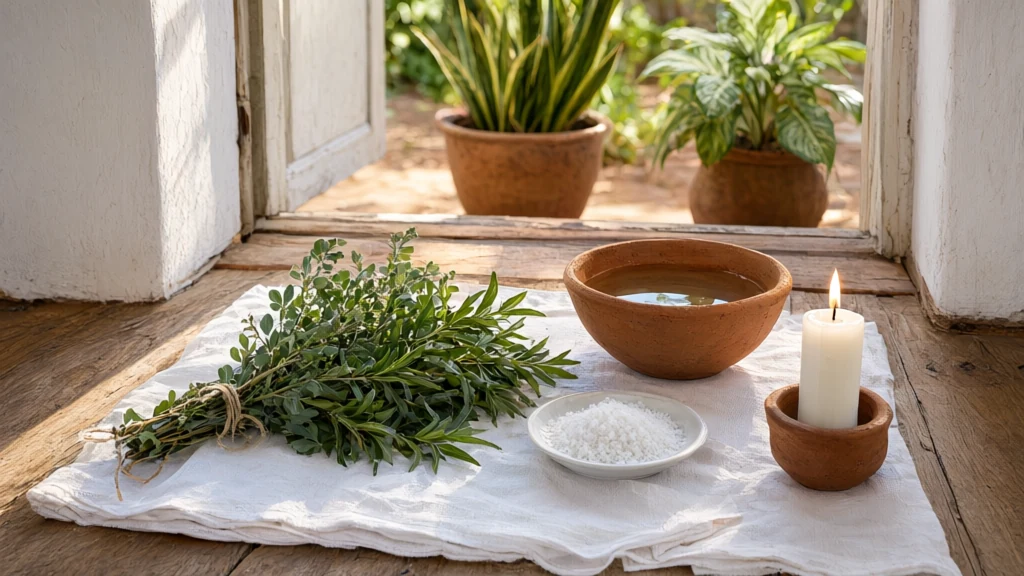
The folk healer (benzedeira) passes small sprigs of rue, guinea hen weed and rosemary over the person while praying, sometimes with a crucifix and candle. A 1935 record already spoke of the green leaf, "better rue or guinea hen weed," traced in a cross. In the northeastern backcountry, it is said that the sprigs wither at the end of the prayer, a sign that they pulled out the evil. The blessing is mostly from popular Catholicism, but in Maranhão, people take children to both folk healers (benzedeiras) and to fathers and mothers of santo.
Cleansing bath
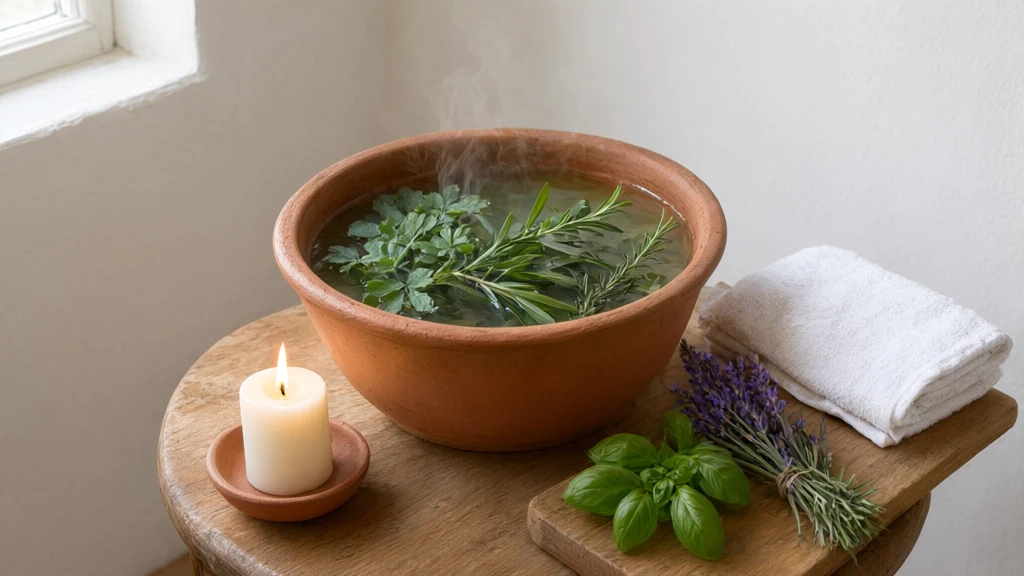
The hot herbal bath, from the neck down, is the cleansing that is done at home. Folk healers (benzedeiras) from Mato Grosso prescribe spiritual cleansing (descarrego) baths with rosemary, rue, guinea hen weed and dumb cane. The São Paulo federation of Umbanda and Candomblé warns that rue and other strong herbs "serve for spiritual cleansing (descarrego)" and asks for caution and guidance. The step by step, the herbs and the correct order are in the guide for the spiritual cleansing bath; rue and guinea hen weed have their own articles.
Smoke cleansing
The smoke of dried herbs cleanses the person and the house. FUCESP indicates for spiritual cleansing (descarrego) basil, rosemary, myrrh, lavender and rue. See how to do the spiritual cleansing (descarrego) smoke cleansing (defumação) on yourself.
Cleansing in the house of the orixás (casa de santo)
When the weight always returns, the cleansing goes into the hands of those who have fundamento. The sacudimento and the ebó are done by the house of the orixás (casa de santo), with guidance from the father or mother of santo, and are not improvised. In the shop in Extrema (MG), Joice performs spiritual cleansing and guides the correct bath and protection for each case; you can chat via WhatsApp.
How to protect yourself from the evil eye
Protection against the evil eye, in the Afro-Brazilian religion, follows the logic of the guarded door: what comes from the street passes first through those who guard the entrance. In a terreiro of Candomblé Ketu and Angola in Bocaiuva (MG), Ogum, Exu, and the Boiadeiro stay at the gate. Whoever arrives from the street arrives with a "dirty" body, and the house believes that these guardians "drain the negative energies".

Ogum is the orixá (orisha) who overcomes demanda. For the Terreiro de Umbanda Pai Maneco, he is the "Orixá of war, of demanda, and of the fight," who protects the weakest. Exu guards the paths and the entrance, and in Umbanda the tronqueira is the house of the guardians at the entrance of the terreiro. The firmeza of the guardians is a matter for the house of the orixás, not a do-it-yourself project.
Plants that ward off the evil eye
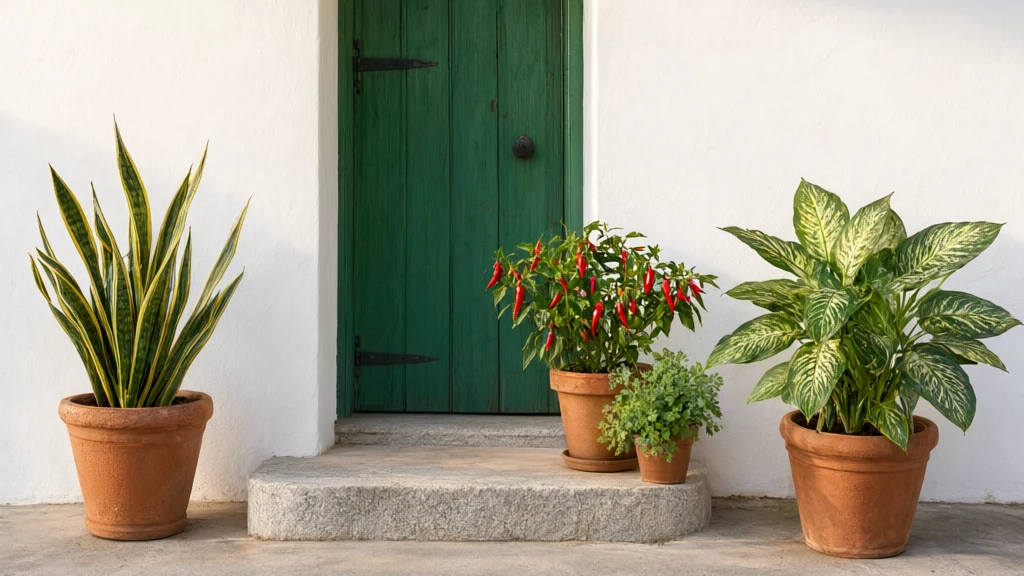
At home, protection begins in the pot at the entrance. Benzedeiras from Mato Grosso keep comigo-ninguém-pode, guiné, or arruda at the door to "ward off the evil eye," and the guiné goes along with the arruda in the pots at the door.
| Plant | Connection in Umbanda | What for |
|---|---|---|
| Arruda | all orixás, especially Ogum | combats envy and blocks bad energy |
| Guiné | Oxóssi (Oshosi) and Ogum | wards off the evil eye, used in smoke cleansing (defumação) and in the ritual bath |
| Comigo-ninguém-pode | Ogum and Iansã (Oya) | cleanses dense energy; toxic leaf |
| Espada de São Jorge | Ogum | a sword that cuts through demandas |
| Pinhão roxo | guardians Exu and pombagira | protects the entrance of the terreiro |
Comigo-ninguém-pode and guiné are toxic: do not eat the leaf, and the pot must be kept away from children and pets.
Figa, evil eye, and patuá
The figa is, in the 1935 registry, "the universal amulet," and the one made of guiné root was the people's favorite. The popular explanation is that it receives the first look and the bad discharge. The greek eye, made of glass and still manufactured in the Middle East, imitates an eye to attract the evil eye to itself and spare the owner. The patuá, however, is the cloth amulet consecrated in the terreiro.
Are evil eye and olho gordo the same thing?
In everyday speech, almost. Benzedeiras from Belém treat mau-olhado and olho gordo as "evils" of one person against another, and Cascudo puts "olho grande" among the names of the same evil. The difference is in the focus: those who speak of olho gordo usually think of the envy aimed at an achievement, such as a new house, a job, or a business. The signs and the protection of that achievement are in the article about olho gordo.
Frequently asked questions
How can I get rid of envy and the evil eye?
To get rid of envy and the evil eye, tradition combines cleansing and protection: a banho de descarrego or a benzedura to remove the weight, and then the door guarded, with arruda, guiné, or espada de São Jorge in the entrance pot. If the weight always returns, seek a trusted house of the orixás (casa de santo).
What is the amulet against the evil eye?
The most traditional amulet in Brazil is the figa, preferably made of guiné root, which according to popular belief receives the first bad look. The evil eye, made of glass, follows the same idea: it attracts the look to itself. In Umbanda, the patuá consecrated in the terreiro fulfills this role.
Does the evil eye affect children?
It catches, according to tradition, and even has its own name: quebranto. It appears in children who are highly praised, with drooping eyes, paleness, and a lack of appetite. These signs are also of common illness, so the child goes to the pediatrician first; the benzedura comes later, as spiritual care.
Which plant removes the evil eye?
The most cited plants against the evil eye are arruda, guiné, comigo-ninguém-pode, and espada de São Jorge. Arruda and guiné are used in the benzedura, in the ritual bath, and in the smoke cleansing (defumação); comigo-ninguém-pode and espada de São Jorge stay in the pot at the entrance, guarding the door.
References
- Boletim do Museu Paraense Emílio Goeldi: Maciel and Guarim Neto, benzedeiras of Juruena and the plants used for benzedura
- Amazônica, Revista de Antropologia (UFPA): Azevedo and Cardoso, the therapeutic method of the benzedeiras of Belém
- Revista Espaço Acadêmico (UEM): Lima Júnior, the belief in the evil eye in Imperatriz
- Research, Society and Development: Santos and Fortuna, ethnobotany of an Umbanda terreiro in Bahia
- Pitt Rivers Museum, University of Oxford: guide of amulets and the evil eye
- Terreiro de Umbanda Pai Maneco: Ogum, orixá of war, of demanda, and of struggle