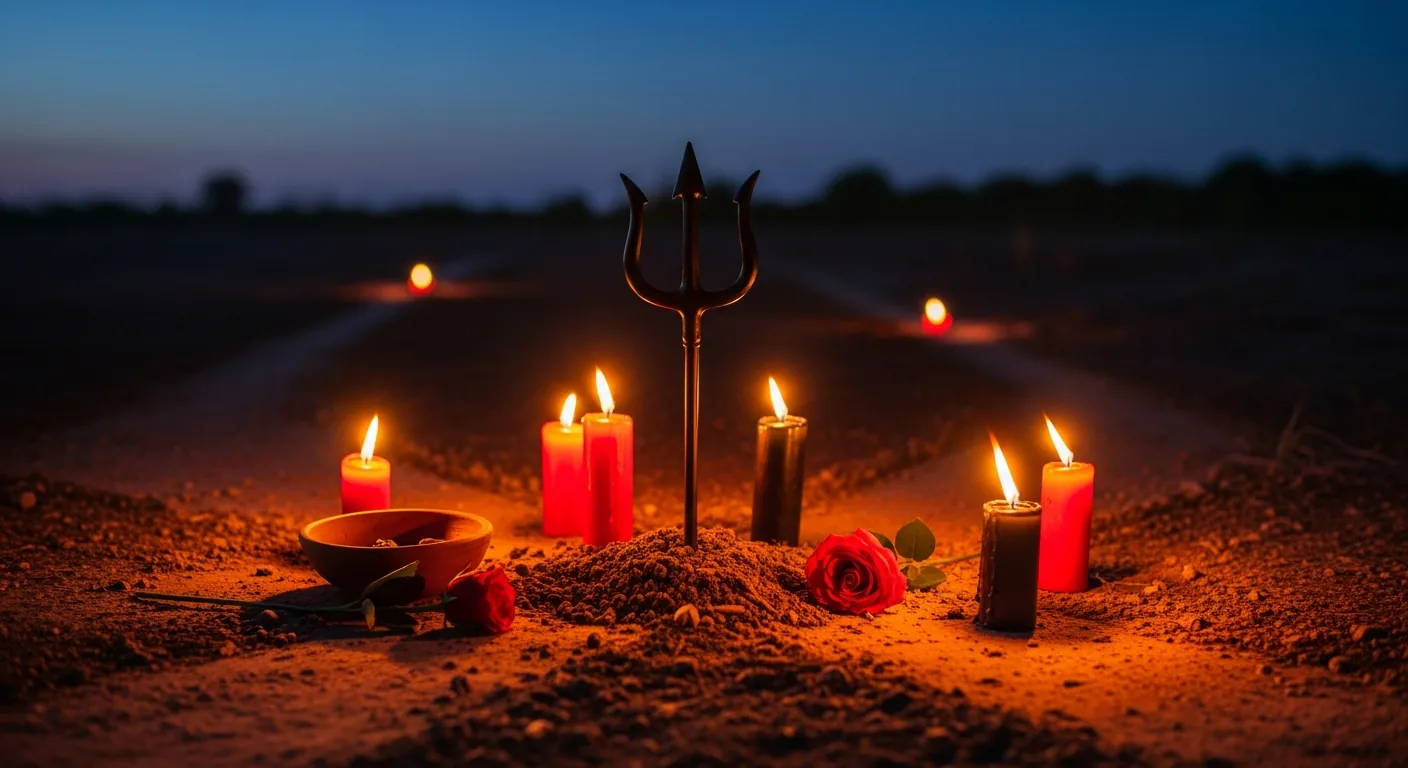
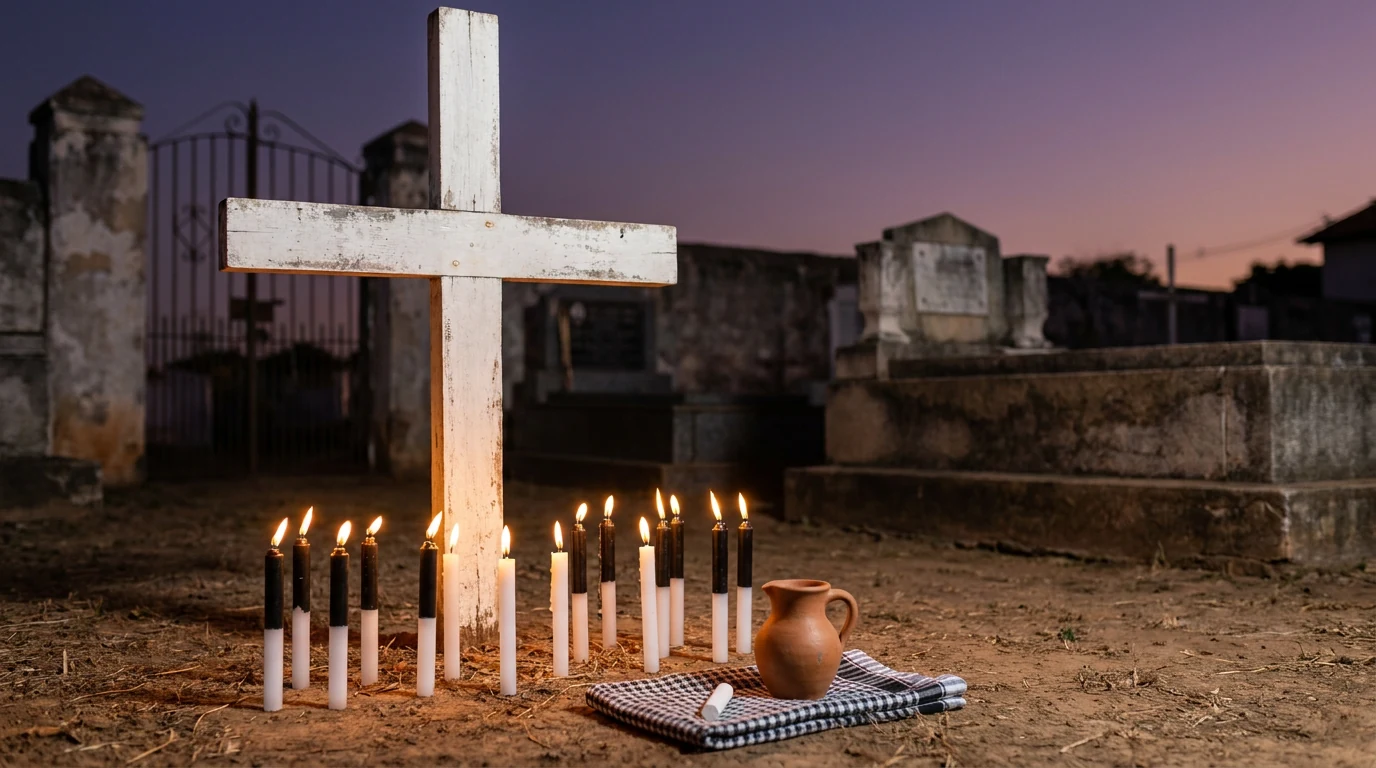
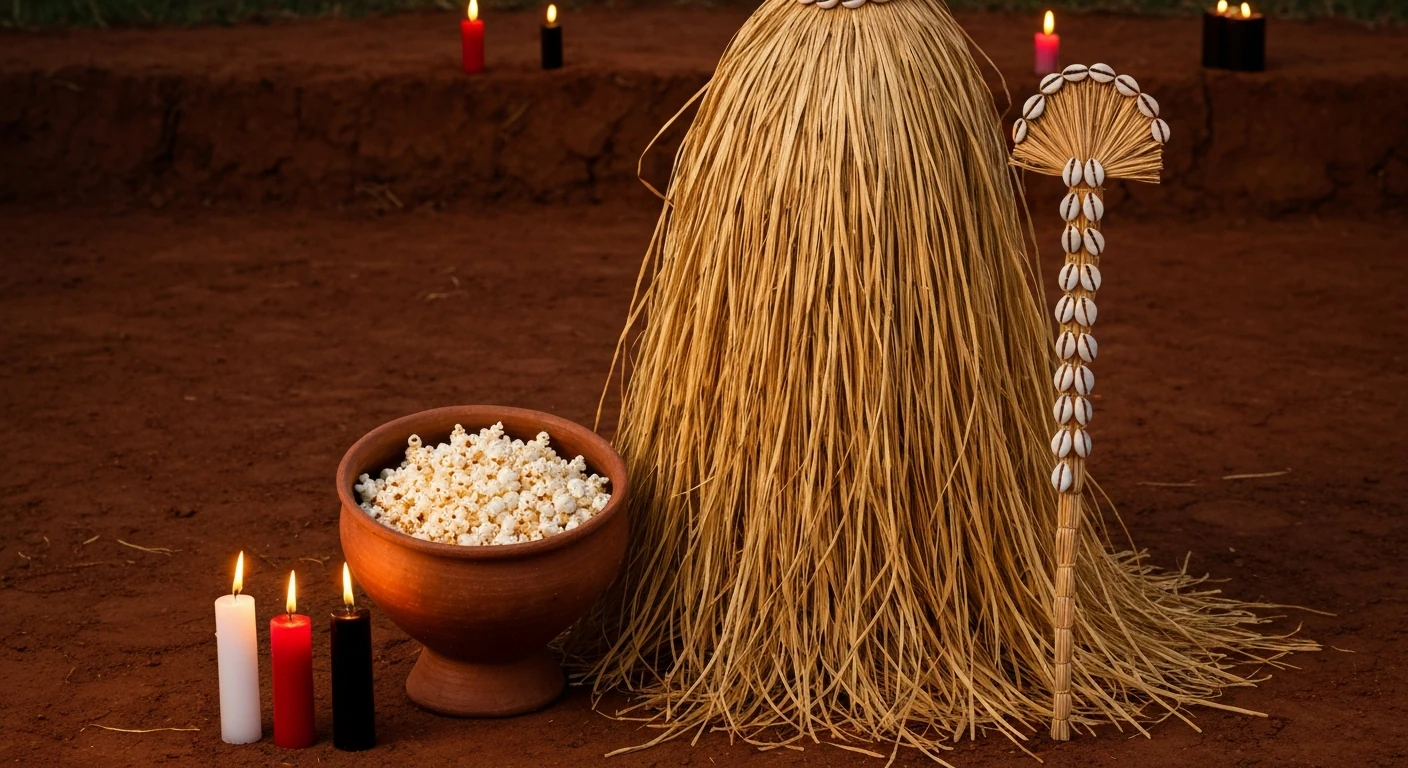
Exu (Eshu) Calunga candle
The lord of the calunga realm, to overcome old demanda and guard those who deal with death
Exu Calunga candle
7-day candle · stays lit for 7 days7 dias
The Exu Calunga candle is for when the weight comes from afar: a demanda that crossed years, a family fight that passed through generations, or the load we bring home after a wake. Calunga is a Bantu word and means the border between the world of the living and the world of the dead. In the terreiro, calunga pequena is the cemetery, and Exu Calunga is the guardian who carries the kingdom itself in his name.
He is ancient in Umbanda literature: the board of Exus that Reginaldo Prandi analyzed already places Exu Calunga among the line chiefs. In a house in Curitiba, the ponto de Exu of the Seven Calungas sings that he ran through seven cemeteries to defeat the enemy and that, in less than seven days, he made the problem run. In part of Quimbanda, the kingdom of the calunga pequena is governed by the Exu Rei das Sete Calungas. The names change from house to house, and the field is the same.
Many houses place the povo da calunga under the vibration of Omulu, owner of the earth that receives the body. At home, the candle does not take anyone to the cemetery nor does it perform ritual work of calunga, which is a matter of the terreiro. It asks that what belongs to the calunga stays in the calunga, and that what is yours returns to walk.
What is it for
What is the Exu Calunga Candle for
All black, the candle of Exu Calunga is of the guardian who bears the name of the cemetery kingdom itself. It is lit to overcome a demanda that has dragged on for years, to leave the weight of a wake in the calunga, and to protect those who work near death.
-
Winning a spiritual dispute (demanda) that has lasted for years
A fight passed from father to son, a process that does not end, a persecution that changes faces and returns. The candle asks the lord of the calunga to bury what has already lasted too long.
-
Clear the weight of a wake and burial
Those who return from a wake usually bring a tiredness that is not theirs. Lit upon returning home, the candle asks that the weight of the cemetery stay in the calunga, along with those who were buried.
-
Protection for those who work with death
ICU nurse, funeral professional, gravedigger, on-call doctor. For those who deal with death every day, the candle asks for a guardian at the front door.
-
Respect when visiting the cemetery
Before going to someone's grave, many people light the candle at home and ask for permission from the guardian of the calunga. The prayer request is to go, pray, and return without bringing anything back.
-
Protect the entire family
When several people in the house are sick, fighting, or stuck at the same time. The candle asks for protection for everyone, under the same guardian, without choosing just one.
Who rules this candle
Orixás and spirits of the Candle of Exu Calunga
-
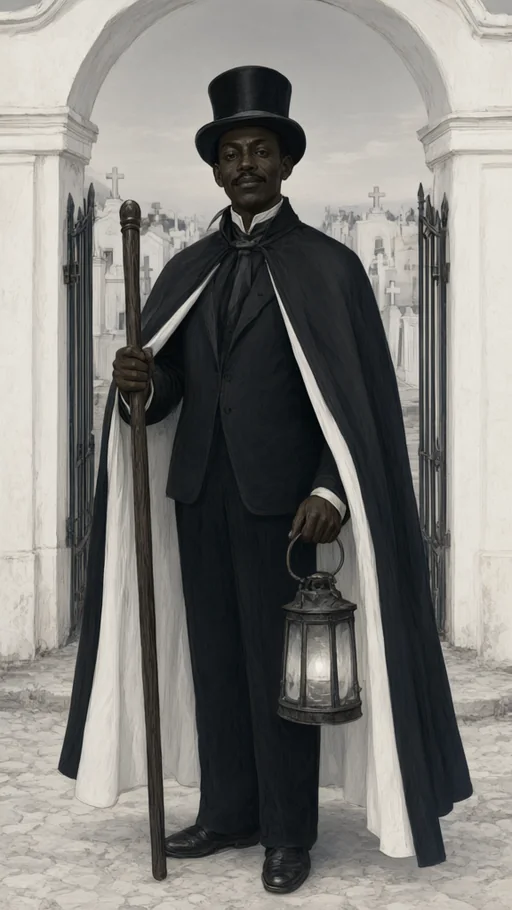
Exu Calunga
Lord of the small calunga kingdom
The label is his. The name is that of the kingdom itself, the border between the living and the dead, and Umbanda literature places him among the line chiefs. Black is the color of the cemetery people, who many houses say only respond in it.
-

Obaluaê (Omulu)
Owner of the land that receives the body
In many houses, the small calunga is called the kingdom of Omulu, and the people who work there respond to him. It is a line affinity: the orixá (orisha) has his own worship and is not an Exu.
Know Obaluaê (Omulu)
Also settled for
- Exu of the Seven Calungas
- Exu King of the Seven Calungas
- Pombagira da Calunga
- People of the Calunga
Prayer to light
Exu Calunga candle prayer to overcome an old demanda
“Lord Exu Calunga, guardian of the line where life meets death, I ask permission from Exu and Omulu and light this candle for you. There is something weighing on me and on my family for a long time. You, who run the cemeteries and know every corner of the calunga, overcome this demanda and bury what has already lasted too long. What I brought from the wake, from the illness, and from the sadness, stays in the calunga, along with those who rest there. Guard those from this house who work near death and bring each one back in peace. I do not ask for anyone's evil, I ask that what belongs to the calunga stays in the calunga. Laroyê, Exu Calunga!”Light the candle and pray
Step by step
How to set the Exu Calunga Candle
- 1
Take the weight off before entering
If the candle is for after a wake, take a cleansing bath (banho de descarrego) before touching anything in the house. The clothes used at the cemetery go straight to be washed.
- 2
Greet Exu and Omulu
Say Laroyê to Exu and Atotô to Omulu before calling the guardian of the calunga. It is the license that the line asks for in almost every house.
- 3
Firmeza on the outside
Backyard, service area, or near the door, on the ground or on a low base. Never in the bedroom or near the altar of the orixás, which is not a place for the calunga candle.
- 4
Say what stays in the calunga
Hold the candle and say, in simple words, what needs to be buried: the demanda, the weight of the wake, the old fight. Light it with a match, serve the marafo, and pray.
- 5
Let it burn and send off the offering (despacho)
Do not blow. When it finishes, the marafo goes to the earth and the cup is washed. Glass and wax go wrapped for the trash, outside the house, without keeping anything from the firmeza.
Precautions before lighting
- 7-day candle stays lit for a long time: clay or ceramic base, away from curtains and dry brush, out of reach of children and animals.
- Ritual work inside the cemetery is done with the terreiro and with permission from the house. Do not take a candle or offering to the calunga on your own.
- Exu Calunga does not work to cause harm to those who harmed you. A request for revenge has no support from a serious guardian.
- For those who work with death, constant fatigue, and sadness, medical and psychological care is requested. The candle accompanies and does not replace the doctor.
Ceromancy
What the flame of the Exu Calunga candle shows
Traditional terreiro reading. Before interpreting, check if there is no wind, crooked wick, or poor quality candle.
- Good sign
High and constant flame until the end
Many houses read this as a request accepted and a spiritual attack (demanda) being overcome. It is the expected burning when the candle is in a place without wind.
- Observe
Dark smoke only in the first hours
In popular reading, it is an old load leaving at the beginning of the work. If the smoke clears later, follow the firmeza without touching the candle.
- Attention
Glass completely black with soot
Sign of a great weight being burned. Wash the glass, take another cleansing bath and, if it repeats in several candles, seek a terreiro.
- Attention
Low flame that does not grow
Check if the wick is drowned in wax. Once resolved, redo the permission to Exu and Omulu; if it continues weak, repeat on the following Monday.
- Good sign
Melted wax forming a smooth pool
Regular burning, without dripping to the sides, is usually read as ritual work in order and a clear path for the guardian.
Ritual bath and smoke cleansing (defumação)
Herbs that combine with the Exu Calunga Candle
-

guiné / Tipi
Petiveria alliacea
Strong cutting leaf. The ritual bath of guiné on the way back from the cemetery removes the weight of the wake before you set the Exu Calunga candle.
See the herb -

Pinhão-Roxo / Pinhão-Paraguaio
Jatropha gossypiifolia
Plant for heavy spiritual cleansing (descarrego) and for guarding the entrance. Some houses sweep the floor from the inside out with branches of pinhão-roxo before lighting.
See the herb -

Rosemary
Rosmarinus officinalis
After the cleansing, a ritual bath of rosemary restores lightness and joy. It is the soft closing of a firmeza linked to death and mourning.
See the herb
Virtual Candle
Light the Exu Calunga Candle now
Choose the type, write your request, and pay by PIX. The flame stays on the altar and you follow along through the link.
Place on the altarFrequently asked questions
Questions about the Exu Calunga Candle
Who is Exu Calunga in Umbanda and in Quimbanda?
He is the guardian who bears the name of the kingdom of the cemetery, the small calunga. Old Umbanda literature already places him among the line chiefs, and there are houses that call him Exu das Sete Calungas or Rei das Sete Calungas. The details change from house to house.
What does calunga mean in the name of Exu?
Calunga is a Bantu word for the border between the world of the living and that of the dead. Calunga grande is the sea and calunga pequena is the cemetery. In the terreiro, when only calunga is said, it almost always refers to the cemetery, which is the kingdom of this guardian.
What is the difference between Exu Calunga and Exu Caveira?
Exu Caveira is a falange (spiritual legion) that works in the cemetery, headed by João or Tatá Caveira depending on the house. Exu Calunga takes the name of the kingdom itself and appears as a head of line. His candle is sought for old demanda (spiritual attack) and for the weight of a wake.
What is the color of Exu Calunga's candle?
Black. In a Gaúcho house researched, the cemetery people are called povo de preto, and Exu Sete Calunga receives only black offering. Part of Quimbanda uses black and white in the bead necklace and candles of the calunga people. What matters is what your terreiro instructs.
Can I light Exu Calunga's candle after a wake?
You can, and it is one of the most common uses. First, take a banho de descarrego (cleansing bath), change your clothes, and light it outside or near the door. Ask that the weight of the cemetery stays there and that your house returns to normal.
What is the best day to light Exu Calunga's candle?
Monday, the day of the povo de rua (people of the street) and the souls, at night. After a wake, many people light it on the same day, upon returning home. If that is the case, greet Exu and Omulu first and light it with respect.
Can I blow out Exu Calunga's candle before it finishes?
Better not. The candle ritual of the calunga goes until the last drop of wax. If it is dangerous to keep it lit, smother it with a saucer, without blowing, and relight it as soon as you can with the same prayer. Leaving the ritual halfway is like leaving the prayer request in the middle of the path.