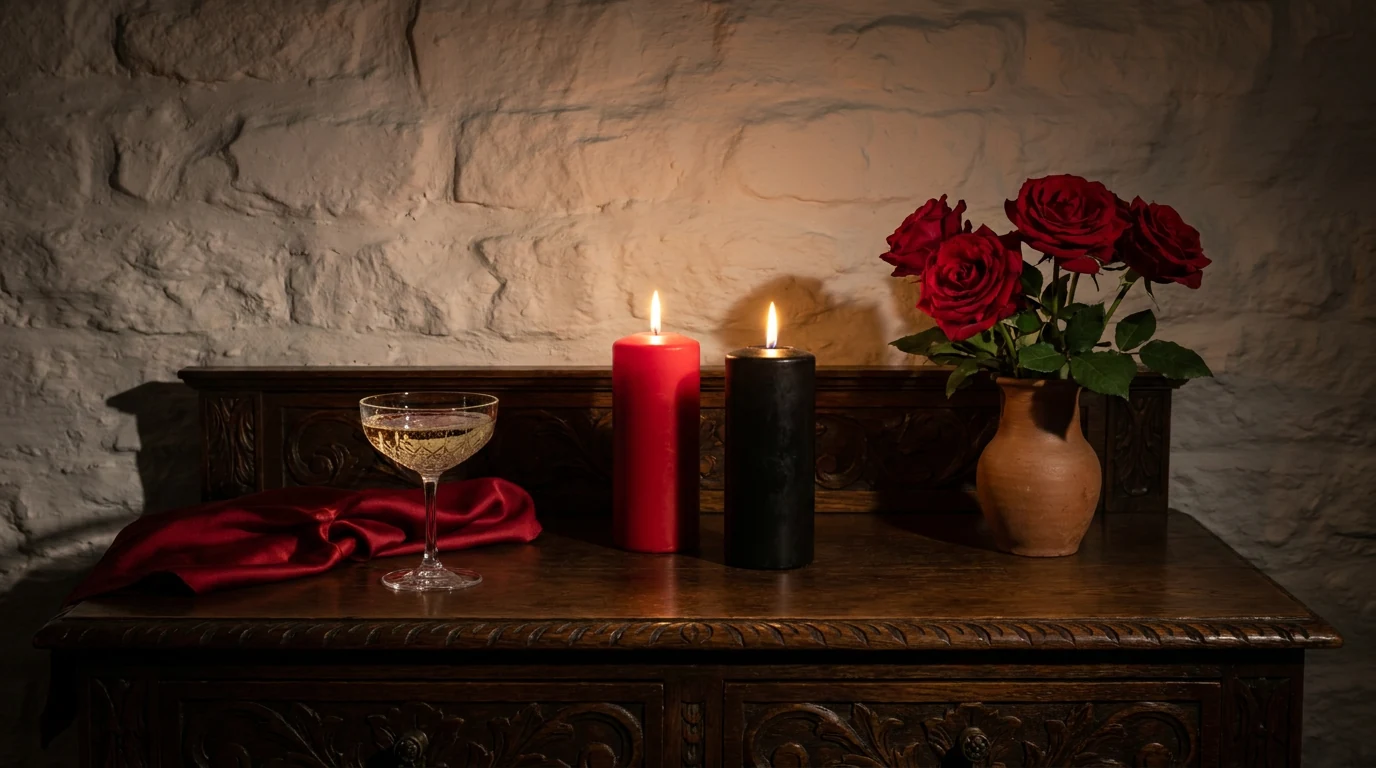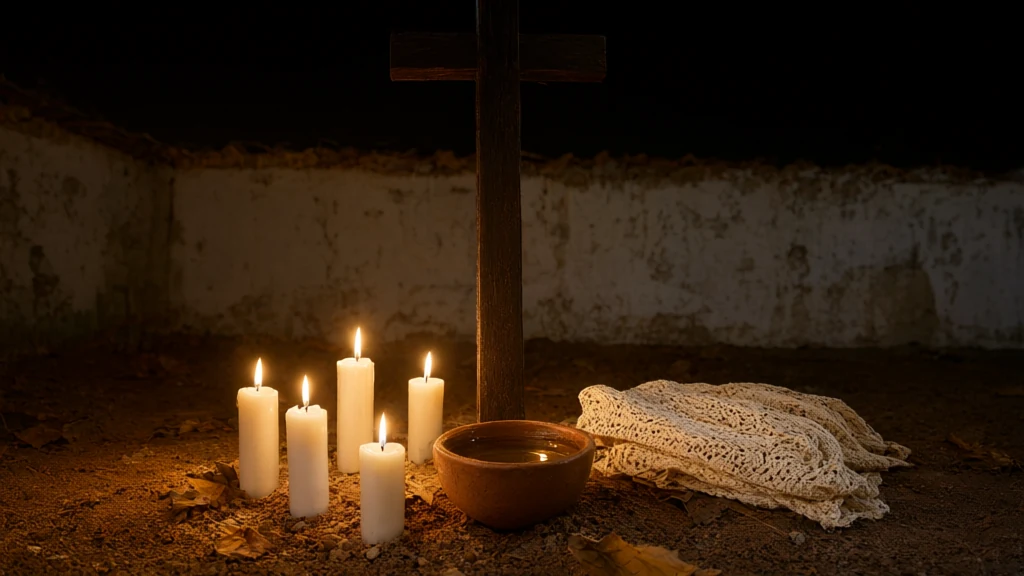
The Pombagira Cacurucaia is a spiritual legion (falange) of pombagiras who present themselves as elderly ladies, worshipped in Umbanda and Quimbanda. A sung chant (ponto cantado) recorded in a study calls her queen and resident of the calunga, the cemetery. She is the old woman of the Pombagira people: she attends late at night, likes serious conversation and breaks the image of the always young pombagira.
Type: elderly pombagira spiritual legion | Place: calunga and Cross of Souls | Drink registered in houses: cachaça | Color, tobacco leaf and orixá: vary from house to house | Partner Exu and specific day: no source
Who is Pombagira Cacurucaia?
Cacurucaia is a pombagira, that is, a feminine Exu, who arrives as an old woman. For Reginaldo Prandi, from USP, Pombagira "is an Exu, or rather, an Exu-woman". He recalls that they "are many, each with their own name, appearance, preferences, symbols and particular chants". The general concept is in who is Pombagira.
The research that defines Cacurucaia is by Ana Laura Brito and Nara Takaki, from UFMS. They criticize the idea that every pombagira is young, beautiful and was a prostitute in life. This stereotype, they write, distances the spirit "from an elderly lady, as is the case of the Pombagiras of the Cacurucaia spiritual legion".
Spiritual legion means that several spirits work with the same name. Therefore, there are many Cacurucaias, in many houses, and none owns the name.
Why is Cacurucaia an elderly pombagira?
Because that is how this spiritual legion presents itself, and old age is part of the name. Brito and Takaki show that she is not the only one: "there are elderly Pombagiras in several other spiritual legions". Their example is Maria Quitéria, sung in a sung chant as "by day a charitable old woman".
The blog of an Umbanda temple goes further and calls her "the oldest pomba gira that exists". It is the word of one house, without research behind it. The same text says that she "presents herself as an old lady" and that "very few mediums work with this Pomba Gira" today.
In the terreiro, age is a sign of someone who has seen a lot. The pretos velhos on the right and the Cacurucaia on the left arrive as people of many years, and their word carries weight.
The connection with the elders even appears in the speech. In the dissertation of Yana Vale at UERJ, the author thanks "my Pretas Velhas and my Pretos Velhos" and closes with an exclamation: "Cacurucaia!". She does not explain the word. The pretos velhos are in pretos velhos in umbanda.
What does the name Cacurucaia mean?
The word is not in the dictionaries. The Aulete responds "Entry not found", and the Michaelis, "The entry was not found".
The sound, however, reminds one of two words that are there. The Michaelis registers "curuca", of "tupi kurúka" origin, as another form of "coroca". And the Priberam defines "curuca" as "Old person". It is just a clue: no source says that Cacurucaia comes from there. But the idea of an old person fits with the spiritual legion (falange).
Where is she from: calunga or Cross of Souls (Cruzeiro das Almas)?
The records place her in the cemetery, and not at the crossroads, where research finds Pombagira Rosa Vermelha. A sung chant (ponto cantado) cited by Brito and Takaki begins like this: "Queen and resident of the Calunga / Master lady in Quimbanda". The blog of the Umbanda temple says that "she is not a Pomba Gira of the crossroads, but rather of the cemetery", and that she is "of the Cross of Souls (Cruzeiro das Almas) of the calunga". An Umbanda practitioner book from 2026 calls her "the old lady of the Cross of Souls".
The cross is the large cross of the cemetery, a point of strength for the souls. In the thesis of Alice Macedo from USP, the line of the Souls and of the Cross appears "linked to the line of the cemeteries, a line of healing associated with Obaluaê". And Jean Favaro from UTFPR shows that each place in the cemetery, from the cross to the graves, has "different spiritual peoples". More about this in Cross of Souls (Cruzeiro das Almas) and in calunga grande and calunga pequena.
What does Cacurucaia do?
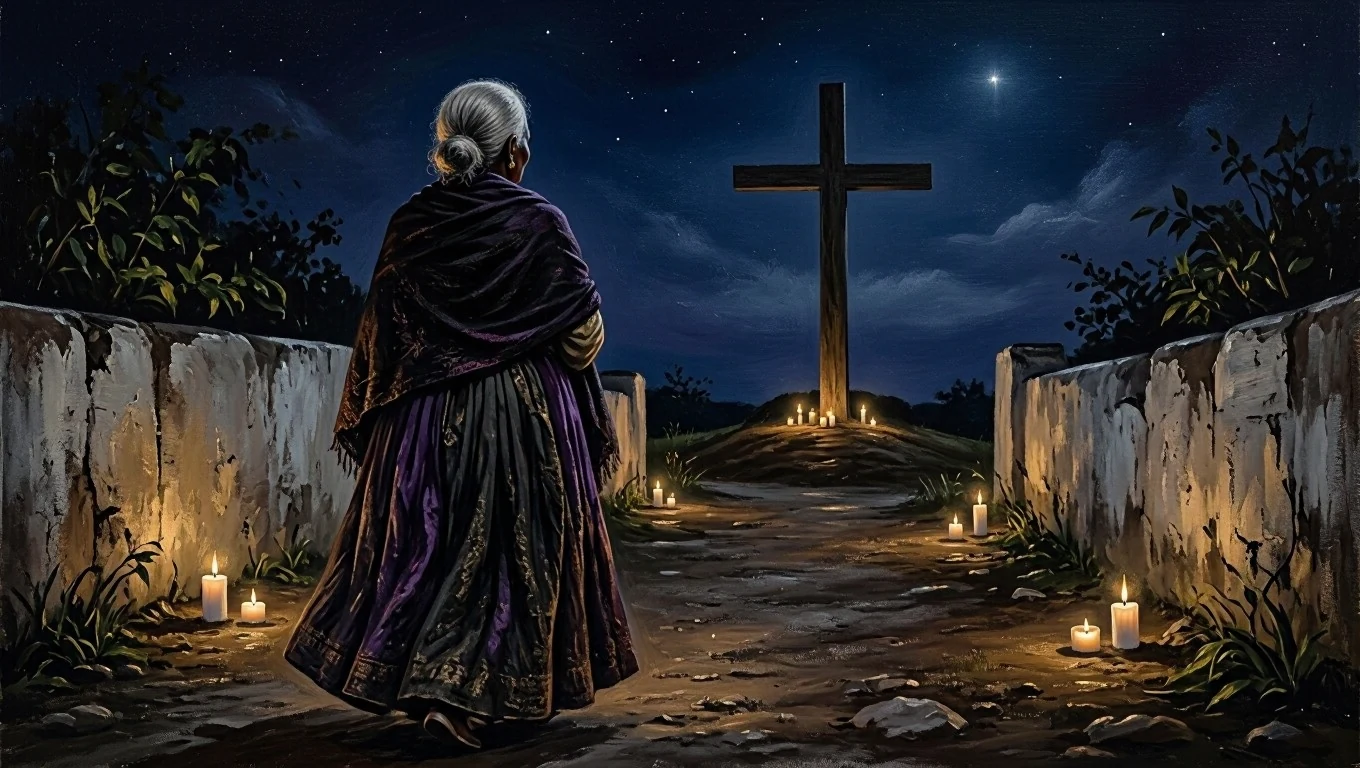
She attends, advises, and protects her followers in the early morning. The best record comes from anthropologist Vânia Zikán Cardoso, in the magazine Mana, from the National Museum. She accompanied a small center in the Rio suburb of Bangu.
There, Cacurucaia was "a well known pombagira who has been giving consultations for several years." After attending many people, she would sit on the doorstep, "generously sharing her cachaça." The filhos de santo feared the return home so late. She "laughed at our fears, and said that the night was her territory."
On one of those nights, Cardoso recounts, the entidade said she had protected a young man who stayed to help her: "And do you think I would leave someone who helped me stranded?" The anthropologist reads the phrase carefully. For her, protection is "a desired possibility, but in no way guaranteed."
Serious pombagira does not sell guarantees nor bind anyone's will. What the research records is advice and protection in the gira, without deadlines or promises.
The temple's blog says she "does not like trivialities, preferring complex issues and those of difficult resolution." The 2026 book summarizes: she "welcomes, heals, and teaches." These are words from the house, without research behind them, but they go in the same direction as what Cardoso saw.
Color, drink, and orixá: what changes from house to house
Almost nothing of Cacurucaia's profile is fixed. The temple's blog itself gives two versions in the same text. In one, she "does not use black and red, only uses white and coral" and smokes thin cigarettes. In the other, she wears "black and yellow or black and purple" and "prefers the charuto."
The drink is the point where the sources meet. Cardoso saw the Cacurucaia of Bangu sharing cachaça, and the blog lists "cachaça, vodka, and gin." For the general rule of what is served, see Pombagira drink. Candles, drinks, and whatever else the house asks for are in the shop; to check the material, talk to us via WhatsApp.
Regarding the orixá, the blog says that, "according to what is said," her vibration comes from Nanã (Nana Buruku). The connection makes sense for those who think of her as old: the FUCESP calls Nanã "the oldest of the Iabás." But it is an association of a house, not a rule. The orixá is in who is Nanã.
Frequently asked questions
With which Exu does Cacurucaia work?
No published source gives a fixed partner Exu for her. As the cemetery lineages share the calunga with many Exus, each house teaches with whom she walks in the gira. Be wary of lists that pin down a pair without saying where they got it.
Who was Cacurucaia in life?
No research records a life story for her. Prandi recalls that many pombagiras are seen as spirits of the dead, some with a "very popular mythical biography," and these stories change from house to house. For Cacurucaia, even this was not recorded.
Is Cacurucaia evil?
No. The research that cites her uses her case to debunk stereotypes, and the anthropologist who accompanied her in Rio saw her advise and protect the filhos de santo. Owl, Beelzebub, and other nicknames circulating on the internet have no record.
What is the day of Pombagira Cacurucaia?
There is no specific day with a source. Prandi records that the pombagira sessions happen "very late at night, usually on Fridays." The general dates are in Pombagira day.
References
- Ana Laura Mota de Brito and Nara Hiroko Takaki, UFMS: Between words and sung chants, Revista Sede de Ler, UFF, 2025
- Vânia Zikán Cardoso, UFSC: Narrating the world: stories of the povo da rua, Mana, v. 13, n. 2, 2007
- Reginaldo Prandi, USP: Pombagira and the unconfessed faces of Brazil, chap. IV of Herdeiras do Axé, Hucitec, 1996
- Yana dos Santos Vale, UERJ: Pombagire-se!, dissertation, 2022
- Alice Costa Macedo, USP: Crossroads of interpretation in Umbanda, thesis, 2015
- Jean Filipe Favaro, UTFPR: Territorialities of axé in the southwest region of Paraná, thesis, 2023
- FUCESP: Nanã
- Michaelis: curuca entry
- Priberam: coroca entry