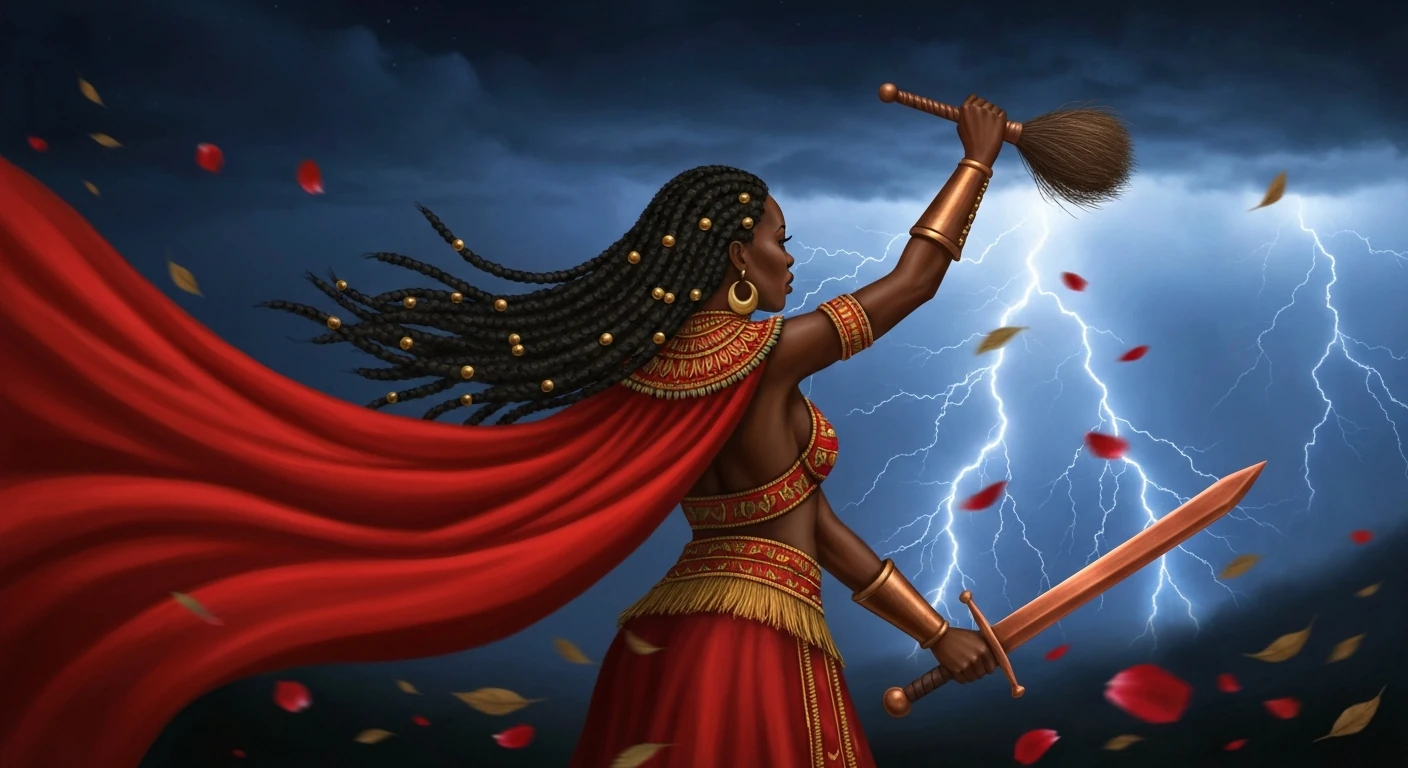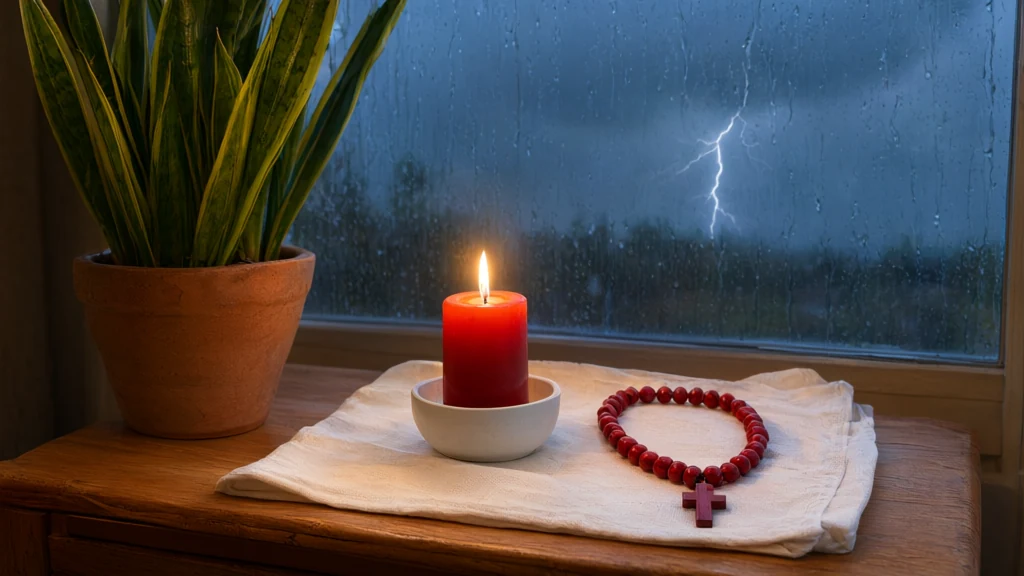
The prayer of Saint Barbara with the Church source is that of the Archdiocese of Belo Horizonte: it asks God, through the intercession of the saint, for deliverance from sudden death and strength in setbacks. It closes with "Saint Barbara, pray for us." For Iansã, the people of santo use the greeting Eparrei and verses of oríki.
Below is the complete text, the prayer that circulates for the time of the storm and where it comes from, the prayer for Iansã with source and when to pray each one. The history of the saint and the syncretism are in Saint Barbara and Iansã, and the date, in day of Iansã, December 4.
What is the prayer of Saint Barbara?
The Archdiocese of Belo Horizonte publishes this prayer on the page of the saint of the day of December 4, right after the life of the saint. Among the published versions, it is the one that carries the signature of a Catholic institution.
God, our Father, grant that, through the intercession of Saint Barbara, we may receive, before death, the sacrament of the body and blood of Our Lord Jesus Christ. Deliver us, therefore, from sudden, violent, and imprudent death. Deliver us from all spiritual and temporal dangers. Let nothing shake our faith in Jesus Christ, your Son. And in this faith, may we have strength to overcome all the setbacks of our lives. And as the rocks opened for the passage of Saint Barbara, so may the rocks of our problems also open, so that we may pass with the solutions, inspired and illuminated by the love we have for you, Lord our. Amen.
Saint Barbara, pray for us.
The prayer is addressed to God and asks for the intercession of the saint. The central request is sudden death, and not the lightning. The same page tells that Barbara lived imprisoned in a tower with three windows in honor of the Holy Trinity.
What is the prayer of Saint Barbara against storms?
There is no prayer against storms signed by the Church among the open sources. What exists is popular devotion: in Portugal and in Brazil, Saint Barbara is invoked as a protector in storms, lightning, and thunder. From there comes the saying "they only remember Saint Barbara when it thunders".
The version most copied by the press begins like this: "O Saint Barbara, who are stronger than the towers of fortresses and the violence of hurricanes, make it so that lightning does not strike me, and thunder does not frighten me". The article that publishes it is signed by the EdiCase Editorial Team and does not say which church, book, or author it came from.
Who wants to pray with a text from the Church during a storm can use the prayer of the archdiocese above. The "deliver us from sudden death" is the same prayer request for protection, said without the word lightning.
Why does the people of santo pray to Saint Barbara thinking of Iansã?
Because, in Afro-Catholic syncretism, Saint Barbara was associated mainly with Oiá-Iansã, the orixá of lightning, winds, and storms. According to researcher Vagner Santos, until the 1930s the saint was also linked to Xangô (Shango), and later she was left only with Iansã.
For researcher Edilece Couto, from UFBA, the only thing in common between the two is the power over the elements. A house of umbanda in São José dos Campos writes that the syncretism "does not mean that the two figures are exactly the same deity". The saint is from Catholicism; the orixá, from Candomblé and Umbanda. Who is Iansã is in the guide who is Iansã.
How to pray to Iansã?
One prays to Iansã with the greeting and with the oríki, the verses of praise that, in the words of Pierre Verger, describe her quite well. Verger recorded in Portuguese these verses of the oríki directed to her:
Oiá, woman of Xangô. Oiá, whose husband is red. Oiá, who beautifies her feet with red powder.
Oiá, wind of death. Oiá, the gale that shakes the leaves of the trees everywhere. Oiá, the only one who can hold the horns of a buffalo.
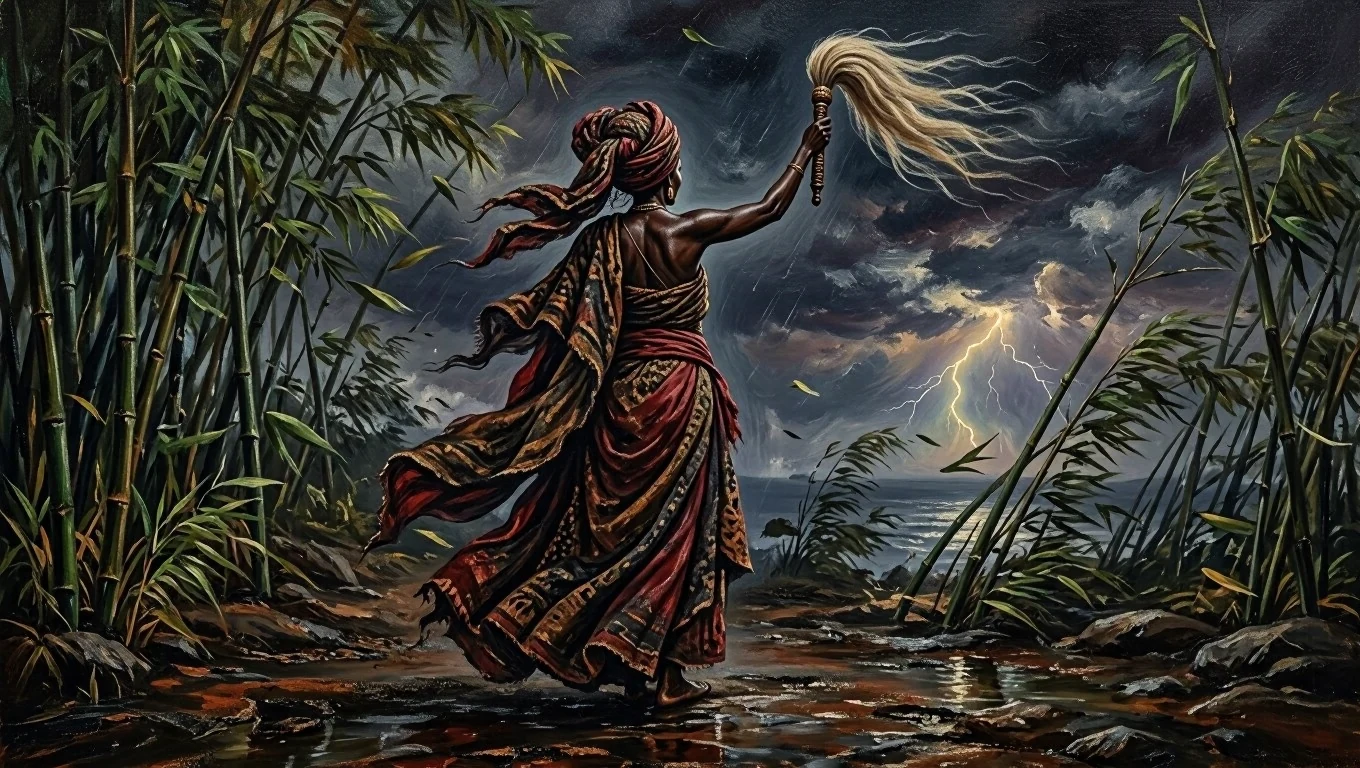
In Umbanda, the Tenda de Umbanda Caboclo Tupinambá e Vó Catarina (TUCTVC), from São José dos Campos, publishes this prayer to Iansã. It is the prayer of the house, not of all Umbanda:
Iansã, Lady of the winds and of transformations, blow away everything that paralyzes us. Give us courage to change, firmeza to choose and wisdom not to act on impulse. Eparrei Oyá!
What to request from Iansã
The same house lists what is requested from her. There is no promise of results, and requests regarding the life of another person are excluded:
- courage for necessary changes;
- movement in stagnant situations;
- protection against unbalanced energies;
- direction in periods of transition;
- detachment from what no longer serves.
Each house has its own prayers, and those who are from the terreiro follow what the mãe or the pai de santo taught.
What is the greeting of Iansã?
The most recorded greeting of Iansã is Eparrei, sometimes followed by her name: Eparrei Oiá, Eparrei Oyá. Prandi closes the entry for Iansã in queto candomblé with "Eparrei!" FUCESP writes "Eparrei Oiá!", and TUCTVC, "Eparrei Oyá!".
Verger gives another spelling: the faithful greet her by shouting "Epa Heyi Oya!" The header of the FUCESP page brings "Epahei!" None of these sources translate the word, and the meaning circulating on the internet comes from sites without authors.
The shout at the time of the lightning
In a house of batuque in Rio Grande do Sul, researcher Carina Dias recorded the belief that, when lightning strikes, one must shout at the time "eparrei, Oiá!" The greeting recalls the great love of Xangô, so that the lightning does not hit those who call for her. In the prayers of the xirê of the same house, "eparrei Oiá!" cuts through the collective chant.
When and how to pray: Wednesday, December 4, and the storm
Iansã is prayed to on Wednesday, her day in queto candomblé and in umbanda. In the year, the date is December 4, when Saint Barbara and Iansã are worshipped on the same day. In a storm, the popular custom of calling for the saint applies.
Day of the week: Wednesday | Date of the year: December 4 | Greeting: Eparrei | Food: acarajé
Which candle to light
The color changes according to the house. TUCTVC indicates a yellow, coral, or red candle. FUCESP gives gold-yellow in umbanda and red in candomblé, and Prandi records brown or dark red beads in queto. The color of your house matters more than that of any list.
On the home altar, the prayer is usually made before a statue of Saint Barbara or Iansã in painted plaster. Without a candle at hand, you can light the virtual red candle. The orixá's ritual bath is in Iansã ritual bath, and the plant that bears the saint's name is in saint-barbara-sword.
The acarajé of December 4
In Salvador, acarajé is part of Saint Barbara's day. Couto writes that it is the ritual food of Iansã and that distributing it at the Saint Barbara mass "does not mean syncretism." Santos records the acará without accompaniments as her favorite food. How to offer is in offering for Iansã.
Whoever has doubts about the color of the candle or the material that the house requested can speak with Joia Mística via WhatsApp. The prayers of other iabás are in prayer for Oxum and prayer for Iemanjá.
Frequently asked questions
Are Saint Barbara and Iansã the same?
No. Saint Barbara is a Catholic saint, and Iansã is an orixá of Candomblé and Umbanda. Syncretism brought the two together through their dominion over lightning and storms, and therefore the people of santo pray to the saint thinking of the orixá. Each house says how it does it.
What does Eparrei mean?
Eparrei is the greeting of Iansã, recorded by Prandi, by FUCESP, and by umbanda houses, sometimes as Eparrei Oiá. Verger writes Epa Heyi Oya. Open sources record the greeting without translating it word for word, and the translations that circulate have no author.
What is the best time to pray to Saint Barbara?
Popular devotion calls for her when it thunders, and the feast is on December 4. For Iansã, Wednesday is the day of the week. The prayer of the Archdiocese of Belo Horizonte can be prayed on any day, because it asks for protection against sudden death and strength in setbacks.
References
- Archdiocese of Belo Horizonte: Saint Barbara of Nicomedia, saint of the day and prayer
- Reginaldo Prandi, Horizontes Antropológicos: African gods in contemporary Brazil
- Pierre Verger, Corrupio: Orixás, work record
- Edilece Souza Couto, Brazilian Journal of History of Religions: Festival of Saint Barbara and Iansã
- Vagner José Rocha Santos, Revista Ingesta (USP): O acará de Iansã na festa de Santa Bárbara
- Carina Monteiro Dias, UCS: dissertation on ritual performance in Batuque
- FUCESP: Iansã
- TUCTVC: Iansã, tent page
- Wikipedia: Barbara of Nicomedia
- O Povo: prayers for the Day of Saint Barbara