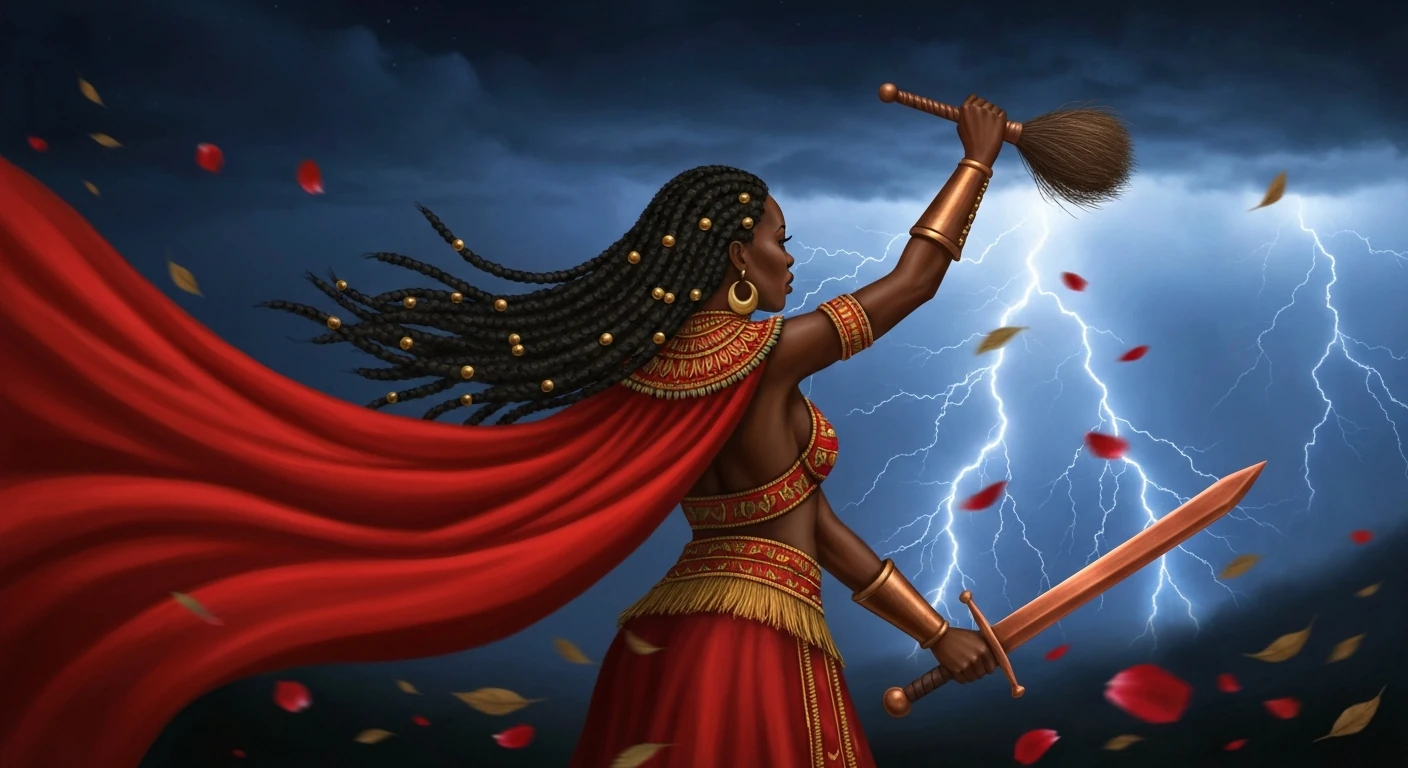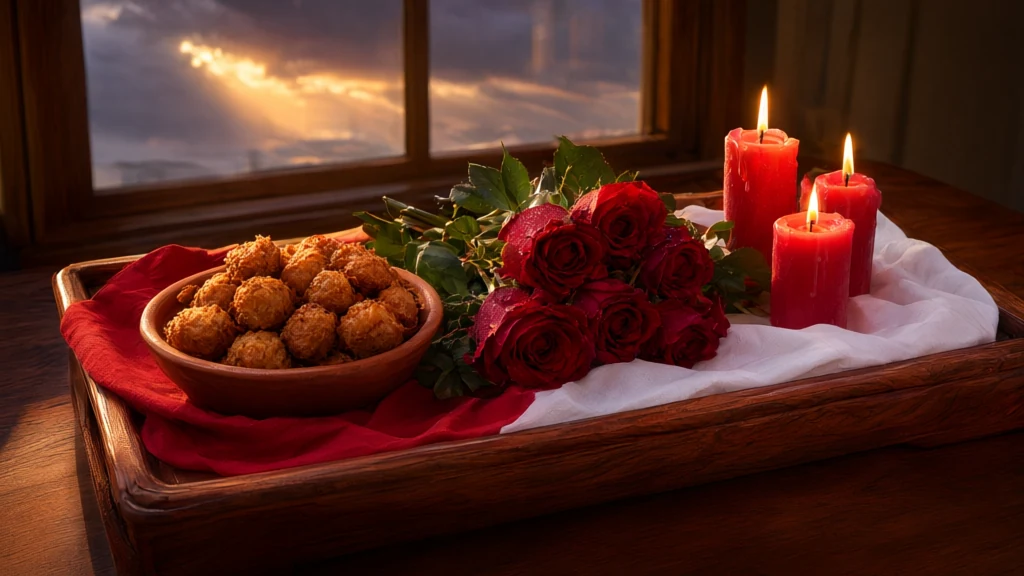
The day of Iansã is Wednesday of the week and December 4 of the year. In 2026, the two answers do not coincide: December 4 falls on a Friday, and the Wednesday of Iansã that week is the 2nd.
What is the day of Iansã in the week and in the year?
The day of Iansã in the week is Wednesday, and in the year is December 4. The Ketu Candomblé and Umbanda sources we consulted agree on both. A batuque house from Rio Grande do Sul gives Tuesday.
| Question | Answer in the consulted sources |
|---|---|
| Day of the week | Wednesday (Tuesday, in a batuque house) |
| Day of the year | December 4 |
| Associated saint | Saint Barbara, in most sources |
| In 2026 | Friday, December 4; Wednesday of Iansã: December 2 |
The complete profile of the orixá is in who is Iansã.
The day of the week: Wednesday, and the Tuesday of a house of batuque
Verger records Wednesday as her day and Xangô (Shango)'s day:
“Wednesday is the day of the week consecrated to her, the same day as Xangô, her husband.”
Prandi puts Wednesday in the table of the São Paulo ketu candomblé terreiros he studied. Bianca Purcino, from UFSB, repeats the same profile, citing Verger, in her dissertation on the plants of two ketu and ijexá terreiros from southern Bahia.
In umbanda, the FUCESP, federation of São Paulo, gives “Day of the week: Wednesday”. The Tenda de Umbanda Caboclo Tupinambá and Vó Catarina repeats Wednesday.
In the gaúcho batuque, one house, the Ilé Àsé Odé, gives Tuesday to Iansã, and the same page gives Tuesday also to Xangô. It is one house, and the text does not treat it as a rule of batuque. The excerpt of the tradition is in Oiá in batuque.
For angola and jeje, the day of Matamba and of Sobô was not located in open sources. The tool orixá of the day responds for Wednesday, and the day of the week of each orixá shows the entire chart.
The day of the year: why December 4
December 4 is the day of Saint Barbara for Catholics and the day of Iansã for followers of Afro-Brazilian religions, according to Edilece Couto, from UFBA. In Salvador, the saint's festival happens “since 1641, always on December 4.”
The festival dates back to the 17th century, and the connection with Iansã appears later. According to Couto, the first associations between Saint Barbara and Iansã in texts date back to the 1950s. As many scholars reject the term syncretism, she proposes calling the festival hybrid.
The Salvador city hall records that Candomblé practitioners "make a point of emphasizing the distinction" between the saint and the orixá. The festival itself, with the history of the saint and the caruru, is in Saint Barbara and Iansã.
In 2026, December 4 falls on a Friday.
The date of the year is fixed and the day of the week moves. December 4 was Wednesday in 2024, Thursday in 2025, and will be Friday in 2026.
In the week of 2026, the dates are as follows:
- Wednesday, December 2: the day of the week of Iansã.
- Friday, December 4: Saint Barbara and Iansã, the day of the festival.
- Tuesday, December 8: municipal holiday in Salvador, Our Lady of the Conception of the Beach, linked to Oxum (Oshun) or Iemanjá (Yemoja) depending on the source; details in December 8, day of Oxum.
Those who count by the Wednesday look at the 2nd, and those who count by the date look at the Friday. The month of each orixá and the calendar of the orixás bring the other dates.
Is Iansã's day a holiday?
Iansã's day is not a holiday in Salvador. The list of municipal holidays in Bahia for 2026, published by the Court of Justice, brings for Salvador "June 24 // December 08", without December 4. Couto already wrote in 2018: "It is not a holiday in Salvador, but the historic center transforms."
December 4 is a municipal holiday in Cipó, Encruzilhada, and in the city of Santa Bárbara, also in Bahia. The list covers holidays created by law and does not include optional holidays decreed by the city hall: for the 2026 schedule, it is worth consulting the Salvador City Hall near the date.
Which saint is Iansã? Each house answers in its own way
The most common answer is Saint Barbara. Verger gives it for Brazil and puts Our Lady of Candelária in Cuba. Prandi, Purcino, FUCESP, and the Umbanda tent repeat it. Carina Dias, who studied the cabinda batuque, cites "Saint Barbara and Oiá" as an example of identification with the saints, in a general phrase.
In other traditions, the pair changes. In an article from UNIR about Tambor de Mina, Bárbara Soeira, considered Iansã in Nagô and Sogbô in Jeje, is represented by Saint Barbara. In Angola, Prandi lists Matamba and Bumburucema as Bantu inquices, in the same line as the Iansã table, and the page of the Angola house consulted (Inzo Tumbansi) does not mention a saint.
Santos reports that, until the 1930s, Saint Barbara also appeared with Xangô. The Umbanda tent warns that the syncretism "does not mean that the two figures are exactly the same deity."
What is seen on the day: the street and the terreiro
In Salvador, the day of Saint Barbara and Iansã is a street festival. In 2025, the announced program planned a fireworks dawn at 6am, a bugle salute at 7am, and an outdoor mass at 8am. This was followed by a procession through Pelourinho and a stop at the Fire Department, in Barroquinha. The time changes from year to year: the 2018 report speaks of fireworks at five in the morning.
The city hall records that "it is also common to offer caruru to Iansã" on that day. Afoxé Filhos de Korin Efan has done so for over 20 years. The acarajé, in Candomblé, is offered to Xangô and Oiá "without fillings," according to IPHAN. Sources diverge on the dish: Santos, from UFBA, gives the acará to the orixá and the caruru to the saint. Her dish is in offering for Iansã.
Outside of Salvador, there are houses that also mark the date. A final course project from UFPB describes a ketu house in João Pessoa. There, there is an eight-night novena, a procession for Saint Barbara, and a toque of Iansã on December 4. It is the study of a house. In Porto Alegre, a 2006 bill states that Umbanda honors Iansã on December 4, and Oxum on the 8th, at Usina do Gasômetro since 1994. What the house does inside the terreiro is its fundamento, and this text does not describe it.
The color of the day
The color of Iansã depends on who answers. In the festival of Salvador, both, the saint and the orixá, use red and white. In Umbanda, FUCESP and Terreiro Pai Maneco, in Curitiba, give gold-yellow. In ketu Candomblé, Prandi records brown and dark red (or white) in the clothes and brown or dark red in the beads.
Those who need a candle or a bead necklace (guia) in the house color and have doubts can speak via WhatsApp with Joia Mística.
Frequently asked questions
What is the day of Iansã in the week and in the year?
During the week, it is Wednesday in the open sources of ketu Candomblé and Umbanda, and Tuesday in a batuque house. In the year, it is December 4. In 2026, December 4 falls on a Friday, and the Wednesday of that week is the 2nd.
Is the day of Iansã the same as the day of Saint Barbara?
In the calendar, yes: both fall on December 4. For Candomblé practitioners, however, the saint and the orixá remain distinct: the Salvador city hall records that they make a point of emphasizing this distinction. The association is historical and varies from house to house.
Is Iansã's day a holiday?
In Salvador, no: the list of municipal holidays from the Bahia Court of Justice for 2026 brings only June 24 and December 8. December 4 is a holiday in Cipó, Encruzilhada, and Santa Bárbara. Optional holidays by decree must be confirmed with the city hall.
References
- Edilece Souza Couto, Revista Brasileira de História das Religiões: Festa de Santa Bárbara e Iansã, os baianos entre fronteiras tênues
- Vagner José Rocha Santos, Revista Ingesta (USP): O acará de Iansã na festa de Santa Bárbara
- Bahia Court of Justice: Judiciary Decree No. 09/2026, municipal holidays
- Reginaldo Prandi, Horizontes Antropológicos: African gods in contemporary Brazil
- Pierre Verger, Corrupio: Orixás, work record
- Bianca Purcino, UFSB: dissertation on the plants of the orixás
- FUCESP: Iansã
- TUCTVC: Iansã in Umbanda, tent page
- Elton de Andrade Batista, UFPB: Procession of Saint Barbara and the acarajé of Oyá
- Porto Alegre City Council: PLL 258/06, festivals of Iansã and Oxum
- Salvador City Hall: Festa de Santa Bárbara symbolizes faith and resistance
- Bahia Notícias: 2025 programming and 2024
- Carina Dias, UCS: dissertation on the sul-rio-grandense Batuque
- Bahia Notícias: Saint Barbara Festival has intangible heritage title revalidated, 2017
- Jamile Araujo, Brasil de Fato: Largo festivals move Salvador in the last month of the year
- Hiago de Paiva Cardoso and Marcelo Sabino Martins, Labirinto Magazine (UNIR): Afro-religious traditions in Porto Velho
- IPHAN: Ofício das Baianas de Acarajé