The day of Cosme and Damião is September 27 in Brazil, and in 2026 the date falls on a Sunday. In the General Roman Calendar of the Catholic Church, the memory of the two saints is on the 26th, since the liturgical reform of 1969.
The difference is no one's mistake: it came from a calendar decision made in Rome, and the very book that made it explains the reason. In the terreiros and in the street festival, the day continues to be the 27th.
Is the day of Cosme and Damião September 26 or 27?
Day in Brazil: September 27 | Memory in the General Roman Calendar: September 26 | In 2026: 26 falls on a Saturday, 27 on a Sunday
| Who celebrates | Date | What happens |
|---|---|---|
| General Roman Calendar (since 1969) | September 26 | liturgical memory of the martyr saints |
| Brazilian popular devotion | September 27 | distribution of sweets, street festival |
| Candomblé | 27, and the caruru runs through the whole of September | caruru for Ibeji, served first to the orixá (orisha) |
| Umbanda | September 27 | gira of the Children, which opens the cycle until October |
In practice, many Brazilian parishes celebrate on two days. In 2025, the Paróquia Santos Cosme e Damião, in Salvador, scheduled the 26th as the liturgical memory. The 27th entered as the "popular festival day," with a dawn at 5:30 AM, seven celebrations, and a procession to Largo da Lapinha.
What changed in 1969, according to the Church's own calendar
Until the reform, the date was the 27th. On February 14, 1969, Paul VI approved the new General Roman Calendar, in effect from 1970. The document with the names and reasons is not the motu proprio of the approval, but rather the Calendarium Romanum, published by the Tipografia Poliglota Vaticana in the same year.
The official comment of this book is direct, in Latin: “Memoria Ss. Cosmae et Damiani die praecedenti (26 Septembris) reponitur, ob natale S. Vincentii de Paul”. The memory of Cosme and Damião was moved to the previous day because of Saint Vincent de Paul, who died in Paris on September 27, 1660.
And there is a detail that few tell. The same comment refers to the 27th recorded in liturgical books since the 7th century. It celebrated, probably, the dedication of the basilica erected for the two saints in the Foro Romano, around 526. The word in the document is probabilius. If the reading is correct, the 27th was never the day of their death: it was the anniversary of a church.
The calendar changed so as not to put two memories on the same day. The devotion of the Brazilian people had no reason to change along with it, and it did not change.
The Archdiocese of Juiz de Fora summarizes the same reasoning in Portuguese. And it recognizes what came after: as the date was already rooted in the hearts of the people, many people continued distributing candy on the 27th.
Who were Cosme and Damião, and how tradition says they died
They were two brothers who were doctors and treated people for free in the 3rd century, during the time of the persecutions of Christians. Because they did not charge, they became known as anárgiros, a Greek word meaning "without silver." Sources diverge on where they were born and where they died. There is a record of Egeia, in Arabia, with training in Syria and activity in Asia Minor, between the current territories of Syria and Turkey.
The martyrdom needs to be read for what it is. Vatican News attributes the account to the Golden Legend, a medieval hagiographic compilation. According to it, the brothers emerged unharmed from the fire, the stones of the stoning turned against those who threw them, and the arrows wounded the archers. Finally, they were beheaded. Catholic sources place the beheading in the year 303. The relics were later taken to Rome.
From there comes the patronage: doctors, pharmacists, nurses, dentists, and medical schools, in addition to the protection of children. This patronage crossed the border of religion. In Portugal, the Order of Pharmacists adopted September 26 as National Pharmacist Day in 1989, as it is the day of the two saints.
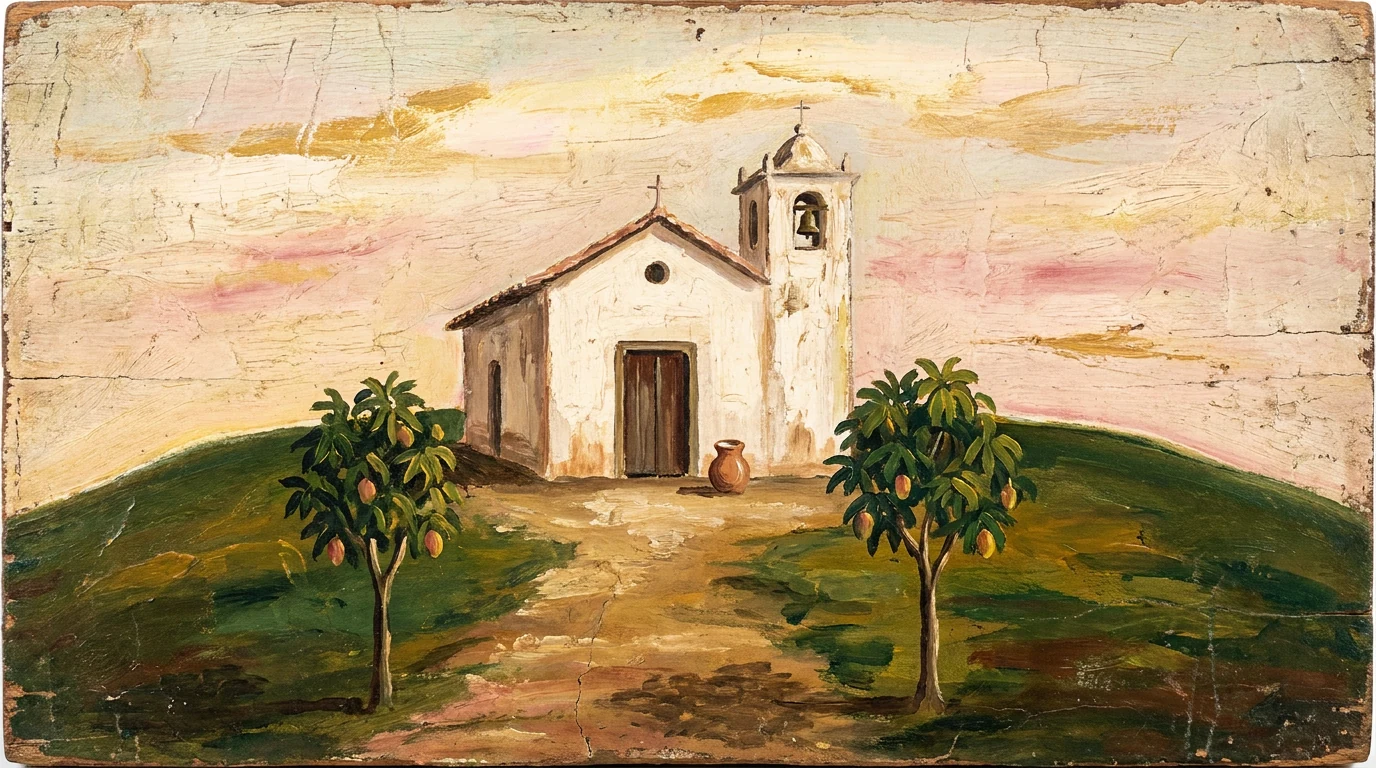
The cult arrived in Brazil around 1530, and their first church was in Igarassu, Pernambuco.
Why did the people and the terreiros stay on the 27th
Because the date already had another owner here. In Brazil, Cosme and Damião were associated with Ibeji, the double orixá of childhood, in an approximation made when enslaved Africans could not openly worship their deities. As shown by Itaú Cultural, in many Brazilian images the twin saints appear infantilized, much younger than in the European version. And frequently accompanied by a third figure, the Doum.
It must be stated clearly: syncretism is not equivalence. Ibeji is not "Cosme and Damião." They are figures from distinct traditions that the history of Brazil placed side by side on the same date. Recent research discusses to what extent there was a worship of Ibeji syncretized with the saints. The account of syncretism remains the most documented, and it is not a closed consensus.
The change of 1969 happened far from this: those who celebrated the 27th by terreiro heritage continued celebrating. The step by step of the party is in Cosme and Damião in umbanda.
The same day, four readings
In Catholic devotion. The 26th is the liturgical memory and the 27th is the popular festival, with dawn, masses, and procession.
In Candomblé. The day belongs to Ibeji, and the caruru is the food of the date. He goes first to the owners of the party and then to seven children, who eat together and with their hands, in a wooden gamela or clay bowl. Only then do the adults serve themselves. In Bahia, the caruru runs through the entire month of September. In 2024, the state registered the Festa do Caruru de São Cosme e São Damião as intangible Bahian heritage. It is a state registry, from IPAC, not federal. The dish and the precept are in caruru de Cosme e Damião. The nation changes the name of the child force: Ibeji in ketu houses, Vunji in those of banto tradition.
In Umbanda. The 27th opens a cycle that continues until October, with Children's Day on October 12 and Saint Crispin and Saint Crispinian on October 25. As recorded in the field research by Morena Freitas, the Criança giras are usually tied to these dates instead of entering the weekly routine. Whoever descends in this gira is in erês in Umbanda.
In Batuque. In the Gaúcho rite, Ibeji also has its own worship and a table served to the children, as shown in Ibeji in Batuque.
The sweet, the candle, and the names of the Children
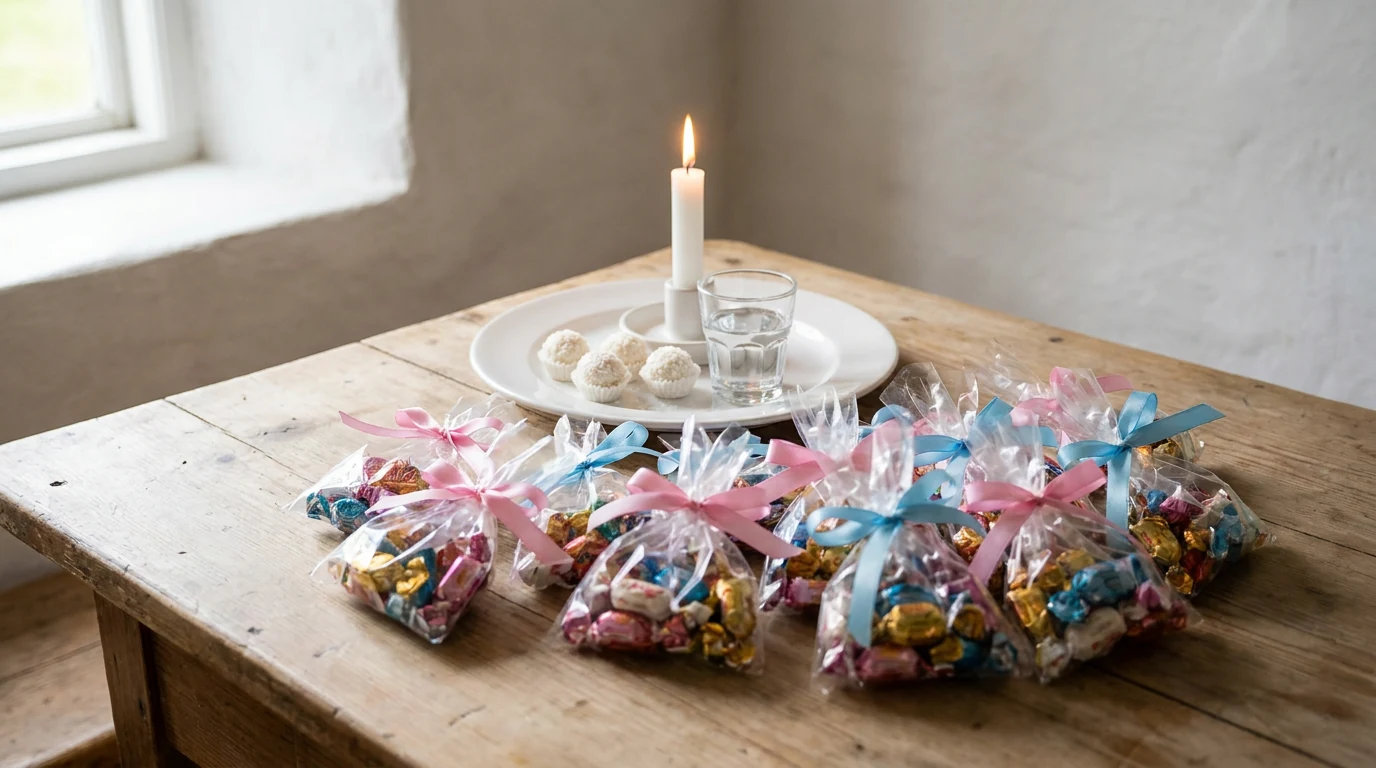
The sweet is the most visible gesture of the date, and it does not come from Catholicism: it was born from the association with the child orixás. Whoever delivers a bag at the door and whoever puts a sweet on the saint's plate does two different things, and only one of them is for taking. The difference, and the answer for who can take, is in Cosme and Damião sweets.
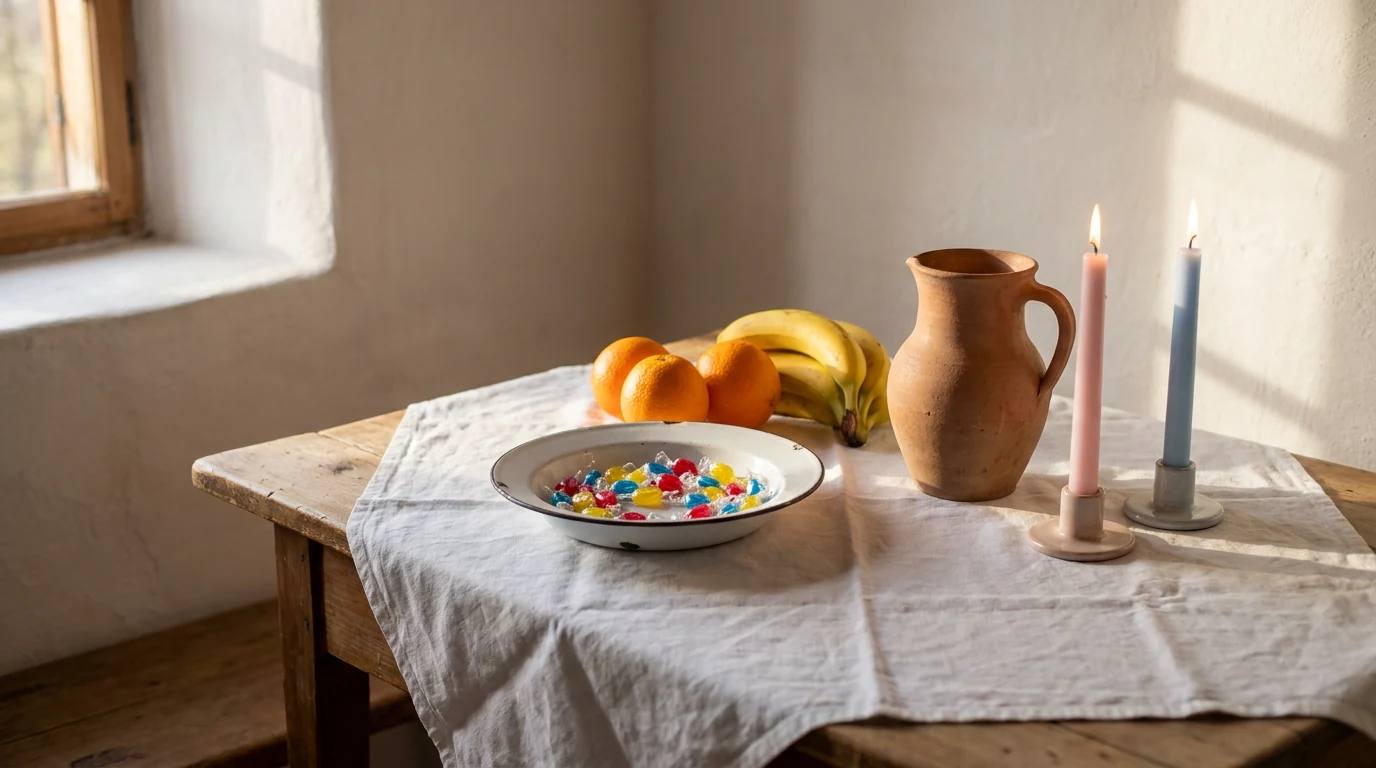
The candle of the Children's line is pink and light blue, and the day of the week is Sunday, according to the National Sanctuary of Umbanda. The number of candles varies from house to house. The use, the herbs, and the prayer are in the sheet of the Cosme and Damião candle.
The names. Each Criança receives a name in the terreiro, and they follow a recognizable pattern: a diminutive linked to the element of the orixá. The lists circulating on the internet are not canonical, and the correct way is that of the house of the one who celebrates. The formation rule and the names of erês with field records are in a separate article. To discover which line accompanies you, the what is your spirit test is a good starting point.
And the third in the image?
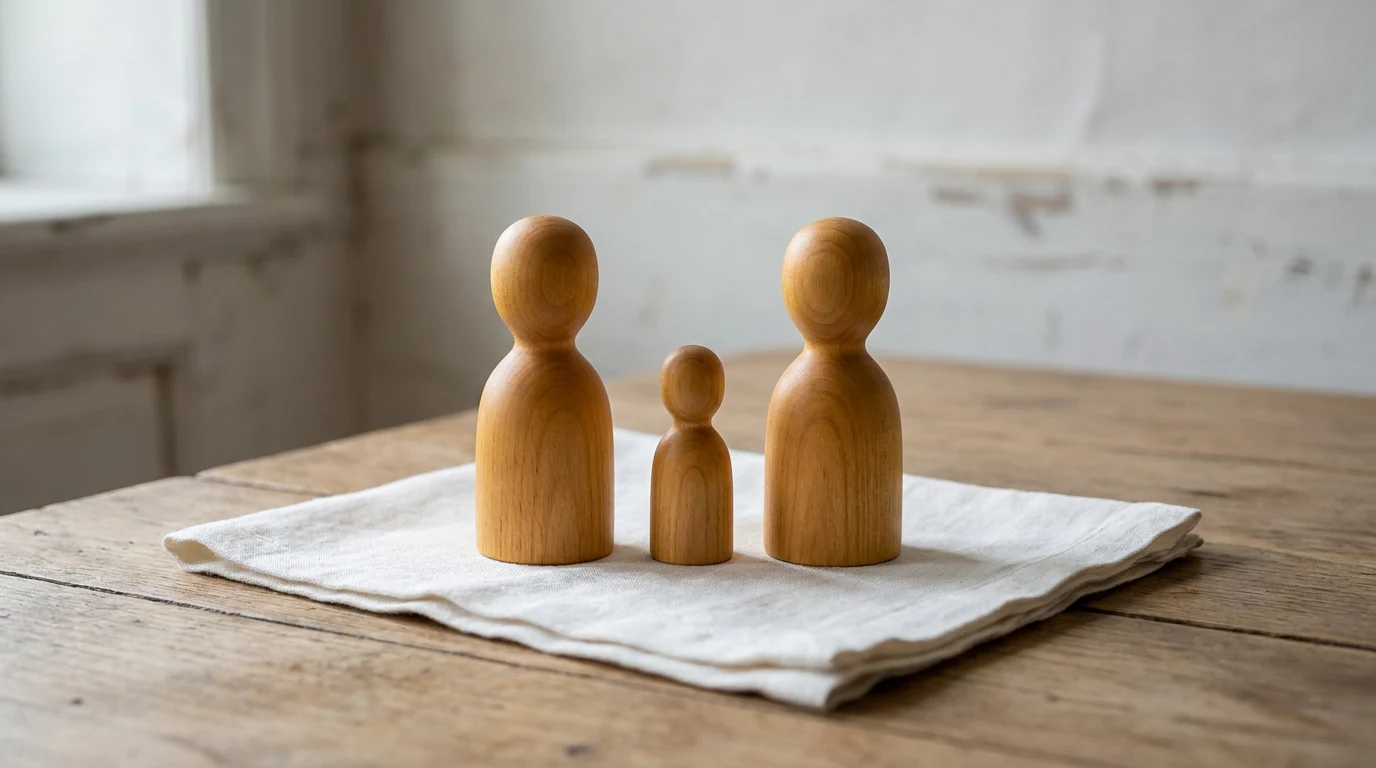
In many Brazilian statues, there is a third child next to the twins. They are usually called Doum, and the name comes from Doú, a corruption of Ìdòwú, which in Yoruba names one who is born right after twins.
In the baiano caruru, the seven boys who eat first represent seven brothers: Cosme, Damião, Doú, Alabá, Crispim, Crispiniano, and Talabi. Alabá and Talabi are also Yoruba names of birth order, which says a lot about where this list came from. What is document and what is devotion in its history is in who is Doum.
Frequently asked questions
Is the day of Cosme and Damião September 26 or 27?
In Brazil, the date celebrated is September 27. In the General Roman Calendar of the Catholic Church, the memory of the saints has been on September 26 since 1969. Many Brazilian parishes celebrate on both days, with the liturgical memory on the 26th and the popular feast on the 27th.
What day of the week does the day of Cosme and Damião fall on in 2026?
In 2026, September 27 falls on a Sunday, and September 26 on a Saturday.
Why did the Church change the date in 1969?
To not place two memories on the same day. Saint Vincent de Paul died on September 27, 1660. The Calendarium Romanum of 1969 records that the memory of Cosme and Damião was moved forward to the 26th because of this.
What is the day of Cosme and Damião in Umbanda and Candomblé?
In both, it is September 27. In Candomblé, the Ibeji caruru can be offered throughout the entire month of September. In Umbanda, the 27th opens a cycle of Children giras that goes until October 25.
How did Cosme and Damião die?
According to the Golden Legend, the source of the account recognized by the Holy See itself, they survived fire, stoning, and arrows before being decapitated. Catholic sources place the decapitation in the year 303. It is a hagiographic narrative, not an archival document.
Are you in doubt about what your house asked for the day of the 27th? You can check via the shop WhatsApp.
References
- Holy See. Calendarium Romanum, editio typica, 1969. Full text
- Vatican News. SS. Cosme and Damião, martyrs
- Archdiocese of Juiz de Fora, 2023. Saint Cosme and Saint Damião on September 26
- Archdiocese of São Salvador da Bahia, 2025. Novena and festival in Liberdade
- Itaú Cultural. The festival of the twins
- Order of Pharmacists, Portugal. Pharmacist Day
- FREITAS, Morena B. M. Religion & Society, v. 42, n. 2, 2022. Children in Umbanda