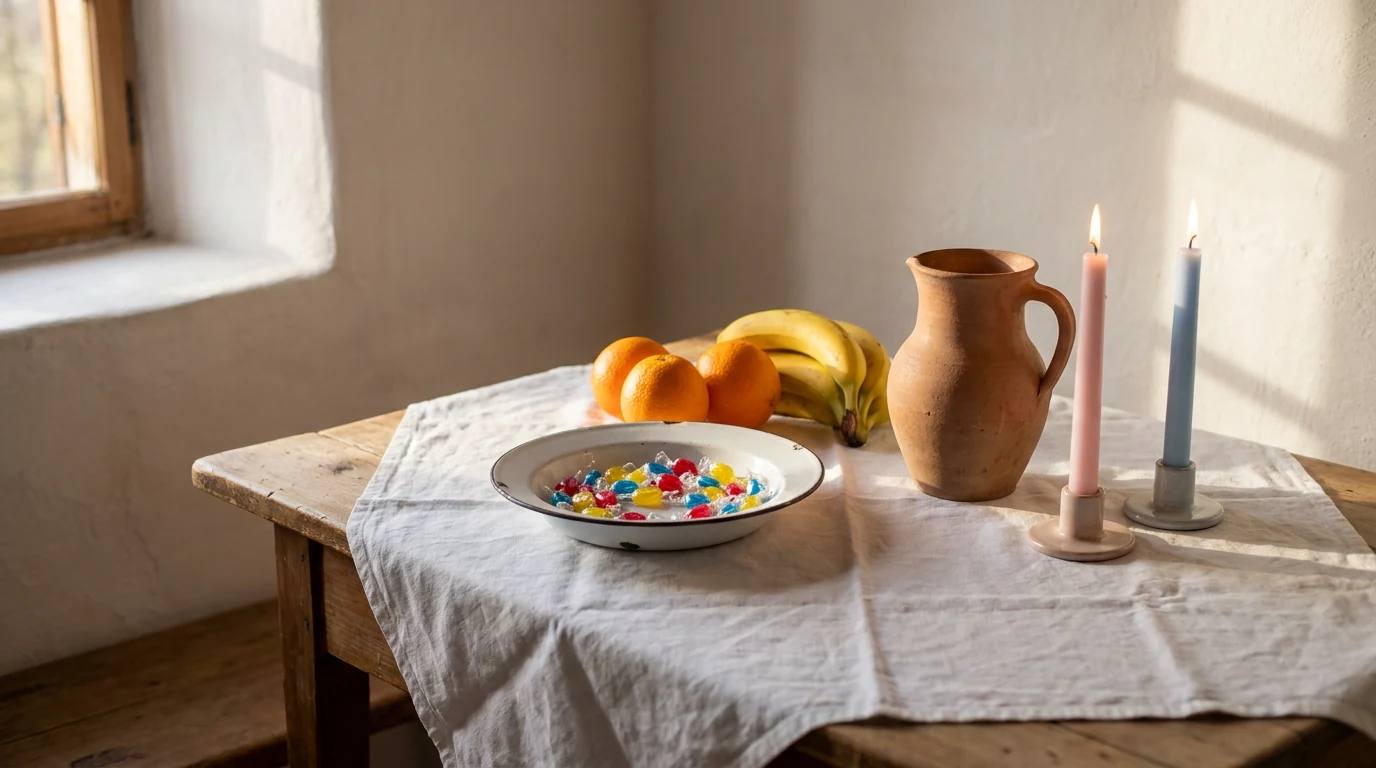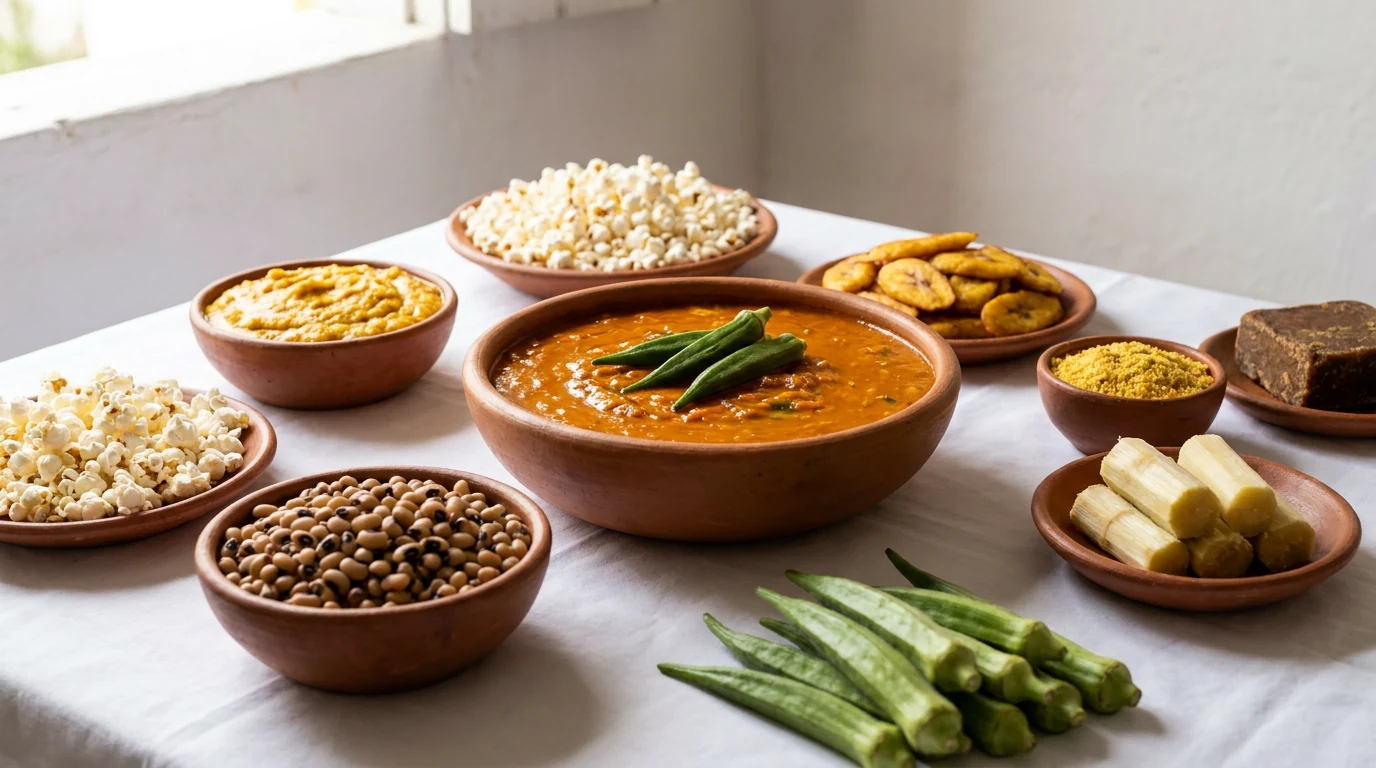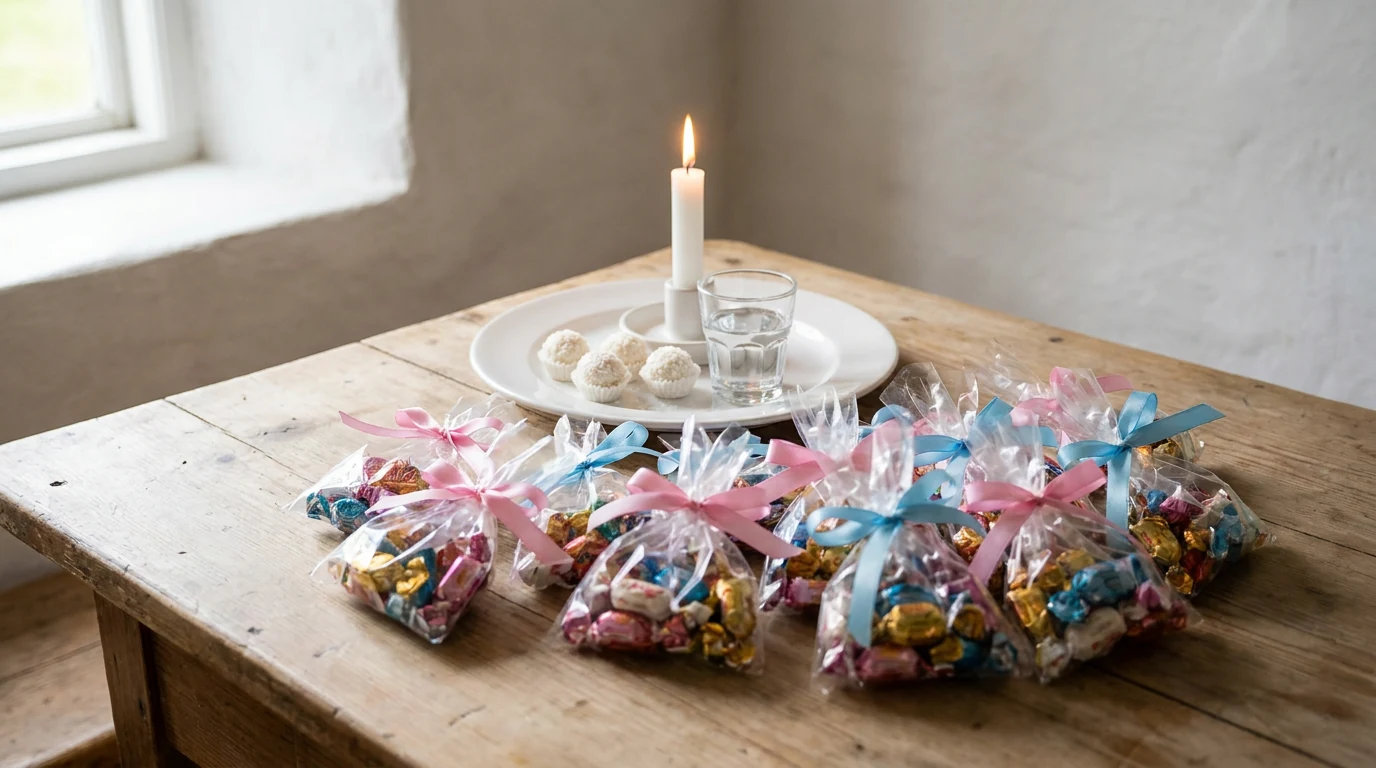
The cosme and damião sweets are distributed on September 27 as payment for a vow and as a tribute to the twin saints and the child spirits. In Catholicism, there was no connection at all between the two brothers and the sweets.
The practice was born here, from the association that enslaved Africans made between the twin saints and the child orixás. And, on the same day, two things happen that many people confuse: the little bag that goes to the child and the plate that stays for the saint.
Where does the candy of Cosme and Damião come from
From the association with Ibeji. As Professor Agnaldo Cuoco Portugal, from UnB, explained to the Agência Brasil, enslaved Africans could not openly worship their deities and brought the twin orixás closer to the Catholic saints. The tradition of giving candy comes from this proximity, and not from the calendar of saints. Who is Ibeji is in who is Ibeji, and the history of the date of September 26 and 27 has its own article.
The custom is older than is usually said. The book Doces santos, published by the National Museum of UFRJ in 2020, identified more than five hundred occurrences of the saints in the Rio press throughout the 20th century. The first advertisements for distributing candy to children are from a devotee, in 1924 and 1926, in the Jornal do Brasil. In the 1930s, the practice already appeared regularly, and by the end of the decade, there was already advertising for candy factories for the date.
In much of Rio de Janeiro, from the suburbs to Pequena África, the twin saints were already celebrated with candy at least since the 1920s.
Asked why they gave candy, the devotees interviewed by the research gave three answers, in this order: by promise, because I like it, and by tradition. The little bag left Rio and reached the rest of the country along with the expansion of Umbanda.
Offering or distribution: the two things from the same day
They are distinct gestures, and the difference resolves almost all the confusion surrounding the date.
The saints' plate is an offering. Before assembling the little bags, many families set aside two sweets of each type, or three when they want to include Doum. The sweets go on a plate near the statue of the twins, so they are the first to eat. With flowers, candles, and cups of water, this plate becomes a domestic altar and remains set up until the end of the party. Later, the sweets are ritually offered, that is, placed as an offering in a garden or in a square.
The little bag is a gift. It goes into the hand of the child who knocks at the door. The field research by Morena Freitas describes the 27th in two parts in a terreiro in Rio: the distribution of little bags in the afternoon and the festive gira at night, when those who eat the most sweets are the Children.
It is not a new arrangement. A testimony from 1978 already described this: "during the day I give the children's little bags and at night, at the time of the party, that is when we give the little plates".
| Little bag | The saints' plate | |
|---|---|---|
| For whom | the child who asks | the saints and the spirits |
| When | during the day, at the front door | set up before, stays until the end |
| Destination | is to take and open | left as a despacho in the garden or in the square |

What goes in the bag, and what is "mouse poop"
The white sweets are always present: suspiro, cocada, manjar, maria-mole. According to Freitas' research, they represent the Children well, associated with purity.
The choice is not random: it follows the dietary foundation of each erê. In houses in Rio recorded by research, for example, umbanda erê does not drink dark soda, which is usually offered to the exus mirins.
And here is the answer to one of the most curious searches of the week of the 27th. "Mouse poop" is neither a rumor nor an insult: it is the popular nickname for a sweet rice popcorn, sold in stores as rice popcorn or sweet rice. It appears listed among the classic treats in the bag in at least three academic works about the festival. Nothing to do with poison.
Can you take the sweet? The three cases
It depends on which sweet. There are three different situations, and only one of them is a real doubt.
The bag delivered at the door: you can. It was made for that. Asking for a sweet, in fact, is a child's activity: an adult who asks does so in the name of a child, and may hear no. The age limit is not fixed, and it is negotiated right there, at the door. In a scene recorded by the research, a grandmother asked for a bag for the grandson who had stayed asleep at home. She heard that only those present would get sweets.
The plate placed on the altar or left as a despacho in the square: no. That is an offering, it has its own purpose and was not placed there for anyone to take. It is the case that most confuses those who are not from a terreiro. It was already confusing in 1952, when a Rio newspaper recorded, with strangeness, children finding on a lawn in Leblon a cardboard plate with cocadas, candies, three white roses, and two figures of the santos.
Does candy do harm? What circulates every September is an old urban legend, of the same mold as the panic over adulterated treats at Halloween. The Boatos.org fact-check from 2022 tracked the audio that went viral in the country. It reached zero confirmed cases of death from distributed candy. The case that gave rise to the rumor was investigated by the Civil Police of Rio: train cameras showed that the teenager received nothing from anyone.
It is worth noting what the search did not find. The most complete research on the festival, with 534 pages and seven years of fieldwork in Rio, does not contain an occurrence of the word "poisoned." The theme does not appear in the field.
The fear that the ethnography records on the 27th is of another order. In a village in the Rio suburbs, Lucas Bártolo described the residents' fear regarding strangers who enter looking for candy. Fear of a stranger on the street, not fear of the candy.
One last thing, for those who have doubts because of their own faith: receiving a little bag does not force anyone to eat the candy. And the tradition has already solved this on its own, with a new label that the research records: those who deliver usually ask for permission from the child's parents first.
The child in first place
It is the foundation behind everything. In the baiano caruru, the food goes first to the owners of the party and then to seven children, who eat together; only then do the adults serve themselves. It is the hierarchy of the table inverted, from the youngest to the oldest, and the caruru of Cosme and Damião has its own article.
The Rio little bag repeats the same logic on another scale: the orixá eats first, on the altar plate, and the child comes right after. In Rio, children go out into the streets looking for a little bag; in Bahia, the caruru is served. Two expressions of the same date.
Regarding age, it is good to clear up a common confusion. The most typical promise of the twins is the seven years: when a child is born, one promises to give sweets for that period, asking for health and protection for them. It is seven years for the one who makes the promise, not the age of the one who receives. Many people extend the commitment for decades, as the research recorded: "I have given it since I was a child, until the day God wants".
Terreiros in Rio today add the delivery of food, clothes, and hygiene items to the distribution, transforming the date into social action. The step by step of the table in Umbanda is in a separate article.
Frequently asked questions
Can I take the sweet from Cosme and Damião?
The bag delivered at the door is a gift and is meant to be taken. As for the plate of sweets placed near the statue of the saints, or sent as a despacho in a garden or a square, it is an offering and has its own purpose: that one is not taken.
Does the sweet from Cosme and Damião do harm?
The story of the poisoned sweet is an urban legend. The fact-check by Boatos.org tracked the rumor and found zero confirmed cases of death by distributed sweets, and the largest field research on the festival records no cases. As with any sweet, common sense always applies.
What is the "rat poop" in the bag?
It is the popular nickname for a small sweet rice popcorn, sold in stores as rice popcorn or sweet rice. It appears among the classic treats in the bag in various academic works about the festival.
Is the sweet from Cosme and Damião Catholic or from Umbanda?
The saints are Catholic, but the distribution of sweets does not come from Catholicism. It was born from the association between the twin saints and the child orixás, and spread across the country along with Umbanda, leaving Rio de Janeiro.
What is the difference between the sweet in the bag and the sweet on the saint's table?
The little bag is a gift for the child. The candy on the table is an offering: it stays on the domestic altar until the end of the party and then is ritually dispatched (despachado). Many families set aside two candies of each type, or three when they include Doum, for the orixá's plate.
If you are in doubt about what your house requested for the 27th, you can check via the shop's WhatsApp.
References
- MENEZES, Renata; FREITAS, Morena; BÁRTOLO, Lucas (orgs.). Holy sweets: devotions to Cosme and Damião. Museu Nacional/UFRJ, 2020. Open access
- FREITAS, Morena B. M. Religião & Sociedade, v. 42, n. 2, 2022. Child's Food: sweets (and) ibejadas of Umbanda
- BÁRTOLO, Lucas. Revista Intratextos (UERJ), v. 9, n. 1, 2018. Between charity, fun, and fear
- DIAS, Júlio Cesar Tavares. Ciências Sociais e Religião, v. 17, n. 23, 2015. The sweet of Cosme and Damião
- Agência Brasil (EBC), 2021. Understand where the tradition of giving sweets comes from
- MATSUKI, Edgard. Boatos.org, 2022. Fact-checking the rumor of poisoned sweets