Try searching for keywords such as the name of an orixá (Ogum, Oxum), an herb (Arruda, Alecrim), or a tradition (Umbanda).
↑↓Navigate↵AccessESCClose
0 found
Preto Velho candle
Patience, advice, and a gentle cleansing with the line of Pretos Velhos and the souls
Preto Velho candle
7-day candle · stays lit for 7 days7 dias
Faith and intention
What is the meaning of lighting a virtual candle?
Whoever lights a candle never lights just wax and wick. They light a prayer request. The flame is the visible sign of something happening inside: the person stops, thinks of those they love, of what they need, of what they want to thank for, and delivers that to the sacred. That is why, in terreiros and in churches, it is said that what matters is the intention.
With the virtual candle, it is the same thing. You choose the candle carefully, write your prayer request in your own words, make your offering, and light it. Each step is a gesture of faith, and faith does not depend on the material of the candle. It is in you, at the moment you decide to light it and trust.
The candle stays lit on the altar for the time you chose, and you can return to look at the flame, pray again, and renew the prayer request. For those who live far away, cannot have fire at home, or need support in the rush of the day, it is a way to keep the flame of devotion burning.
edit_noteStep 1: Write the prayer request in your own words
volunteer_activismStep 2: Make your offering
local_fire_departmentStep 3: Light with faith and trust
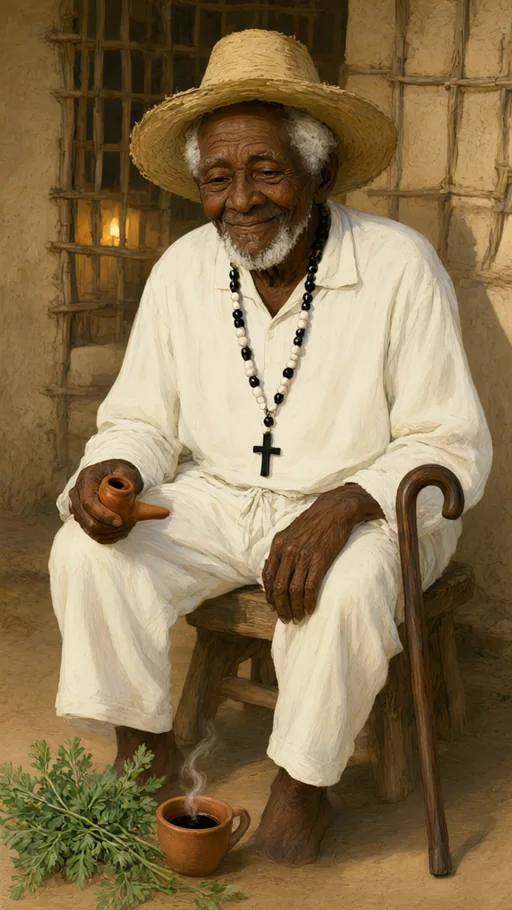
The Preto Velho candle is the candle for the entire line, not for a specific spirit guide with a name. It bears the label of an elder sitting on a stump and the two most registered colors for the Pretos Velhos: black, of the earth and of the souls, and white, of peace. It serves for those who want to ask for help from this line and do not yet know who their Preto Velho is, or for those who prefer to greet everyone at once, the grandfathers and grandmothers.
Pretos Velhos are spirits who present themselves as black elders who passed through captivity and kept their faith, patience, and charity. In Umbanda they form a line of ritual work, they are not orixás (orishas). Most houses place them under the irradiation of the souls, linked to Obaluaê, and some of them under Oxalá (Obatala). Monday is the most cited day of the week, May 13 is the date of the year, and the greeting is Adorei as Almas!
At home, this candle asks for a low tone, a sugarless coffee, and time. Preto Velho resolves slowly, like someone untying a knot with their fingers, and does not work to bind, punish, or change anyone's will. If you already know your Preto Velho for consultation, prefer the candle with his name; this one serves well to call the entire line.
What is it for
What is the purpose of the Preto Velho Candle
The Preto Velho candle is black at the bottom and white at the top, the colors that Umbanda gives to the entire line of the Pretos Velhos. It is lit to ask for patience, counsel, comfort, and a gentle cleansing, without needing to know the name of the spirit guide, under the irradiation of the Almas.
psychology01
Advice when the head cannot decide
For difficult choices at work, at home, or in the family. Light it, tell the problem, and stay silent for a while. Many people report clarity in the following days.
cleaning_services02
Removing the weight of a bad week
After a heavy environment, an argument, or a heavy visit, the candle with arruda by its side performs the cleansing in the way of the Pretos Velhos: slowly and without shaking the house.
favorite03
Consolation in mourning and in longing
In the weeks after a loss, the candle accompanies the prayer for those who left and for those who stayed. It does not take away the pain all at once, but helps to go through it with support.
family_restroom04
Patience inside the house
For parents and children who only fight, a tired couple, or a difficult relative. Ask for calm for your part of the conversation, without asking to control the other person's will.
volunteer_activism05
Thanking the vovôs and vovós
When a piece of counsel from a gira worked out or a hard phase passed, the candle with a brewed coffee is the simple way to say thank you to the entire line.
Who rules this candle
Orixás and spirits of the Preto Velho Candle
Pretos Velhos
The vovôs and vovós of the Almas line
The candle is for the entire line: the label shows an elder with a pipe and the prayer request goes to the Pretos Velhos and the Pretas Velhas who work in your house or who look over you, even without a known name.
Obaluaê
Lord of the earth and of the line of the Almas
In most Umbanda houses, the Pretos Velhos work in the irradiation of the Almas, which belongs to Obaluaê. The black of the wax speaks of the earth that receives what weighs and returns it transformed.
There are terreiros that place the Pretos Velhos under Oxalá, for the charity and the patience they teach. The white on top is his part, and the houses do not agree on this regency.
Prayer of the Preto Velho candle to the Almas line
“Adorei as Almas! My Pretos Velhos and my Pretas Velhas, vovôs and vovós of Aruanda, I do not know the name of each one, but I know that you look over those who arrive with humility. I light this black and white candle and leave the bitter coffee beside, in the simple way you like. Take from me the haste that makes me err and the stubbornness that makes me suffer. Bless my house with the leaf and with the smoke of the pipe, and take to the earth what does not belong to me. Where there is crying, put comfort. Where there is fighting, put a gentle word. Teach me to wait without giving up and to forgive without forgetting who I am. Hail all the blessed Almas. Adorei as Almas!”
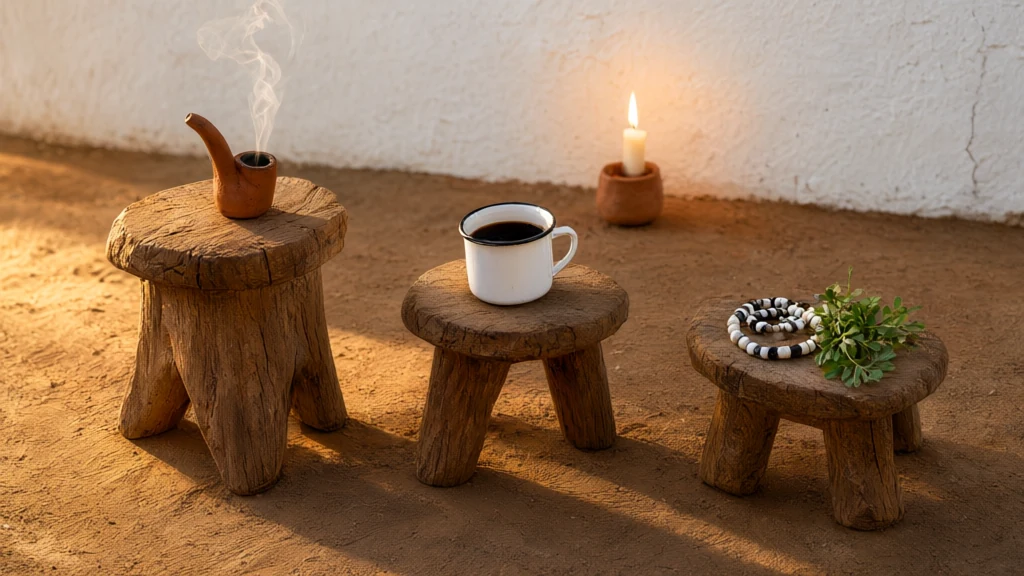
Pretos Velhos attend sitting on a stump, close to the ground. A low table, a small stool, or the foot of the altar serve, as long as it is away from curtains and drafts.
2
Serve the coffee before lighting
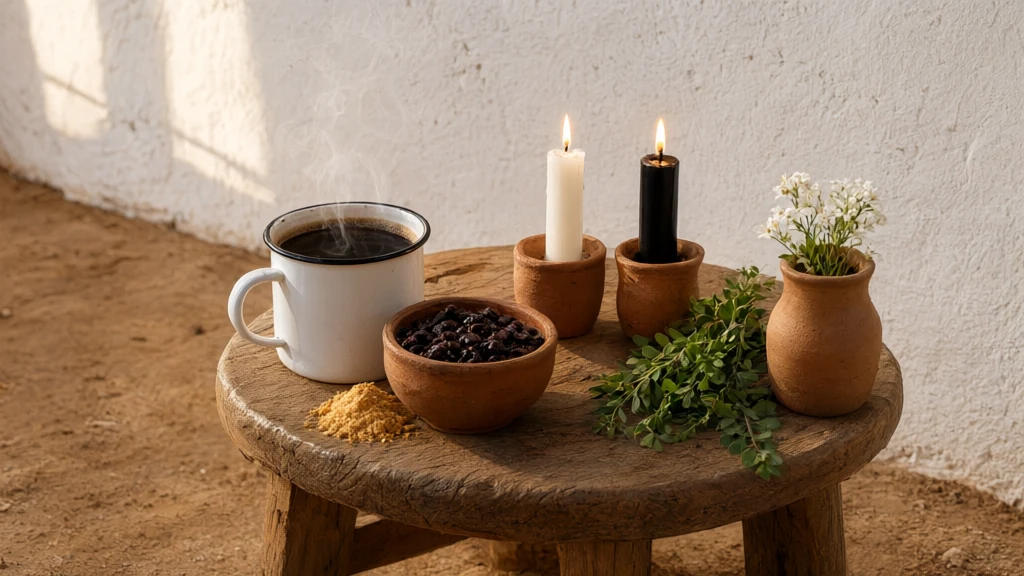
Brew the coffee, let it cool down, and place the cup next to the saucer, with the glass of water on the other side. In the line of Almas, the offering arrives before the prayer request.
3
Speak as if with a grandfather
Hold the candle and tell what is happening, without embellishment and without haste. If you do not know the name of your Preto Velho, call the line: vovôs and vovós, Pretos Velhos of my house.
4
Light it and pray with the rue
Light it with a match, place the rue at the foot of the saucer, and say the prayer. Then stay quiet for a few minutes. Silence is the part of the prayer in which the counsel usually arrives.
5
Finish without blowing
If you need to leave, smother the flame with a saucer. At the end, coffee, water, and rue go to the earth of a pot or the backyard, and the remaining wax goes to the trash wrapped in paper.
health_and_safety
Precautions before lighting
errorThe 7-day candle burns day and night: use a deep saucer, away from curtains, paper, and animals, and do not leave the house for a long time with it lit.
errorConsultation, blessing, and firmeza of a medium with Preto Velho are done in the terreiro, with the leader. The house candle is for prayer and does not replace the gira.
errorPreto Velho is a spirit guide of charity: do not request harm to anyone nor that someone returns by force. This type of request does not match the line.
errorIf the request involves someone's health, the candle accompanies the treatment and does not take its place. Follow the doctor's guidance and do not stop the medication.
Ceromancy
What the flame of the Preto Velho Candle shows
Traditional terreiro reading. Before interpreting, check if there is no wind, crooked wick, or poor quality candle.
local_fire_departmentGood sign
Gentle, low, and firm flame
It is the typical burning of a Preto Velho candle. Many houses read it as a request received and ritual work running in the time of the line, without haste and without stumbling.
local_fire_departmentGood sign
Clear glass at the end of the week
On the 7-day candle, finishing without soot is usually read as a completed descarga. Give thanks with another coffee when you can.
local_fire_departmentAttention
Dark smoke right at the beginning
Some houses read it as a charge being burned. Change the water, reinforce the arruda and pray again; if it happens in several candles, take the case to a gira.
local_fire_departmentAttention
Wax that cries and drowns the wick
It may just be a soft wax candle. If not, many people read it as sadness in the environment: take a herbal bath and set another candle on the following Monday.
local_fire_departmentObserve
Flame leaning to one side
It is almost always wind or a crooked candle on the saucer. Straighten it, protect it from the air and only then think about a spiritual reading.
What is the candle color for Preto Velho?expand_more
Black and white is the most used combination, and white alone also works. These are the two colors that Umbanda most records for the line: black speaks of the earth and the souls, white of peace. Some houses use only white, others follow the color of the orixá of the bead necklace. If your terreiro has its own custom, follow that.
What is the Preto Velho candle for?expand_more
It serves to ask for patience, advice, consolation in mourning, and a gentle cleansing of the house and the body to the line of the Pretos Velhos. It accompanies the prayer and the bitter coffee and helps cross the difficult phase with calm. It is not a candle for binding nor for harming anyone.
What is the difference between the Preto Velho candle and that of Pai Joaquim or Vovó Maria Conga?expand_more
The Preto Velho candle calls the entire line, without a name. Those of Pai Joaquim de Aruanda, Vovó Maria Conga, and others carry the label of a single guide and serve those who already know who works with them. If you do not know the name of your Preto Velho, this is the most indicated one.
What is the best day to light a candle for Preto Velho?expand_more
Monday, preferably at dusk. It is the day of the week most cited for the Pretos Velhos and for the souls. In the year, the date is May 13, and there are those who propose November 20. In times of need, you can light it on any day, with the same respect.
Can I light a Preto Velho candle inside the house?expand_more
You can, and it is one of the most common devotions at home. Choose a low, clean, and safe corner, with sugarless coffee and water nearby. You do not need to be a medium. Ritual work of foundation, consultation, and medium firmeza are left for the terreiro.
Can I blow out the Preto Velho candle and light it later?expand_more
You can, without blowing. Smother the flame with a saucer or a metal lid and relight it upon your return, repeating the prayer request. The ideal for the 7-day candle is to let it burn continuously, in a safe place, so the prayer request does not stay stuck in the middle.
What to do with the leftover coffee and wax?expand_more
The coffee and water go into the soil of a pot, garden, or backyard, along with the arruda. The remaining wax goes into the common trash wrapped in paper, and the cup is washed and returns to normal use. It is not necessary to take anything to the cemetery.
Does a virtual candle have the same value as a wax candle?expand_more
What gives strength to the candle is the intention of the one who lights it. In wax or on a screen, you set aside a moment, think of your prayer request, deliver your offering, and light it with faith. The flame is the sign; the faith is yours and goes along with it. When the situation calls for firmeza in the terreiro, the virtual candle does not replace the zelador, but as a prayer and a prayer request, it is worth just as much as a candle lit at home.
Who are the pretos-velhos in Umbanda? Learn about their origin, symbols, spirits such as Pai Joaquim and Vovó Maria Conga, and the governance of the line of the souls.
What preto velho likes to receive: coffee, rolled tobacco leaf, white and black candles, and flowers. See the day to bring it, where to leave the offering, and what not to offer to him.
Preto Velho day is May 13, the date of the Lei Áurea. See where the November 20 proposal comes from, what the houses do on that day, and what day of the week it falls on.
Preto Velho names combine Pai, Vovó, or Tio, a saint's name, and a place. See what each part means, what research confirms, and what circulates without a source.