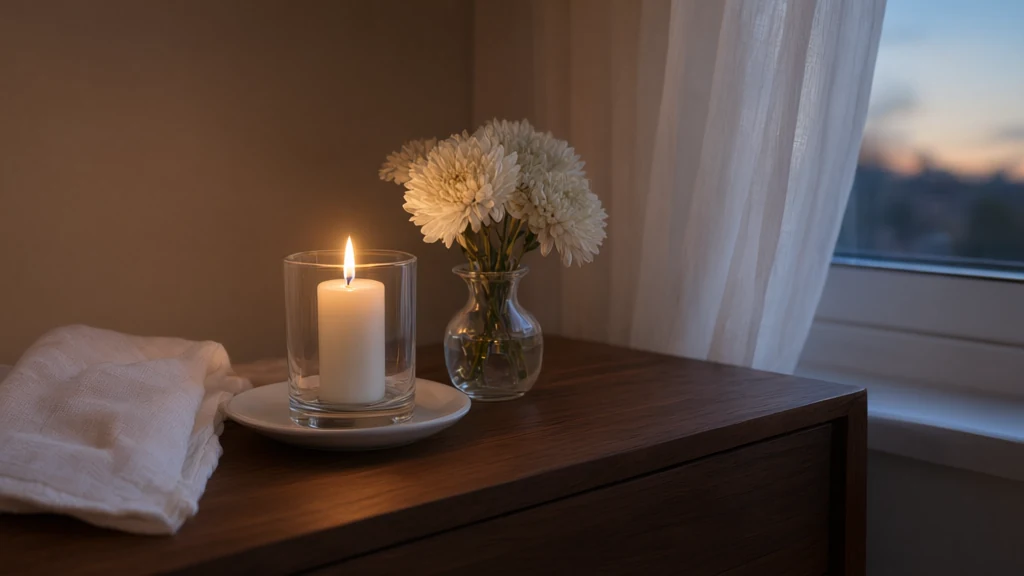
Dreaming of a person who has already died, for Umbanda, can be a memory, longing, or an encounter of spirits during sleep, and almost always brings comfort. There is no table of meanings: the house confirms a message. Upon waking, write down the dream, pray for the person, and light a white candle outside the room.
Near All Souls Day, November 2, this dream carries more weight. Below, what Umbanda and Candomblé say, when the dream asks for caution, and what to do with it.
What does it mean to dream of a person who has already died in Umbanda?
In Umbanda, the dream is one of the paths of contact with the ancestors. A priest was heard by the magazine Sacrilegens, from UFJF. For him, Umbanda "recognizes the dream as an essential means of connection with the sacred and of communication with the ancestors and ancestors."
It can be: a visit, longing, or memory | Who interprets: your house | What to do: write it down, pray, white candle
The idea of an encounter in sleep comes from Spiritism, which Umbanda inherited. For Reginaldo Prandi, from USP, the common point between Umbanda and Kardecism seems to be the mediumship used "for communication with the dead." In The Spirits' Book, Allan Kardec writes that the spirit loosens a bit from the sleeping body:
"During sleep, it regains a bit of its freedom and corresponds with those who are dear to it, whether in this world or in others." (Allan Kardec, The Spirits' Book, question 403)
But not every dream is a visit. Kardec himself says that many dreams are just memories mixed with "what worries you while awake." The priest in the study goes in the same direction: the dream is like mist and is not interpreted literally. The general meaning of dreams for the religion is in dreams in Umbanda. The same care applies to those looking to dream with a snake or dream with fire.
Is dreaming of someone who has already died good or bad?
Most of the time, it is good. A study heard from 278 mourning people in the United States. Of them, 58% said they dreamed of someone who had died. The majority described pleasant dreams, or pleasant and sad at the same time. Few had only bad dreams.
The most common themes were good memories, the person healed and at peace, and the person passing a message. Six out of ten said that the dream moved their own mourning, bringing acceptance and comfort.
Umbanda says something similar in other words. For the priest heard by UFJF, dreams help by "calming feelings, expanding the understanding of suffering, and ordering thoughts." And he completes: "dreams can heal."
The dream asks for more attention when:
- It returns many times with the same scene of distress.
- It leaves weight on the body or a fear that does not pass during the day.
- It brings a prayer request that you do not understand or that affects your life.
In these cases, the path is to talk with the house, and not look for an answer in an internet list.
And when the person appears asking for prayer?
Many people dream of the father, the mother, or the grandmother asking for a prayer. Fulfilling the prayer request does not require a ritual: for Kardec, the prayer is valid wherever it is made, "as long as it is made with the heart." He also says that the memory of the living reaches those who died "much more than you can suppose.
In Umbanda, the prayer for the dead has its own place in many terreiros. In a terreiro in Ribeirão Preto studied at USP, the house of the souls has a white candle that the leader replaces every day. There, the house of the souls "is a devotion of the line of the pretos-velhos." Its obligations fall on Monday, the day of the souls. The researcher shows that this devotion reveres above all the dead of the family, linked by kinship and affection. Since this line works, it is in the line of the souls in Umbanda.
The National Sanctuary of Umbanda maintains the Cross of Souls (Cruzeiro das Almas), heir to the crosses that marked "where people should make their prayers to the deceased." If you cannot go to a cross, the prayer made at home is valid in the same way.
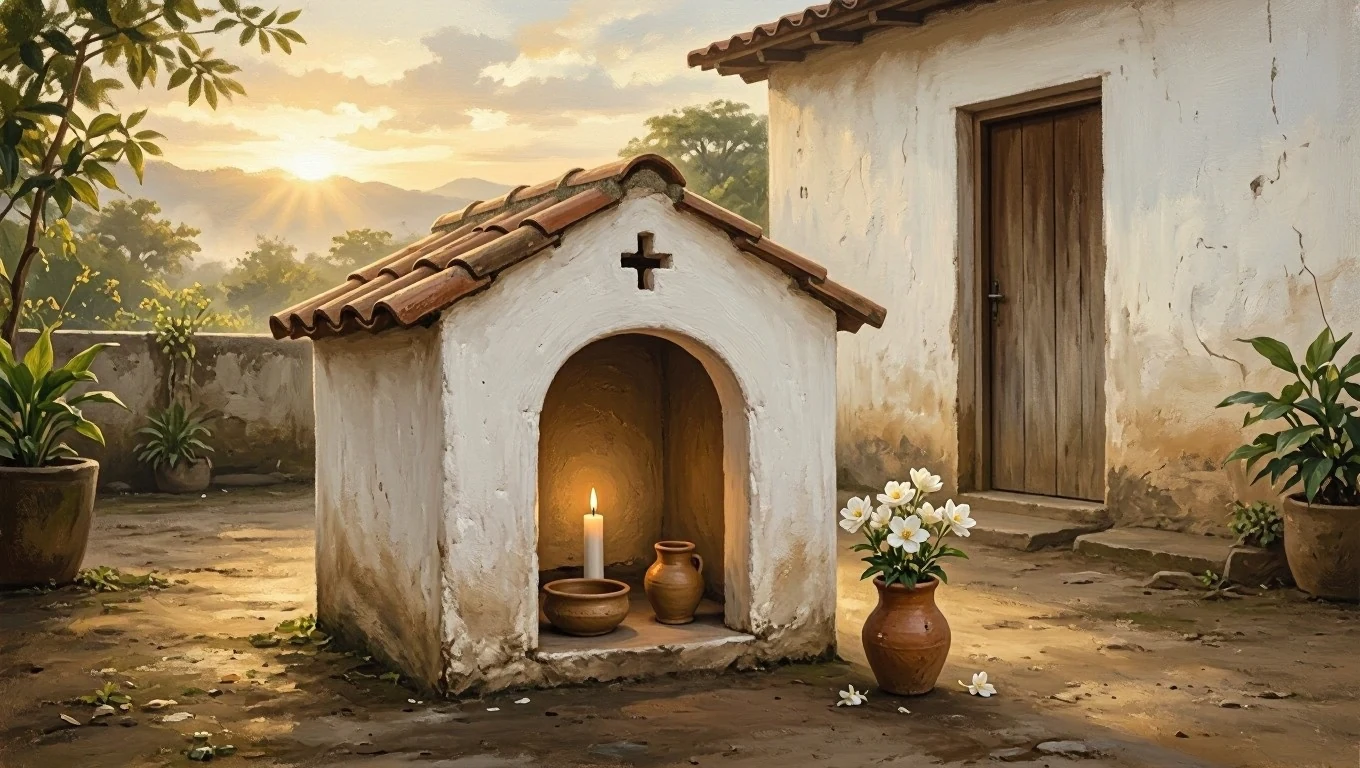
And in Candomblé? The egum and the orum
In the Ketu nation Candomblé, the dead is egum. Reginaldo Prandi explains that, in the Yoruba vision, the egum goes to the orum, the spiritual world, and can return by being reborn in the same family. The funerary rite, the axexê, serves, among other things, to "dispatch the egum of the dead, so that he leaves the aiê and goes to the orum."
Tradition takes care of keeping the two worlds separate. In the axexê, the attendees use palm leaf, the mariô, on the wrist "as protection against any eventual approach of the eguns." In Candomblé and in the houses of Egungun, the worship of the dead stays in its own space, outside the main temple, and Iansã (Oya) is "the mother of all the Egun."
Therefore, for those who are from Candomblé, dreaming of a deceased relative is not a dictionary matter. If the dream asks for something, the one who says is the pai or mãe de santo of your house. What the egum is can be found in egum in Candomblé, and the rite, in what is axexê.
What to do after dreaming of someone who has already died
Upon waking up, do the simple thing, without haste and without fear:
- Note the dream. Write down who appeared, what was said, and how you woke up. In Umbanda, a dream message is confirmed later, with the house.
- Pray for the person. An Our Father, a Hail Mary, or your own words. Kardec reminds us that the place does not matter.
- Light a white candle, if you wish. It is the color that a terreiro studied at USP maintains in the house of the souls. Leave the candle in a firm support, about 30 cm away from curtains and paper, and never in the room where someone sleeps. For those who prefer not to have a flame at home, the virtual candle from Joia Mística has the white candle, lit on the shop altar and accompanied by the link.
- Do not take it literally. Kardec calls it "absurd to believe that dreaming of such a thing announces such another thing."
- Seek the house if the dream returns. The leader, the caretaker, or the mãe de santo know how to read what the dream asks of you.
The step by step of a real candle is in candle for those who died. What is done on the date is in All Souls Day in Umbanda.
When to seek the house, and when to seek a doctor
Dreaming of those who died is part of mourning and is not a disease. But a dream that takes away sleep for weeks deserves care. Psychiatrists Adair de Menezes Júnior and Alexander Moreira-Almeida list signs of a healthy spiritual experience, among them "absence of psychological suffering, absence of social and occupational impairments."
A dream with anguish that does not pass, insomnia, or the desire to isolate oneself also calls for a doctor or psychologist. The house cares for the spirit, and the treatment cares for the body. One thing does not replace the other. The time and way of living the loss in the religion are in mourning in Umbanda.
Frequently asked questions
What does it mean to dream of a father or mother who has already died?
Most of the time, it is longing and comfort. In a survey with 278 mourners, the most common themes were good memories, the person at peace, and a message. In umbanda, it can also be an encounter during sleep, an idea that comes from Kardec. If the dream brings a clear request, take it to your house.
Is dreaming that the person who died is alive a bad sign?
No. No source we consulted treats this dream as a bad warning. Kardec says that many dreams mix memories with what worries us while awake, and those who have just lost someone still live with their presence. Seeing the person alive in the dream may be memory working through the mourning.
Is dreaming of someone who died calling me a warning of death?
No. A priest of umbanda heard in a UFJF survey says that dreaming of a death does not mean it will happen: it can be fear and anguish. Kardec calls it absurd to read a dream as an announcement. If the dream repeats and scares you, talk to your house and take care of your sleep.
Should I light a candle on All Souls Day because of the dream?
You can, if you want, but it is not an obrigação. The prayer is valid on any day and in any place, according to Kardec, who writes that spirits attend on All Souls Day as on any other day. If you light one, use a white candle in a firm support, outside the bedroom and away from curtains.
References
- Bressan and Oliveira, Sacrilegens (UFJF), 2025. Terreiros of the psyche: dreams in umbanda
- Kardec, The Spirits' Book, questions 400 to 404. Sleep and dreams
- Kardec, The Spirits' Book, questions 320 to 329. Commemoration of the dead
- Arribas, NER Debates (UFRGS), 2013. Review of Os mortos e os vivos, by Prandi
- Prandi, 2000. Concepts of life and death in the axexê ritual
- Oliveira, Habitus (PUC Goiás), 2012. Rituals to the dead of batuque and candomblé
- Nuzzi Dias, USP, 2011. Ancestral chains: the pretos-velhos of the Rosary
- National Sanctuary of Umbanda. Cross of Souls (Cruzeiro das Almas)
- Wright et al., American Journal of Hospice and Palliative Medicine, 2014. Dreams of the deceased and mourning
- Menezes Júnior and Moreira-Almeida, Revista de Psiquiatria Clínica, 2009. Spiritual experiences and mental disorders
- U.S. Fire Administration (FEMA). Candle fire safety