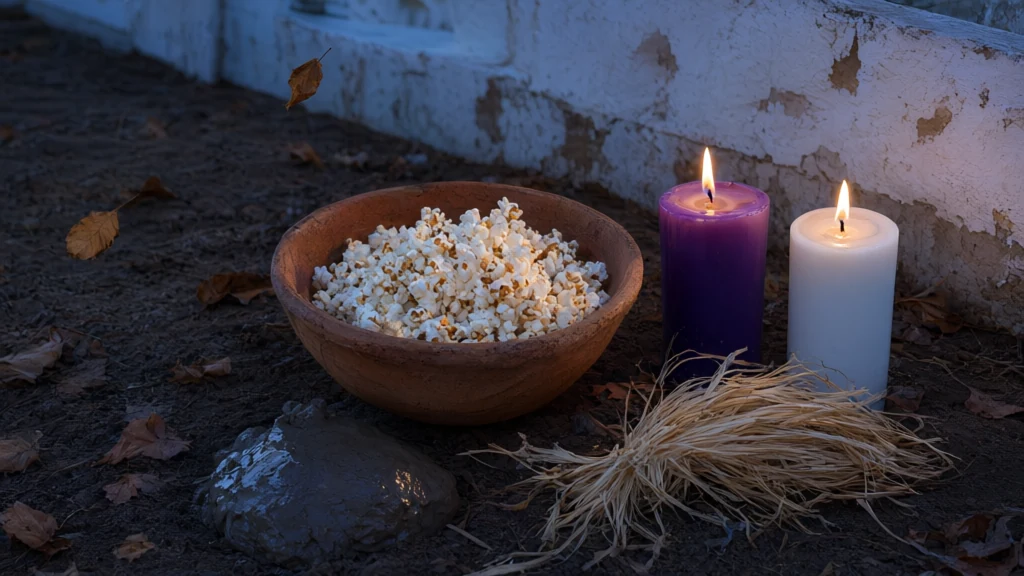
The mourning in Umbanda has no single deadline or color: the house marks the time and the way, and death is seen as the spirit's passage to the spiritual plane. A terreiro in Florianópolis observed a year of mourning for its priestess and warned that other houses take less or more.
At the wake, the color that appears in the consulted houses is white. For those who are a medium, returning to the gira is coordinated with the leader.
How mourning works in Umbanda
Deadline: defined by the house | Who decides: the house leader | Color at the wake: white, in the consulted houses | Rite: varies from terreiro to terreiro
Umbanda does not have a single book. The book of Terreiro do Pai Maneco, in Curitiba, says: "Our religion, therefore, is not codified. Each house has its own dogmas." It is the same with mourning. The research by Gisleine Nogueira and Orlando Gunlanda, with Umbandistas from Joinville, records the particularities of each terreiro also in funeral practice.
There are houses that do not even say "death." Mãe Gardênia d’Iansã (Oya), from Centro Espírita de Umbanda Jesus Maria José, told the Diário do Nordeste that some segments prefer "departure." In her house, the liturgy follows the person's function in the terreiro.
Mourning is not to hide the pain. When they lost their priestess, the Terreiro de Umbanda Reino de Iemanjá (Yemoja) wrote:
“The mourning period is extremely important for us to experience the sadness of the pain so that we can be reborn.” (Terreiro de Umbanda Reino de Iemanjá, 2011)
How many days of mourning in Umbanda?
There is no number of days that applies to all of Umbanda. The timeframe belongs to the house and changes depending on who died. The most detailed case we found is that of the Terreiro de Umbanda Reino de Iemanjá (TURI), an umbanda of Almas and Angola. The house announced mourning for the priestess Dilma de Iemanjá Ogunté, who passed away on July 7, 2010.
| House | Who died | Mourning period |
|---|---|---|
| Reino de Iemanjá, Florianópolis (umbanda) | the priestess | one year; less or more in other houses |
| Ilé Àṣẹ Òrìṣà Wúre, Porto Alegre (batuque) | son or brother of santo | from 7 to 32 days or more |
| the same house of batuque | Pai, Mãe, or avô de santo | one year |
Batuque, a religion from Rio Grande do Sul, is included only for comparison. There, according to babalorixá Hendrix Silveira, the one who sets the deadline is the babalorixá or the iyalorixá. The end of the ritual mourning is called "breaking the mourning".
There is also the mourning of those who remain, which does not follow a calendar. Psychologist Nazaré Jacobucci summarizes: mourning "is individual and we cannot determine a time for it to end".
What is the color of mourning in umbanda?
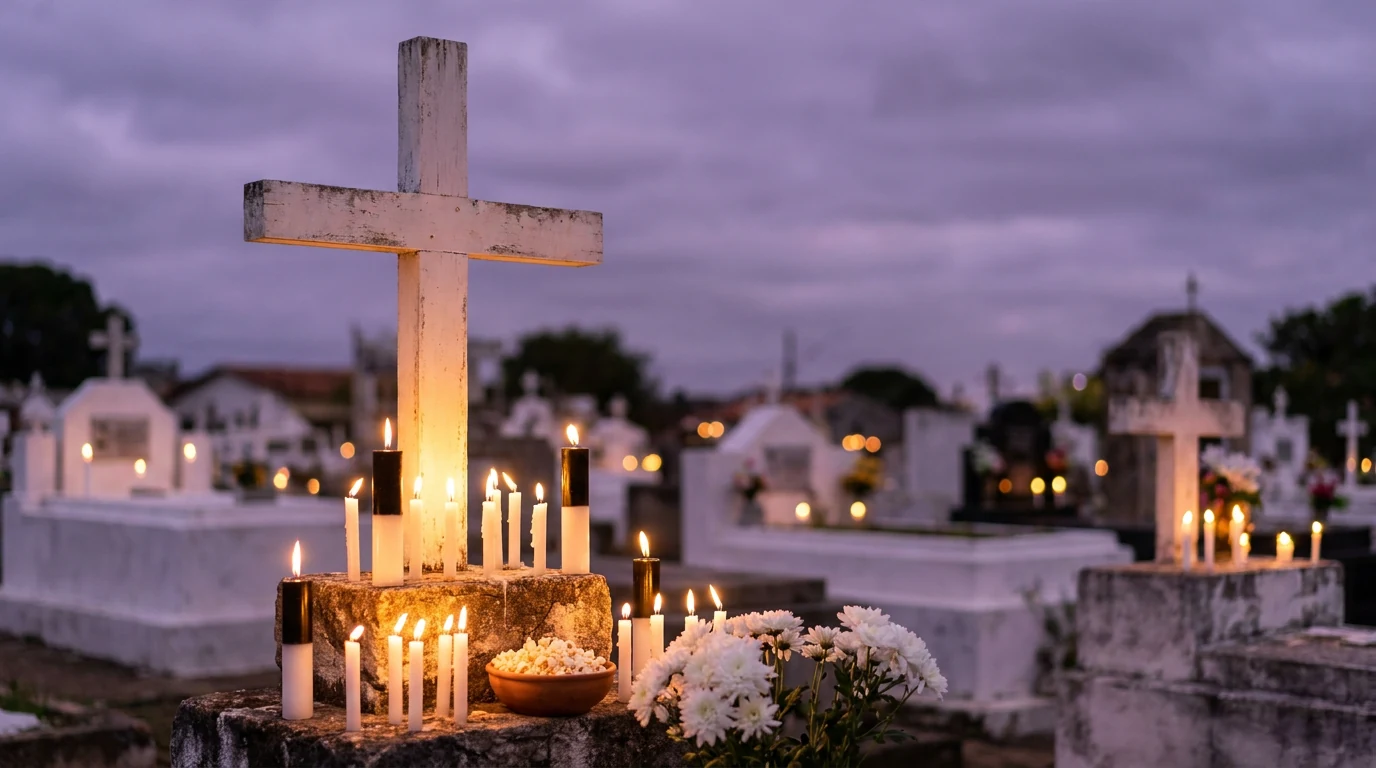
In the umbanda houses consulted, the color that accompanies death is white. None of them fix a clothing color for the family. At the Templo Espiritual de Umbanda Caboclo Pena Verde, in São Paulo, the body is dressed "in white clothes". At the wake, there are white candles at the head, at the feet, and on both sides of the coffin. Mãe Dinan Sátyro, from Centro de Umbanda Geração da Fé, speaks of four white candles around the grave.
The phrase "white is the color of mourning" comes from Candomblé. Babalorixá Márcio de Jagun explained to Notícia Preta the white at Preta Gil's wake:
"White, starting from Yoruba culture, which is reflected in Nagô tradition Candomblé, is the color of mourning." (Márcio de Jagun, 2025)
For him, white there is transition. Black "usually represents mourning in Western culture". No source we opened prohibits black at the wake of an umbandista. In case of doubt, ask the family.
Can the mourning medium go to the gira?
They can, if the leader agrees. No source we opened brings a period of absence for the mourning medium in umbanda. Terreiro do Pai Maneco asks that the medium arrive at the gira with "the mind without resentment or anger". In case of doubt, ask the leaders.
The Joinville research heard both sides. One medium said that "the gira serves for everything, even for what you cannot imagine." One interviewee distanced herself after the loss: "it seems like it created a block." Both reactions fit within mourning.
What usually comes up in conversation with the house:
- To incorporate or just to set. Whether the medium gives passage to the spirit guide or just sustains the chain during these days, the leader decides. See how firmeza in Umbanda and the gira work.
- The precept. The protection before the gira remains valid. What is included in it is in precepts in Umbanda.
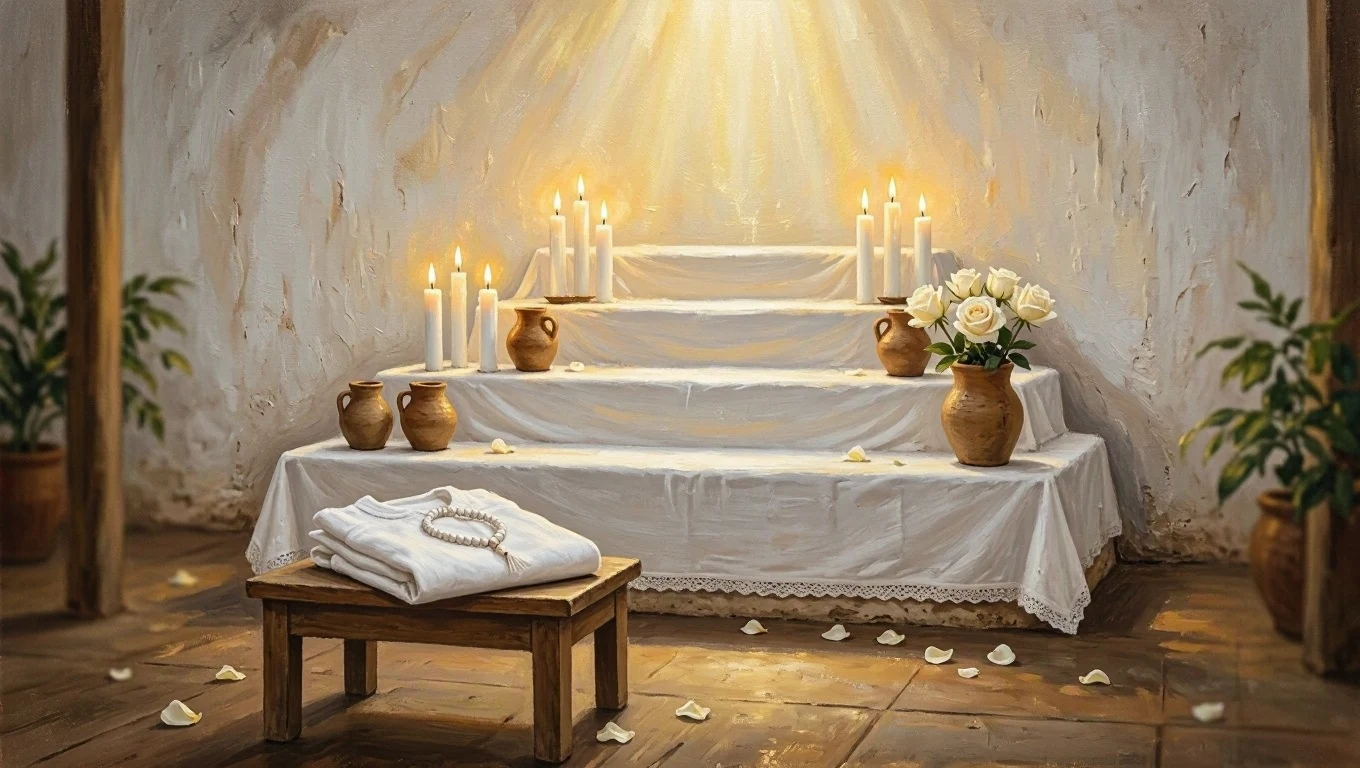
- When the deceased was a medium. At Pai Maneco, if the family wishes, bead necklaces and clothes used in the gira undergo a de-energization with the leader. It is a house rite.
What happens when someone dies, according to Umbanda?
For the Umbandistas heard in Joinville, death ends a phase that continues in the spiritual plane. The way the person lived guides where they will live after passing. Reincarnation appears as a path of evolution. Pai Maneco says: "death does not represent an end in Umbanda, but a passage of the spirit."
There is no single doctrine about the after. Each vision has an origin:
- In sacred Umbanda, Mãe Dinan Sátyro says that Omulu "cuts the silver cord that links the material body to the spiritual body." Then, the deceased is taken to Obaluaiê (Babalu Aye). Who this orixá (orisha) is can be found in who is Obaluaiê (Omulu).
- Reincarnation comes from a common broth with Kardecism. For Reginaldo Prandi, from USP, Spiritism arrived in Brazil and found a culture already familiar with trance and reincarnation. Many Umbandistas, in fact, declared themselves Spiritists.
Death ritual in Umbanda: wake and farewell
Umbanda does not have a single funeral rite with a specific name. Each house performs its own, and a large part of it falls to the priest. At Pai Maneco, "there is no specific ritualism." The deceased is presented and support is requested from the spirit guides. Points can be sung "in praise of Oxalá (Obatala) and the ruling orixá of the deceased." The purpose is for the family to understand "the spirit's detachment."
In Caboclo Pena Verde, the priest crosses the body with white pemba to disconnect him from the crossroads made during his life. There is the Prayer of Cáritas, the Hymn of Umbanda, and the chant of Oxalá and Omulu. In Joinville, the wake has chanted points, prayers, and tributes.
We did not find a rite called encomendação in Umbanda in the sources. And we do not teach how to prepare the body: that is from the house, and there is a part only for initiates.
Mourning in Umbanda and axexê: what is the difference
The axexê is from Candomblé, not from Umbanda. Reginaldo Prandi describes it as the funeral rite of the Ketu nation Candomblé and of the Yoruba variants. It begins after the burial and varies from terreiro to terreiro and from nation to nation. What he undoes is in what is axexê, and the Candomblé ancestors, in egum in Candomblé.
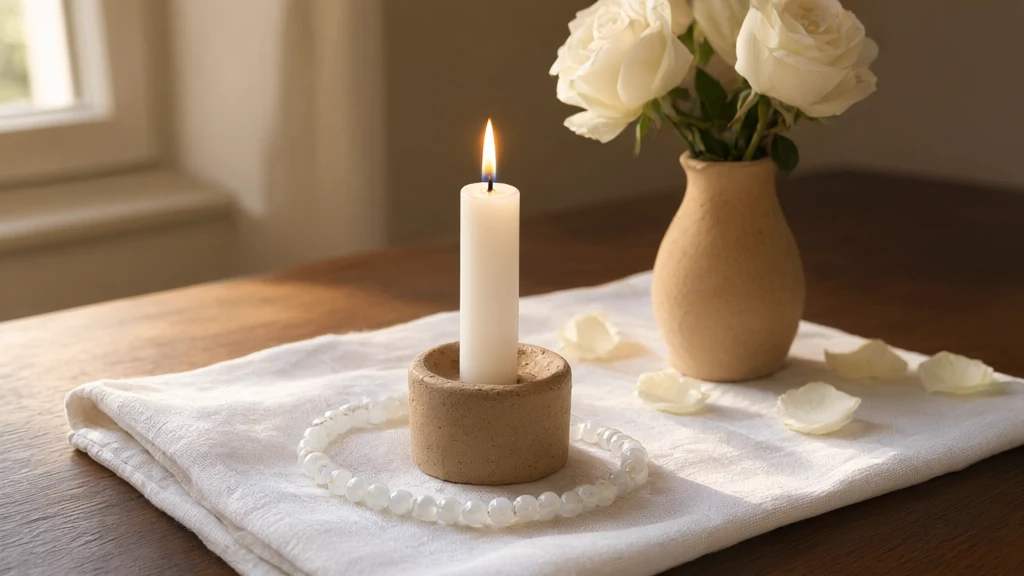
November 2nd brings memories together. What is done on this day is All Souls Day in Umbanda, and those who work with the souls in the terreiro are in the line of souls in Umbanda. If you cannot go to the cemetery, light a white candle at home. Or leave a white candle on the virtual altar of Joia Mística, lit on the shop altar and accompanied by the link.
Frequently asked questions
Can a medium in mourning incorporate a spirit?
It is possible, if the house leader agrees. No source we opened gives a period of absence for a medium in mourning in Umbanda. The Terreiro do Pai Maneco asks that the medium arrive at the gira without resentment or anger and that they take their doubts to the leaders. There are those who feel supported by the gira and there are those who need a Tempo.
Can I wear black clothes to the wake of an Umbandista?
No consulted source prohibits it. In the umbanda houses we opened, white appears on the clothing of the deceased and on the candles around the coffin. The phrase "white is the color of mourning" is said for the nagô candomblé. In case of doubt, ask the family, who knows what the house and the deceased requested.
Does crying hinder the spirit of the deceased?
There is no Umbanda rule about this. An interviewee from the Joinville research believes that the crying of those who stay makes those who left suffer. The Terreiro de Umbanda Reino de Iemanjá wrote the opposite: the mourning period serves to live through the sadness of the pain. The research, citing the psychoanalyst Nasio, calls mourning the "pain of loving".
What is the difference between mourning in Umbanda and axexê?
The axexê is the funeral rite of the Ketu Candomblé and Yoruba variants, performed after the burial and differing in each terreiro and nation. In Umbanda, there is no rite with this name: each house has its own, with points at the wake and, in the case of the medium, care with the belongings used in the gira.
References
- Nogueira e Gunlanda, Monumenta, 2022. The meaning of death for umbandistas and mourning
- Arribas, NER Debates (UFRGS), 2013. Review of Os mortos e os vivos, by Prandi
- Prandi, 2000. Concepts of life and death in the axexê ritual
- Terreiro do Pai Maneco, 2019. Umbanda feet on the ground
- Pai Maneco's terreiro. Guidelines for the mediums
- Caboclo Pena Verde. Funeral
- Terreiro de Umbanda Reino de Iemanjá, 2011. Mourning in Umbanda and in life
- Jacobucci, Loss and Mourning, 2016. Interview with Mãe Dinan Sátyro
- Diário do Nordeste, 2021. Funeral rituals of the religions
- Silveira, Orumilaia, 2023. Mourning in batuque
- Notícia Preta, 2025. Thais Bernardes, "Why Preta Gil's friends wore white at the singer's wake"