The white smoke of rosemary rises lightly, without weight, and seems to take away everything that remained from a difficult day. Anyone who has already fumigated the house with a sprig of this herb knows the feeling: the air changes, the head clears, the shoulder relaxes. It is no coincidence that rosemary in Umbanda is considered the most delicate herb in the pantheon of Oxalá, the one that purifies without cutting, that cleans without agitating.
This article is a complete profile of rosemary for those who want to understand, with respect and depth, the place of this plant in Afro-Brazilian traditions: its Mediterranean origin, its integration into the body of ewé (sacred leaves), its daily uses, and the care it requires.
Rosemary: the white lightness of Oxalá
There are herbs that cut, like arruda. There are herbs that move, like mint. And there are herbs that elevate, and it is in this group, in the ascending vibration of Oxalá, that rosemary finds its most natural place.
Oxalá is the Orixá of peace, of white, of serene purity. He dresses in white, eats white food, and prefers Sundays. His energy does not act through force, but through presence. Rosemary fulfills this same function in the plant realm: the aroma rises, occupies the environment, and what was dense dissolves without noise.
In the systematization that Pierre Verger recorded in his work Ewé: o uso das plantas na sociedade ioruba (EDUSP, 1995), herbs with a soft and ascending aroma belong to the pantheon of the deities from above: Oxalá, Oxaguiã, Oxalufã. Rosemary, with its white-bluish flowers and its elevating scent, fits into this profile naturally.
An honest observation: not every house associates rosemary with Oxalá. Some Umbanda currents link it to Oxóssi (Oshosi), due to the green aspect of the plant and the connection with the forest. Other houses relate it to Iemanjá (Yemoja), because of the light blue color of the flowers and its calming property. There is no contradiction: there is legitimate diversity within the religion. Here we present Oxalá as the main regency because it is the most consensual in Brazilian Umbanda sources.
Colors: white, light green | Day: Friday (Oxalá) | Element: Light Fire (Brazilian tradition) / Air (classic Yoruba tradition) | Regent orixás (orishas): Oxalá (principal), Oxóssi and Iemanjá (secondary)
From the Mediterranean to the terreiro: the long journey of rosemary
The scientific name Rosmarinus officinalis, now reclassified by the Royal Horticultural Society as Salvia rosmarinus after genetic studies in 2017, comes from the Latin ros marinus, "sea dew". This was how the Romans called the shrubs that grew on the cliffs of the Mediterranean, sprinkled by the tide.
Before Rome, the Egyptians already placed rosemary branches in tombs, a symbol of immortality and memory of the dead. The Greeks pinned branches in their hair during exams, with the intuition that the plant awakened memory, an intuition that modern science partially confirms: the 1,8-cineol compound present in rosemary essential oil has a proven effect on cognition.
In the European Middle Ages, doctors filled bird-beak masks with rosemary during the Black Death, believing in its purifying power. The Catholic Church adopted the herb as liturgical incense, and Christian tradition tells that the Virgin Mary, fleeing to Egypt, rested her blue mantle over a bush of white flowers that has bloomed blue ever since. From this comes part of the symbolic association of rosemary with Marian purity, which later, in Brazil, would resonate with Iemanjá and with Our Lady.
The Portuguese brought rosemary in the 16th century. The plant acclimated well in the Brazilian South and Southeast and was quickly absorbed by sertanejo medicine and popular Catholicism: Palm Sunday, Saint Anthony's charms, Saint John's baths.
When Umbanda and Candomblé structured themselves between the 19th and 20th centuries, rosemary, already familiar to popular religiosity, was incorporated into the body of ewé, the sacred leaves. An ethnobotanical study published in the journal Research, Society and Development in 2025 confirms what the terreiros know in practice: rosemary figures among the most cited species in surveys of plants used in Brazilian terreiros, alongside rue and guinea hen weed. In syncretism, it was connected to Oxalá through the path of Senhor do Bonfim in Salvador, a cultural bridge that enriches tradition without subordinating one religion to another.
When to use rosemary in daily life
Rosemary is one of the most versatile herbs in our repertoire. Because it is warm-light (and not warm-sharp like rue), it can be used more frequently without overloading the environment. These are the most traditional cases:
- Before a test, interview, or important decision light smoke cleansing (defumação) in the study area, or a cup of warm tea 30 minutes before. Traditionally used to clear the mind and set focus.
- House cleaning after a heavy visit when someone left a dense atmosphere in the environment, rosemary smoke cleansing airs out what remained.
- Weekly purification ritual bath for those who work serving the public (teachers, health professionals, attendants, therapists). Once a week, on Friday or Sunday morning.
- Pot at the entrance of the business popular tradition: live rosemary at the door of the establishment brings clarity to business and keeps away bad-faith customers.
- Rosemary pillow dry branches in a cotton bag under the pillow, for lucid dreams and waking up with a clear head.
- Amaci of Oxalá in some Umbanda houses, rosemary is part of the composition of amacis for Oxalá. Always under the guidance of Pai/Mãe-de-santo amaci is not something to improvise.
Tip: rosemary is a maintenance herb, not for emergencies. For heavy spiritual cleanings, it combines with arruda (which cuts) and guiné (which protects). Alone, it is the everyday herb of the one that is lit when arriving home tired.
Practical recipe
Here are three fundamental uses. Smoke cleansing is the entry point; the ritual bath and tea are variations that expand the repertoire.
Purification smoke cleansing with rosemary
What you will need
- Dry rosemary branches (minimum one week of drying in a ventilated place)
- Ceramic container, abalone, or heat-resistant saucer to place it on
- Match or lighter
- Optional: white Oxalá candle lit in a safe place
How to do it
- Light the tip of the rosemary bundle, wait for it to catch well, extinguish the flame with a gentle breath and let it smolder is the smoke that works, not the flame.
- Start from the room furthest back in the house and go through each room in a clockwise direction, carrying the smoke to the street door.
- Visualize the white smoke crossing walls, furniture, and corners, taking with it everything that does not belong in that space.
- Upon reaching the door, open it for a few seconds so that the old air can leave.
- Place the bundle in the container until it goes out on its own or carefully smother it in sand.
May the house become light. May the peace of Oxalá occupy every corner. May only what is mine remain here.
Variation: clarity tea
For moments that require focus, study, writing, or decision.
- 1 teaspoon of dried rosemary
- 1 cup of boiling water
- Cover for 5 minutes, strain and drink lukewarm
Traditionally taken 30 minutes before an activity that requires concentration. Limit: one cup per day, never at night, and do not exceed seven consecutive days. Read the contraindications section before including the tea in your routine.
Variation: clarity ritual bath
- 1 generous handful of fresh rosemary (or 2 tablespoons of dried)
- 2 liters of water
- Boil the water, turn off the heat, throw the herb inside and cover for 10 minutes
- Strain, wait to cool down and pour from the neck down after a normal bath, without rinsing
Friday or Sunday morning are the most recommended days. Wear a white shirt afterward.
Rosemary, lavender and mint: which one to use at each moment
A frequent doubt among beginning practitioners is how to choose between herbs that seem to fulfill similar functions. The practical rule is simple:
- Rosemary activates the mind clarifies, focuses, elevates. Bath before studying, deciding, attending the public. Energy of Oxalá.
- Lavender (alfazema) calms the heart relaxes, puts to sleep, softens. Ritual bath before sleeping, after an argument, in moments of anxiety. Feminine energy, associated in some houses with Oxum (Oshun) and Iemanjá.
- Mint renews the path refreshes, moves, opens. Ritual bath to start a new month, for prosperity at work, to move out of a stagnant phase. Energy linked to movement.
The three belong to the Lamiaceae family and can be combined: rosemary + lavender is the classic prosperity ritual bath, ideal for interviews and exams. Rosemary + mint opens paths at work while keeping the mind serene.
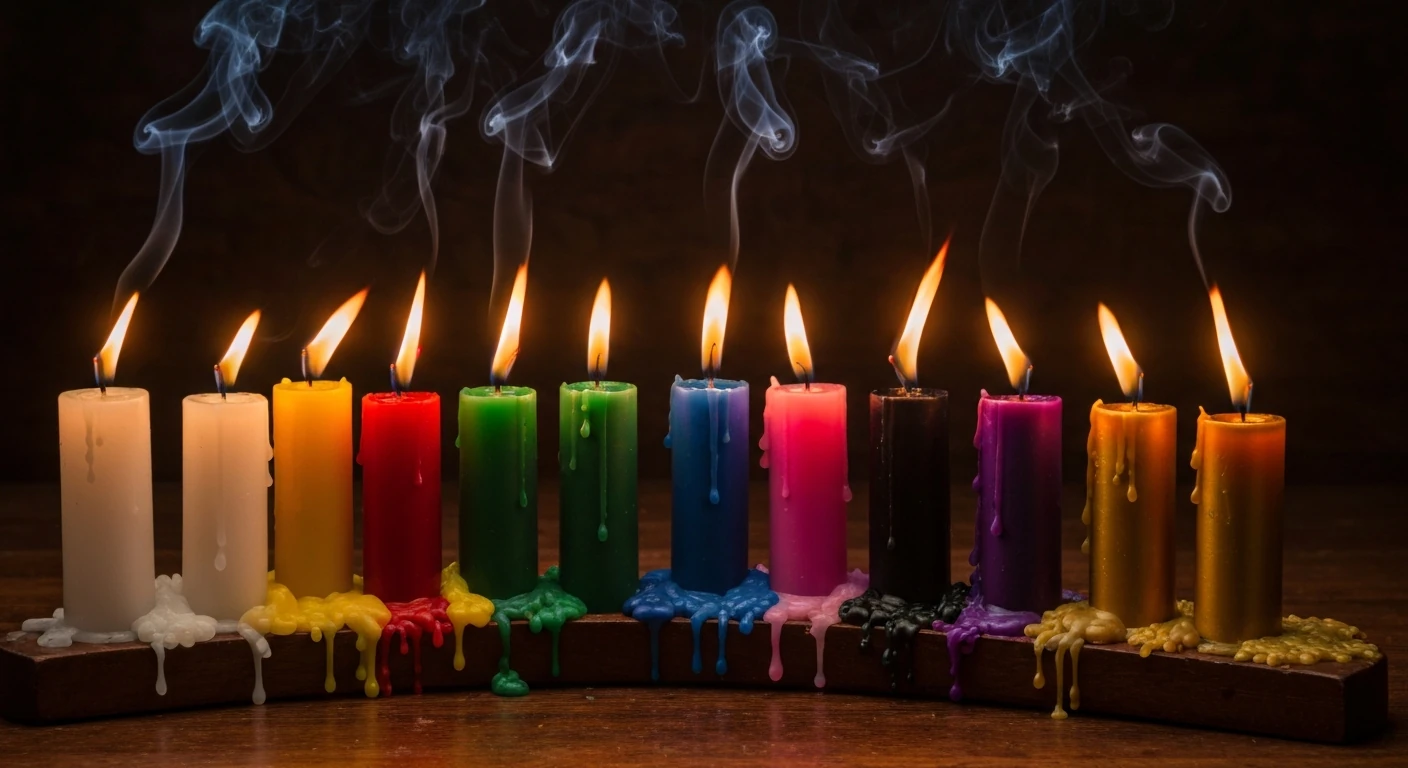
To better understand the ritual functioning of the candles that accompany these ritual baths, it is worth reading about ritual candles and the meaning of colors.
Contraindications: rosemary asks for respect
Rosemary is considered one of the safest herbs in popular pharmacopeia, but it is not harmless. These are the precautions that every house should know:
- High blood pressure: internal use (tea, capsule, essential oil) can raise blood pressure and heart rate. Hypertensive people should avoid the tea or consult a doctor first. Smoke cleansing and external ritual bath do not have this restriction.
- Pregnant women: do not consume tea during pregnancy as rosemary can stimulate uterine contractions. External ritual bath, in moderation, is safe.
- Nursing mothers: avoid internal use, as rosemary compounds pass into breast milk.
- Children under six years old: never offer pure tea; ritual baths can be done with a very diluted infusion.
- People using anticoagulants, diuretics, or anti-hypertensives: rosemary can reduce the effectiveness of these medications. Talk to your doctor.
- People with epilepsy: high concentration rosemary essential oil (intense aromatherapy) can lower the convulsive threshold. Avoid closed diffusers with pure oil.
For a broader overview on the ritual and medicinal use of herbs, see the Joia Mística sacred herbs page and the full profile of rosemary in our shop.
Frequently asked questions about rosemary
What is rosemary used for spiritually?
Spiritually, rosemary is traditionally used for light purification, mental clarity, and elevation of environments. It is the indicated herb when one wants to clean the house without agitating energies, when focus is needed for a decision, or when seeking the serene vibration of Oxalá. It works in ritual baths, smoke cleansing (defumação), in a vase at the door, and on the pillow.
Who is the Orixá of rosemary?
The most consensual regency is Oxalá, due to the whiteness, lightness, and elevating aroma of the plant. Some houses, however, associate rosemary with Oxóssi (due to the forest and the green color) or Iemanjá (due to the light blue color of the flowers and the calming effect). It is not a contradiction: it is the internal diversity of the Afro-Brazilian religion. Consult your Pai or Mãe-de-santo about the tradition of your house.
How to do smoke cleansing (defumação) with rosemary at home?
Use a bundle of dried rosemary (minimum one week of drying). Light the tip, extinguish the flame, and let it smoke. Walk through the house from the room furthest back to the street door, always in a clockwise direction. Visualize the white smoke cleaning the environment. Finish by opening the street door for a few seconds.
Can I take a rosemary ritual bath every day?
An external rosemary ritual bath can be done frequently, but the ideal is one to two times per week, preferably on Friday or Sunday. Daily baths of any herb can wear down the body's energetic sensitivity. For deeper ritual use, alternate with water-only baths or consult your house.
Who cannot drink rosemary tea?
Hypertensive individuals, pregnant women, lactating women, and children under six years old should avoid rosemary tea. People using anticoagulants, diuretics, or anti-hypertensives also need medical guidance before consumption. External baths and smoke cleansing (defumação) do not present these serious restrictions for most people.
Where to buy rosemary and Oxalá items
At Joia Mística Laroyê you will find:
- Dried rosemary in branches ready for smoke cleansing (defumação) and ritual bath
- White candles of Oxalá in different sizes
- Handmade incense burners with rosemary, rue, and other herbs
- Statues of Oxalá for the altar
- Ready-made ritual baths prepared with axé by Joice Mística
Visit the physical store in Extrema-MG (R. Benedito Zingari, 460). Direct service via WhatsApp for questions and personalized orders.
References
- Research, Society and Development: ethnobotanical survey on plants used in Brazilian terreiros
- Federation of Umbanda and Candomblé of the State of São Paulo (FUCESP): list of ritual bath herbs by day and by orixá, with rosemary among them