On January 20, Rio de Janeiro stops to celebrate its patron. It is the day of Saint Sebastian, the soldier saint killed by arrows, and also the day of Oxóssi, the orixá hunter of the forests and of abundance. For much of Brazil, especially in the terreiros of the Southeast, the two are found in the same devotion. But is Saint Sebastian really Oxóssi? The answer is beautiful, and it changes depending on the region.
This article tells who Saint Sebastian was, who Oxóssi is, why the arrow brought them together, how January 20 is lived in Rio, and why in Bahia this same orixá is linked to another saint. With respect to the two faiths that share the date.
Who was Saint Sebastian
Saint Sebastian was a Roman soldier who lived in the 3rd century, captain of the personal guard of Emperor Diocletian. A secret Christian, he used his position to help and strengthen the persecuted. When his faith was discovered, the emperor ordered his execution: Sebastian was tied to a tree and pierced with arrows.
Tradition says that he survived the arrows, was healed, and returned to confront the emperor, being then killed for good. For this reason, the statue that became famous is that of the young man tied up, his body pierced by arrows, his face serene in the face of pain. This scene became his symbol, and made him the patron of soldiers, of archers, and of those who face epidemics. In Brazil, he is the patron of Rio de Janeiro, a city founded in 1565 with the name of São Sebastião do Rio de Janeiro.
Oxóssi, the hunter orixá
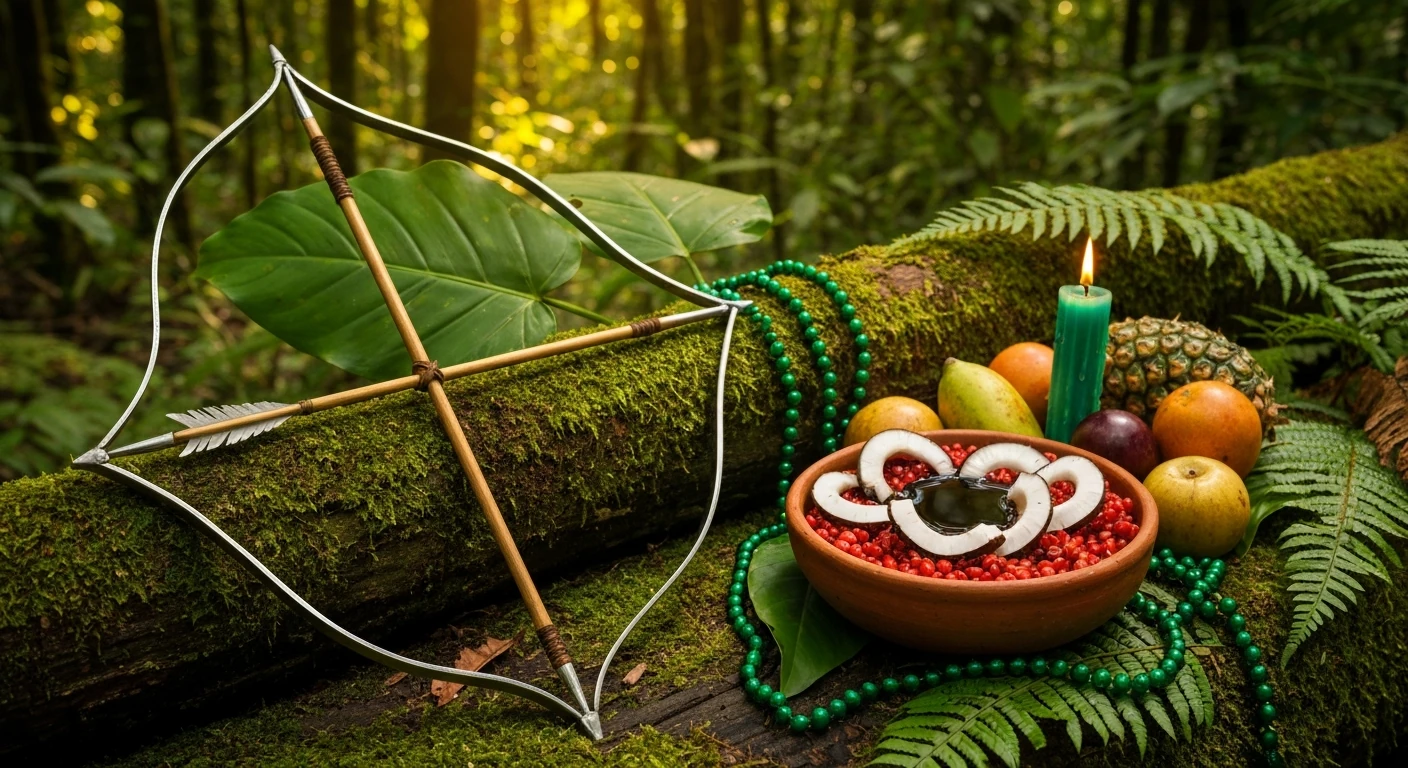
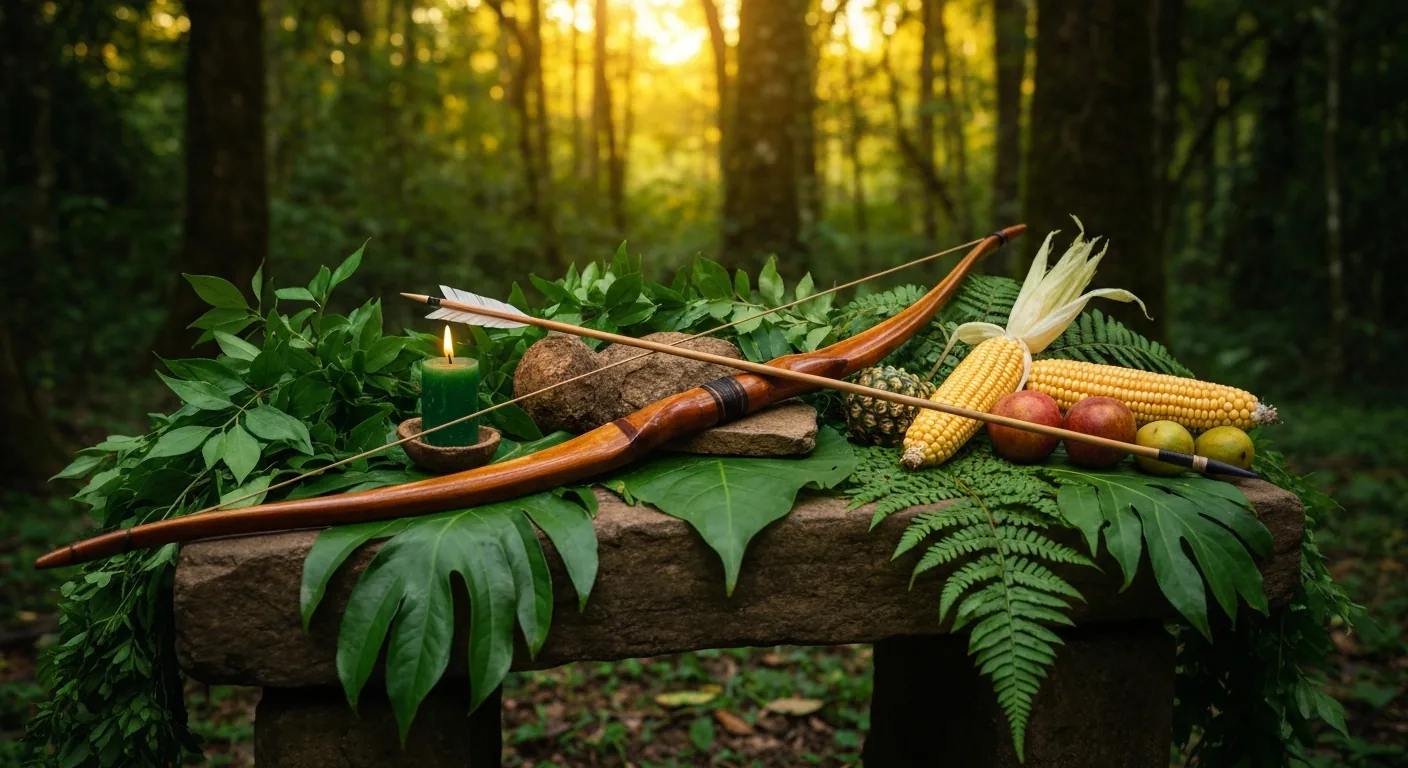
On the Afro-Brazilian side is Oxóssi, the orixá of hunting, the forests, abundance, and the knowledge of leaves. He is the one who enters the forest in silence and returns with sustenance, the provider who guarantees food and masters the secrets of the woods. His greeting is “Okê Arô!” and his symbol is the ofá, the bow and arrow of the one-arrow hunter. The color changes with the region: green is common in Rio de Janeiro terreiros and in Umbanda, and light blue, in the terreiros of Bahia, according to researcher Raphael de Jesus (UFJF), starting from Lody.
Here is just the essentials, because the blog already has his complete profile. To deeply know the mythology, colors, food, and qualities, it is worth reading who is Oxóssi. In Umbanda, it is Oxóssi who commands the line of the Caboclos, the spirits of the forests; how Umbanda lives the orixá, from color to ponto (sacred song), is in Oxóssi in Umbanda. What matters to keep in mind is that Oxóssi's hunt is not violence: it is the art of providing, of aiming correctly, and sustaining life.
The arrow that unites the two
The meeting of Saint Sebastian with Oxóssi has a symbol at its center: the arrow. The saint is remembered precisely for the arrows that pierced his body, and the orixá is the lord of the bow and arrow. Faced with two statues so similar, one holding what the other receives, the association was almost inevitable in the eyes of the people.
But it was not born of free choice. During slavery, Africans were forbidden from worshipping their orixás. The way out was to hide Oxóssi behind the statue of Saint Sebastian: before the lord, they prayed to the Catholic saint; in their hearts, they greeted the orixá of the forests. Syncretism was, therefore, a strategy of resistance, and not a fusion of religions.
Therefore, syncretism is not equivalence. Saint Sebastian continues to be Saint Sebastian for the Catholic, and Oxóssi continues to be Oxóssi for the people of santo. January 20th houses two devotions that respect each other, each with its own faith.
January 20: Rio de Janeiro Day
January 20 is a municipal holiday in the city of Rio de Janeiro. The basis is article 26 of the Organic Law of the Municipality, from 1990: "The patron of the City is Saint Sebastian, who will be celebrated with a municipal holiday on January 20, every year." On the Catholic side, the 2026 programming of the Archdiocese of Rio scheduled a solemn mass at the Basilica Sanctuary of Saint Sebastian, in Tijuca, and, at 4:00 PM, the procession from the Basilica to the Metropolitan Cathedral, in the Center, followed by a mass.
On the Afro-Brazilian side, the day is also of Oxóssi. On January 20, 2026, the Baden Powell Staircase, in Copacabana, was washed in honor of the orixá, under the supervision of ialorixá Alba de Oyá, and Fundição Progresso, in the Center, received the Lava São Sebastião, dedicated to the patron and "to the orixá Oxóssi," according to Alma Preta. Umbanda houses such as Tenda de Umbanda Caboclo Tupinambá and Vó Catarina, in São José dos Campos (SP), mark January 20 as the "Date of worship" of Oxóssi. Many devotees experience both celebrations on the same day, without contradiction. The law, what is seen in Rio, and on what day of the week January 20 falls in 2027 are in Oxóssi's day. To situate the date in the cycle of Afro-Brazilian celebrations, see the calendar of the orixás.
In Bahia, Oxóssi is Saint George
Here is the point that almost no one tells, and which shows how syncretism is alive. The association between Oxóssi and Saint Sebastian applies to the Rio de Janeiro, the Southeast, and Umbanda. But it is not a universal rule.
In Bahia, in the Ketu tradition of Candomblé, Oxóssi is usually linked to Saint George, the warrior saint mounted as we already told in the article about Saint George and Ogum. Pierre Verger records: "Oxossi is syncretized in Bahia with Saint George and with Saint Sebastian in Rio de Janeiro". And in Pernambuco, according to Wikipedia, Oxóssi is associated with Saint Michael the Archangel. The same orixá, three different saints, according to the history of each place.
In Bahia, the festival of Oxóssi does not even fall on the saint's day. According to the column by Pai Paulo de Oxalá (Obatala) in the Extra newspaper, Opô Afonjá, Engenho Velho (Casa Branca), and Gantois celebrate Oxóssi "on the day of Corpus Christi", and "There is no consensus on why". In 2023, the "Mass of Oxóssi", a mass of thanksgiving to Saint George at the Igreja do Rosário dos Pretos, in Salvador, gathered Catholics and the Casa Branca community, who then followed to the Festival of Oxóssi at the terreiro, according to Bahia Notícias.
This does not mean that one region is right and the other is wrong. It is the same thing that happens with Saint Barbara and Iansã or with Our Lady Aparecida and Oxum: each terreiro interpreted the similarities in its own way. The golden rule still applies: whoever defines the correspondence is the foundation of each house.
The caution of traditional terreiros
A word is worth saying about the care that many terreiros ask for today. If syncretism was a tool for survival, a growing part of the people of santo choose to separate the saint from the orixá, stating that Oxóssi is Oxóssi and Saint Sebastian is Saint Sebastian, each in its own tradition.
This movement is not a lack of respect to anyone. It is the recognition that Afro-Brazilian religions no longer need to hide and can assert their identity with pride. Those who celebrate both together honor the resistance of the ancestors; those who prefer to separate them honor the autonomy of their own faith. Both attitudes have their place, and both deserve respect.
Frequently asked questions
Is Saint Sebastian Oxóssi?
In the syncretism of Rio de Janeiro, the Southeast, and in Umbanda, yes, Saint Sebastian is associated with Oxóssi, the hunter orixá. But they are not the same deity: they are figures from different religions, linked by the common image of the arrow. The correspondence varies by region, and many houses today prefer to keep the saint and the orixá separate.
Why is Saint Sebastian associated with Oxóssi?
Because of the arrow. Saint Sebastian was killed riddled with arrows, and Oxóssi is the orixá of the bow and arrow, the ofá. During slavery, Africans hid Oxóssi behind the statue of Saint Sebastian so they could worship him without being punished. It was a strategy of spiritual resistance, not a fusion of faiths.
What day is the day of Saint Sebastian and Oxóssi?
The day is January 20. It is the date of Saint Sebastian in the Catholic calendar and, in syncretism, also the day when many celebrate Oxóssi. In Rio de Janeiro, of which Saint Sebastian is the patron, the date is a municipal holiday by article 26 of the Organic Law, with a procession from Tijuca to the Cathedral and tributes to Oxóssi, such as the washing of the Baden Powell Staircase in 2026.
Is Saint Sebastian Oxóssi or Saint George?
It depends on the region. In Rio de Janeiro and the Southeast, Saint Sebastian is linked to Oxóssi. In Bahia, in Ketu Candomblé, it is Saint George who is usually associated with Oxóssi, while in Pernambuco, according to Wikipedia, the orixá is linked to Saint Michael the Archangel. It is not a contradiction, but rather the living plurality of Brazilian syncretism.
Who is the patron saint of Rio de Janeiro?
The patron saint of Rio de Janeiro is Saint Sebastian. The city itself was founded in 1565 with the name Saint Sebastian of Rio de Janeiro, in honor of the saint. Therefore, January 20 is one of the most important dates in the Carioca religious calendar, celebrated by Catholics and by practitioners of Afro-Brazilian religions.
Where to find items for Saint Sebastian and Oxóssi
At Joia Mística Laroyê, you find what you need to honor the saint and the orixá:
- Statues of Saint Sebastian and Oxóssi: for your altar
- Ofá (bow and arrow): the symbol of the hunter orixá
- Green bead necklaces and candles: the colors of Oxóssi
- Forest herbs: for baths and fumigations of the hunter
- Statues of Caboclos: the line commanded by Oxóssi
Visit our shop in Extrema, Minas Gerais and we ship all over Brazil.
References
- Wikipedia: Saint Sebastian, patron saint of Rio de Janeiro
- Wikipedia: Oxóssi, the hunter orixá
- Rio City Hall, General Prosecutor's Office: Organic Law of the Municipality of Rio de Janeiro
- Archdiocese of Rio de Janeiro: schedule for the Trezena of Saint Sebastian 2026
- Alma Preta: washing of the Baden Powell Staircase in honor of Oxóssi and Wash Saint Sebastian in the Center of Rio
- TUCTVC: Oxóssi
- Verger, book (Corrupio, 1981): Orixás: Yoruba gods in Africa and the New World
- Jesus, Sacrilegens (UFJF, 2024): The chromatics of the Orixás
- Pai Paulo de Oxalá, Extra (2015): Oxóssi and Corpus Christi
- Bahia Notícias (2023): Mass of Oxóssi on the day of Corpus Christi in Salvador