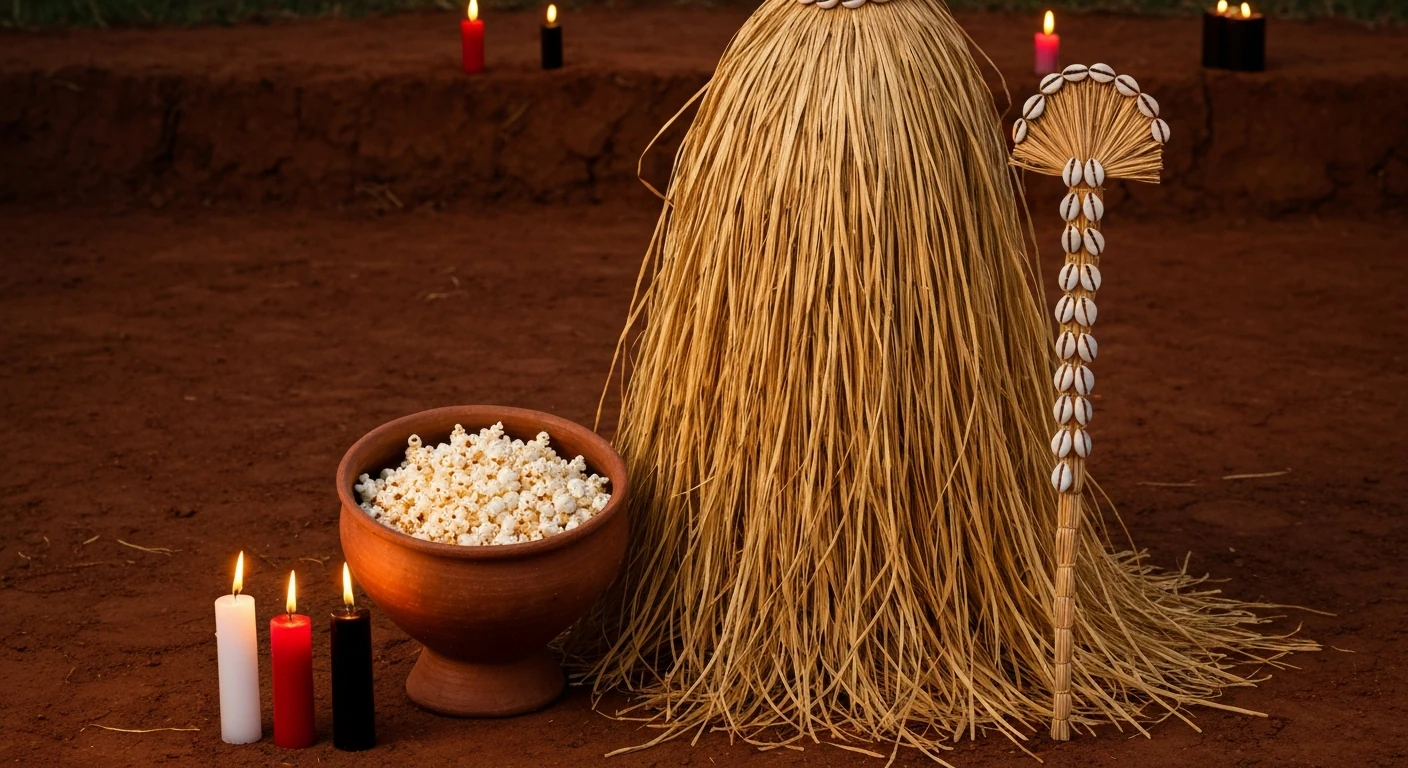
The day of Nanã is celebrated on July 26, the same date on which Catholicism celebrates Saint Anne, mother of Mary and grandmother of Jesus. It is no coincidence: the oldest of the iabás, the elder who rules the mud and ancestry, was associated precisely with the grandmother of the Christian tradition, and this bridge between two grandmothers is the heart of the festival.
This guide explains why the date fell on July 26, how the syncretism with Saint Anne was born from the resistance of the terreiros, and in what way you can greet and offer to the lady of the mud at home, with respect and without magical promises. For the complete profile of the iabá, it is also worth reading who is Nanã.
Why the day of Nanã is July 26
The short answer: the date does not come from the African calendar, but rather from the Catholic calendar. July 26 is the liturgical feast of Saint Anne and Saint Joachim, the parents of Mary. The celebration of Saint Anne was fixed on this date by Pope Gregory XIII in 1584, and later Saint Joachim was joined to the same celebration. By extension, July 26 also became known as Grandparents Day, which perfectly matches the archetype of the grandmother of the orixás.
When enslaved Africans were forbidden from worshipping their deities, they associated each orixá with a Catholic saint to continue revering them in secret. Nanã, the wise elder, the oldest of the pantheon, was naturally linked to Saint Anne, the grandmother par excellence. Thus, on the day the Church honored the grandmother of Jesus, the terreiros greeted the grandmother of all the orixás.
This logic of making a saint and an orixá share the same date organizes the entire cycle of Afro-Brazilian festivals. Anyone who followed the June cycle, for example, has already seen the same mechanism in the syncretism of the saints and the orixás. July 26 is another link in this chain.
Nanã and Saint Anne: the meeting of two grandmothers
To understand the festival, it helps to know the Catholic side of the bridge. Saint Anne is, in the Christian tradition, the mother of Mary and, therefore, the grandmother of Jesus. Wife of Saint Joachim, she appears in ancient texts as the matriarch who educated Mary herself. Not for nothing, she is venerated as the protector of grandmothers, of women who wish to have children and of educators, and is the patron saint of several Brazilian cities.
What brings the saint closer to the iabá is not appearance, but the archetype: both embody the figure of the elder who guards the family memory, supports the generations and carries the wisdom accumulated over time. Saint Anne is the root of the tree that gives Mary and then Jesus; Nanã is the still and ancient water from which life springs and to which it returns. Both are beginning and support.
It is important to say clearly: to syncretize is not to equate. The Afro-Brazilian tradition never stated that "Nanã is Saint Anne." What happened was an intelligent association, a disguise of survival that allowed the axé to remain alive under the mantle of a saint. Honoring the lady of the mud on this date is recognizing this history of resistance, and not merging two religions into one.
Who is Nanã, the oldest of the iabás
Before arriving at the celebration, it is worth fixing the essentials about the honored one, without repeating the entire profile here. Nanã Buruquê is the oldest of the iabás, the lady of still waters, mud, and clay, and the guardian of ancestry. Tradition places her in the two portals of existence: birth, when life emerges from the mud, and death, when the body returns to the earth. For this reason, she is worshipped as the great elder, the grandmother who saw everything.
Unlike most orixás of Yoruba origin, the elder has jeje-fon roots, coming from ancient Daomé, current Benin, as recorded in the Wikipedia entry about Nanã. She is one of the oldest deities in the pantheon, preceding many Nagô cults. In the Angola nation Candomblé, the same energy is worshipped as the inquice Nzumbarandá. Her symbol is the ibiri, a scepter made of palm ribs, cowrie shells (búzios), and straw, linked to ancestral spirits.
Colors: purple, lilac, and white | Domains: mud, still waters, ancestry, death as a passage | Symbol: the ibiri | Origin: jeje-fon, from ancient Daomé | Greeting: “Saluba, Nanã!”
From the elder descends the lineage linked to the earth and healing. The most famous of her children is Obaluaê, the orixá who rules diseases and health; knowing who is Obaluaê, the Omulu helps to understand the domain of this family over the cycles of life and the body. For the complete portrait of the iabá, with itans, qualities, and fundamentals, the path is the profile of who is Nanã.
How to celebrate and offer to Nanã at home on July 26
Nanã's day is not an euphoric party, but a moment of serene reverence: a time of gratitude to the ancestors, of asking for patience and wisdom, and of welcoming the cycles of life. What follows is a devotional reference, reminding that foundation offerings are made under the guidance of a pai or mãe de santo, and that each house has its own practices. For the general step by step, see how to make an offering to the orixás.
The home tribute usually gathers some simple gestures:
- Light a purple or lilac candle (some houses also use white) in a clean and quiet place, visualizing gratitude to the ancestral grandmother
- Prepare an offering of cold and white foods, such as mungunzá or white canjica, black-eyed peas, sweet potato, and cooked corn, arranged in an alguidar or clay bowl
- Use purple, lilac, or white flowers, which translate the serenity of the lady of the mud
- Greet the iabá with your head bowed, like someone talking to their own grandmother, asking for serenity, strength in mourning, and patience to mature decisions
A point of foundation that crosses almost all houses: the elder does not receive anything in a metal vessel. Clay, wood, and bamboo are the materials of the delivery, in respect to the quizila of iron that tradition attributes to her. Choosing the right candle is also part of the reverence; the guide of ritual candles and their meanings helps to understand the reason for the purple.
Saluba, Nanã! My grandmother of the still waters, lady of the mud from which life sprouts and to which it returns. May your patience teach me to wait for the right time, and may your ancient wisdom give me serenity before what I cannot change.
What to avoid on Nanã's day
Knowing what to do is just as important as knowing what not to do, so as not to disrespect the foundations of the elder. Some precautions are almost a consensus among the houses:
- Do not use iron or metal in the preparation and delivery of the offering. The quizila of iron is widely followed, although it may vary according to the house and the nation. In case of doubt, prefer clay and wood.
- Do not treat the offering as an infallible charm. Honoring the lady of the mud is a gesture of faith and gratitude, not a formula that guarantees a result. Magical promises do not match the respect that tradition demands.
- Do not confuse the annual date with the day of the week. The firm point is July 26. The day of the week dedicated to the elder varies between houses, with some indicating Sunday and others Monday.
- Do not folklorize the connection with Death. Nanã rules the passage, the return to the earth, the cycle that closes so that another can begin. This is welcoming and ancestry, never something macabre or somber.
To situate July 26 among the other festivals of the year and plan your tributes, it is worth following the calendar of the orixás, which gathers the dates of each deity.
Frequently asked questions
What is the day of Nanã?
The day of Nanã is July 26, the date on which Catholicism celebrates Saint Anne and which became consecrated to the elder of the orixás in syncretism. The day of the week dedicated to her varies between houses, but the annual date of tribute is firm: July 26, along with the feast of Saint Anne.
Which saint is syncretized with Nanã?
Nanã is syncretized with Saint Anne, the mother of Mary and grandmother of Jesus in the Christian tradition. The association is explained by the shared archetype: both represent the wise grandmother, ancestry, and the support of generations. The syncretism was a strategy of resistance, not a fusion between saint and orixá.
What is offered to Nanã on July 26?
The typical offering gathers white and cold foods, such as mungunzá or white canjica, feijão-fradinho, sweet potato, and cooked corn, served in a clay alguidar. Purple, lilac, or white flowers and a purple candle are added. Nothing should be served in a metal vessel, respecting the quizila of iron.
Why does Nanã not use iron?
Most houses teach that the elder does not accept iron or metal objects. A historical reading, recorded by researchers such as Pierre Verger, associates this with her antiquity: Nanã would be prior to the Iron Age. There are also itans that link the quizila to a misunderstanding with Ogum (Ogun). The practice varies by house.
Who is older, Nanã or the other iabás?
Nanã is recognized as the oldest of the iabás, the elder of the pantheon. Of Jeje-Fon origin and very ancient, she is treated as the grandmother of the orixás, the one who guards the wisdom accumulated over time. For this reason, the connection with Saint Anne, the grandmother, and with July 26, which is also Grandparents Day.
Where to buy items for Nanã
At Joia Mística Laroyê, you find everything to honor the lady of the mud with respect and devotion:
- Statues of Nanã for your altar or assentamento
- Purple, lilac, and white candles, in the colors of the elder of the orixás
- Alguidares and clay bowls for the offerings, in the material that tradition demands
- Purple and white flowers and arrangements for the July 26 tribute
- Ritual bead necklaces (guias) and beads in purple and crystal for devotion
Visit our shop in Extrema, Minas Gerais or receive it at home, with delivery to all of Brazil. For guidance on the correct use of the products and the best way to greet Nanã, talk to us via WhatsApp.
References
- Wikipedia: entry about the orixá Nanã