Who is Oxum: the orixá of fresh waters, love, and gold
Oxum is the Yoruba orixá of the Osun river, of fresh waters, gold, and love. See the technical sheet in Candomblé, Oxum in Umbanda house by house, myths, colors, and dates.
Read articleCaring for the relationship that already exists: dialogue, affection and peace at home, with Oxum (Oshun) and Iemanjá (Yemoja)
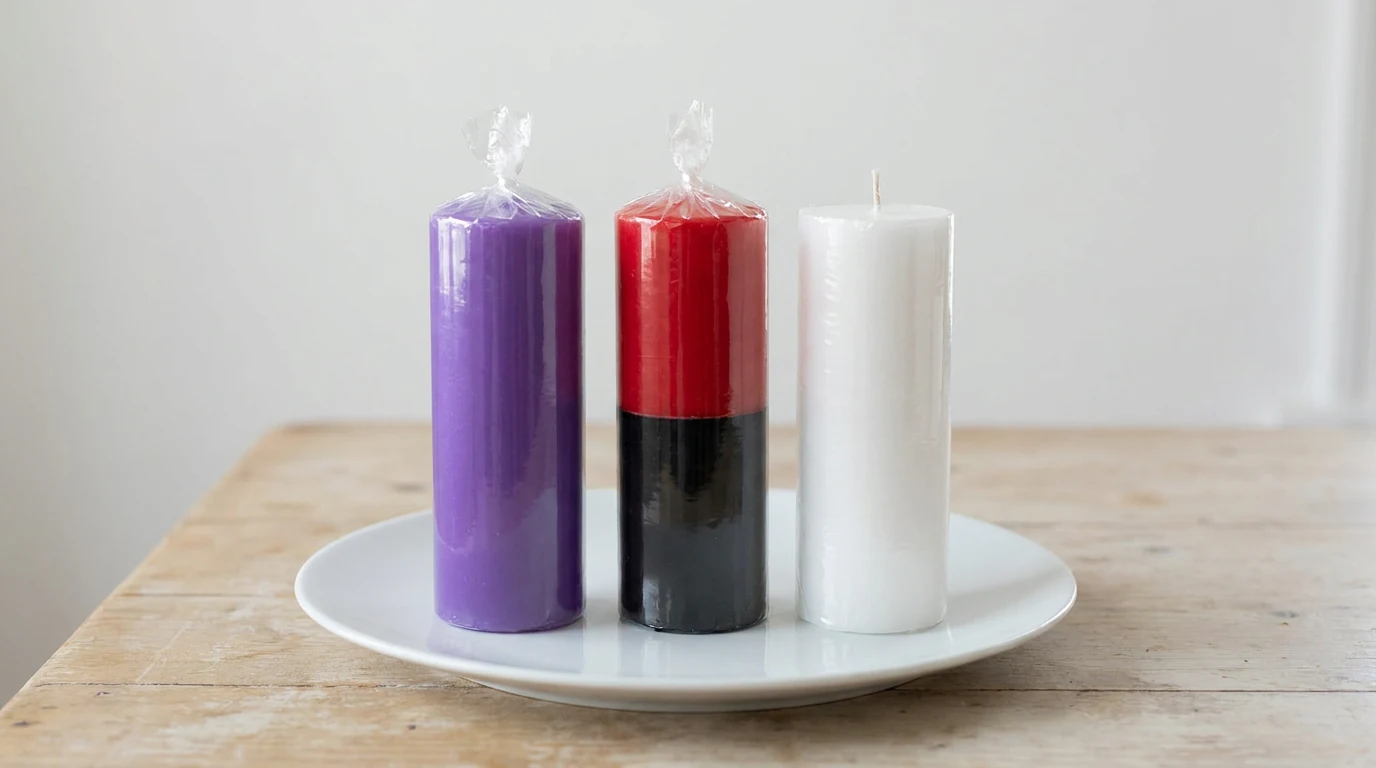
Couple Union candle
7-day candle · stays lit for 7 days7 dias
Faith and intention
Whoever lights a candle never lights just wax and wick. They light a prayer request. The flame is the visible sign of something happening inside: the person stops, thinks of those they love, of what they need, of what they want to thank for, and delivers that to the sacred. That is why, in terreiros and in churches, it is said that what matters is the intention.
With the virtual candle, it is the same thing. You choose the candle carefully, write your prayer request in your own words, make your offering, and light it. Each step is a gesture of faith, and faith does not depend on the material of the candle. It is in you, at the moment you decide to light it and trust.
The candle stays lit on the altar for the time you chose, and you can return to look at the flame, pray again, and renew the prayer request. For those who live far away, cannot have fire at home, or need support in the rush of the day, it is a way to keep the flame of devotion burning.

The couple union candle is for those who are already together. It is not for starting a dating relationship nor for holding onto someone who wants to leave. It enters the phase where routine swallowed conversation, fighting became a habit, or the house felt heavy. Half red and half pink, it is lit in Umbanda and in popular devotion by couples who love each other and want to care for what they built.
In the terreiro, the prayer request usually goes to two mothers. Oxum rules love and is remembered in an itan as the one who convinced the orixás (orishas) to return, so she is called when agreement is lacking. Iemanjá rules the home and the family, and welcomes those who want peace under the same roof. Both have Saturday in most houses. Many terreiros also take the matter to the Pretos Velhos, counselors of patience. Each house marks it in its own way.
At home, it works best lit by both, or at least with the other knowing. The couple union candle does not decide for anyone and does not hold a relationship that has already ended for one side. What it sustains is the atmosphere: lowering the voice, sitting down to talk, remembering why you chose each other. If there is violence, the candle is not the path: seek help.
What is it for
The couple's union candle has two colors: the red of desire and the pink of affection. It is lit for Oxum and Iemanjá when a couple that chose each other wants more dialogue, fewer fights, and peace inside the house, without interfering with the will of either one.
For the couple that only talks about bills and problems, or that argues about everything. Light it before an important conversation, asking for calmness to listen and courage to speak.
When the atmosphere became heavy, with doors slamming and the silence of anger. The candle asks that the house return to being a shelter, and not a field of dispute, for the couple and for the children.
The red reminds of desire and the pink reminds of tenderness. For couples who like each other but became roommates, the candle accompanies the effort to touch and care for each other again.
Change, unemployment, illness in the family, the arrival of a baby. The candle asks that the pressure from outside does not turn into a fight from inside and that both remember they are on the same side.
It is not just for crises. Many couples light the union candle on their wedding or dating anniversary to thank for the path traveled and ask for a blessing for what is to come.
Who rules this candle
The one that reconciles and sweetens conversation
Oxum rules love and, in the itan, was the one who convinced the orixás to return when everyone had given up. Therefore, she is called upon when the couple has lost their agreement. Saturday is her day and gold-yellow is her own color.
Know Oxum
Mother of the home and family
Iemanjá rules motherhood, the home and family, and welcomes those who want peace under the same roof. She wears light blue and white and shares Saturday with Oxum. Many houses deliver the union prayer request to her when children are involved.
Know IemanjáAlso settled for
Prayer to light
“Mother Oxum and Mother Iemanjá, we light this red and pink candle for the house we built together. You know our beginning and see how tired we are. Enter this house and lower the tone of our voices. Where there was a harsh word, put patience. Where there was a silence of resentment, put the will to sit and talk. Remind each of us why we chose each other and give us humility to apologize without counting who made more mistakes. Protect our children from our fights. We do not ask for one to change to please the other. We ask that the two grow together, each one free, if that is the good path. Ora Yeyê Ô! Odoyá!”Light the candle and pray
Step by step
The ideal is to light it together. If the other does not pray, at least count what you will do and why. A candle made in secret to change the partner escapes the foundation of the union.
The living room or the dining table, where the couple's life happens. Avoid the bedroom and any place near a curtain. The candle stays in the center of the plate, with a glass of water on each side.
Both hold the candle at the same time, each saying in a low voice one thing they admire in the other. It seems simple, and it is: this gesture is already half of the prayer request.
One strikes the match and the other touches the wick. Say that the candle is for Oxum and Iemanjá and read the prayer together. Then, if possible, talk right there, with the flame lit.
Let the candle burn until the end and smother it with a saucer if you need to leave. The water from both cups will go together into the soil of a pot, and the remaining wax goes in the trash, wrapped in paper.
Ceromancy
Traditional terreiro reading. Before interpreting, check if there is no wind, crooked wick, or poor quality candle.
Many houses read it as a request accepted and an environment ready for conversation. It is the expected burning of a 7-day candle in a room without wind.
Some read the even melting of the red and pink as a balance between desire and affection. It is just one reading: what matters is the effort of both.
It is almost always the candle near wind or a heat source. Some houses read it as one side of the couple being more tired: it is worth asking the other how they are.
It could be moisture in the wick. Without that, many houses read it as stored resentment coming to the surface. It is not a punishment: it is time to talk calmly about what is bothering you.
It could just be a long wick. If the good candle darkens again, many houses indicate a herbal bath for both and a visit to a trusted terreiro.
Ritual bath and smoke cleansing (defumação)
Rosa alba
A white rose next to the plate asks for peace and a truce. Some petals in the bath for both, on the night of the candle, accompany the request for calm.
See the herb
Melissa officinalis
Herb that calms the nerves. A lemon balm tea taken together before the conversation, with the candle lit, helps lower the tone of the house.
See the herb
Lavandula angustifolia
A sprig of lavender near the candle or a light smoke cleansing (defumação) in the living room before lighting perfumes the environment and helps undo the atmosphere of fighting.
See the herb
Matricaria chamomilla
Gentle flower for the end of the day. A weak chamomile bath after the conversation helps the couple sleep in peace, without taking the argument to bed.
See the herbVirtual Candle
Choose the type, write your request, and pay by PIX. The flame stays on the altar and you follow along through the link.
Place on the altarFrequently asked questions
It serves to care for a relationship that already exists: to ask for dialogue, affection, and peace at home. It accompanies phases of fighting, heavy routine, or outside pressure. It is not for starting a dating relationship nor for holding onto someone who has already decided to leave.
No. If one of the two has already decided to leave, the candle does not change that will, and it should not. It is for a couple that is still together and wants to take care of each other. After an end, the love candle is the most indicated, for you to open your own path again.
Saturday, the day of Oxum and Iemanjá in most houses. Many couples prefer the night, when both are at home. The date of the wedding or the dating also is a good day to light, as a thank you.
You can, if the other one does not pray or does not want to participate. In this case, ask for yourself: patience, clarity, and calm for the conversation. Avoid asking for the partner to change. The best is to tell them that you lit it, without secrets.
The soulmate one is for those who are alone and ask for an encounter with someone like them. The couple union one is for those who have already found someone and want to take care of the relationship. One asks for the arrival, the other asks for the coexistence to work out.
You can, without blowing. Smother it with a saucer if you need to leave and light it together again when you return, resuming the prayer. Many houses avoid blowing because it would be like scattering the prayer with your own breath.
Better not. Many traditions avoid candles in the bedroom, and a 7-day candle near the bed is a fire risk. The living room or the dining table, where the lives of the two happen, are the most indicated places.
What gives strength to the candle is the intention of the one who lights it. In wax or on a screen, you set aside a moment, think of your prayer request, deliver your offering, and light it with faith. The flame is the sign; the faith is yours and goes along with it. When the situation calls for firmeza in the terreiro, the virtual candle does not replace the zelador, but as a prayer and a prayer request, it is worth just as much as a candle lit at home.
Oxum is the Yoruba orixá of the Osun river, of fresh waters, gold, and love. See the technical sheet in Candomblé, Oxum in Umbanda house by house, myths, colors, and dates.
Read article
Who is Iemanjá, the Queen of the Sea and Great Mother of the orixás: the mythology, the domains, the colors, the Odoyá greeting, the qualities, and the plural syncretism.
Read article
Who are the pretos-velhos in Umbanda? Learn about their origin, symbols, spirits such as Pai Joaquim and Vovó Maria Conga, and the governance of the line of the souls.
Read article
Does the 7-day candle need to have the plastic removed? Joice shows how to light it the right way, where to leave it, why it goes out by itself, and if it can be lit in the bedroom.
Read article