Try searching for keywords such as the name of an orixá (Ogum, Oxum), an herb (Arruda, Alecrim), or a tradition (Umbanda).
↑↓Navigate↵AccessESCClose
0 found
Candle of Saint Benedict
Protection against evil, the cross of the medal, and the firmeza of the father of the monks
Candle of Saint Benedict
7-day candle · stays lit for 7 days7 dias
Faith and intention
What is the meaning of lighting a virtual candle?
Whoever lights a candle never lights just wax and wick. They light a prayer request. The flame is the visible sign of something happening inside: the person stops, thinks of those they love, of what they need, of what they want to thank for, and delivers that to the sacred. That is why, in terreiros and in churches, it is said that what matters is the intention.
With the virtual candle, it is the same thing. You choose the candle carefully, write your prayer request in your own words, make your offering, and light it. Each step is a gesture of faith, and faith does not depend on the material of the candle. It is in you, at the moment you decide to light it and trust.
The candle stays lit on the altar for the time you chose, and you can return to look at the flame, pray again, and renew the prayer request. For those who live far away, cannot have fire at home, or need support in the rush of the day, it is a way to keep the flame of devotion burning.
edit_noteStep 1: Write the prayer request in your own words
volunteer_activismStep 2: Make your offering
local_fire_departmentStep 3: Light with faith and trust
The Saint Benedict candle is the candle for those who want their home closed to evil. In Brazil, Saint Benedict is the saint of protection: his medal is hung on the door, on the car's rearview mirror, and around a child's neck, and many grandmothers still pray the Saint Benedict verse against snakes and venomous creatures before entering the woods.
Benedict was born in Nursia, Italy, around 480. He left his studies in Rome, lived as a hermit in a cave, and founded the monastery of Monte Cassino, where he wrote the Rule that summarizes the life of monks in ora et labora, pray and work. The medal features the cross and the Latin initials of phrases such as Crux Sacra Sit Mihi Lux, the sacred cross be my light, and Vade retro Satana, step back, Satan. Some Umbanda houses associate Saint Benedict with Obaluaê, but this varies greatly.
At home, this candle does not fight with anyone nor return evil to those who did it. It asks for protection, cleanses the heavy atmosphere with prayer, and remembers the way of Saint Benedict: routine, honest work, and daily faith. Therefore, it combines with the house cleaning, with the blessed medal on the door, and with the short prayer before leaving.
What is it for
What is the Saint Benedict Candle for
The Saint Benedict candle is white, the color of the most common saint candle in Brazil. It is lit to protect the house and the family, ward off envy and bad thoughts, ask for firmness in faith and work, and to give thanks on July 11.
shield01
Protect the house and those who live in it
It is the most common prayer request to Saint Benedict. Light it near the entrance door, with the medal beside it, asking that nothing bad crosses the threshold.
visibility02
To ward off envy and the evil eye
When you feel that the evil eye is weighing on your work or family, the candle asks that the evil does not take hold and that you move forward without resentment.
cleaning_services03
To clear a heavy environment
After a bad fight, a move, or a visit that left the house heavy, light Saint Benedict along with a thorough cleaning and the window open to let air in.
work04
Firmeza at work and in the routine
Saint Benedict taught that work is also prayer. The candle helps those who need discipline to start a project, study, or maintain a new job.
route05
Protection on trips and on the road
Many people carry the medal of Saint Benedict in the car or in the backpack. Light it before hitting the road, asking for a good path and a peaceful return home.
celebration06
To give thanks on July 11
On the saint's day, Benedictine monasteries celebrate mass and bless medals. Those who reached grace light the candle and renew the house medal.
To whom it is dedicated
The devotion to Saint Benedict
Saint Benedict
The father of the monks and protector against evil
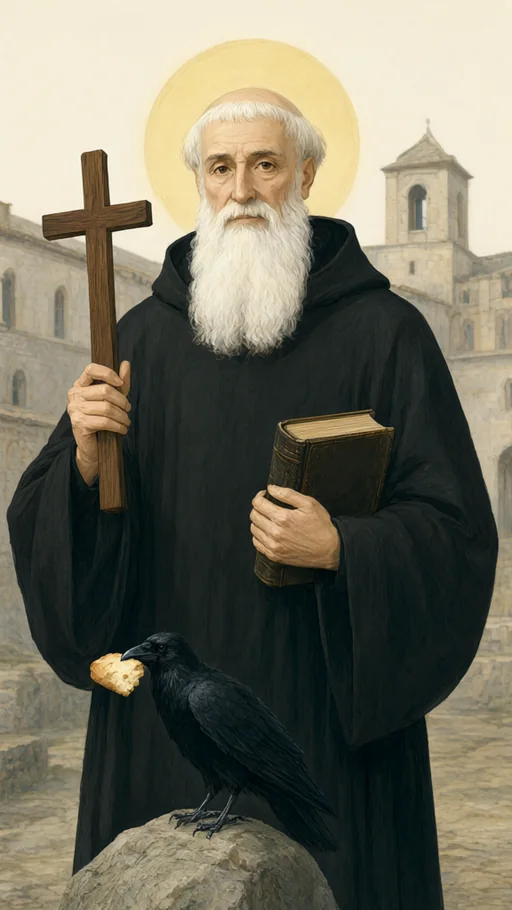
Italian monk of the 6th century, founder of Monte Cassino and author of the Benedictine Rule. He appears in a black habit, with the book of the Rule, the staff, and the cross. The white of the candle is for simple prayer, and the medal is his sign.
Also lit by
Devotees of Saint Benedict
Benedictine monks
Healers from the countryside
auto_stories
Prayer to light
Prayer of the Saint Benedict candle for house protection
“Saint Benedict, man of the cave and the monastery, who exchanged the haste of the world for prayer and for work, I light this white light in my house and ask for your protection. May the cross of your medal stay at my door and on my path. Keep away from us envy, lies, and bad thoughts, coming from wherever they may come, without me needing to wish ill on anyone. Give me firmeza to get up early, do what is mine, and not let go of faith on gray days. May this house be a place of peace, of a full table, and of people who respect each other. May the sacred cross be my light. Long live Saint Benedict! Amen.”
Sweep, take out the trash, and open the windows. Saint Benedict liked order, and the protection candle catches better in a cared for house. Leave the saucer near the door, away from the curtain.
2
Place the medal and the water
Place the medal of Saint Benedict next to the saucer and the glass of water nearby. If you have holy water, use it. It is the old custom of linking the saint to the water that blesses.
3
Make the sign of the cross and light
Make the sign of the cross, light with a match, and offer the candle to Saint Benedict. Say in a low voice the name of each person in the house and what you want to protect.
4
Pray the prayer and the jaculatory
Pray the prayer on this page. Many devotees finish with the phrase of the medal: may the holy cross be my light, may the dragon not be my guide. Repeat on the following days.
5
Finish without blowing
Let the candle burn out on its own or smother it with a lid if you need to leave. The water goes into a vase or to the doorstep, and the leftover wax, wrapped, goes to the trash.
health_and_safety
Precautions before lighting
errorA lit candle near the door asks for double attention: away from the rug, curtain, and where people pass. Never leave the flame alone with a child or pet.
errorThe prayer of Saint Benedict against snakes is faith, not first aid. In a snake bite, go to the emergency room immediately. Only serum and a doctor treat it.
errorProtection is not revenge. The candle of Saint Benedict asks that evil moves away, never that it returns to someone. A prayer request for evil against another does not match the saint.
errorIf you are from a terreiro and your house settles Saint Benedict along with some orixá (orisha), the zelador is the one who guides color, day, and form. Each house has its own fundamento.
Ceromancy
What the flame of the Saint Benedict candle shows
Traditional terreiro reading. Before interpreting, check if there is no wind, crooked wick, or poor quality candle.
local_fire_departmentGood sign
Straight, high, and serene flame
Many devotees read this as a guarded home. Keep the medal in place and follow the prayer routine you started.
local_fire_departmentAttention
Flame that dances without wind
Some homes read this as agitation in the environment. Check if there is a draft and, if it continues, pray again and perform a cleansing with herbs in the house.
local_fire_departmentAttention
Black smoke rising from the wick
First check the wick and the quality of the candle. If the sign repeats in good candles, seek a priest to bless the house or the keeper of your terreiro.
local_fire_departmentObserve
Wick that forms a small ball
It is accumulated carbon, common in long candles. Some read it as a request that is still being weighed. Appear with care and continue.
local_fire_departmentGood sign
Candle that goes until the end without going out
Complete burning is usually read as established protection. Keep the medal on the door and light it again on the next July 11.
It serves to ask for protection for the house and family, to ward off envy and the evil eye, to clear a heavy environment, and to have firmeza in faith and work. It is a popular Catholic devotion, also lit to give thanks on July 11.
What is the day of Saint Benedict and when to light the candle?expand_more
The Church celebrates Saint Benedict on July 11. Some traditions also remember March 21, the day of his death around 547. During the week there is no fixed day: light it in the morning, before work, or when the house asks for protection.
What do the letters on the Saint Benedict medal mean?expand_more
They are initials of phrases in Latin. On the cross: Crux Sacra Sit Mihi Lux, let the sacred cross be my light, and Non Draco Sit Mihi Dux, let not the dragon be my guide. Around it: Vade retro Satana, step back, Satan, followed by verses that refuse temptation.
What is the difference between Saint Benedict and Saint Benedictus?expand_more
They are two different saints. Saint Benedict was an Italian monk of the 6th century, founder of the Benedictines. Saint Benedict was a black Franciscan friar from Sicily, from the 16th century, widely celebrated in congado. The candle of one is not that of the other.
Does Saint Benedict have an orixá in Umbanda?expand_more
There is no fixed orixá. Some Umbanda houses mention Saint Benedict among the saints associated with Obaluaê, but most link this orixá to Saint Lazarus or Saint Roch. If your house makes this connection, the zelador is the one who explains it.
Can I blow out the Saint Benedict candle and light it again?expand_more
You can, no problem, when you need to leave or sleep. Do not blow: smother the flame with a lid or a saucer and light it again when you return, making the sign of the cross. The leftover wax will be wrapped in paper for the common trash.
Can I light the Saint Benedict candle at home without being Catholic?expand_more
You can. Devotion to Saint Benedict is old and open, and many people from Umbanda, Spiritism, and those without a religion keep the medal at home. What matters is asking with respect and taking good care of the fire.
Does a virtual candle have the same value as a wax candle?expand_more
What gives strength to the candle is the intention of the one who lights it. In wax or on a screen, you set aside a moment, think of your prayer request, deliver your offering, and light it with faith. The flame is the sign; the faith is yours and goes along with it. When the situation calls for firmeza in the terreiro, the virtual candle does not replace the zelador, but as a prayer and a prayer request, it is worth just as much as a candle lit at home.
Saint Benedict was born free, the son of enslaved Africans in Sicily. See who the black saint was, why he became the patron of brotherhoods, and where he is celebrated.
Saint Lazarus and Obaluaê: why the saint of the sores became the orixá of healing, the difference from Saint Roch, and the feast dates. Understand the syncretism of Omulu.
Rue is the leaf of Exu (Eshu) that Ogum (Ogun) carries. See the foundation with the two orixás, the mythology, the cleansing bath (banho de descarrego) step by step, and who should not take it.
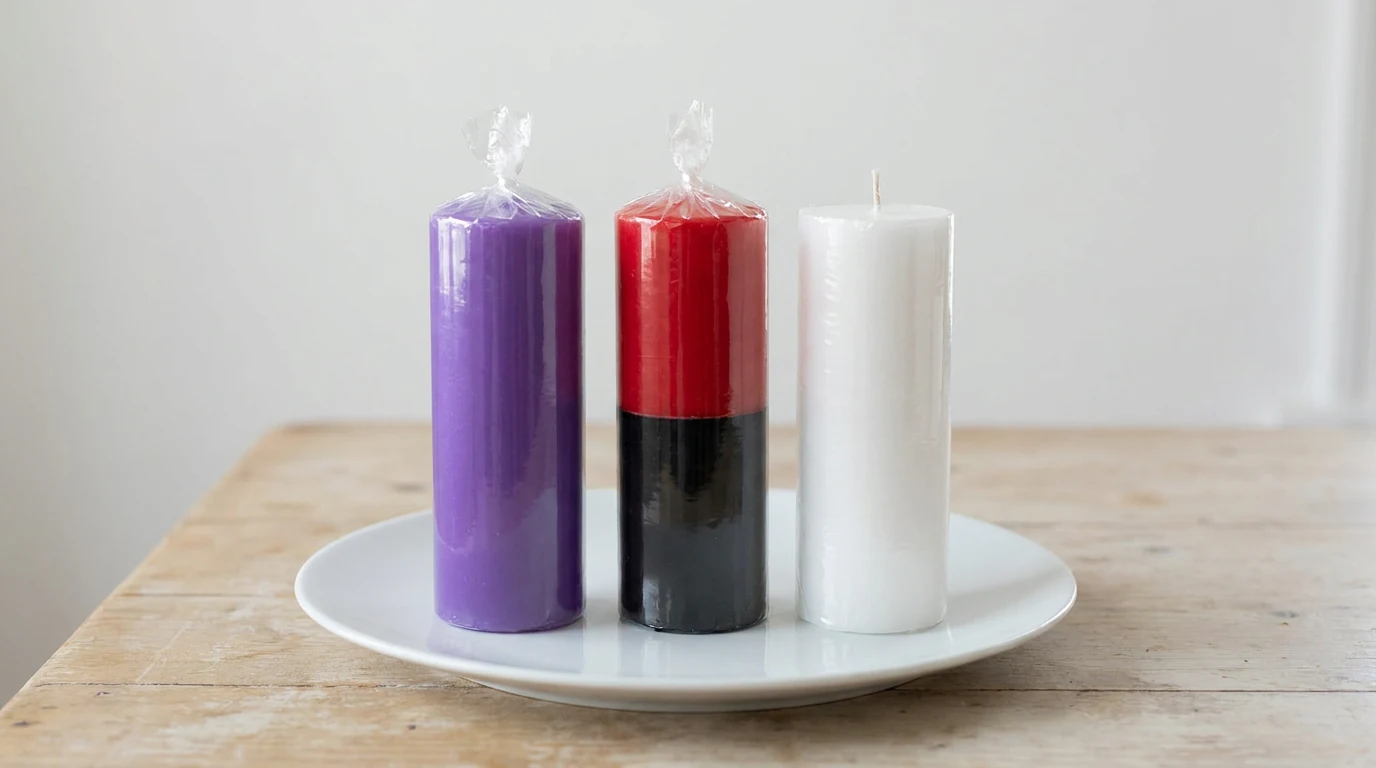
Does the 7-day candle need to have the plastic removed? Joice shows how to light it the right way, where to leave it, why it goes out by itself, and if it can be lit in the bedroom.