Exu (Eshu) Tatá Caveira candle
The Pai of the Caveiras spiritual legion (falange), to guard the gate and overcome heavy spells
Exu Tatá Caveira candle
7-day candle · stays lit for 7 days7 dias
The Exu Tatá Caveira candle is usually used when ordinary candle rituals are no longer enough: the house was the target of heavy ritual work, the gate seems open to everything, the family is out of order. Tatá is a title of respect of Bantu origin, linked to the idea of father, and that is how many houses treat him: as the eldest of the Caveiras spiritual legion, the one who transmits orders and puts everyone in their place.
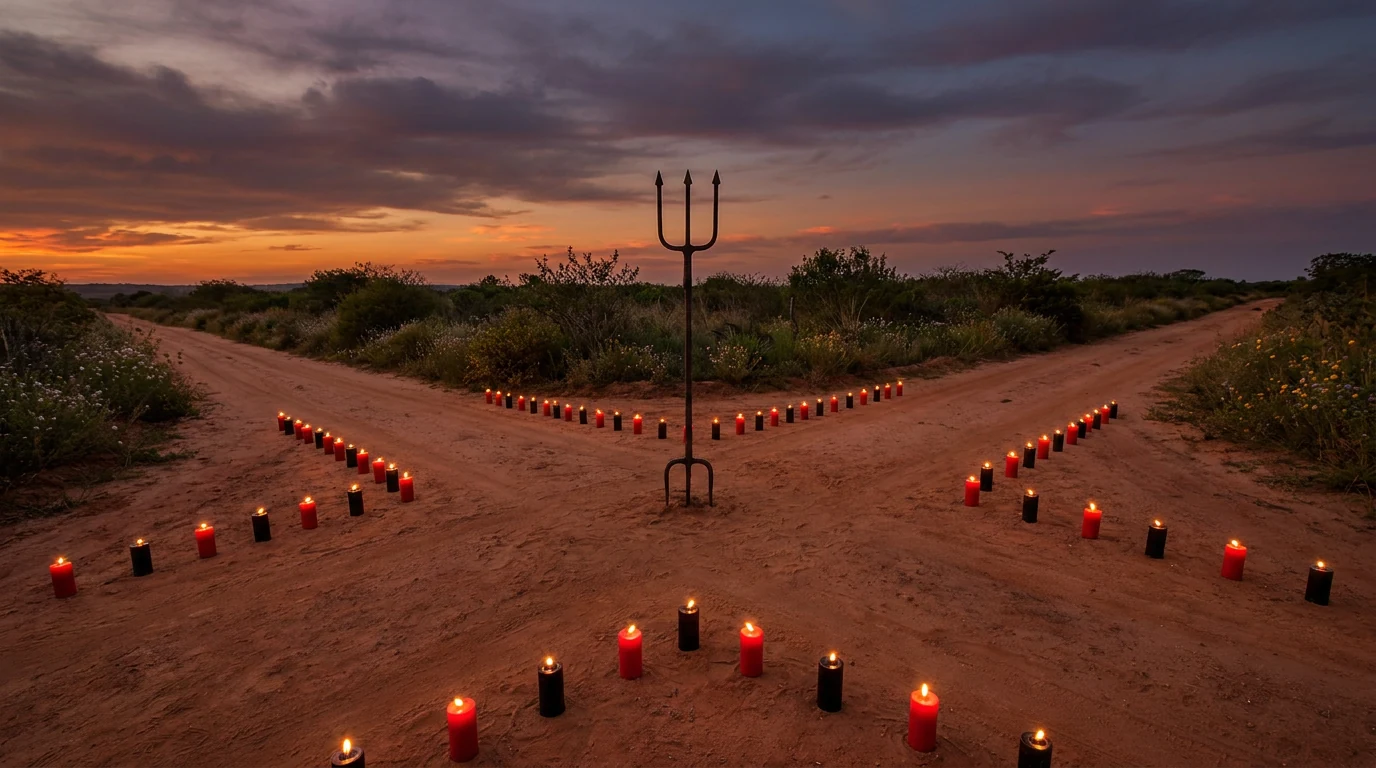
In the Umbandista literature that Reginaldo Prandi analyzed, Tatá Caveira appears as the most well-known name among the Exus who work under the orders of Omulu, the lord of the cemeteries. The pontos (sacred songs) of a house in Curitiba confirm the link: they sing of an iron gate with a wooden padlock, a noise at the gate in the silence of the Calunga and a Saravá Rei Omolu just before his name. There he arrives with a trident and a pointer, the tools of one who firms and undoes.
He is not the same as Exu Caveira or João Caveira, although they walk together and many people confuse them. The legend of the man from Egypt martyred with forty-nine followers circulates now for one, now for the other, without documentation. At home, the Tatá Caveira candle is firmeza for the gate and for order, and it does not replace the ritual work of the terreiro when the case is serious.
What is it for
What is the Exu Tatá Caveira Candle for
Black and white, the candle of Exu Tatá Caveira goes to who many houses point out as the head of the Caveiras falange, working under the orders of Omulu. It is lit to guard the front door of the house, overcome heavy spells, and provide support to those crossing the end of a cycle.
-
Guard the house gate
The gate through which everything enters, a visit that leaves the house heavy, the feeling of an unprotected house. The candle sets the head of the falange as the watchman of the entrance, which is his place.
-
Overcome heavy spells
When there is a sign of ritual work done and common cleaning did not solve it. The candle asks that Tatá Caveira undo with the pointer what was fixed against you and your family.
-
Support for those in treatment
Many houses link the falange to healing ritual, along with the force of Omulu. The candle accompanies those who are sick, asking for strength and protection, always by the side of the doctor.
-
Put order in spiritual life
For those who go around lighting a candle for everything and setting firmezas without guidance. The father of the falange is called to settle the mess and return discipline and respect to the path.
-
Crossing the end of a cycle
Long illness of a relative, a farewell that is approaching, a phase that is ending. The candle asks for support to cross the moment with dignity and without despair.
Who rules this candle
Orixás and spirits of the Exu Tatá Caveira Candle
-
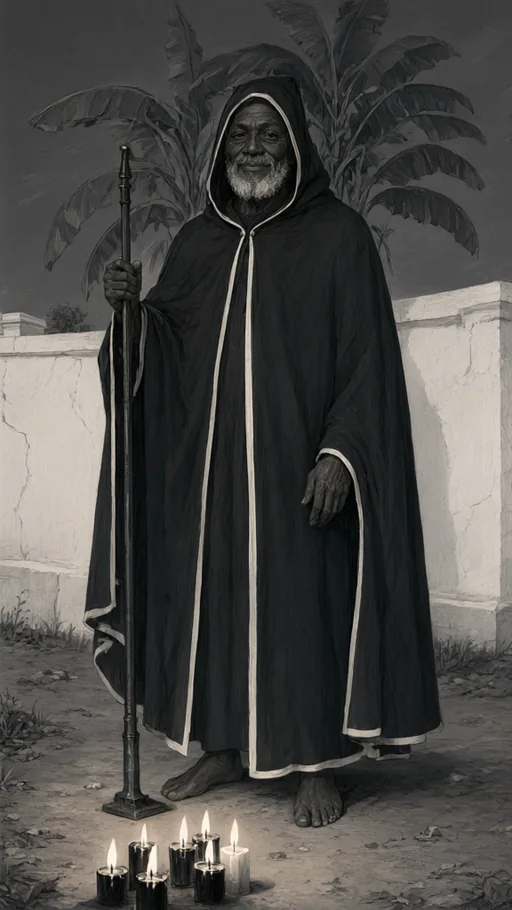
Exu Tatá Caveira
Father and head of the Caveiras falange
The label is his. Many houses treat him as the head of the Caveiras, guardian of the small calunga and the gate, and record the colors black and white for the candle, the bead necklace, and the clothing of the gira.
-

Obaluaê (Omulu)
King to whom Tatá Caveira responds
In Umbanda literature and in the pontos cantados (sacred songs), Tatá Caveira works under the orders of Omulu, the lord of the cemeteries. It is a line affiliation: the orixá (orisha) is not an Exu, and each has their own worship.
Know Obaluaê (Omulu)
Also settled for
- Exu João Caveira
- Exu Caveira
- Exu Caveirinha
- Exu Sete Catacumbas
- Omulu Line
Prayer to light
Candle prayer of Exu Tatá Caveira to guard the gate
“Lord Tatá Caveira, father of the falange that guards the calunga, I ask permission from Exu and King Omolu to reach you. I light this candle at the gate of my house and entrust to you its protection. What was set against me and against mine, undo with your pointer and return it to the earth. What entered without permission, put it out. Put order where I left a mess and teach me to ask with respect. Support those who are sick in this house and give strength to those who care for them. I do not ask for anyone's evil, I ask for protection and justice. Laroyê, Tatá Caveira! Atotô, Omolu!”Light the candle and pray
Step by step
How to set the Candle of Exu Tatá Caveira
- 1
Ask permission from Exu and Omulu
Greet Exu with Laroyê and Omulu with Atotô before calling Tatá Caveira. He works under the orders of the king of the calunga, and whoever skips the permission starts on the wrong side.
- 2
Set at the gate
The place is the gate, the entrance door, or the corner of the backyard closest to it, on the ground or on a low base. Far from the bedroom and the altar of the orixás.
- 3
Say what needs to be undone
Hold the candle and speak clearly about what weighs on the house. Tatá Caveira is treated as a Pai: a respectful and direct request, without bargaining and without a request against anyone.
- 4
Light and serve the drink
Light with a match, place the glass beside it and pray. Some houses ask for cognac instead of marafo; if your house does not offer a drink, the candle and the prayer are enough.
- 5
Dispose of the leftovers outside the house
Do not blow. At the end, the drink goes to the earth and the glass is washed. Glass, wax, and what was left of the lining go wrapped for the trash, away from the gate.
Precautions before lighting
- The candle at the gate stays near the passage: firm base, out of the path of those entering, away from dry brush, children, and animals.
- Tatá Caveira does not work for revenge nor to bind anyone's will. Whoever asks for evil in his name is outside the tradition.
- Heavy spell and gate firmeza with consecrated foundation (assentamento) are matters for the zelador of your terreiro. The candle at home helps, but does not do this ritual work alone.
- In a request for healing, the candle accompanies the treatment and never replaces the doctor. Follow the consultations, the medicines, and the exams exactly as they were given.
Ceromancy
What the flame of the Exu Tatá Caveira candle shows
Traditional terreiro reading. Before interpreting, check if there is no wind, crooked wick, or poor quality candle.
- Good sign
Straight, silent, and firm flame
Many houses read this as a guard being set at the entrance and a request received by the head of the spiritual legion (falange). Let it burn without touching it.
- Observe
Flame that jumps and crackles at the beginning
In popular reading, it is the spell being undone right at the entrance. It usually calms over time; keep a safe distance from any fabric.
- Attention
Glass that cracks during the burning
Some houses read this as a strong cut. Before anything else, change the base and manage the fire. If it happens again, take the case to a terreiro.
- Attention
Thick soot rising through the glass
Sign of a heavy load being burned. Take a cleansing bath (banho de descarrego), clean the entrance, and, if it persists, seek guidance from a zelador.
- Good sign
Wax that ends up clean at the bottom
A complete burn is usually read as the work being finished. It is time to thank the head of the spiritual legion (falange) and keep the house in order.
Ritual bath and smoke cleansing (defumação)
Herbs that combine with the Candle of Exu Tatá Caveira
-

Wormwood (losna) / Absinthe
Artemisia absinthium
Herb of Omulu, bitter and for deep cleansing. Many houses fumigate the entrance with dry losna before setting the candle of Tatá Caveira.
See the herb -

Rue
Ruta graveolens
Rue (arruda) ritual bath from the neck down before lighting removes the heavy load and leaves the body ready to make a request at the entrance.
See the herb -

Velame
Croton campestris
Heavy cleansing plant, used in some houses in the banho de descarrego when there is a sign of a spell. Use only with guidance from the terreiro.
See the herb
Virtual Candle
Light the Exu Tatá Caveira candle now
Choose the type, write your request, and pay by PIX. The flame stays on the altar and you follow along through the link.
Place on the altarFrequently asked questions
Questions about the Exu Tatá Caveira candle
Is Exu Tatá Caveira the same as Exu Caveira?
No. Exu Caveira is the name of the cemetery spiritual legion (falange) and the guardians who work in it. Tatá Caveira is treated by many houses as the head of this spiritual legion (falange), the eldest, who transmits the orders. They walk together, but each has their own ponto (sacred song) and candle.
What is the difference between Tatá Caveira and João Caveira?
Both are from the Caveiras spiritual legion (falange), and the hierarchy changes from house to house. In some parts of Umbanda, João Caveira heads the cemetery spiritual legion (falange); in other houses, the one who heads it is Tatá Caveira, and João accompanies him. Whoever says how it is in your house is the leader.
What is the color of the Exu Tatá Caveira candle?
Black and white in most Umbanda houses, the same colors as the bead necklace (guia) and the gira clothing. Some Quimbanda houses use black and red. Both interpretations exist, and the one of your terreiro is the one that counts.
What is the best day to light the Tatá Caveira candle?
Monday, which is the day of the povo de rua and the souls, preferably at night. Many houses prefer the great hour, after midnight. If it is urgent, light it on another day greeting Exu and Omulu before.
What does Tatá mean in the name of Exu?
Tatá is a word of Bantu origin, used as a title of respect and linked to the idea of father. This is why many houses treat Tatá Caveira as the father of the falange, the oldest, and greet him with the deference given to a chief.
Can I light the Tatá Caveira candle inside the house?
His place is the gate: the gate, the entrance door, or the corner of the backyard closest to it. Inside the bedroom or on the altar of the orixás, no. In an apartment, use a corner near the door, with a firm base and away from fabric.
What to do with the drink and the leftover candle?
The drink goes to the earth, in a garden bed or at the foot of a tree, and the cup is washed in running water. The glass and the wax go wrapped in paper for the trash, away from the gate. Nothing is reused in another firmeza.