Caboclo Tupinambá candle
Courage, vigor, and defense at work with the forest warrior of Oxóssi (Oshosi) and Ogum (Ogun)
Caboclo Tupinambá candle
7-day candle · stays lit for 7 days7 dias
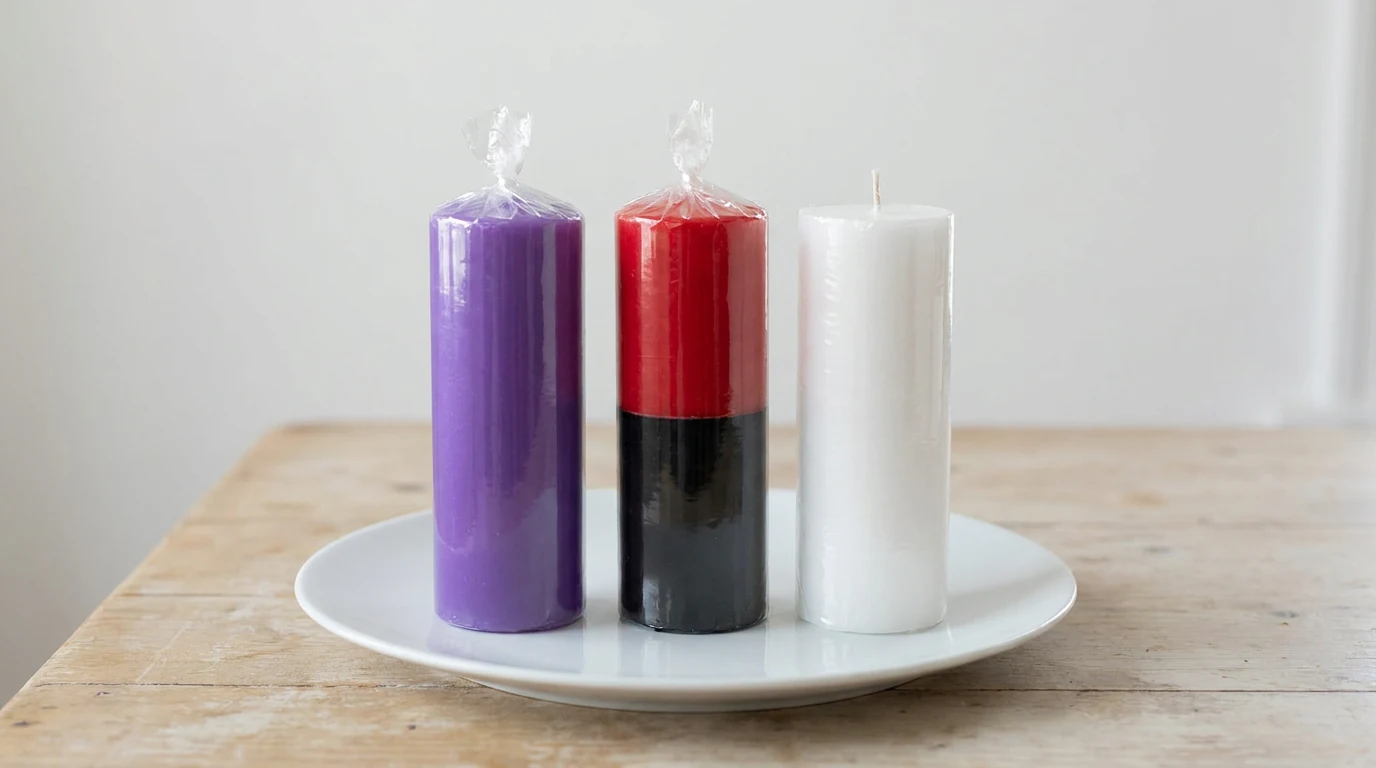
The Caboclo Tupinambá candle is a bicolor votive candle, with the top half green and the bottom half red, and the label of the warrior caboclo on the front. It appears on the Umbanda congá, in the caboclo giras, and in the prayer corner of those who have this caboclo as their front spirit guide. Those seeking this candle are usually tired of fighting alone and want a bit of his strength nearby.
The name honors the Tupinambá peoples, indigenous peoples who lived on the coast of Brazil when the Portuguese arrived. In the gira, Tupinambá comes as a caboclo of upright posture, loud shout, and defensive work. Many houses place him in the Oxóssi line, and therefore Thursday is the most common day. Others treat him as the lead caboclo under Ogum and light him on Tuesday. The two colors of the candle welcome both interpretations, and the custom of your terreiro decides.
At home, he does not arrive to do the work for you. The caboclo gives spirit to those who have already picked up the hoe: those who face a double shift, those who are rebuilding their lives, those who need to defend themselves without losing their integrity. Caboclo defends, he does not attack. A request for revenge does not match this candle.
What is it for
What is the Caboclo Tupinambá Candle for
Green on top, red on bottom: the Caboclo Tupinambá candle joins the forest of Oxóssi to the iron of Ogum. It is lit to ask for courage, disposition for hard work, defense against those who act behind your back, and firmeza to not give up in the middle of the fight.
-
Spirit to face a heavy routine
For those who wake up without strength and still have construction work, an on-call shift, or a double shift ahead. The candle asks for disposition from the caboclo, without taking away from you the duty to care for your body.
-
Defense against betrayal and falsehood
When someone nearby acts behind your back, the caboclo is called to guard your house and your name. He protects and shows who is who, but does not return the evil.
-
Courage for a difficult conversation
To claim a right, to resign, to face a family fight. Light it before the marked day and ask for the warrior's firm word, without rudeness and without fear.
-
Abundance earned with your own sweat
Caboclo respects those who work. The candle accompanies the small business, the crop, and manual labor, asking that honest effort turns into sustenance on the table.
-
To set the caboclo in front
For the medium who has Tupinambá as a guide, the candle on Thursday keeps the bond lit between one gira and another. Coordinate with the zelador on how and where to set it at home.
Who rules this candle
Orixás and spirits of the Caboclo Tupinambá candle
-
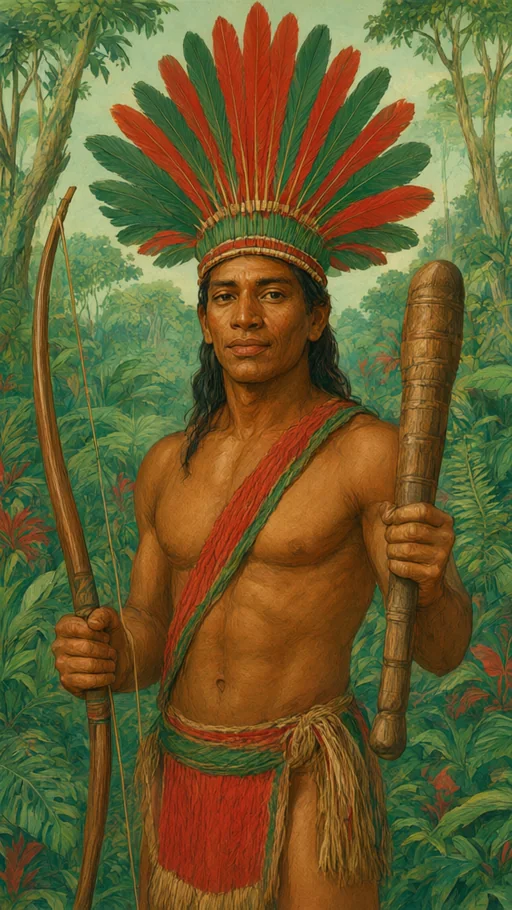
Caboclo Tupinambá
Warrior of feather and forest arrow
The candle carries his label and the two colors of his radiation. It is the caboclo himself who receives the prayer request, with the cry of one who defends the village and does not abandon his people in the middle of the fight.
-

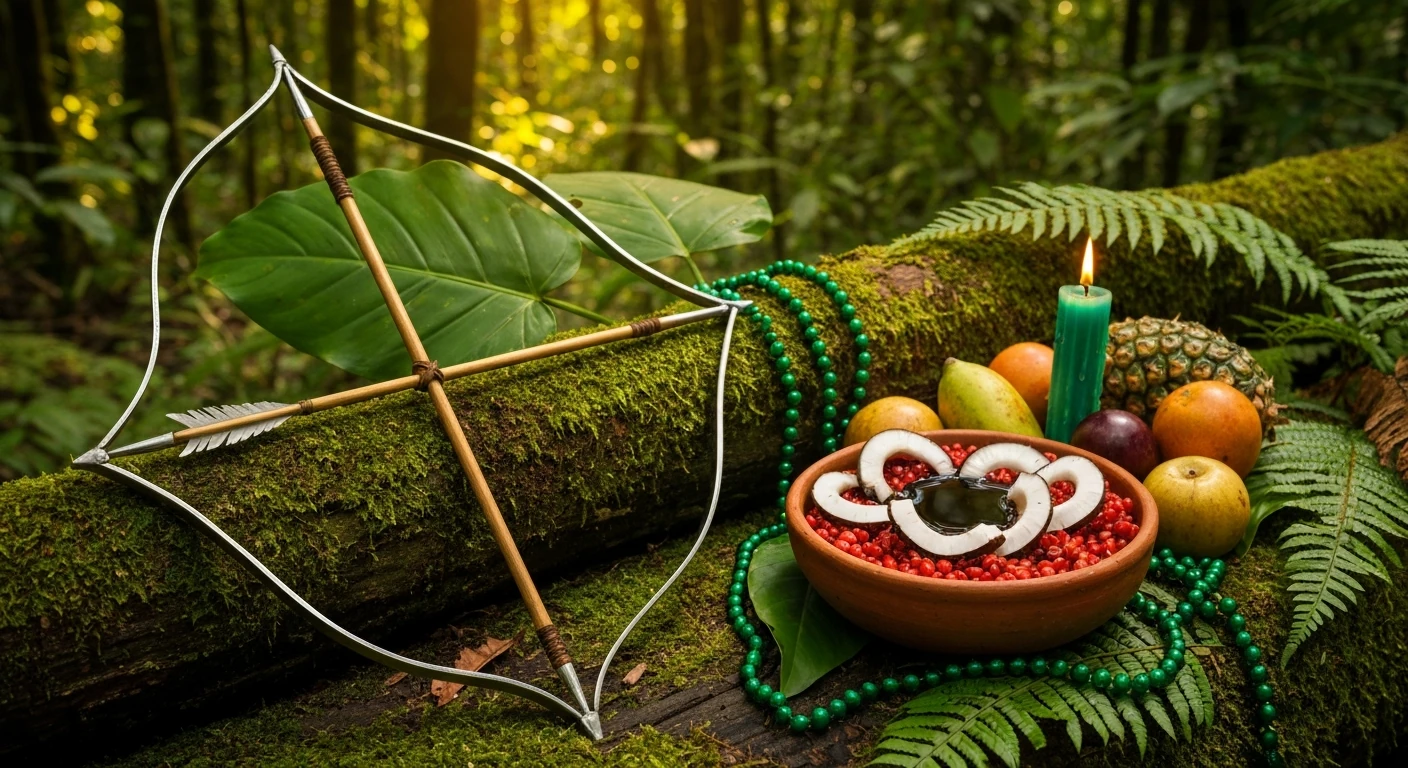
Oxóssi
Hunter, lord of the caboclos and of the leaves
The green on the top part is from Oxóssi, regent of the line where most houses place the caboclos. From him comes Thursday, the right aim, and the knowledge of the forest herbs.
Know Oxóssi -

Ogum
Blacksmith who overcomes demands
The red at the bottom is the fire of Ogum in Umbanda. Houses that see Tupinambá as a caboclo of Ogum's front request Tuesday and call upon the sword of the orixá (orisha) to cut what blocks the path.
Know Ogum
Also settled for
- Caboclos de Oxóssi
- Caboclos de Ogum
- Feathered caboclos
- Cabocla Jurema
Prayer to light
Prayer of the Caboclo Tupinambá candle for courage
“Caboclo Tupinambá, warrior who knows every trail of the forest, I light this green and red candle and ask permission to come near your fire. I am tired, but I do not want to stop. Lend me your breath, so that I may finish what I started. Stay on guard at my door and do not let in those who come with falsehood. May my work be honest and may the bread of my house come from it. Pai Oxóssi, set my aim. Pai Ogum, cut what binds me. And you, caboclo, teach me to fight without losing integrity and to win without humiliating anyone. Okê Caboclo!”Light the candle and pray
Step by step
How to set the Caboclo Tupinambá Candle
- 1
Prepare the body before
Take a regular bath and, if possible, a guiné ritual bath from the neck down. Caboclo is strength, and we present ourselves to him clean and with our heads on straight.
- 2
Set up the caboclo corner
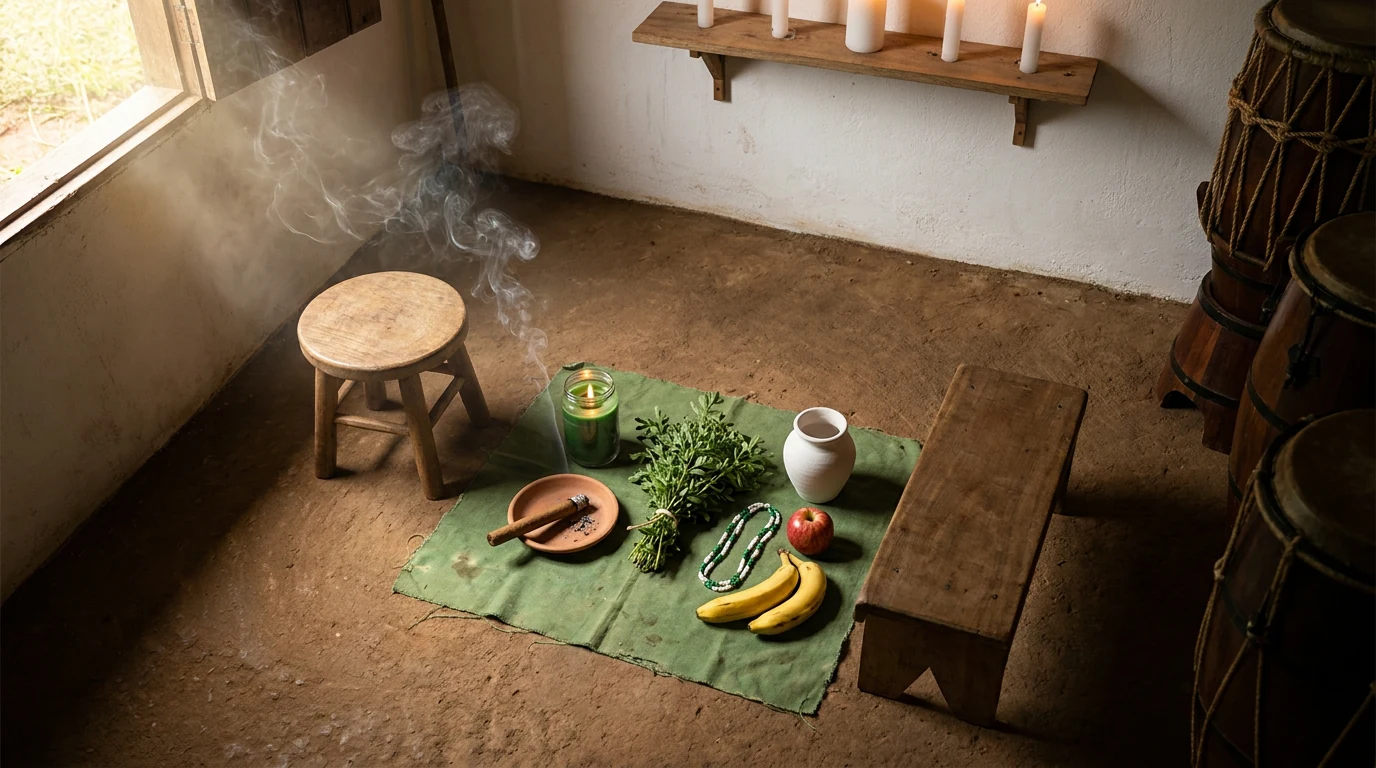
Use a firm table or the floor covered with a green cloth, away from curtains. The candle goes in the center of the saucer, the water to the right, and the branch of leaves to the left.
- 3
Pass the candle over the body
Hold the candle and move it down from the head to the feet, asking that it takes away the tiredness and discouragement. Then set it firmly in the saucer with the green part facing up.
- 4
Light it and call by name
Light it with a match, greet with Okê Caboclo, and say that the light is for Caboclo Tupinambá. Perform the prayer and tell your prayer request as if talking to a protector.
- 5
Finish without blowing
Let it burn until the end. If you leave the house, smother it with another saucer. The water goes to the earth, the fruit goes under a tree, and the wax wrapped for the trash.
Precautions before lighting
- 7-day candle burns day and night. Leave the glass on stone, ceramic, or metal, away from any fabric, and out of reach of children and pets.
- The foundation of the caboclo is to guard, not to harm. A request for punishment, fighting, or loss for someone is not ritual work that is taken to him.
- A medium whose lead spirit is Tupinambá receives from the zelador of their house the guidance on firmeza, offering, and day. Internet text does not take that place.
- Whoever requests vigor for being sick or exhausted also needs a doctor. The candle adds strength to the treatment; it does not replace a consultation, exam, or medicine.
Ceromancy
What the flame of the Caboclo Tupinambá Candle shows
Traditional terreiro reading. Before interpreting, check if there is no wind, crooked wick, or poor quality candle.
- Good sign
High and straight flame, without flickering
Many houses read it as the caboclo standing next to the request. Stay firm in what you are doing, because the strength you requested is accompanying you.
- Good sign
Flame that crackles and releases sparks
Check first if the wick did not catch moisture. Other than that, in the terreiro reading, the crackle in a caboclo candle usually indicates defense in progress. Stay calm.
- Attention
Low and weak flame for a long time
It may indicate tiredness in the person who lit it, or a request that still needs more action from you. Rest, review your plans, and light another candle on another Thursday.
- Attention
Wax dripping only on the red side
Some houses read it as a fight or pending issue still without a solution. It could just be a draft of air on that side. If it repeats in several candles, take the doubt to the caboclo in the gira.
- Observe
Darkened glass of the 7-day candle
Soot on the glass appears with a large wick or wind. Check this first. Without a physical cause, many people understand it as burned charge and perform a ritual bath of leaves.
Ritual bath and smoke cleansing (defumação)
Herbs that combine with the Caboclo Tupinambá Candle
-

guiné / Tipi
Petiveria alliacea
Leaf for defense and for cutting heavy energy. The guinea hen weed ritual bath before setting the candle leaves the body ready to receive the force of the caboclo.
See the herb -

Pepper tree (aroeira)
Schinus terebinthifolius
Forest tree that appears in the caboclo giras. A branch next to the saucer reinforces the request for protection and house cleansing during the burning.
See the herb -

Saint George's Sword / Ogum's Sword
Sansevieria trifasciata
Ogum plant that guards the entrance. A pot near the door, added to the candle, accompanies the request for defense against betrayal and envy.
See the herb
Virtual Candle
Light the Caboclo Tupinambá Candle now
Choose the type, write your request, and pay by PIX. The flame stays on the altar and you follow along through the link.
Place on the altarFrequently asked questions
Questions about the Caboclo Tupinambá Candle
What is the right day to light the Caboclo Tupinambá candle?
In most houses it is Thursday, the day of Oxóssi and the line of the caboclos. Terreiros that see Tupinambá as a caboclo of Ogum prefer Tuesday. If you attend a house, follow the day it uses; if not, Thursday is the most common choice.
Is Caboclo Tupinambá from Oxóssi or Ogum?
It depends on the house. The most common reading places him in the line of Oxóssi, among the feather caboclos. Others receive him as a caboclo of the front of Ogum, due to his warrior nature. The green and red candle exists precisely because it carries both forces.
Can I light the Tupinambá candle at home without being a medium?
You can. Anyone can light a candle for a caboclo and request courage and protection with respect. What remains for the terreiro is firmeza with assentamento, a large offering, and mediumship development work.
Can I blow out the caboclo candle before it finishes?
Avoid it. The custom is to let it burn until the end. If you need to leave, smother the flame with a saucer, without blowing, and light it again upon returning, saying once more who the light is for. Blowing is seen as cutting the request.
What is the difference between the Tupinambá candle and the common green and red one?
The colors are the same, but the votive one carries the caboclo label and is directed to him by name. The green and red one without the image usually goes to Ogum Rompe-Mato or to the caboclos in general, without a specific guide.
What to do with the leftover candle and water?
The water from the cup goes to the soil of a pot or a garden. The fruit, if there was any, stays at the foot of a tree. The leftover wax can go to the common trash, wrapped in paper, and the saucer is washed before being used again.