Caboclo das Sete Encruzilhadas Candle
Charity, open paths and gratitude to Umbanda with the guide of Zélio de Moraes
Caboclo das Sete Encruzilhadas Candle
7-day candle · stays lit for 7 days7 dias
The Caboclo das Sete Encruzilhadas candle honors the most remembered spirit guide in the history of Umbanda. It bears his label and two colors: white, from the tunic he was described with and the clothing that the mediums of his house wear to this day, and green, from the caboclo line. It is lit on the home congá, in the November 15th giras, and by those who are facing many paths without knowing which one to take.
By tradition, the Caboclo manifested in the young Zélio de Moraes during a spiritist session in Niterói on November 15, 1908, and announced a form of worship open to everyone, founded on charity. According to the house's version, the Tenda Espírita Nossa Senhora da Piedade was born the next day, where he is called the Chief. Researchers treat the episode as a myth of origin, told in writing decades later. The oldest record, by Leal de Souza, is from 1933.
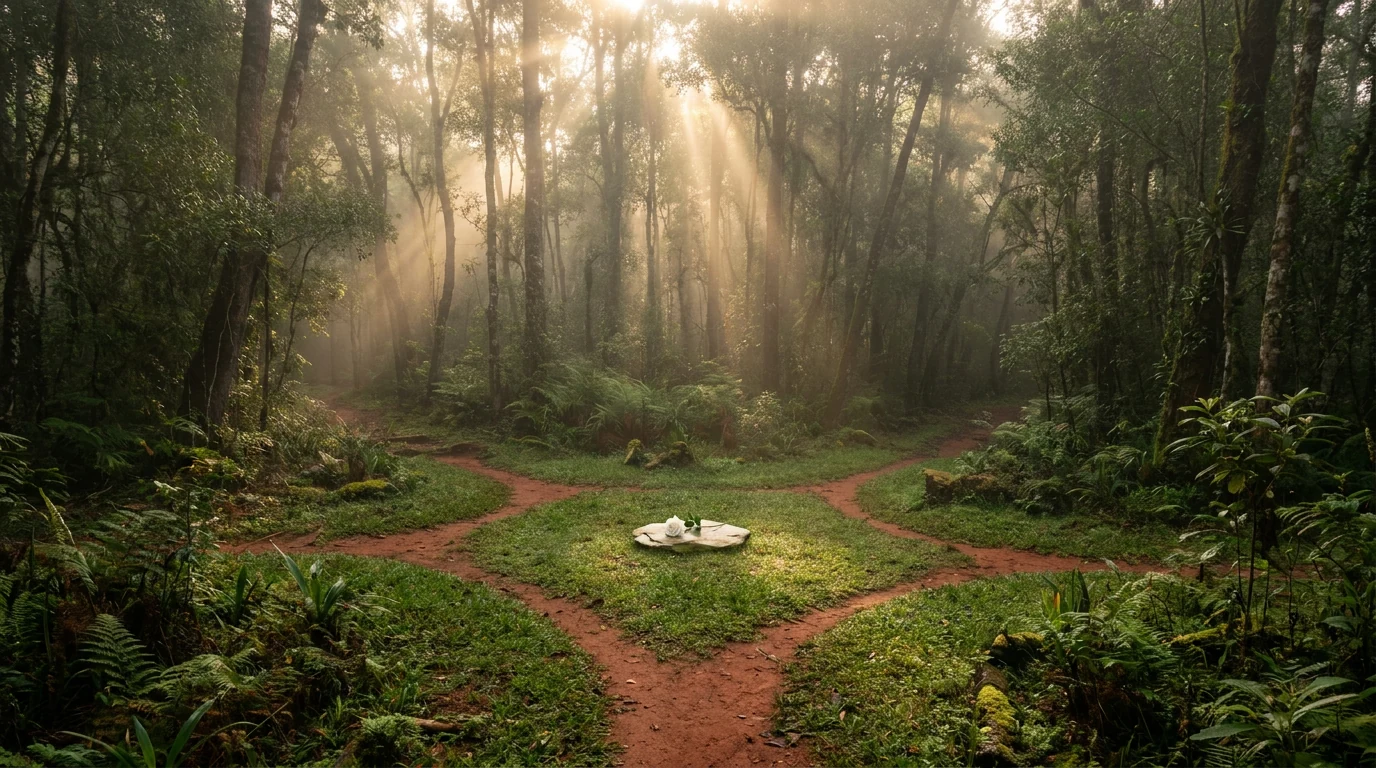
The name has an ancient explanation: according to Leal de Souza, the spirit cried at the crossing of seven paths until he discovered his mission. Therefore, his candle is for those who are lost between choices. It does not decide for you nor does it open a door by force. It asks for clarity, firmeza, and the commitment to be useful to someone on the path.
What is it for
What is the Caboclo das Sete Encruzilhadas Candle for?
The candle of Caboclo das Sete Encruzilhadas is white on top and green on the bottom, with the label of the guide that tradition links to the announcement of Umbanda in 1908. It is lit to request open paths, to set the spirit of charity, and to thank the religion.
-
Choose among many paths
For those who have many exits and no certainty: course, city, work, relationship. The Caboclo who found his mission at the crossroads of seven paths is the right company for this doubt.
-
Open a path that seems closed
Tradition attributes to him the phrase that there would be no closed paths for his name. Light it when everything seems stuck and ask for the next possible step, not the miracle.
-
Set the spirit of charity
His house has served people for free to this day. The candle is good for those who want to start volunteer work, help a family member, or return to serving at the terreiro.
-
Give thanks on Umbanda Day
On November 15, many houses light a candle and place white roses on the congá in tribute to Caboclo and Zélio. It is a simple way to thank the religion that welcomed you.
-
Reconnect with Umbanda after some time
For those who moved away from the terreiro and feel the loss. The candle of the guide who, by tradition, announced Umbanda helps to take the first step back, calmly and without guilt.
Who rules this candle
Orixás and spirits of the Candle of Caboclo das Sete Encruzilhadas
-
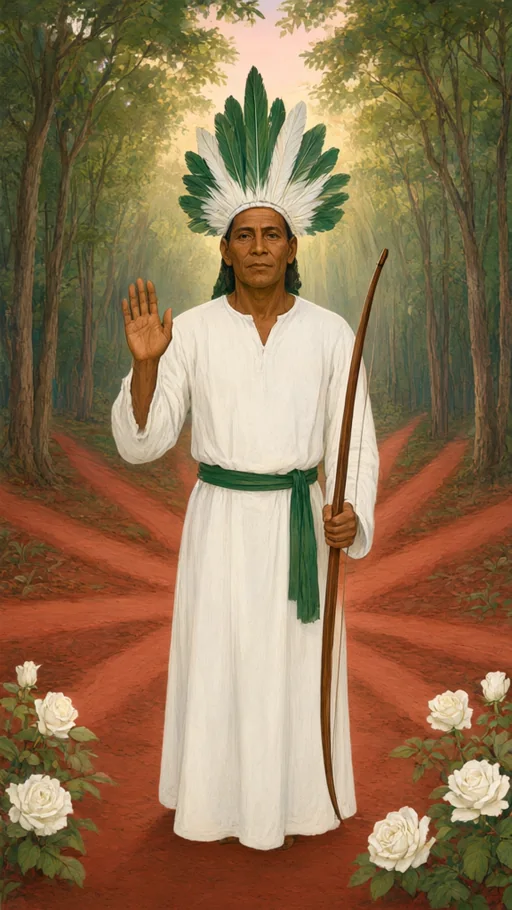
Caboclo das Sete Encruzilhadas
The Chief of the Tenda da Piedade, guide of Zélio
The label is his and the prayer request goes in his name. Tradition links him to the announcement of Umbanda in 1908 and to free charity as a rule of the house. The candle asks for what he taught: direction, humility, and service.
-

Oxóssi (Oshosi)
King of the woods and father of the caboclos
In a recording of the Tenda's 63 years, the Caboclo himself says he is from the line of Oxóssi, and the house's songbook places him in that section. Hence the green of the candle and the Thursday of many houses.
Know Oxóssi -

Ogum
Lord of iron and of paths
Leal de Souza, in 1933, placed him in the line of Ogum, and the opening ponto (sacred song) of the Tenda sings Ogum in every gira. Therefore, there are houses that consecrate him on Tuesday. Sources diverge regarding the line.
Know Ogum
Also settled for
- Caboclos
- Oxóssi line
- Line of Ogum
- Pai Antônio
Prayer to light
Candle prayer of Caboclo das Sete Encruzilhadas to find the way
“Okê Caboclo! Caboclo das Sete Encruzilhadas, who one day stood still at the crossroads of seven paths without knowing where to go, I am also like this. I light this white and green light and ask you for what you received: a way and a mission. Show me which path is mine and give me the courage to walk it, even slowly. Take from me vanity and fear, which are the two vines that hold the foot the most. Make me someone useful, who helps without expecting anything in return, as you taught in your house. Bless the Umbanda, the mediums, and those who arrive at the terreiro for the first time. May no path remain closed for those who walk with charity. Okê Caboclo!”Light the candle and pray
Step by step
How to consecrate the Candle of Caboclo das Sete Encruzilhadas
- 1
Clean the place and wear something white
In the house of the Caboclo, the mediums work in white and barefoot. At home, light clothing and feet on the ground are a simple gesture of respect, which matches the candle.
- 2
Line the saucer with green leaves
Distribute the abre-caminho or guinea hen weed leaves on the saucer. They remind you of the forest of the caboclo line and serve as a floor for the candle throughout the week.
- 3
Place the white rose next to it
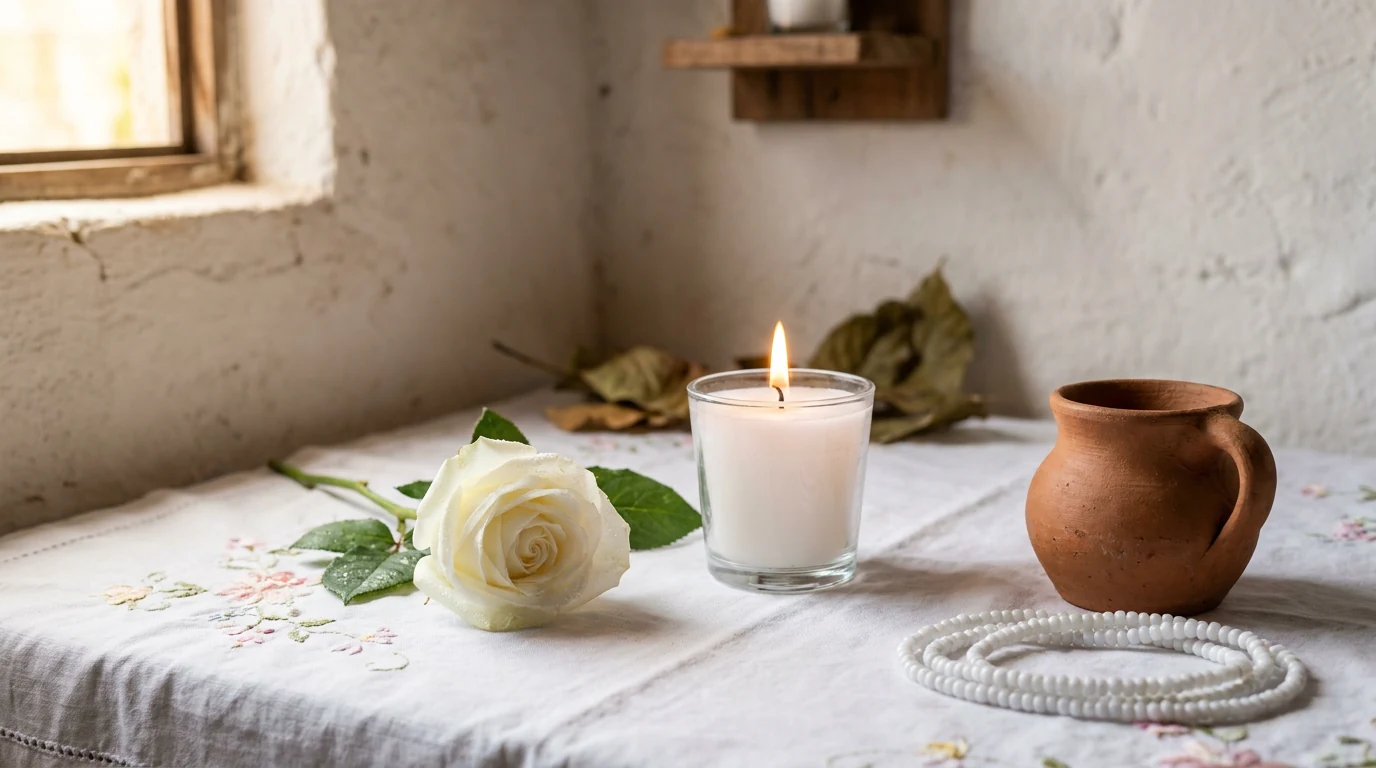
Place the white rose in a glass of water next to the candle and a clean glass of water on the other side. White rose is the most common tribute to the Caboclo on Umbanda Day.
- 4
Say what your crossroads is
Hold the candle and name the paths you have before you. Promise a concrete, small, and possible act of charity, to fulfill when the direction clears.
- 5
Light and hail the Caboclo
Light with a match, give the Okê Caboclo! shout, and say the prayer. Let the candle finish without blowing it out. The rose and leaves will go to the earth later, and the wax to the trash wrapped up.
Precautions before lighting
- A 7-day candle requires a firm place, away from curtains, dry leaves, and children, and someone nearby at home. The rose and leaves cannot touch the flame.
- The history of the Caboclo is an origin myth for researchers and a foundation for those of Umbanda. Speak of it with respect, without turning it into a dispute.
- Caboclo firmeza, consultation, and foundation ritual work are with the terreiro and the zelador. The candle at home is a tribute and prayer, it does not replace the gira.
- If the crossroads is about health, such as choosing a treatment, the decision is with the doctor. The candle accompanies the choice, it does not take the place of guidance.
Ceromancy
What the flame of the Caboclo das Sete Encruzilhadas candle shows
Traditional terreiro reading. Before interpreting, check if there is no wind, crooked wick, or poor quality candle.
- Good sign
High and straight flame, without dancing
Many houses read this as a path opening and a prayer request received by the Caboclo. Stay attentive to the signs of daily life, which is where the answer usually comes.
- Good sign
Clear flame with a golden glow
Some read the strong glow as the presence of a spirit guide of light nearby. Take this opportunity to give thanks and to remember the charity that you promised.
- Attention
Flame that divides into two tips
Some houses understand this as a decision still divided. Do not force the choice: pray again, ask for clarity and wait one more day before deciding.
- Attention
Candle that goes out right at the beginning
Check the wick, wind, and quality of the candle. If nothing explains it, redo the prayer request with more simplicity and, if it repeats, seek guidance in a terreiro.
- Observe
White and light smoke
It is common at the beginning of the burning and when the wick is still settling. It does not require a special reading, just that you let the candle burn in peace.
Ritual bath and smoke cleansing (defumação)
Herbs that combine with the Caboclo das Sete Encruzilhadas candle
-

Abre-Caminho / Lacre
Justicia gendarussa
The name already says the request. Leaves lining the saucer or a path-opening herbal bath before lighting it pair well with the candle for those seeking a direction.
See the herb -

White Rose
Rosa alba
The most common tribute to the Caboclo on November 15. A white rose next to the candle, or petals in a ritual bath, speaks of peace and gratitude.
See the herb -

guiné / Tipi
Petiveria alliacea
Leaf of cutting and defense of the caboclos. A guinea hen weed ritual bath from the neck down cleanses what blocks before you set the path request.
See the herb
Virtual Candle
Light the Caboclo das Sete Encruzilhadas Candle now
Choose the type, write your request, and pay by PIX. The flame stays on the altar and you follow along through the link.
Place on the altarFrequently asked questions
Questions about the Caboclo das Sete Encruzilhadas Candle
What is the Caboclo das Sete Encruzilhadas candle for?
To ask for direction when there are many paths, to open a path that seems closed, to set the spirit of charity and to thank Umbanda, especially on November 15. It is a candle of clarity and service, not for a request to bend the will of others.
Is the Caboclo das Sete Encruzilhadas the same as Exu (Eshu) Sete Encruzilhadas?
No. The Caboclo is a spirit guide of the caboclo line, linked to Zélio de Moraes. Sete Encruzilhadas is also the name of the territory of various Exus and Pombagiras, from the left. The very book of pontos (sacred songs) from Tenda da Piedade separates the two: the Caboclo in the Oxóssi section, Seu Sete Capas in the Exu section.
Did the Caboclo das Sete Encruzilhadas found Umbanda?
By tradition, it was by him, manifested in Zélio de Moraes on November 15, 1908, that Umbanda announced itself. Researchers treat the episode as an origin myth: the complete scene was only published decades later and the religion formed over years, in many houses.
What is the best day to light the Caboclo das Sete Encruzilhadas candle?
Every year, November 15 is Umbanda Day, established by federal law in 2012. During the week, Thursday is the day of the caboclos and of Oxóssi. Houses that follow Leal de Souza and place him in the line of Ogum may prefer Tuesday.
Why is his candle white and green?
The white comes from the white tunic with which he was described in 1933 and from the white clothing of the mediums of the Tenda da Piedade. Green is the color of the line of the caboclos. There is no official color: many houses honor him only with a white candle and white roses, and both forms are respectful.
Is it true that he was Father Gabriel Malagrida in a past life?
That is what an account says, one that became established over time. Leal de Souza, in 1933, only said that he had been a priest, without a name. Researchers read the identification with the Jesuit Malagrida, executed in Lisbon in 1761, as a layer added later. For lighting the candle, this changes nothing.