Light Blue Candle
Calm in the chest, united family, and the lap of Iemanjá (Yemoja) in the color of shallow water
Light Blue Candle
7-day candle · stays lit for 7 days7 dias
Those who look for the light blue candle are almost always seeking peace. It is the candle lit when the heart is heavy, when the house is at war, or when a mother wants to cover her child with protection. In Umbanda and Candomblé, it is offered to Iemanjá, and many people outside of terreiros also light this color on New Year, facing the sea or in the living room.
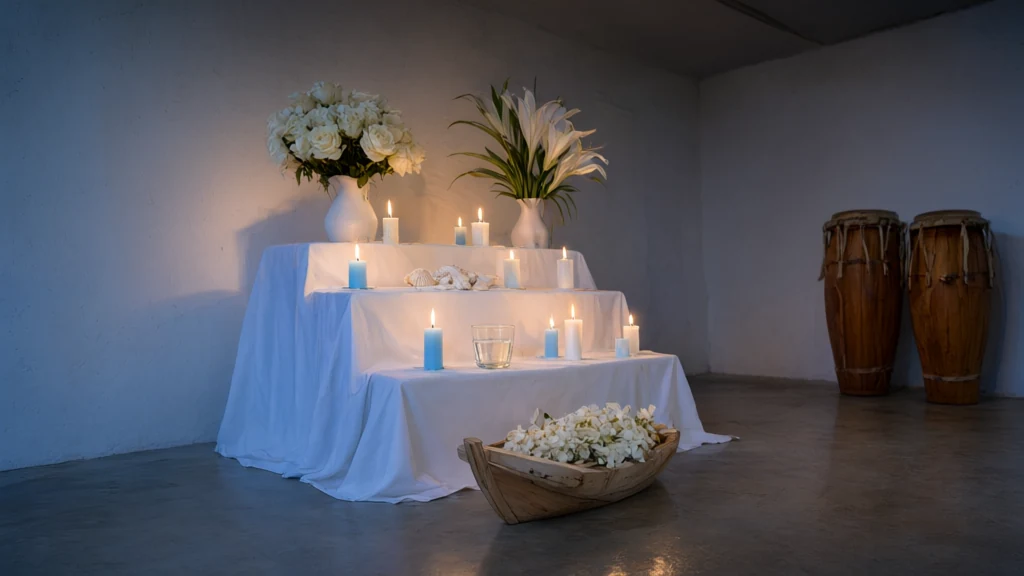
Iemanjá is the iabá of the salt waters, worshipped as the great mother who cares for the ori, the spiritual head of each one. Her colors are light blue, white, and silver, and Saturday is her day in most houses. Therefore, the light blue candle usually goes to the congá along with white flowers and a glass of water, and also reaches the Marinheiros, the Caboclas do mar, and the entire falange of the Povo d'Água.
Inside the house, this candle works slowly, like a rising tide. It does not cut demanda nor open paths by force: what it does is soften the environment, lower the tone of conversations, and give the person a little comfort. If the problem is heavy or old, the candle helps, but the path continues to be seeking a serious house of axé.
What is it for
What the Light Blue Candle Is For
Light blue is the color of the sea near the sand, and in the terreiro it belongs to Iemanjá. The candle of this color is lit to calm emotions, ask for protection for mothers, children, and home, thank the Queen of the Sea, and consecrate the Povo d'Água.
-
Calm anxiety and held-back tears
Light it when your mind won't shut off or sadness weighs on your chest. Sitting near the blue flame and praying softly helps you breathe better and put your feelings in order.
-
Peace among relatives
For homes where everyone is irritable or where an old fight remains unresolved. The candle stays in the living room, in a common place, requesting that Iemanjá calms everyone's spirits.
-
Protect mother, pregnant woman, and child
It is the candle that many mothers light for their children, and that accompanies the wait of those who are pregnant. The prayer request is for support and care, delivered into the hands of the great mother.
-
Quiet night and lighter sleep
Lit at the beginning of the night, in a safe room and away from the bed, the light blue candle helps to end the day with calm and to lie down without carrying agitation into sleep.
-
Give thanks and greet the Queen of the Sea
On February 2, on December 8, or at the turn of the year, it is the color of those who want to thank Iemanjá. It also serves to greet the Sailors and the Water People on the congá.
Who rules this candle
Orixás and spirits of the Light Blue Candle
-

Iemanjá
Queen of the Sea, mother who cares for the heads
Light blue is the color of the shallow waters where Iemanjá receives flowers and gifts. Saturday is her day, and everything she governs, such as family, motherhood, and emotional balance, belongs to this candle.
Know Iemanjá
Also settled for
- Water People
- Sailors
- Caboclas do mar
- Mermaids
Prayer to light
Prayer of the light blue candle to Mother Iemanjá
“Mother Iemanjá, lady of the salt waters, I light this blue candle and sit on the shore of your sea. Receive what I bring in my chest: the exhaustion, the sorrow, the fear that does not let me sleep. Wash all of this with your foam and return only calm to me. Watch over my head, which you have known since before I was born. Cover my children, my parents, and those who live with me with your blue mantle, and put peace where there is fighting today. May my house be a harbor, and not a storm. I thank you for what I have already received and trust in your timing, which is the time of the tide. Odoyá, my mother!”Light the candle and pray
Step by step
How to set the Light Blue Candle
- 1
Cover a place in the house
Choose a firm table or shelf, in the living room or in a quiet corner. Spread the light cloth and leave there only what belongs to the candle ritual, without paper, keys, or everyday objects.
- 2
Set up the water and the flowers
Place the glass of water next to the saucer; some people put a pinch of coarse salt to remember the sea, but it is not mandatory. The white flowers stay nearby, in a small vase or laid out on the cloth.
- 3
Hold the candle before lighting
With the candle in your hands, think of whom you want to protect and say the names of those people. This way, the candle already leaves your hands knowing where it is going and for whom it is.
- 4
Light it calling Iemanjá
Use a match, greet with Odoyá, and say in a low voice that the candle is for the Queen of the Sea. Then pray the prayer and make the request in your own words, without demanding a deadline.
- 5
Finish without blowing
Let the candle finish on its own; if you need to leave, smother it with a saucer. The water goes to the ground or to the drain, the withered flowers go to a garden, and the wax goes to the trash, wrapped.
Precautions before lighting
- A 7-day candle stays lit for a long time: keep it away from curtains, fabric, and the bed, on a firm saucer, out of reach of children and animals.
- Iemanjá is a mother and does not accept a request of evil against anyone. Do not use this candle to bind the will of another person or to hinder someone's life.
- Iemanjá's consecrated foundation (assentamento), obrigação, and bori require house foundation. For this, the one who guides you is the zelador of your terreiro, not the lit candle at home.
- Anxiety, insomnia, and sadness that do not pass need professional care. The candle accompanies, but does not replace the doctor or the psychologist.
Ceromancy
What the flame of the Light Blue Candle shows
Traditional terreiro reading. Before interpreting, check if there is no wind, crooked wick, or poor quality candle.
- Good sign
Soft, high flame without popping
Many houses read the serene flame as a sign that the prayer request has arrived and that the environment is accepting the calm you brought to it.
- Observe
Wax that drips in drops down the body
In the reading of the followers of the orixá (orisha) religion, wax tears speak of sorrow being let out. It is not a bad sign: it is the candle doing its work.
- Attention
Flame that sways from side to side
It could just be a draft, so check windows first. Without wind, it usually reflects the agitation of the one who lit it: breathe, pray again and continue.
- Attention
Wick that makes a mushroom or black smoke
Some read it as heavy emotional load in the house. Trim the wick, change the water and, if it keeps happening, talk to a trusted terreiro.
- Observe
Candle that goes out before the end
First check for wind, crooked wick and candle quality. If everything is correct, light it again calmly, without fear, and redo the prayer request for Iemanjá.
Ritual bath and smoke cleansing (defumação)
Herbs that combine with the Light Blue Candle
-

Colônia
Alpinia zerumbet
Leaf of Iemanjá and of Oxalá. A ritual bath of colônia (ginger lily) before lighting helps to settle emotions and leaves the body lighter for the prayer.
See the herb -

Pariparoba / Capeba
Piper umbellatum
The leaf of Iemanjá par excellence. The cold ritual bath of macerated pariparoba, made before lighting, welcomes the anguish that tightens the chest.
See the herb -

White Rose
Rosa alba
The flower that surrenders to the Queen of the Sea. The petals can stay around the saucer or go for a ritual bath from the neck down after the candle.
See the herb -

lemon balm / Capim-Cidreira
Melissa officinalis
A welcoming herb linked to Iemanjá in many houses. The tea or warm ritual bath of cidreira helps to end the day more peacefully.
See the herb
Virtual Candle
Light the Light Blue Candle now
Choose the type, write your request, and pay by PIX. The flame stays on the altar and you follow along through the link.
Place on the altarFrequently asked questions
Questions about the Light Blue Candle
Which orixá is the light blue candle for?
It is for Iemanjá, the Queen of the Sea, in Umbanda and in most of Candomblé. The light blue reminds of the shallow waters where she receives gifts. Some houses use the same color for the Povo d'Água and the Sailors, who work in her line.
What is the best day to light a light blue candle?
Saturday, which is the day of Iemanjá in most houses. The festival dates are also good: February 2, December 8, August 15 in some regions and New Year's Eve. On a day of distress, however, it can be lit on any day.
What is the difference between the light blue candle and the dark blue candle?
The light blue is for Iemanjá and asks for calm, family, and welcoming. The dark blue, or indigo, usually goes to Ogum (Ogun), and many houses keep it for Ogum Beira-Mar; this changes from terreiro to terreiro. It asks for firmeza and protection. One calms, the other steadies: choose by the request.
Can I light a light blue candle inside the house?
It can be, and that is where it is most used. A firm saucer, a glass of water, and a place away from curtains are enough. There is no need to be at the beach: many people consecrate Iemanjá in the living room or the bedroom, with white flowers nearby.
Can I blow out the light blue candle and light it again?
The best way is to let it burn completely. If you need to leave or sleep with it lit in a risky place, smother it with a saucer, without blowing, and relight it later. Blowing is seen as undoing the prayer request itself.
What to do with the water, the flowers, and the leftover wax?
The water goes into the soil of a pot or down the drain, and the glass is washed. The flowers, when they wither, return to nature in a garden. The leftover wax goes into the common trash wrapped in paper. None of this needs to be taken to the sea.