Blue and White Candle
Iemanjá (Yemoja) and Oxalá (Obatala) in the same flame, to calm the home and care for those you love
Blue and White Candle
7-day candle · stays lit for 7 days7 dias
Two colors, one prayer request: that the home returns to peace. The blue and white candle is sought by those living a time of argument inside the house, by couples who are distant, and by mothers and fathers worried about their children. In Umbanda it is one of the most lit bicolor candles, and many people choose it at the turn of the year, when a calmer new cycle is requested for the entire family.
Blue is from Iemanjá, the iabá of the salt waters, who cares for the ori and is seen as a welcoming mother. White is from Oxalá, the orixá (orisha) of creation, who asks for silence, patience, and faith. When the two colors share the same wax body, the prayer request gains comfort and steadiness at the same time. The most used day is Saturday, of Iemanjá, but there are homes that prefer Friday of Oxalá, and both choices have foundation.
Do not expect from it a cut of demanda or an opening of path: that is the job of other candles. What it does is lower the temperature of a home, helping the person to speak without hurting and to listen without retaliating. It is a candle of coexistence, which asks for patience from whoever lights it.
What is it for
What is the Blue and White Candle for
With the blue of Iemanjá and the white of Oxalá, the blue and white candle joins the mother of heads and the father of creation. It is lit for peace in the home, reconciliation between relatives, protection of children, and to clear the mind during a phase of resentment.
-
End fights at home
When every conversation turns into an argument, leave the candle in a common room. The prayer request is for everyone to lower their voices and start listening to each other again, without winners or losers.
-
Bring the couple closer together
It serves for relationships tired by daily life, not to bind anyone. The candle asks for dialogue and patience between the two, and leaves each person's choice free.
-
Protect children, pregnancy, and babies
Mothers and fathers light it for children who leave home, for pregnancy, and for the newborn. It is a prayer request for protection made to Iemanjá with the serene blessing of Oxalá.
-
Undo hurt and resentment
For those who hold the pain of an old offense and want to move forward. The flame helps to look at the hurt with calm, without promising that the wound will close in a day.
-
Clear the head to decide
Before a difficult conversation or a decision involving the family, the blue and white candle calms the ori and helps to think before speaking.
-
Greet the mother and the father at the parties
On New Year's Eve, or on Iemanjá's dates, which vary by region (February 2 in Bahia, December 8 in many cities), it is the color of those who thank the mother and the father together.
Who rules this candle
Orixás and spirits of the Blue and White Candle
-

Iemanjá
Mother who welcomes, lady of the salt waters
The blue of the candle is hers, and Saturday is too. Iemanjá rules the family, motherhood, and the emotions that overflow, which is exactly what the person brings when they light this bicolor one.
Know Iemanjá -

Oxalá
Father of creation, owner of white
White is the color of Oxalá, who asks for calm and patience. He enters the candle as firmeza: the welcoming of Iemanjá gains the silence and faith that make peace last.
Know Oxalá
Also settled for
- Water People
- Sailors
- Mermaids
- Caboclas do mar
Prayer to light
Prayer of the blue and white candle to Iemanjá and Oxalá
“Mother Iemanjá, Father Oxalá, I light this two-colored candle asking that my house become a place of rest again. My mother, gather in your waves the harsh words that have been spoken here and take to the bottom of the sea what remained as resentment. My father, stretch your white cloth over each person in this family and teach us to wait our turn to speak. Guard my children wherever they are, give good sense to those who walk with a hot head, and give me the patience that I do not have on my own. I do not ask anyone to change out of duty. I ask that the love that already exists here find a way to show itself. Odoyá! Epa Babá!”Light the candle and pray
Step by step
How to set the Blue and White Candle
- 1
Prepare the family's space
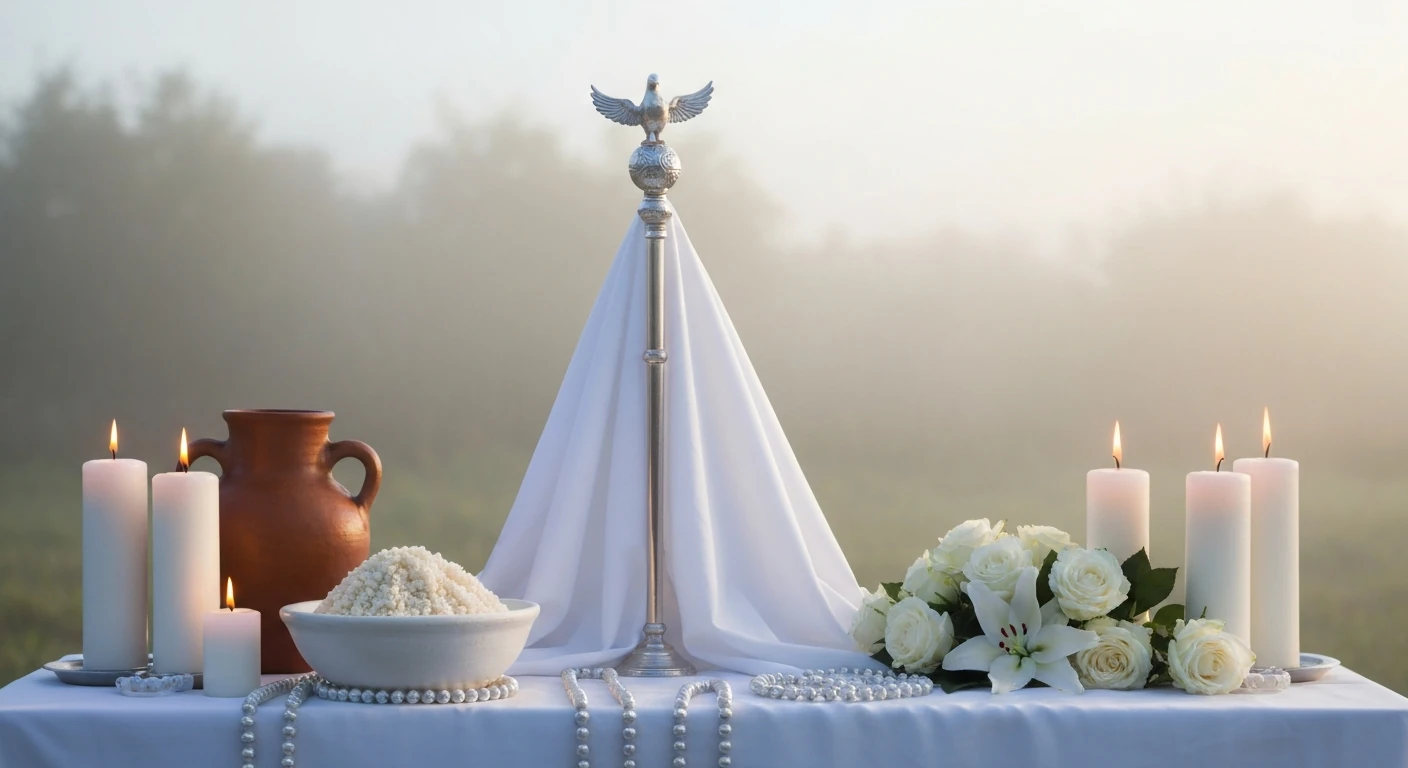
Prefer the living room or another room where everyone passes, on a firm table. Cover it with the cloth and remove everyday objects: the space becomes only for the firmeza.
- 2
Write the names
On a piece of paper, write the name of those who live in the house, or of those who are in disagreement. Fold it and place it under the plate. The candle will burn over these people.
- 3
Place water and flowers nearby
The glass with water and salt stays next to the plate, remembering the sea of Iemanjá. The white roses or the colônia (white ginger lily) complete it, bringing the white and the perfume of Oxalá.
- 4
Light them while greeting the two
Strike the match, say Odoyá to Iemanjá and Epa Babá to Oxalá. Make the prayer and then speak in your own way about the house, without demanding a deadline or result.
- 5
Return to it during the week
Each day, pass by the candle and pray a little, even if it is for one minute. Change the water if it becomes cloudy. The prayer request for peace is fed by the constancy of the one who requested it.
- 6
Close without blowing
Let the candle burn out on its own. The water goes to the earth or the drain, the flowers to a garden, the paper can be burned carefully, and the wax will be wrapped for the trash.
Precautions before lighting
- The 7-day candle stays lit through the night: use a firm plate, away from curtains and wooden furniture, out of reach of children, cats, and dogs.
- Family peace is not imposed. This candle is not for forcing someone to return or for bending anyone's will, and the candle of Iemanjá is not the place for this request.
- Obrigação, bori, and assentamento of Iemanjá or Oxalá are matters of fundamento. The one who guides is the zelador of your terreiro, not the lit candle at home.
- Violence inside the home is not resolved with a candle. If there is aggression, seek help: call 180 or 190. The prayer accompanies, but does not protect alone.
Ceromancy
What the flame of the Blue and White Candle shows
Traditional terreiro reading. Before interpreting, check if there is no wind, crooked wick, or poor quality candle.
- Good sign
Calm flame and constant height
Many houses understand this as a sign that the request was welcomed and that the house is accepting peace. Continue firming in the following days.
- Good sign
Wax that melts equally in both colors
Some read it as a balance between welcoming and standing firm, a sign that the family is ready to talk with less tension.
- Observe
One of the colors burns much faster
It is usually just the wick being crooked or the heat on one side. Rotate the plate carefully, without touching the flame, and continue the firmeza normally.
- Attention
Flame that crackles or releases sparks
Customarily, it points to tension still present in the environment. Before any difficult conversation, pray again and choose the right time to speak.
- Attention
Glass darkened with soot
It may indicate heavy resentment being burned. Clean the glass afterward, take a cologne ritual bath and, if it repeats always, seek a serious terreiro.
Ritual bath and smoke cleansing (defumação)
Herbs that combine with the Blue and White Candle
-

Colônia
Alpinia zerumbet
The leaf that belongs to Iemanjá and Oxalá at the same time. A cologne ritual bath before lighting prepares the body and calms the one who will set the candle.
See the herb -

White Rose
Rosa alba
The white petals around the plate offer flowers to the Queen of the Sea and white to the Pai. Afterward, they can go for a ritual bath from the neck down.
See the herb -

boldo
Peumus boldus
Oxalá leaf to cool the head. A leaf macerated in the water of the glass, or a light ritual bath, helps the one who is irritated with the family.
See the herb -

Lavender (alfazema)
Lavandula angustifolia
In the firmeza room, a gentle smoke cleansing of lavender, also called alfazema, makes the environment lighter for the conversation that needs to happen.
See the herb
Virtual Candle
Light the Blue and White Candle now
Choose the type, write your request, and pay by PIX. The flame stays on the altar and you follow along through the link.
Place on the altarFrequently asked questions
Questions about the Blue and White Candle
Which orixá is the blue and white candle for?
For Iemanjá and Oxalá together. Blue is for Iemanjá and white is for Oxalá, and therefore the candle unites the mother's welcoming with the father's calm. Some houses dedicate it only to Iemanjá, since white is also her color.
What is the best day to light the blue and white candle?
Saturday, the day of Iemanjá in most Umbanda houses. Those who follow the line of Oxalá more prefer Friday. Festival dates, such as February 2, December 8, and New Year's Eve, are also common choices.
What is the difference between the blue and white candle and the light blue candle?
The light blue is only for Iemanjá and takes more care of the emotions of the one who lights it. The blue and white adds Oxalá to the prayer request, and therefore it is the most used for the peace of the entire house, reconciliation, and coexistence between relatives.
Is the blue and white candle good for reconciling a couple?
It serves to request peace and dialogue between the two, not to bring back someone who decided to leave. It does not bind or force anyone. If both want to talk, the candle accompanies this effort with calm, and each one's choice remains free.
Can I light the blue and white candle inside the house?
You can, and that is where it makes the most sense, since the prayer request is for the home. Choose a common room, a firm plate, and a place away from fabric. It is not necessary to go to the beach to consecrate Iemanjá.
If the candle goes out before the end, do I need to start over?
You do not need to start from zero. Check for wind and the wick, relight with a match, and repeat the prayer. If you have to leave the house, smother it with a saucer instead of blowing. In many houses, blowing is seen as undoing the prayer request.
What to do with the water, the paper, and the leftover wax?
The water goes into the soil of a pot or down the drain, and the cup is washed. The paper with the names can be safely burned or buried. The leftover wax goes into the common trash, wrapped in paper.