Dreaming of a rat does not have a ready interpretation in the Afro-Brazilian tradition, but the rat has a place in it. In Ifá, the Yoruba worship of Orunmilá, it is the food of the orixá and the creature that saved him from Death after a bad sleep. The reputation of a traitor also appears there. The one who reads your dream is your house.
| Where the rat appears | What it is | Source |
|---|---|---|
| Ifá (Orunmilá) | favorite food of the orixá and part of the ebó, alongside the fish | Abimbola, UNESCO |
| Ifá Poem | the giant rat that dug the burrow through which Orunmilá escaped from Death | Abimbola, UNESCO |
| Ifá Song | the friend of Orunmilá who ultimately betrayed him | Abimbola, UNESCO |
| Candomblé queto | killing a mouse is a quizila of the children of Iemanjá | Prandi, 1995 |
What does it mean to dream of a mouse in Ifá?
In Ifá, the mouse is the animal of Orunmilá, the orixá of the oracle: it is his food and the hero of a poem in which the warning came in a dream. This does not make every dream with a mouse a message from Orunmilá. It shows that, in this tradition, the mouse has ritual value.
A dissertation from USP defines Ifá-Orunmilá as "the oracular divinity of the Yoruba tradition". In Brazil, the worship of Ifá of Afro-Cuban tradition became established starting in the 1990s, in Rio. The one who casts Ifá is the babalaô, the "father who has the secret". The sign drawn in the casting is in the odu of the year.
The mouse is the favorite food of Orunmilá
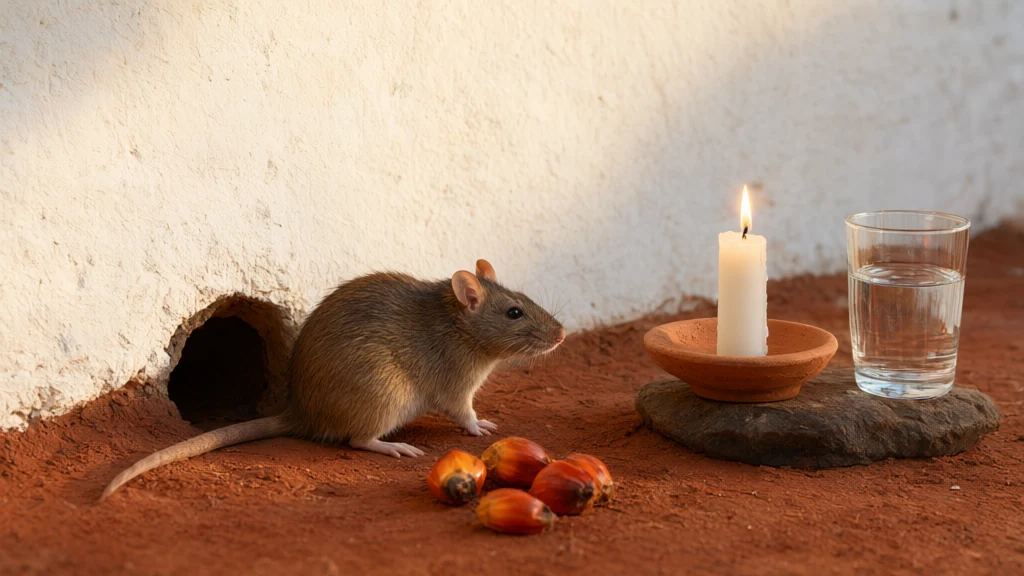
Wande Abimbola gathered the great poems of Ifá in a book from UNESCO, from 1975. In a note, he says that the mouse and the African carob seed are offered to Orunmilá and are considered his favorite food.
In the verses, the mouse comes along with the fish. One poem speaks of "two quick mice" and another of "two large fish that swim beautifully" in the ebó that Ifá requests. It is the same pair that appears in dreaming of fish, on the side of Iemanjá and Oxum (Oshun).
Orixá: Orunmilá (Ifá) | Where the mouse enters: ebó and food of the orixá | Priest: babalaô | Quizila with mouse: children of Iemanjá, in the queto
The bad sleep of Orunmilá and the mouse on Exu (Eshu)'s seat
The poem that interests those who dreamed the most begins with a dream. Abimbola summarizes: Orunmilá "saw in a dream that a danger threatened him". In the verse, he sleeps and realizes that the sleep was not good. Orunmilá did not try to decipher the dream alone. He consulted the oracle, and Ifá ordered a sacrifice with a giant mouse.
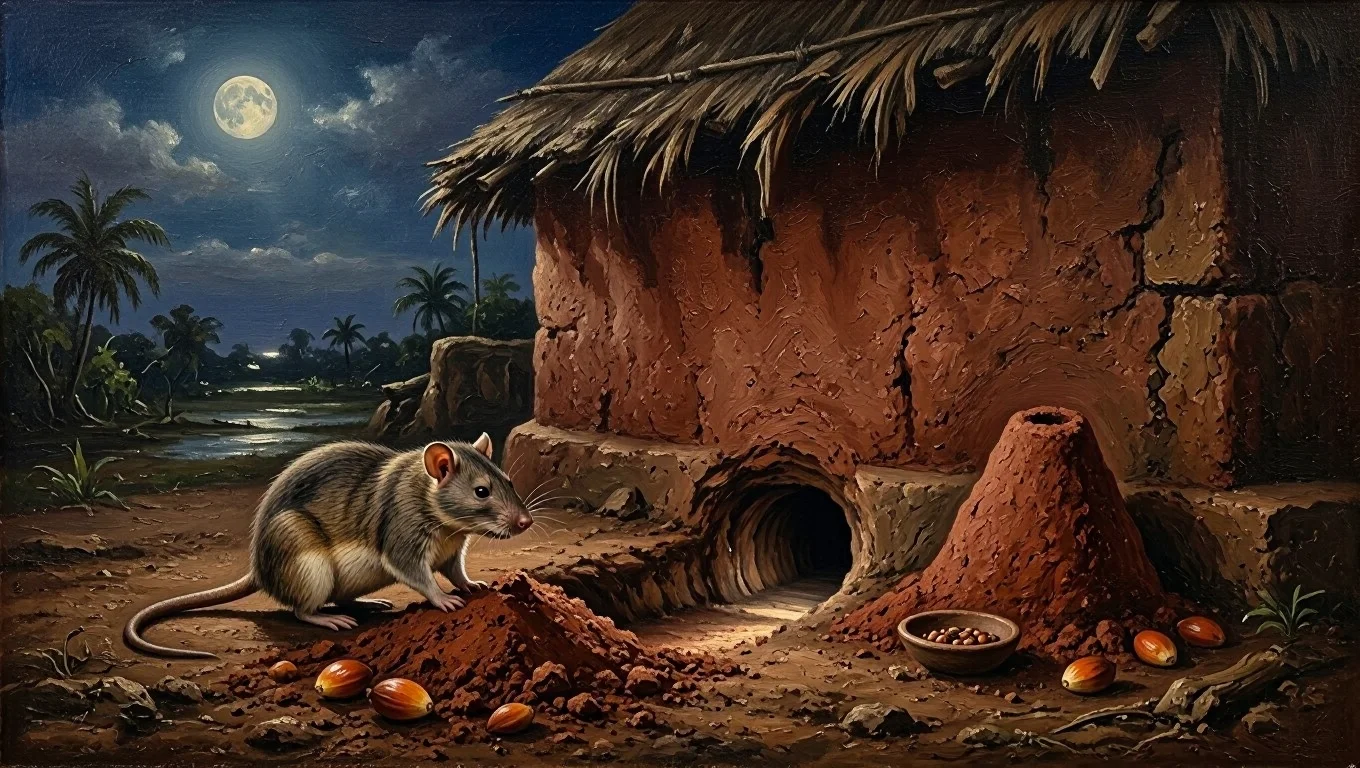
The sacrifice was placed on the seat of Exu. The rat dug a hole from there to the Orunmilá room. When Death arrived, Orunmilá entered the rat's burrow and left through the back of the house. In the same work, Abimbola explains that Exu supports those who perform the requested sacrifice and punishes those who do not.
In the Ifá poem, the bad sleep was not deciphered: it was taken to the oracle, and what the oracle requested was done.
Is dreaming about a rat a sign of betrayal?
According to tradition, no source says that dreaming about a rat announces betrayal. But the rat's reputation as a traitor is recorded within Ifá itself.
Abimbola tells that the giant rat, the okété, was the first to save Orunmilá. In the body of Ifá, it usually appears as Orunmilá's sworn friend who eventually betrayed him. An Ifá song says: "Giant rat, so this is your character," and ends with "but in the end you betrayed him." The reason, the author explains, is that the okété keeps small balls of dendê in the burrow, as a friend of Ifá, but keeps them to eat on rainy days.
Today's popular reading comes close to this. Personare, an astrology portal, writes that the rat, "as a stealthy animal, can symbolize deceptive situations or dishonest attitudes," and speaks of financial loss. No source links this reading to the Ifá song. The two stand side by side.
And in the Bible?
The rat is in Leviticus, among the animals that the law calls unclean, next to the ferret. The text speaks of purity, not of dreams.
Psychology also does not provide a single meaning. Correio Braziliense summarizes that dreaming about a rat can bring fear and disgust, but that psychology does not give a unique meaning to the creature in sleep. What matters is what you lived and felt.
And in Candomblé, does the rat have quizila?
There is, and it is from Iemanjá. In the charts of Reginaldo Prandi for the Ketu rite Candomblé, the taboo for the children of Iemanjá is "eating crab; killing a mouse or cockroach". The entire table, with the taboos of the children of each orixá, is in quizilas in Candomblé.
Quizila is a rule for the filho de santo for waking life, and each house has its own. No source says that dreaming of killing a mouse breaks quizila. If you are of Iemanjá and the dream felt heavy, tell your house.
What does it mean to dream of a mouse in Umbanda?
Umbanda does not have its own reading for the mouse in a dream. What it has is a way of looking at the dream. An Umbanda priest heard in a UFJF study says that the dream is not read literally: dreaming of a death or a robbery "does not mean that this will occur in reality". What arrives in a dream, he says, needs to be confirmed with the incorporated spirit.
The guide to dreams in Umbanda teaches how to separate a common dream from a warning. The rule is the same as the dog of Ogum (Ogun) in dreaming about a dog and the snake of Oxumaré (Oshumare) in dreaming about a snake. An animal without an orixá, like the spider, requires the same care: see dreaming about a spider.
What tradition does not say: black mouse, dead or biting
No terreiro or academic source consulted reads a black, white, or gray mouse, a dead mouse, a biting mouse, or a mouse inside the house. These lists come from a dream dictionary. They have no source.
In Candomblé, even the dreams of the initiate are read as signs, but "always within the community framework of the terreiro", as recorded by Revista Iluminus. That is what Orunmilá did in the poem: he took the bad sleep to those who know how to read.
What to do upon waking after dreaming of a mouse
Without haste and without fear. The steps serve for anyone.
- Write down the dream immediately. Where was the mouse, what did it do, what did you feel.
- Light a white candle to the Guardian Angel, with a glass of clean water nearby, and say a prayer in your own words. The step by step is in firmeza in umbanda. Away from home, the virtual white candle serves as a remembrance.
- Do not perform ebó on your own. In the poem, who said what to offer was the oracle, and every house has its own foundation.
- Take the dream to your zelador or zeladora if it repeats or brings a prayer request. If the house asks for a candle, herb, or other material, the shop will confirm with you via WhatsApp.
- Take care of your sleep and your home. A nightmare that returns every night requires a conversation with a doctor. And a real rat in the house requires cleaning and pest control, not just prayer.
Frequently asked questions
What does it mean to dream that you kill a rat?
No terreiro source provides a reading for killing a rat in a dream. What exists is the quizila of the children of Iemanjá in queto candomblé, which includes killing a mouse, according to Prandi. Quizila is a rule for what is done while awake, and no source extends it to dreams. If you are of Iemanjá and the dream felt heavy, tell your house.
Is dreaming of a dead rat good or bad?
The tradition consulted does not bring a reading for a dead rat in a dream, and the sites that speak of a "cycle's end" do not cite a terreiro source. In Ifá, the rat is the animal of Orunmilá and has already saved the orixá of Death. If the dream left you uneasy, write it down and take it to your house.
Is dreaming of a rat a message from Exu?
No source says this. The rat appears in the seat of Exu only within a poem of Ifá, as a sacrifice that Orunmilá made by order of the oracle. In the consulted sources, the rat does not appear as the animal of Exu in umbanda or in candomblé. Who says if a dream is a message from a spirit is the house, in the gira or in the game.
Does dreaming of many rats in the house have a spiritual meaning?
Terreiro sources do not read the quantity of rats or the location of the dream. Psychology looks at the moment of the person who dreamed, without a fixed meaning. Note what was happening in your life and, if the dream repeats, take it to the house and take care of your sleep.
References
- ABIMBOLA, Wande. UNESCO, 1975. Sixteen Great Poems of Ifá
- PRANDI, Reginaldo. Horizontes Antropológicos, 1995. African gods in contemporary Brazil
- SANTOS, Jamile Dantas Nascimento. Dissertation, USP, 2023. Culto a Ifá no Brasil: tempo e destino numa tradição afro-cubana
- ORTEGA MARÍN, Alexander. Iluminus Journal (UFMA), 2026. Salvador de Bahia photographed on a night of Candomblé
- BRESSAN, Renato Teixeira; OLIVEIRA, Andréa Olímpio de. Sacrilegens (UFJF), 2025. Terreiros of the psyche: dreams in Umbanda
- Bíblia Online. Leviticus 11, Almeida Corrigida Fiel
- Correio Braziliense, 2026. What it means to dream about rats, according to psychology
- Personare, 2026. Dreaming about a rat: what does this dream mean