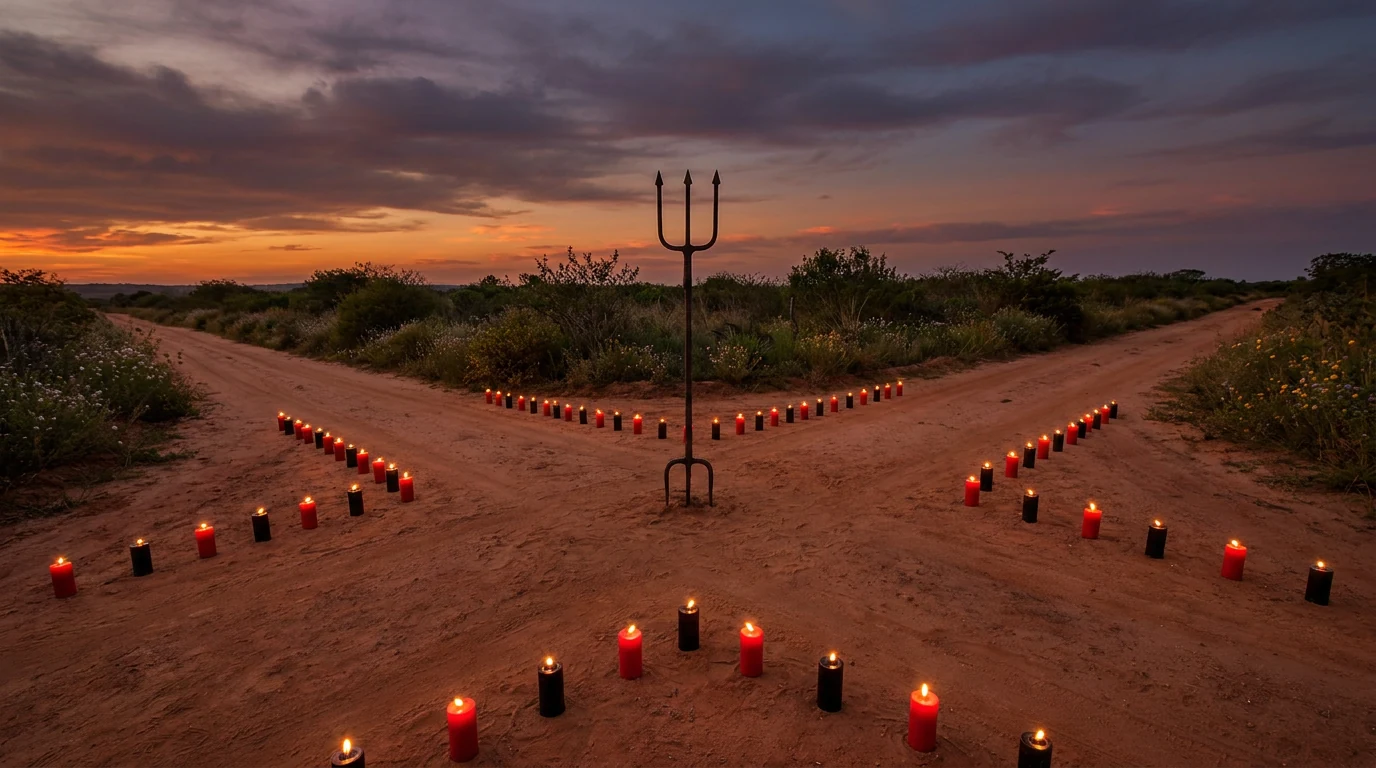
Exu Brasa is an Exu of the left line of Umbanda and Quimbanda, recorded in Umbanda books since the 1950s. In the classification of Matta and Silva, he is one of the seven legion chiefs under Exu Pinga-Fogo, in the line of the pretos-velhos, and works for Pai Arruda. Another table places him among the Exus of Omulu.
Line: left, Exu de trabalho | In Matta and Silva: vibration of Yorimá, under Exu Pinga-Fogo, for Pai Arruda | In another table: group of the Exus of Omulu | Own color, day, drink, and greeting: no record
Does Exu Brasa exist?
Yes. The name has been in Umbanda books for more than seventy years. He appears in the classification of W. W. da Matta e Silva, who wrote the first work, Umbanda de todos nós, "in 1955", according to the historian Léo Carrer Nogueira, in a book by Editora UFG. Matta e Silva founded the movement known as "umbanda esotérica".
The name appears in a table of Umbanda authors compiled by Reginaldo Prandi, from USP, based on Fontenelle, Bittencourt (1989) and Omolubá (1990). There, "Exu Brasa" appears among the most well-known Exus of one of the groups.
Exu Brasa is a spirit of Umbanda, an egum, like the other Exus de trabalho. Nogueira defines this Exu as "spirits of the dead who descend into terreiros to provide charity." He is not the orixá (orisha) Exu of Candomblé, who has his own worship and foundation. The difference lies in who Exu is.
In which line does Exu Brasa work?
It depends on the classification the house follows, and the two most cited do not match.
In the classification of Matta and Silva: under Pinga-Fogo
The psychologist Sônia Lages, in a book published by UFJF, reproduces the table by Matta and Silva. In it, seven supervisor Exus command each of a vibration of orixá. One of them is "Exu Pinga-Fogo: Vibration of Yorimá". Below him come seven legion chiefs, and the second is "Exu Brasa, for Pai Arruda".
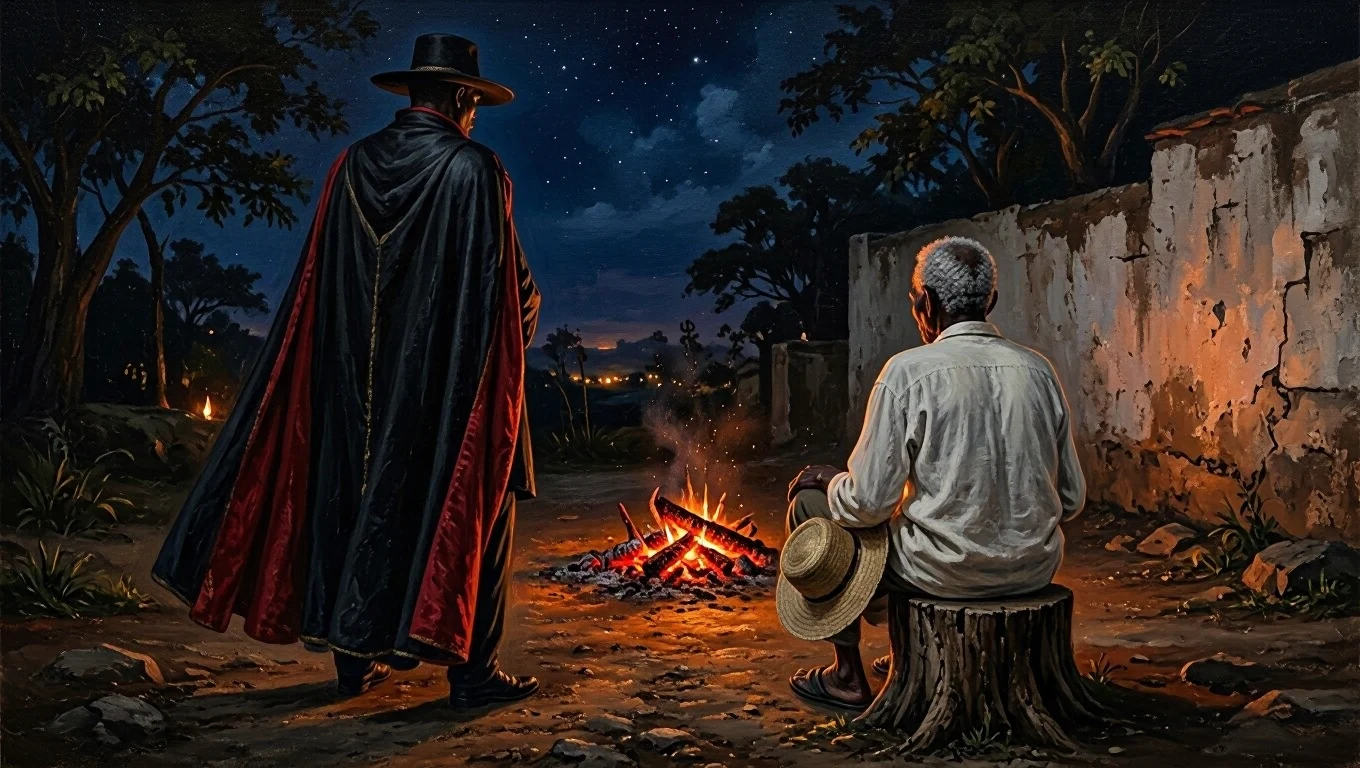
Yorimá is the line of the pretos-velhos in this chain. Nogueira writes that it "operates through the spirits of preto-velho and preta-velha", and in Lages' list, Pai Arruda is a preto-velho. In other words: in this reading, Exu Brasa works together on the right, guarding the path of a preto-velho. This partnership is in preto-velho and Exu.
Each supervisor, Lages explains, "supervises seven other chiefs of legions". It is the same scheme that puts Exu Gira Mundo in another vibration, as shown by who is Exu Gira Mundo.
In the table summarized by Prandi: under Omulu
The other table separates the Exus by orixá. Prandi summarizes: "there are also the Exus who work under the orders of the orixá Omulu, the lord of the cemeteries". Among the most well-known names of this group are Exu Tata Caveira and Exu Brasa. Whoever reads this table links Brasa to the cemetery, and not to the pretos-velhos.
Neither of the two is wrong for those who follow it. The classification is of the house, and two serious houses can place the same Exu in different lines.
Are Exu Brasa and Exu Pinga Fogo the same?
No. They are different names in all sources. In the table by Matta and Silva, Pinga-Fogo is the chief of the vibration and Brasa is one of the seven below him.
Pinga Fogo has his own weight. In the research of Sulivan Charles Barros, at PUC Goiás, conducted with pais and mães de santo from Brasília, he commands one of the seven lines of Quimbanda. There, "each Exu, in his spiritual plane, commands seven chiefs of legions." Pinga Fogo also has his own sung chants: the Terreiro de Umbanda Pai Maneco, in Curitiba, sings "Do not hit the stone / For from it comes fire" in the Exu booklet.
In the same Yorimá list, a third name of fire appears: "Exu Come-Fogo, for Pai Tomé." The three share the line, with different pretos-velhos. Meanwhile, "Exu Labareda" does not appear in any source consulted. The map of names is in Exu names.
Is Exu Brasa evil?
No. The bad reputation of the Exus was created by writers, and not by the terreiros. Prandi records that, among the "first consolidators of the Umbanda doctrine," there were those who gave each Exu the name of a figure from the Christian hell. The table in which Brasa appears comes from that wave.
The anthropologist Emerson Giumbelli and Leonardo Almeida show that the word Quimbanda "consolidated as a category of accusation." There are records from the 1940s, when Umbanda sought "to present itself as an autonomous religion with its own doctrine." The stigma of Exu Brasa was born from this movement. The difference between the two religions is in the difference between Umbanda and Quimbanda.
In the houses studied by Barros, what is asked of the Exus is defense. The phrase most heard by the researcher was: "They do, we undo."
What is the chant to Exu Brasa?
The chant that circulates in Umbanda collections says that he is not fooled by little. The most repeated verses are these:
Exu Brasa is not a child, / Who is fooled by a penny.
The same lyrics remind us that "They only remember Your Brasa, / When they are in distress." Another version sings "Set the point of Exu Brasa / Who works for our good." These are lyrics without a known author, from chant blogs, and each house sings its own. The ponto riscado of Exu Brasa has no published record. Other chants are in ponto de Exu.
What has a source and what belongs to the house
Aside from the name and the line, the profile of Exu Brasa has no record. None of the sources consulted give him a color, day, drink, tobacco, own greeting, partner Pombagira, or life story.
The sites that answer all of this do not cite where they got the information. Some place Brasa in the "fire people," with Xangô (Shango) and Iansã (Oya), and others place him in the calunga. No research supports these profiles. What matters is what the leader of your house teaches. The general rule of what is offered to Exu is in oferenda para Exu. To set a prayer request with him at home, there is the vela virtual de Exu Brasa, and to clear up doubts about candles or materials for the gira, the shop assists via WhatsApp.
Frequently asked questions
Which orixá does Exu Brasa belong to?
In the classification by Matta and Silva, he is in the vibration of Yorimá, the line of pretos-velhos, under Exu Pinga-Fogo. In the table by Fontenelle, Bittencourt, and Omolubá, he is in the group of Exus who work under Omulu. The house says which of the two it follows.
Is Exu Brasa from the calunga?
There is no record of Exu Brasa from the calunga. The closest to that is the table summarized by Prandi, which places him among the Exus of Omulu, the lord of the cemeteries. In the table by Matta and Silva, he is from the line of pretos-velhos.
What does Exu Brasa like to receive?
There is no specific offering for Exu Brasa with a source. Each house teaches what is given to each Exu, and what circulates on the internet without a source does not speak for him. The general rule is in the offering for Exu article.
Can the "which is your Exu" test give Exu Brasa?
No. The test which is your Exu works with other names, such as Sete Encruzilhadas, Tranca-Ruas, Marabô and Caveira. Exu Brasa is not among the results.
References
- Léo Carrer Nogueira: From Africa to Brazil, from Orixá to Egum, Editora UFG, 2022
- Reginaldo Prandi, USP: Exu, from messenger to devil, Revista USP, n. 50, 2001
- Sônia Regina Corrêa Lages: Exu: light and shadows, Clio Edições Eletrônicas, UFJF, 2003
- Sulivan Charles Barros: Umbanda x quimbanda, Caminhos, PUC Goiás, 2007
- Terreiro de Umbanda Pai Maneco, Curitiba: Exu handout
- Emerson Giumbelli and Leonardo Oliveira de Almeida: The enigma of quimbanda, Revista de Antropologia, USP, 2021