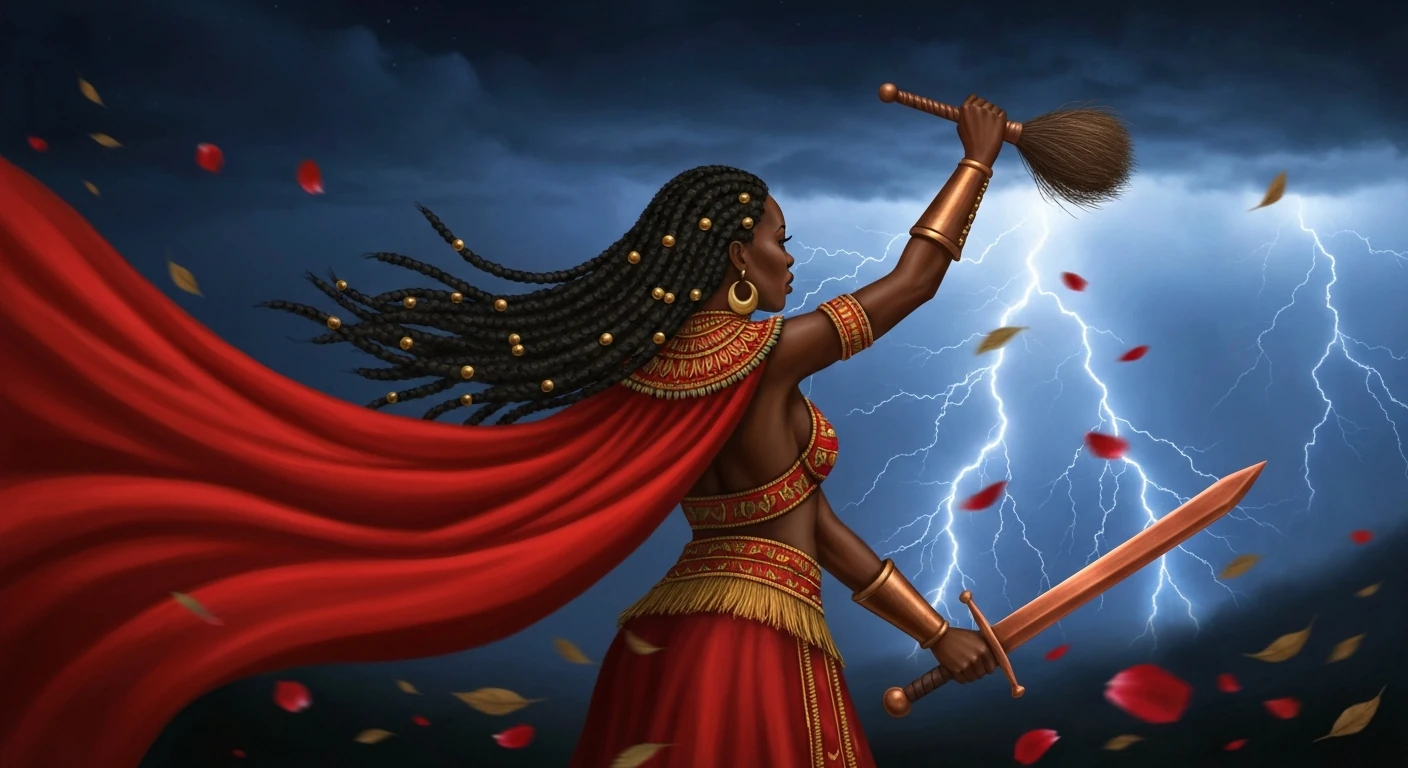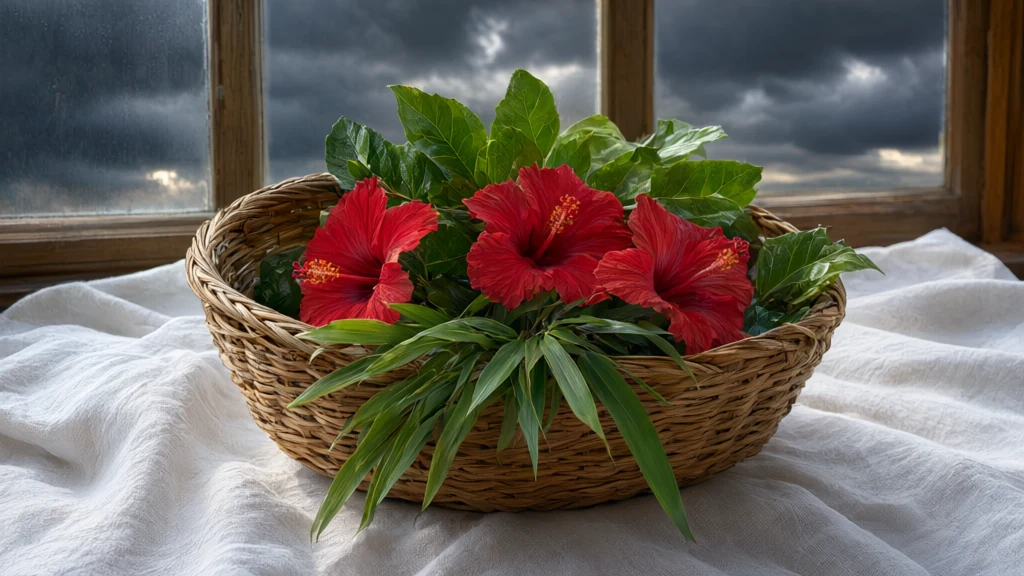
The herbs of Iansã do not have a single list: each house and each terreiro research records its own, and only the espada-de-iansã appears in several of them. The surveys that heard the terreiros also warn that some of these plants are toxic if ingested.
The answer comes from published field research. There is no ritual bath recipe, because none of them describe one.
What are the herbs of Iansã?
There is no single list. Each source gives different plants, and the most cited is the espada-de-iansã. The table shows what each research or house records.
| Source | Tradition and place | Plants cited for Iansã |
|---|---|---|
| FUCESP | Umbanda, São Paulo | Aguapé, espada de Iansã, carqueja, bamboo leaves |
| Terreiro Pai Maneco | Umbanda, Curitiba | Catinga-de-mulata, cordão-de-frade, geranium, lily, white rose leaf, erva-de-santa-bárbara |
| Ilé Àsé Odé | Batuque, Rio Grande do Sul (one house) | Iansã's sword, rue, pitangueira leaf |
| Purcino, UFSB | Candomblé ketu and ijexá, Bahia | White pepper tree (with Exu (Eshu)), Oyá's peregun, fire leaf, among others |
| Santos and Fortuna, UNEB | Umbanda, Teixeira de Freitas (BA) | About eight, including pepper tree, alfavacão, rue, boldo, dumb cane, guinea hen weed, basil, and pinhão-roxo |
FUCESP, the terreiro Pai Maneco, the batuque house, Bianca Purcino and Joyce Santos and Jorge Fortuna are the five lines. In Angola, a UERJ dissertation links hibiscus to Matamba, the inquice, without saying that she is Iansã. Another UERJ dissertation records the flamboyant, with Euá, Oyá, and Xangô (Shango), and the almond tree, with Oyá Igbalé. They are trees, and what is "of Iansã" in the research includes flower and tree, not just leaf.
The orixá's file is in who is Iansã.
Why the lists do not match
The lists do not match for five reasons, and all appear in the research.
- The same herb serves more than one orixá. Colli Silva and Silva, from USP, heard 13 leaders from eight Umbanda terreiros in Greater São Paulo: "many times the same herb is circumscribed in the domain of more than one orixá". In Teixeira de Freitas, none of Iansã's plants belong only to her.
- The list is from the house, not from the book. FUCESP writes "Some herbs," and the list itself declares itself partial.
- The same name becomes a different species. The pepper tree of Purcino is the Lithraea, and that of Santos and Fortuna, the Schinus.
- The same plant is hot in one house and fragrant in another. In two terreiros in Santarém (PA), the dumb cane and the snake plant are boiled before use in one of them, and in another, the snake plant is a fragrant herb for a ritual bath. The chart of hot and cold herbs is in hot and cold herbs.
- The plant comes from outside. In the terreiro of Teixeira de Freitas, 20 of the 39 plants are in the backyard and 19 are purchased. The National Sanctuary of Umbanda does not allow the collection of plants.
The same applies to the herbs of other orixás, as shown in herbs of Oxóssi.
The Iansã's sword: the name and the plant
Iansã's sword is the Sansevieria trifasciata var. laurentii, according to Purcino and according to Pagnocca, Zank and Hanazaki, from UFSC. Ogum (Ogun)'s sword is the var. trifasciata, and Ogum's spear is the S. cylindrica. In São Paulo, the leaders heard mention "the swords or spears of Saint George/Saint Barbara".
Caring for the plant and positioning it in the house are subjects of Saint Barbara's sword, the plant of Iansã. For the Ogum's sword, see snake plant.
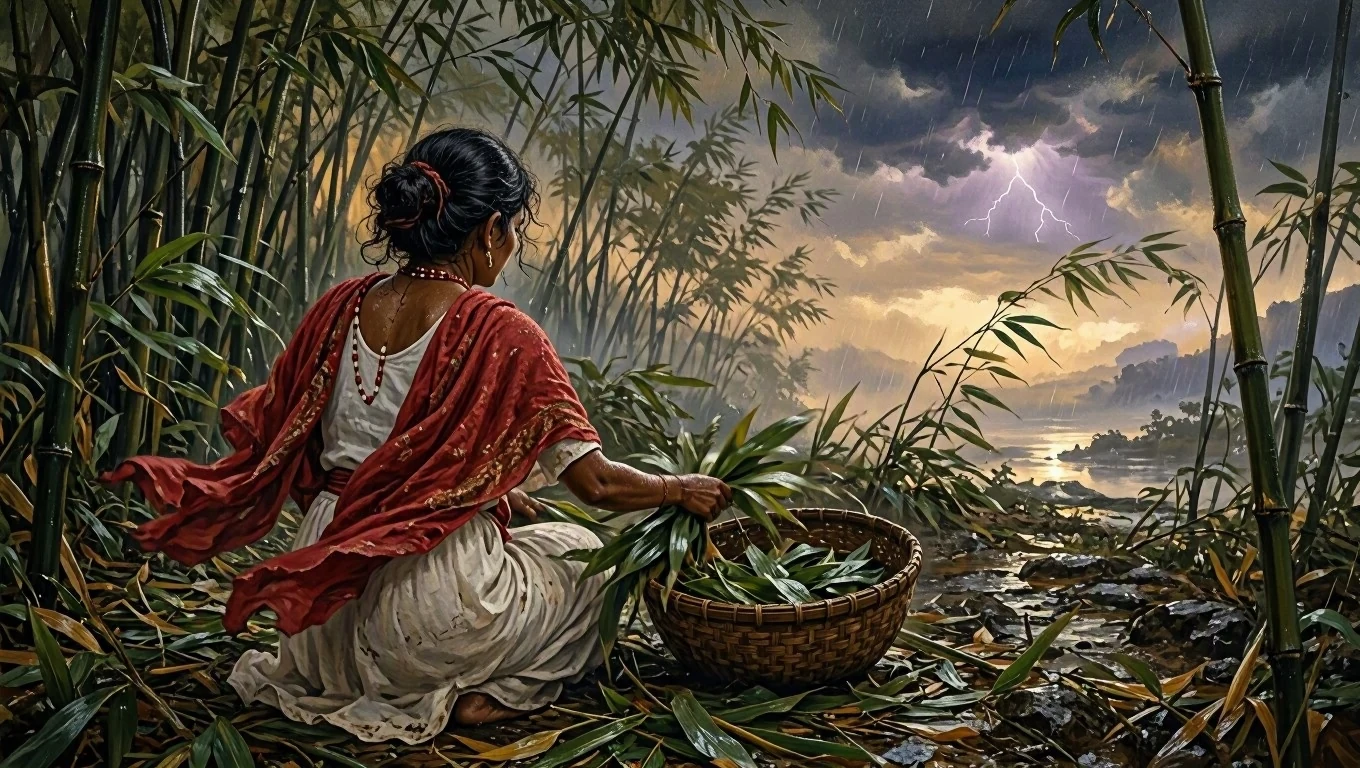
What should not go in the mouth: toxic plants
Among the plants cited for Iansã, several should not be ingested. The source of each alert follows.
“its leaves cannot be ingested, as they are toxic”
This is what the mãe de santo of the terreiro of Teixeira de Freitas reported about the comigo-ninguém-pode. Regarding the espada-de-são-jorge, the authors write that the interviewees pointed it out as toxic if ingested.
- Dumb cane. The authors of the UFSC research call it a "toxic plant." It is among the most cited plants in recorded poisonings in Belém, with 11.2% of cases. See dumb cane.
- Espada (both varieties). Pagnocca and colleagues call it toxic. A veterinary review from UFFS attributes the toxicity to steroidal saponins and pregnanic glycosides, but the data are from dogs and cats. No source consulted provides a dose for people.
- Pinhão-roxo. It is the most cited plant in cases of poisoning in Pará, with 25.1%. Santos and Fortuna link it to Ogum, Iansã, Oxóssi (Oshosi), and Xangô.
- Rue. "It is one of the plants most commonly used for abortion induction in Brazil," write Clarke, Rates, and Bridi, from UFRGS, and the data by gestation period are contradictory. The alert applies to ingestion.
- Pepper tree. The Ministry of Health records allergic reactions on the skin and mucous membranes from direct contact with the beach pepper tree (Schinus), and says that the extract cannot be used by pregnant women. The document does not address the white pepper tree of Purcino.
None of this is a recipe, and this article does not teach how to make tea.
Who harvests the leaf, and with what permission
Who harvests, in the researched terreiros, is whoever the house designates. In two terreiros in Santarém, one of Mina and one of candomblé ketu, the collection and handling are left to the Bàbálósányìn or the Iyálósányìn, who master "period, locations, permission chants, gratitude chants." A leadership from a São Paulo umbanda says that "when the orixás go to get herbs, they ask for permission," and never for waste.
In the chapter on Ossaim (Osanyin), Verger writes that the harvesting of leaves "must be done with extreme care, always in a wild place." He does not say which house or nation he is referring to, and the rule is not from Iansã.
Iansã's own harvest rule was not found in the consulted searches. The plant is also not the entire recipe: Verger recorded formulas with the incantations, "as essential as the other ingredients".
And the Iansã ritual bath?
No consulted source describes an Iansã ritual bath with a function, to open a path, for love, or for prosperity. This is what the reader is looking for, and the research does not provide it. What the research records is a warning: in a Mina terreiro, the priest says that "erroneous combinations" can cause "shocks" and "aquizilamentos".
The foundation ritual bath, the abô, and the amaci are from the house, and the one who prepares them is the leader. What they are is in what is abô. What is taken to Iansã is in offering for Iansã.
Anyone who needs a herb that the house requested and does not know how to check the material can clear up the doubt via WhatsApp with the Joia Mística team.
Frequently asked questions
What are the herbs of Iansã?
There is no single list. FUCESP cites aguapé, Iansã's sword, carqueja, and bamboo. A terreiro in Curitiba cites catinga-de-mulata and cordão-de-frade. The Iansã's sword is the most repeated. The list from your house is worth more than any research.
Which herb to use in the Iansã ritual bath?
No consulted source describes an Iansã ritual bath with a function, such as opening a path or attracting love. The foundation ritual bath is from the house, and the one who prepares it is the leader. Before using any herb, confirm with him and remember that several plants cited for Iansã are toxic if ingested.
Is Iansã's sword the same as Saint George's sword?
They are varieties of the same species. The Iansã's sword is the Sansevieria trifasciata var. laurentii, and the Ogum's sword is the var. trifasciata, according to Purcino and the UFSC research. The Ogum's spear is another species, the Sansevieria cylindrica, according to Purcino. The care with the plant is in the Saint Barbara's sword guide.
Can you make tea with Iansã's herbs?
No consulted source indicates tea. The mãe de santo interviewed in Teixeira de Freitas says that the leaves of the comigo-ninguém-pode cannot be ingested, the interviewees point out the sword as toxic for ingestion, and rue has a warning for pregnant women. Do not drink terreiro leaf.
References
- Bianca Purcino, UFSB: Ethnobotanical profile in Candomblé terreiros in southern Bahia
- Joyce Santos and Jorge Fortuna, Research, Society and Development: The ethnobotany of an Umbanda terreiro in Teixeira de Freitas
- Matheus Colli Silva and Vagner Gonçalves da Silva, Interagir (UERJ): A grove of sacred leaves
- Barboza et al., Nova Revista Amazônica (UFPA): Without the plants the religion would not exist
- Pagnocca, Zank and Hanazaki, Journal of Ethnobiology and Ethnomedicine: The plants have axé
- Thaís Salatiel de Azevedo, UERJ: Ancestral knowledge on the use of flowers in Angola Candomblé and Umbanda
- Vitor Amorim Moreira de Azevedo, UERJ: Ewé Igbo, sacred trees of Candomblé
- Santos et al., Revista Fitos (Fiocruz): Intoxication by plants in the State of Pará
- Clarke, Rates and Bridi, Infarma: A warning about the use of products of plant origin during pregnancy
- Ministry of Health: Schinus terebinthifolius, aroeira-da-praia
- UFFS: Intoxication by Monstera deliciosa and Sansevieria trifasciata in companion animals
- FUCESP: Iansã
- Terreiro Pai Maneco: Iansã, lady of the winds and storms
- Ilé Àsé Odé: Orixás, characteristics
- Pierre Verger, Corrupio: Orixás, work record
- Fundação Pierre Verger: Ewé, the use of plants in Yoruba society