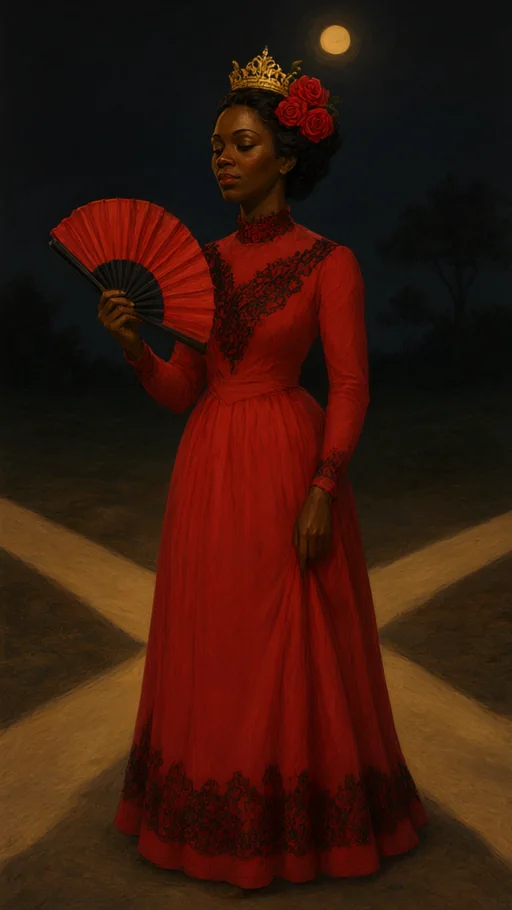
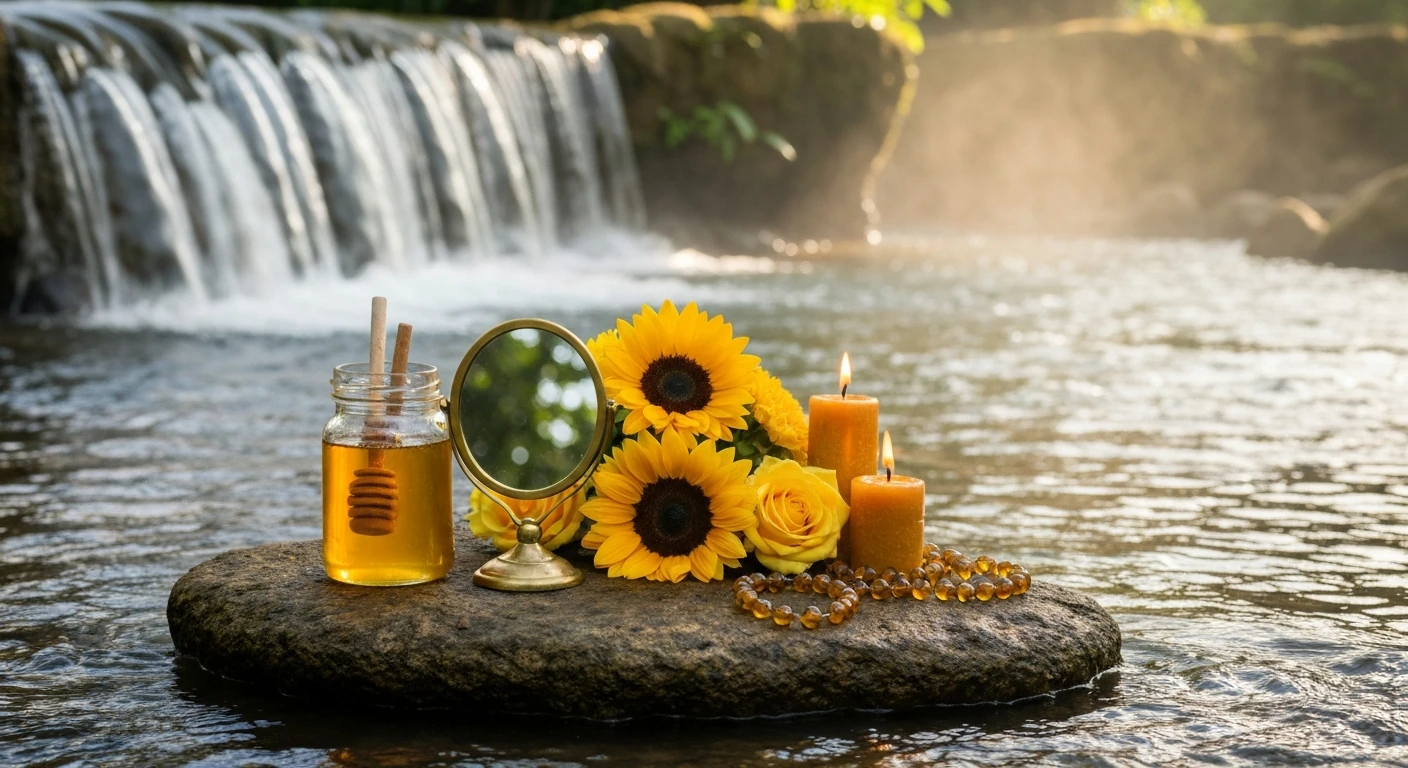
Who is Oxum: the orixá of fresh waters, love, and gold
Oxum is the Yoruba orixá of the Osun river, of fresh waters, gold, and love. See the technical sheet in Candomblé, Oxum in Umbanda house by house, myths, colors, and dates.
Read articleOpen the heart and the path for love, starting with self-love, with Oxum (Oshun) and Pombagira
Love candle
7-day candle · stays lit for 7 days7 dias
Faith and intention
Whoever lights a candle never lights just wax and wick. They light a prayer request. The flame is the visible sign of something happening inside: the person stops, thinks of those they love, of what they need, of what they want to thank for, and delivers that to the sacred. That is why, in terreiros and in churches, it is said that what matters is the intention.
With the virtual candle, it is the same thing. You choose the candle carefully, write your prayer request in your own words, make your offering, and light it. Each step is a gesture of faith, and faith does not depend on the material of the candle. It is in you, at the moment you decide to light it and trust.
The candle stays lit on the altar for the time you chose, and you can return to look at the flame, pray again, and renew the prayer request. For those who live far away, cannot have fire at home, or need support in the rush of the day, it is a way to keep the flame of devotion burning.

The love candle is the one lit when the heart is closed. Sometimes due to a disappointment that still weighs heavy, sometimes due to years of taking care of everyone and never yourself. It is red, common in Umbanda congás and in popular devotion, and serves for a prayer request that begins inside of you: to start liking yourself again, to become open to affection and to leave the path clear so that a good love has a way to arrive.
In the terreiro, who handles this prayer request varies from house to house. Many call Oxum, the owner of sweet waters and beauty, whose day is Saturday and whose own color is golden-yellow; she enters here through sweetness and the mirror, which is looking at oneself with affection. Others call the Pombagira, who works the feminine force and the desire to live, almost always on Monday night. The red of the candle speaks of the heat that both awaken.
At home, the love candle does not choose a person and does not interfere with anyone's will. Whoever asks for a specific name is asking for something else, and this candle is not for that. What it does is accompany your change: the rose ritual bath, the clothes you started wearing again, the courage to say yes to an invitation. The love that comes, comes by the free choice of both.
What is it for
The love candle is red because love has heat. It is lit for Oxum and for the Pombagira when the prayer request is to open the heart, care for self-esteem, and leave the path free for a good affection, without anyone's name and without haste.
For those who left a relationship hurt and closed themselves off out of fear. The candle accompanies the mourning of what ended and helps to realize, little by little, that it is still possible to trust someone.
When you forgot yourself in the middle of work, home, and others. Light it while looking in the mirror, as Oxum asks, and commit to a concrete act of self-care in the same week.
Without asking for a name. The prayer request is for the right love to find the door open and for you to recognize who arrives with respect, without confusing longing with love.
The Pombagira takes care of the joy of the body and vanity without guilt. The red candle lit for her asks for the spirit to go out, laugh, dance, and feel beautiful again.
When a good encounter happened, return with a love candle and a rose. Thanking also firms the care for the relationship that is beginning.
Who rules this candle
Lady of the sweet waters and the mirror
Oxum rules love, beauty, and fertility, and Saturday is her day. Her color is golden-yellow, but it is to her that many houses deliver the love candle, because the abebé, her mirror, teaches to love one's own image first.
Know Oxum
The feminine force of the left
The Pombagira wears red and works on desire, self-esteem, and the courage to place oneself in the world. Maria Padilha is the most remembered of the line. In Umbanda, she receives the love candle when the prayer request is about you, never about binding someone.
Also settled for
Prayer to light
Mother Oxum, owner of the river that flows without asking permission from the stone, I light this red candle because my heart has been closed. Help me look in the mirror and like what I see. Wash away from me the old sorrow, the fear of suffering again, and the haste to be chosen. Lady Pombagira, who laughs loudly and walks with her head held high, give me back the will to dress up, to go out, and to live. I do not ask for anyone by name. I ask that the love that is good for me finds the open door, and that I know how to recognize who arrives with respect and who only wants to pass by. May this flame warm my chest without burning my peace. Ora Yeyê Ô! Laroyê, Pombagira!Light the candle and pray
Step by step
Red rose petals in warm water, poured from the neck down. It is the first gesture of self-care, and the love candle begins with it, not with the match.
A saucer on a firm table, away from curtains. Beside it, the rose in the glass of water and the mirror facing you. The cinnamon or the clove go on the saucer, touching the base of the candle.
Hold the candle, look at your face in the mirror and say in a low voice three things you like about yourself. It seems like little, but it is the most serious prayer request this candle receives.
Light with a match, say if the candle is for Oxum or for the Pombagira and say the prayer. Ask for opening and discernment, never for a specific person or someone's will.
Let it burn until the end and smother it with a saucer if you need to leave. Then take the rose to a garden or running water, pour the water on the ground and the wax in the trash, wrapped in paper.
Ceromancy
Traditional terreiro reading. Before interpreting, check if there is no wind, crooked wick, or poor quality candle.
Many houses read it as a request accepted and a willing heart. It is the burning that is expected from a love candle in a room without wind.
Some read the agitated flame, in a still room, as the joy of the Pombagira. Check first if it is not a draft or damp wax.
Some houses understand it as resentment leaving toward yourself. Do not be scared: reinforce self-care that week and follow the prayer.
It might just be a long wick. If the good candle insists on smoking, many houses read it as a load of old sadness: take a ritual bath of roses and repeat the candle.
Check the wind and wick first. If it goes out again, it is worth talking to a trusted terreiro before insisting on the same prayer request.
Ritual bath and smoke cleansing (defumação)
Rosa gallica
Petals in the warm ritual bath before lighting and an open rose next to the candle. It is the flower of warmth and guiltless vanity, dear to Oxum and to Pombagira.
See the herb
Cinnamomum verum
A cinnamon stick on the saucer, leaning against the candle, perfumes the sung chant and recalls the sweetness of Oxum. Many people also boil cinnamon for a ritual bath of self-esteem.
See the herb
Syzygium aromaticum
Three cloves stuck into the base of the taper candle, or loose on the saucer of the 7 day candle, accompany the prayer request for spirit and opening of the heart.
See the herbVirtual Candle
Choose the type, write your request, and pay by PIX. The flame stays on the altar and you follow along through the link.
Place on the altarFrequently asked questions
It serves to open your heart and your path to love, starting with self-love. It accompanies those who have come from a disappointment, those who forgot themselves, or those who want to be available for a good affection. It does not serve to choose a person or to mess with anyone's will.
In most houses, it is for Oxum, who rules love and beauty, and for Pombagira, who takes care of desire and self-esteem. Oxum's own color is golden-yellow, and that is why there are houses that prefer the yellow candle for her. Red speaks more of Pombagira and the warmth of affection.
Saturday, if the prayer request is for Oxum, or Monday night, if it is for Pombagira. Some houses use Friday. More important than the day is lighting it after a ritual bath of roses, calmly and without being in the middle of an argument.
You can think of who you like, but the prayer request should not be for her nor about her will. Ask for clarity to know if that relationship is good for you and courage to act. If the person also wants it, the choice belongs to both, not to the candle.
The love candle works on you: opening the heart and taking care of self-love. The soulmate candle is the prayer request to find someone like-minded, with patience. The couple's union candle is for a relationship that already exists and needs dialogue and peace at home.
You can. If you are going out, press the wick with the back of a wet spoon until the flame dies, and relight it upon your return saying the prayer again. The custom of most terreiros is not to blow: the breath carries your prayer request and should not be used to undo it.
The rose goes to a garden, a clay pot, or running water, and the water from the cup returns to the earth. The leftover wax can go into the common trash, wrapped in paper. The mirror is yours: wash it with water and use it normally.
What gives strength to the candle is the intention of the one who lights it. In wax or on a screen, you set aside a moment, think of your prayer request, deliver your offering, and light it with faith. The flame is the sign; the faith is yours and goes along with it. When the situation calls for firmeza in the terreiro, the virtual candle does not replace the zelador, but as a prayer and a prayer request, it is worth just as much as a candle lit at home.
Oxum is the Yoruba orixá of the Osun river, of fresh waters, gold, and love. See the technical sheet in Candomblé, Oxum in Umbanda house by house, myths, colors, and dates.
Read article
Who is Maria Padilha, the queen of the pombagiras: her origin in the queen of Castile, the falanges, the day, the colors, and the truth behind the stigma.
Read article
Yellow for Oxum, white for Iemanjá (Yemoja), red for Pombagira. The rose is the most versatile flower of the Afro-Brazilian herbarium. See how to use each color.
Read article
Learn how to prepare the herbal bath for Oxum, orixá of love and sweet waters: the right herbs, the step by step recipe, the prayer, and the right day.
Read article