Blue and Pink Candle
Protection of children, peaceful pregnancy, and the joy of the Ibejada under the mantle of Iemanjá (Yemoja)
Blue and Pink Candle
7-day candle · stays lit for 7 days7 dias
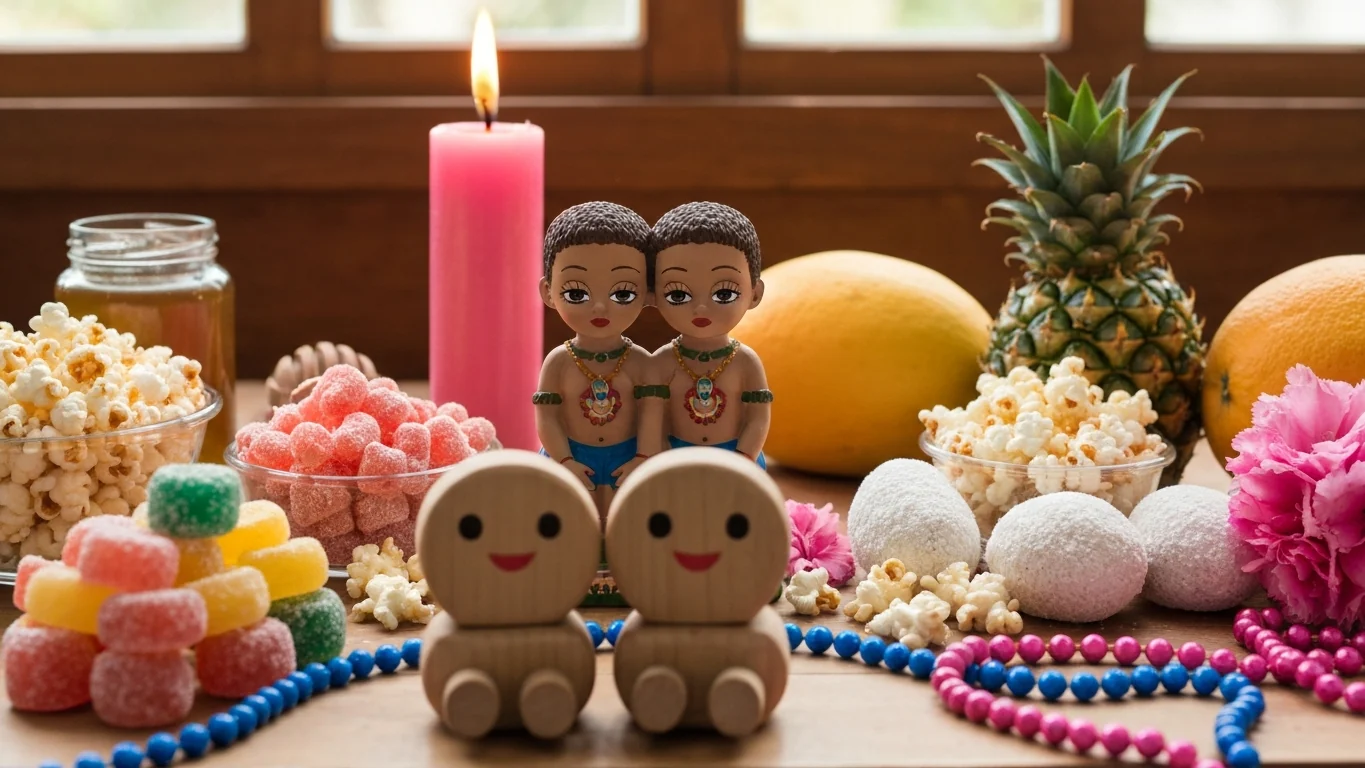
The blue and pink candle is the candle of the children. Mothers, fathers, grandmothers, and godmothers usually look for it when a baby cries for no reason, when a pregnancy is in its early stages, or when a child is quiet and withdrawn. It appears in Umbanda terreiros during Erê festivals, at the sweet tables of September, and in many homes that do not attend a gira, but pray for the little ones.
The foundation joins two forces. On one side is Ibeji, the sacred twins, along with the Erês who descend in the gira: blue and pink became their popular mark, and Sunday is the most remembered day. On the other side is Iemanjá, mother of heads, who has blue as her color and Saturday as her day. One takes care of the child, the other takes care of the one who raises them. The markings change from house to house, and there are terreiros that use other colors for the Ibejada.
In practice, the blue and pink candle does not cure disease nor does it cause pregnancy on its own. Its role is one of support: to make the room more serene, to accompany the wait of those who are pregnant, and to remind the family that a child needs laughter as much as care. The rest comes from the pediatrician, from prenatal care, and from everyday affection.
What is it for
What is the Blue and Pink Candle for
Blue and pink are the two most prominent colors of Ibejada, and blue also calls upon the lap of Iemanjá. Therefore, this two-color candle is lit by the children: protection for babies and children, peaceful pregnancy, calm sleep, and the return of joy to a sad home.
-
Protecting a baby and small child
When the little one is frequently crying, scared, or receiving many looks from visitors. The candle enters as a request for protection, so that the Erês play around them and ward off the weight.
-
Accompanying pregnancy and childbirth
Many pregnant women light the blue and pink candle during the month of pregnancy or near the date of childbirth, asking Iemanjá for a lap and calm. She adds faith to the prenatal care, without taking its place.
-
Calm sleep and the end of nightmares
For the child who wakes up screaming or does not want to sleep alone. Light the candle in a nearby room at dusk, and turn off the strong house lights earlier on that day.
-
Bringing back the joy of the home
After mourning, separation, or a phase of great hardship, the house is left without laughter. Ibejada is called to restore lightness, and the family usually adds a sweet to the candle.
-
Child at school and away from home
During daycare adaptation, when changing schools, or when the child travels with the other guardian. The request is that the sacred twins provide company and that they return well.
Who rules this candle
Orixás and spirits of the Blue and Pink Candle
-
Ibeji and the Ibejada
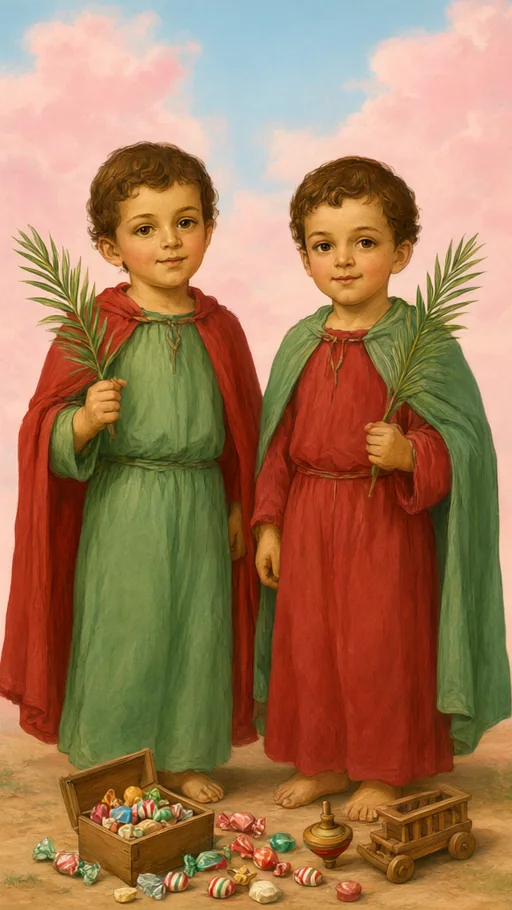
The sacred twins, owners of childhood
Blue and pink are the colors that the people of the terreiro most associate with Ibejada, reminding them of the boys and girls of the gira. Ibeji rules birth, twins, and joy, and on Sunday and September 27 receives a candle, sweets, and caruru.
-

Iemanjá
Mother of the orixás (orishas), lady of the sea and the womb
The blue of the candle is hers. Iemanjá is the great mother, linked to pregnancy, the home, and the head of each child, and Saturday is her day. When the candle is for the mother and the baby at the same time, she is called along with the children.
Know Iemanjá
Also settled for
- Erês of Umbanda
- Cosme and Damião
- Children of the beach
Prayer to light
Prayer of the blue and pink candle to Ibeji and Mother Iemanjá
“Ibeji, sacred boys and girls, look over this child that I bring in my heart and in my name. Play near their cradle, sit by the bed, walk with them on the path to school, and scare away with your laughter every fright and every heavy look. Mother Iemanjá, who carries all your children in the womb of the sea, teach me to care without suffocating and to protect without fear. If there is a life growing inside me or near me, cover this wait with your calm. May this blue and pink flame burn joyfully and gently, and may this house never lack sweets, comfort, and health. Bejirô! Odoyá!”Light the candle and pray
Step by step
How to set the Blue and Pink Candle
- 1
Choose a safe and visible place
Never in the room where the child sleeps alone. A high shelf in the living room or kitchen works, away from curtains and small hands, in a spot where an adult always passes.
- 2
Prepare the water and the sweet
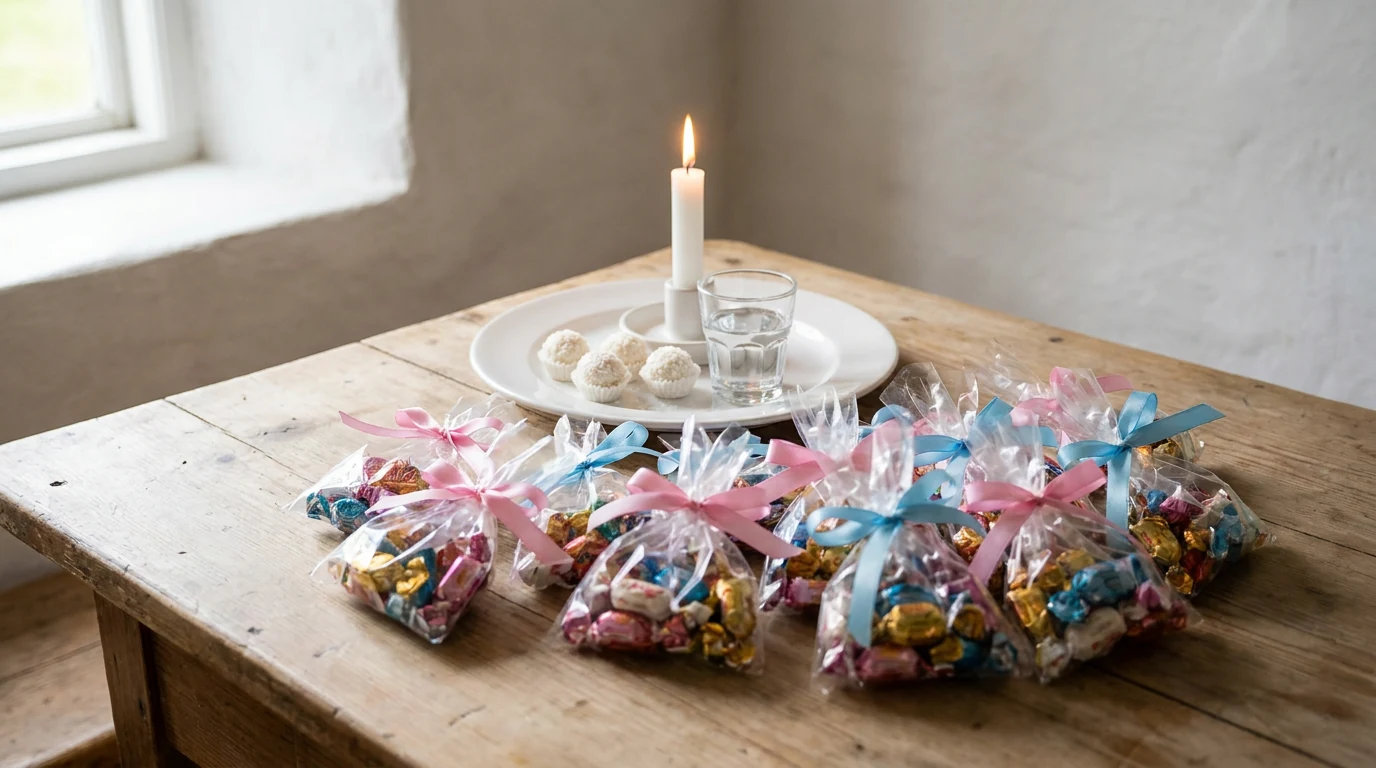
Sweeten the water in the glass and leave the sweets next to the saucer. It is the way to call the Ibejada. If there is a photo or clothing of the child, place it nearby, but without touching the candle.
- 3
Firm the candle thinking of the name
Hold the candle between your hands and say the full name of the child or the pregnant woman softly. Ask for protection for her, and not for her to change her way of being.
- 4
Light and pray without haste
Light with a match, offer the candle to Ibeji and to Iemanjá and say the prayer. Then speak with your own words, telling what worries you, like someone venting to a mother and to friends.
- 5
Close the prayer request and share
Let it burn until the end and do not blow: if you need to leave, smother it. The next day, give the sweets to known children, pour the water into a vase and throw the cold wax in the trash, wrapped.
Precautions before lighting
- Candle and child request distance: flame always out of reach, on pottery, away from curtains, and never lit in the room where the little one sleeps without an adult.
- Fever, crying that does not stop, or pregnancy problems are a matter for a doctor. The candle accompanies the pediatrician and prenatal care, it never replaces them.
- Gira de Erê, caruru offering, and obrigação for Iemanjá have their own foundation. For this, the one who guides is the zelador of your terreiro.
- The sweet is to be shared immediately. Do not leave sugar sitting for days near the candle, so as not to gather ants or attract bugs to the altar.
Ceromancy
What the flame of the Blue and Pink Candle shows
Traditional terreiro reading. Before interpreting, check if there is no wind, crooked wick, or poor quality candle.
- Good sign
Living flame that sways without wind
In a child's candle, many houses read this playful movement as the Erês arriving for the treat. It usually comes along with a feeling of a lighter home.
- Good sign
Firm flame, clear and of medium height
Quiet burning, of a prayer request well delivered. It is what is expected in a protection candle lit with calm, in a closed room and without a draft.
- Attention
A lot of wax running down the pink part
Some houses understand it as the child carrying sadness or fright. It is worth paying attention to it in the next few days and repeating the candle on the following Sunday.
- Attention
Dark smoke rising from the flame
It may indicate a heavy environment or just a wick that is too long. Trim the wick. If it always returns, a herbal bath in the house and a conversation at a terreiro help.
- Observe
Wick that opens into two flames
For the Ibejada, some see the twins present in this, and others see only a manufacturing defect. Neither reading calls for alarm: continue the prayer.
Ritual bath and smoke cleansing (defumação)
Herbs that combine with the Blue and Pink Candle
-

Anise / Fennel
Pimpinella anisum
A weak anise tea in a glass of water, or a warm ritual bath for the child, sweetens the prayer request made to the Ibejada along with the candle.
See the herb -

Colônia
Alpinia zerumbet
Iemanjá leaf that calms the environment. A ritual bath of colônia (white ginger lily) for the pregnant woman before lighting the candle brings serenity to the wait.
See the herb -

Lavender (alfazema)
Lavandula angustifolia
A small bag of dried lavender near the saucer, or on the child's pillow that night, accompanies the request for sleep without nightmares.
See the herb
Virtual Candle
Light the Blue and Pink Candle now
Choose the type, write your request, and pay by PIX. The flame stays on the altar and you follow along through the link.
Place on the altarFrequently asked questions
Questions about the Blue and Pink Candle
Which orixá is the blue and pink candle for?
It is mainly for Ibeji and the Ibejada, who have blue and pink as their most popular colors. Blue also links the candle to Iemanjá, mother of the orixás, which is why it is lit both by the child and by those who are pregnant or raising children.
What is the best day to light the blue and pink candle?
Sunday, which is children's day in many homes, or September 27, the date of Cosme and Damião. If the focus is on the pregnant woman and motherhood, many people prefer Iemanjá's Saturday. Other than that, it can be lit whenever the child needs it.
Can I light a blue and pink candle to get pregnant?
You can light it as a prayer request and as an act of faith, surrendering your will to Iemanjá and Ibeji. But the candle does not guarantee pregnancy nor does it replace medical follow-up. If the attempt takes a long time, seek a fertility specialist and keep the candle as support.
What is the difference between the blue and pink candle and the pink candle?
The pink candle alone speaks of affection and reconciliation between the adults of the house, with the Erês and the sweetness of Oxum (Oshun). The blue and pink one is directed toward children: protection of the baby, the child, and the pregnancy, combining the lap of Iemanjá with the joy of the Ibejada.
Can I light the blue and pink candle in the baby's room?
It is not recommended. The room where the child sleeps should not have an open flame. Place the candle in a nearby room, in a high place and with an adult nearby. The protection arrives the same way, without the risk of fire near the crib.
Can I blow out the candle and light it again later?
You can, as long as you do not blow it out. Smother the flame with a saucer or a spoon and light it again when you are home to watch over it. For those with small children, this pause is even the safest choice.
What to do with the sweets after the candle?
Share them with known children the next day or leave them in a clean garden, at the foot of a tree. The sweets of the Ibejada are not for the person who made the prayer request to eat alone. The sweetened water returns to the earth in a pot and the cup is washed.