


Dreaming of a tooth falling out, according to Umbanda, is not an announcement of death in the family. A pai de santo heard in a UFJF survey says that dreaming of a death does not mean it will happen, and that the dream may just be fear and anguish. The idea of the tooth as death comes from the Talmud and ancient Greece, not from the terreiro.
| Reading that circulates | Where it comes from | What to say about it |
|---|---|---|
| Tooth falling out is death in the family | Babylonian Talmud and popular belief | the Talmud itself shows that the reading depended on the interpreter |
| Tooth falling out is pregnancy | idea attributed to Jung, cited by Freud | it is a theory of psychology, not of tradition |
| Dream is a message from the ancestors | an umbanda pai de santo | the message is confirmed with the spirit, in the gira |
What is the spiritual meaning of dreaming about a tooth falling out?
In umbanda, the spiritual meaning of dreaming about a tooth falling out is not in any table. The religion takes the dream seriously. But who reads each person's dream is their house, with the spirit guides.
In the research published in the magazine Sacrilegens, from UFJF, an umbanda pai de santo says that the religion recognizes the dream as a means of contact with the sacred and with the ancestors. Through dreams, he says, the spirits manifest themselves. Therefore, the dream carries weight for those who are from a terreiro.
No terreiro or academic source consulted brings a specific reading for the tooth. "Front tooth is father" and "bottom tooth is son" come from dream books.
The researcher Ivan dos Santos Messias, in the Revista Psicologia, Diversidade e Saúde, writes that each community has its own key to interpret dreams, based on its cultural heritage. In umbanda, this key stays with the terreiro. The guide to dreams in umbanda helps separate the common dream from the warning.
Does dreaming about a tooth falling out mean death in the family?
There is no umbanda or Candomblé source that says this. The belief is old and comes from outside the Afro-Brazilian matrix. The Brazilian press records that it still treats the dream as a "prophecy of death".
The Talmud and the interpreter who charged
An ancient record is in the Babylonian Talmud, in the treatise Berakhot. Rava tells the interpreter bar Haddaya that he saw the front and back teeth fall out. The answer is harsh: your sons and daughters will die.
The same text tells a forgotten detail. Bar Haddaya gave a good reading to those who paid and a bad reading to those who did not. At the end of the story, Rava finds the phrase "all dreams follow the mouth" in the interpreter's book. In other words, the reading of the dream followed whoever interpreted it.
The dream with a tooth that "announced death" came from the mouth of an interpreter who charged for a good reading.
Artemidoro and the mouth as a house
In 2nd century Greece, Artemidoro wrote a book of dreams that read the mouth as the person's house and the teeth as the people of the house. The upper teeth were the important people, the lower ones were of lesser position, as Sarah Bond and Matthew Neujahr summarize in the history magazine The Appendix.
Researchers Naama Rozen and Nirit Soffer-Dudek, from Ben-Gurion University of the Negev, summarize this story in the magazine Frontiers in Psychology. Artemidoro linked losing a tooth to paying a debt. The connection with death came from the Talmud and was a common belief for many years. Freud reacted to it with irony.
And in Umbanda, what is said about a dream with death?
In Umbanda, a dream is not read literally. The pai de santo heard by UFJF says that dreaming of a death does not mean it will happen. It could just be fear and anguish.
He remembers that what arrives in a dream needs to be confirmed. When the spirit is incorporated, the person asks it. Who confirms is the gira, not the scare of the early morning.
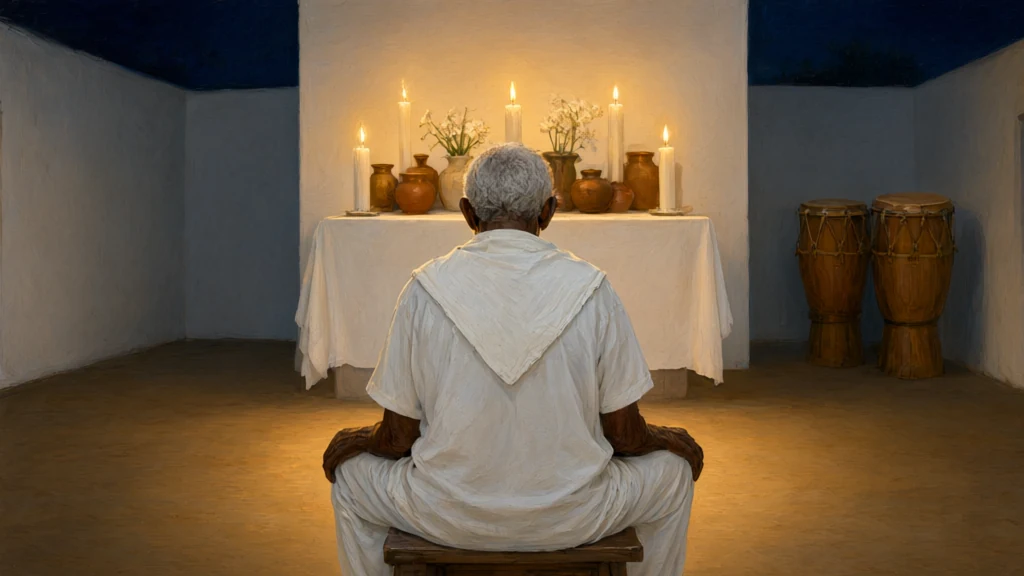
Umbanda inherited part of its view on dreams from Spiritism. Allan Kardec already refused the dictionary of dreams in The Book of Spirits: "it is absurd to believe that dreaming of such a thing announces such another." For him, many dreams mix memory with what worries the person while awake.
And in Candomblé?
In Candomblé, death in the family has its own rite and meaning, but no source links this to the dream of a tooth. Reginaldo Prandi explains that, in the Yoruba base, life and death alternate in cycles. The dead person returns by being reborn in a new member of the same family.
The axexê, a funeral rite of Candomblé, serves to perform a despacho for the egum, so that he leaves the aiê and moves to the orum. Whoever dreamed of someone who has already passed finds the theme in dreaming of a person who has already died. Who the egum is can be found in egum in Candomblé.
Can the dream of a tooth come from the body?
It can, and research on the theme points to this. Taking care of the tooth does not remove the religious meaning of the dream. The dream of a falling tooth is one of the most common typical dreams. In a study cited by the researchers from Ben-Gurion, 39% of people said they had this dream at least once.
In their study, with 210 university students, the dream of a tooth appeared linked to the sensation of tension in the teeth, the gum, or the jaw upon waking. It did not appear linked to psychological suffering. The authors themselves call the result preliminary.
The grinding and clenching of teeth have a name: bruxism. The National Cancer Institute lists among the signs the sensation of aching teeth, headache, and clicking when opening the mouth. In the beginning, bruxism is usually silent, and the dentist is the one who treats it.
What to do upon waking after dreaming of a falling tooth
No panic and no dictionary. The steps serve for those who are from a terreiro and for those who are not.
- Write down the dream immediately. Which tooth fell, where you were, what you felt. Detail disappears quickly.
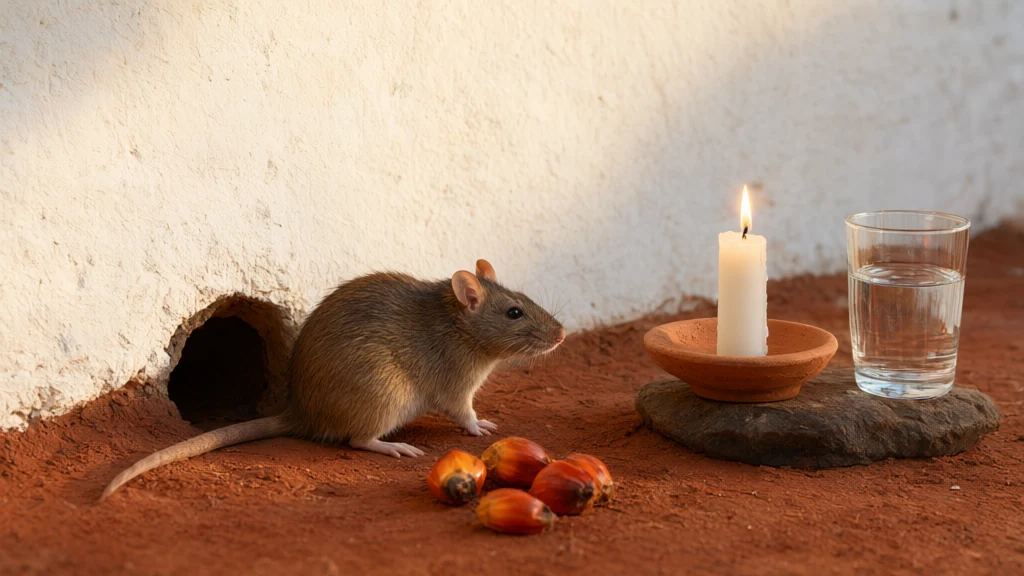
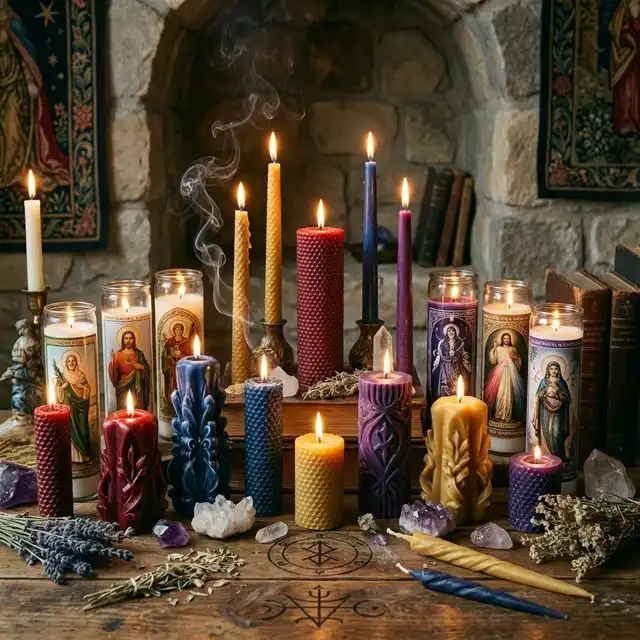
- Make a prayer with a white candle and a glass of water to the Guardian Angel, with your own words. The step by step is in firmeza na umbanda. Light it in the living room or kitchen, away from curtains, and never leave a candle lit in the bedroom where you sleep. Away from home, the virtual white candle serves as a reminder.
- If the fear of illness remained in the house, those who are filho de santo can turn to Obaluaê. Prandi describes him as the orixá (orisha) of diseases and of the body's cures. See the prayer for Obaluaê.
- Take the dream to your zelador or zeladora if it repeats or leaves a message. In umbanda, the one who confirms is the spirit, in the gira. If the house asks for a candle, herb, or bead necklace, the shop confirms the material with you via WhatsApp.
- Make an appointment with the dentist if you wake up with a tense jaw, sensitive tooth, or headache. A nightmare that returns every night also calls for a conversation with a doctor.
Frequently asked questions
Is dreaming of a falling tooth good or bad?
According to the tradition consulted, the dream is neither good nor bad in itself. In the words of a pai de santo of umbanda heard by UFJF, a dream is not read literally, and dreaming of death does not mean death. The meaning for you depends on your life and the reading of your house.
Is dreaming of a falling tooth pregnancy?
There is no source of umbanda or Candomblé for this. The idea that a dream with a tooth, in women, represents childbirth is attributed to Carl Jung and appears cited by Freud. It is a theory of psychology from the beginning of the 20th century, not a foundation of terreiro.
Does dreaming of a falling tooth in the hand or bleeding change the meaning?
No source of terreiro consulted gives a reading for a tooth in the hand, with blood, or rotten. These variations appear in dream books, without a basis in tradition. If the dream was strong, write down the details and take it to your house. If you woke up in pain, also see the dentist.
Is dreaming of a tooth falling out a warning from the spirit guides?
It could be, for those who belong to a terreiro, but only the house can say. In Umbanda, what arrives in a dream is confirmed with the incorporated spirit, in the gira. A dream that repeats, that does not leave your memory, or that brings a prayer request deserves a conversation with the zelador or the zeladora.
References
- ROZEN, Naama; SOFFER-DUDEK, Nirit. Frontiers in Psychology, 2018. Dreams of Teeth Falling Out: An Empirical Investigation of Physiological and Psychological Correlates
- Babylonian Talmud, Berakhot 56a, William Davidson Edition, Sefaria. Berakhot 56a
- BOND, Sarah; NEUJAHR, Matthew. The Appendix, 2014. Divine Reverie: Revelation, Dream Interpretation, and Teeth in Antiquity
- BRESSAN, Renato Teixeira; OLIVEIRA, Andréa Olímpio de. Sacrilegens (UFJF), 2025. Terreiros of the psyche: considerations on dreams in Umbanda from Jungian psychology
- KARDEC, Allan. The Book of Spirits, 1857, KardecPedia. Sleep and dreams
- MESSIAS, Ivan dos Santos. Revista Psicologia, Diversidade e Saúde (Bahiana), 2016. Dream symbology and culturality
- PRANDI, Reginaldo. In Faraimará, o caçador traz alegria, Pallas, 2000. Concepts of life and death in the axexê ritual
- PRANDI, Reginaldo. Horizontes Antropológicos, 1995. African gods in contemporary Brazil
- National Cancer Institute (INCA). Informe INCA, 2023. Bruxism: learn the causes, symptoms, and treatments
- Agência O Globo, via InfoMoney, 2025. Have you ever dreamed of teeth falling out? Science explains why this happens