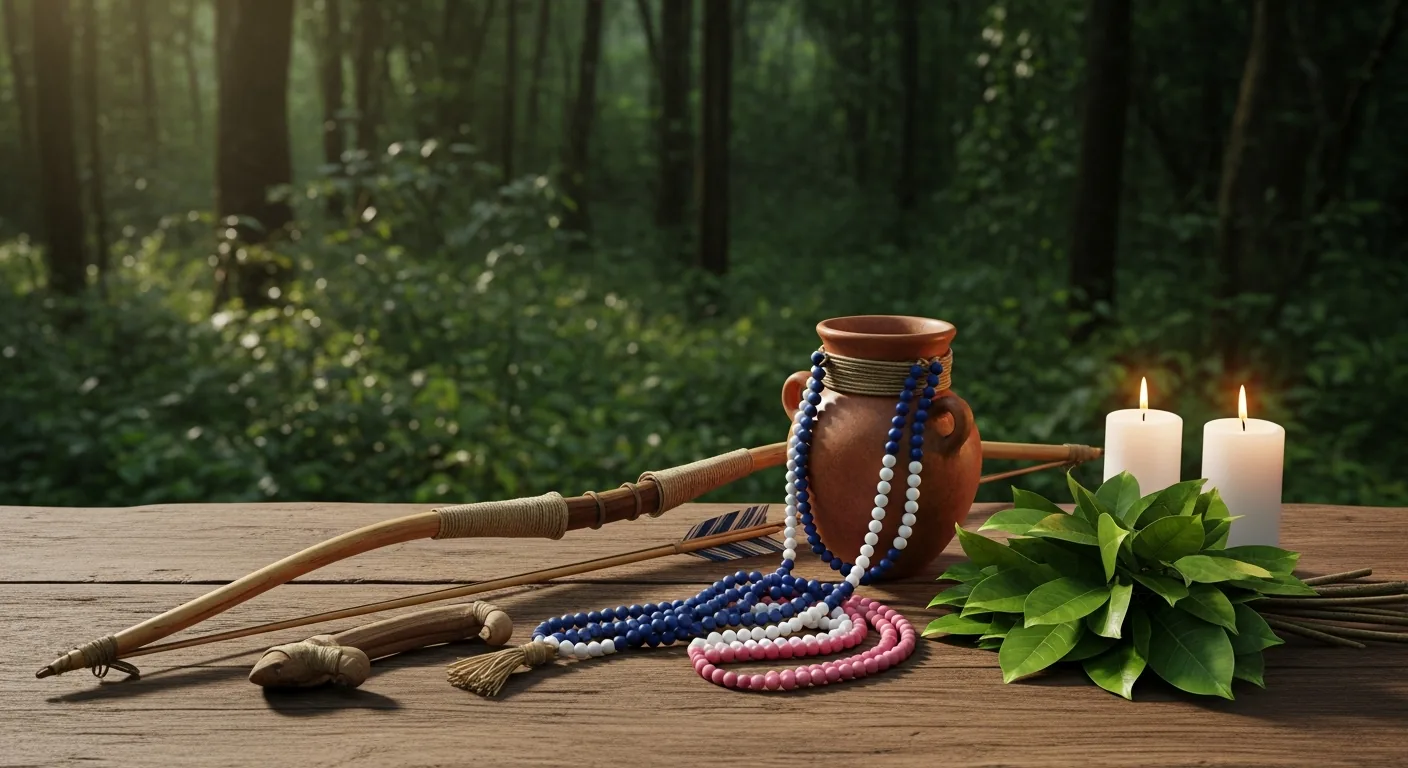
In Candomblé and Umbanda, the hunter of the woods is one: Oxóssi (Oshosi). But those who arrive at the Batuque of Rio Grande do Sul discover a beautiful surprise there: the hunter comes in a pair. Odé and Otim are two orixás who live, hunt, and are worshipped together, one the inseparable pair of the other.
This unfolding is one of the most characteristic marks of the Gaucho Batuque and often confuses those coming from other traditions. This guide explains who Odé and Otim are, why the South worships them as a couple, and gathers colors, day, greeting, foods, and syncretism of each, always remembering that, in Batuque, many things change according to the nation and the house of the orixás (casa de santo).
Who are Odé and Otim, the hunter orixás
Odé and Otim are the orixás of hunting and the woods in Batuque. Odé is the hunter; Otim, the huntress. They always walk together, like a couple that completes each other: tradition describes them as inseparable companions, masters of the sustenance that comes from the forest.
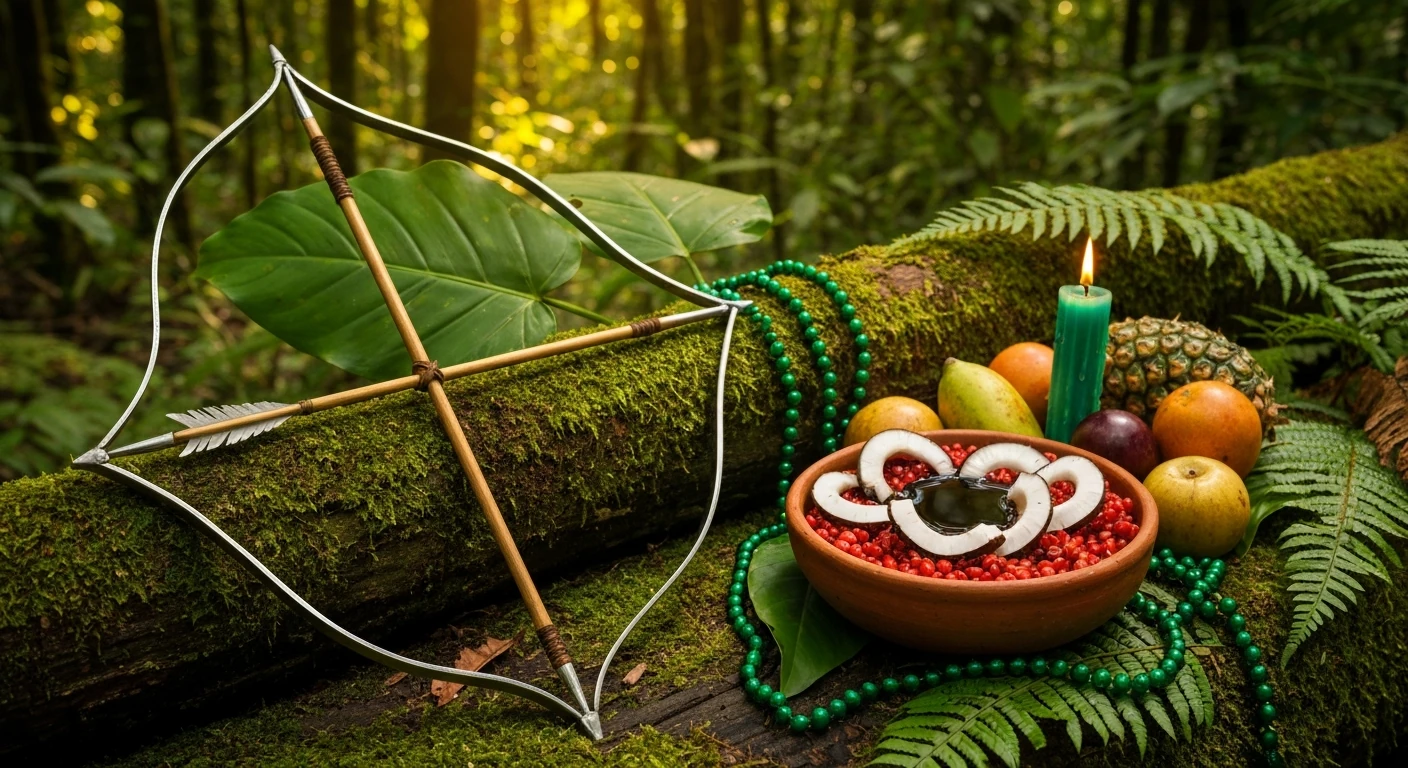
The classic image is that of Odé taking down the prey with his bow and arrow and, penalized or by sharing, delivering the food to Otim, who prepares it. They are not figures of violence, they are orixás of abundance and provision, those who ensure that food does not lack on the table. Where there is woods, there is leaf, and where there is leaf, there is healing: that is why Otim also appears linked to plants and harvests.
In the pantheon of Batuque, this pair occupies the place that in other houses belongs to Oxóssi, the great hunter of Yoruba matrix. The energy is the same: that of the woods, of abundance, and of the steady gaze, but the way of worshiping is specific to the South.
Why does Batuque unfold Oxóssi into two orixás
Here is the point that generates the most doubt. In many Afro-Brazilian traditions, Batuque organizes its pantheon in pairs of orixás and the hunter is one of those pairs. What in Candomblé is concentrated in the single figure of Oxóssi, in Batuque is expressed in two names: Odé, the masculine, and Otim, the feminine.
It is worth saying clearly: this does not mean that Batuque is an "incomplete" Candomblé or a smaller version of another tradition. Batuque is a religion with its own liturgy, theology, and worldview, formed in Rio Grande do Sul from the African nations that arrived in the South. Treating its particularities as an "error" is disrespectful. The unfolding of the hunter into a couple is a theological richness, not a flaw.
In Batuque, the hunter does not come alone. Odé learns that the forest only sustains those who respect its pair: without Otim, there is no table; without Odé, there is no hunt. The duo teaches that abundance is born from partnership.
This paired view is repeated in other orixás of Batuque and is one of the traits that give identity to the Gaucho religion.
Odé: the hunter's profile
Gathering what sources and the practice of the houses most record about Odé, always with the caveat that details vary by nation:
- Domain: the hunt, the forests, abundance, and sustenance.
- Colors: navy blue and white (in some houses, navy blue and pink).
- Day of the week: Monday in most houses; in the Cabinda nation, he is worshiped on Friday.
- Greeting: "Okê, Okebambo!" (also written as "Oquê, Oquebambo").
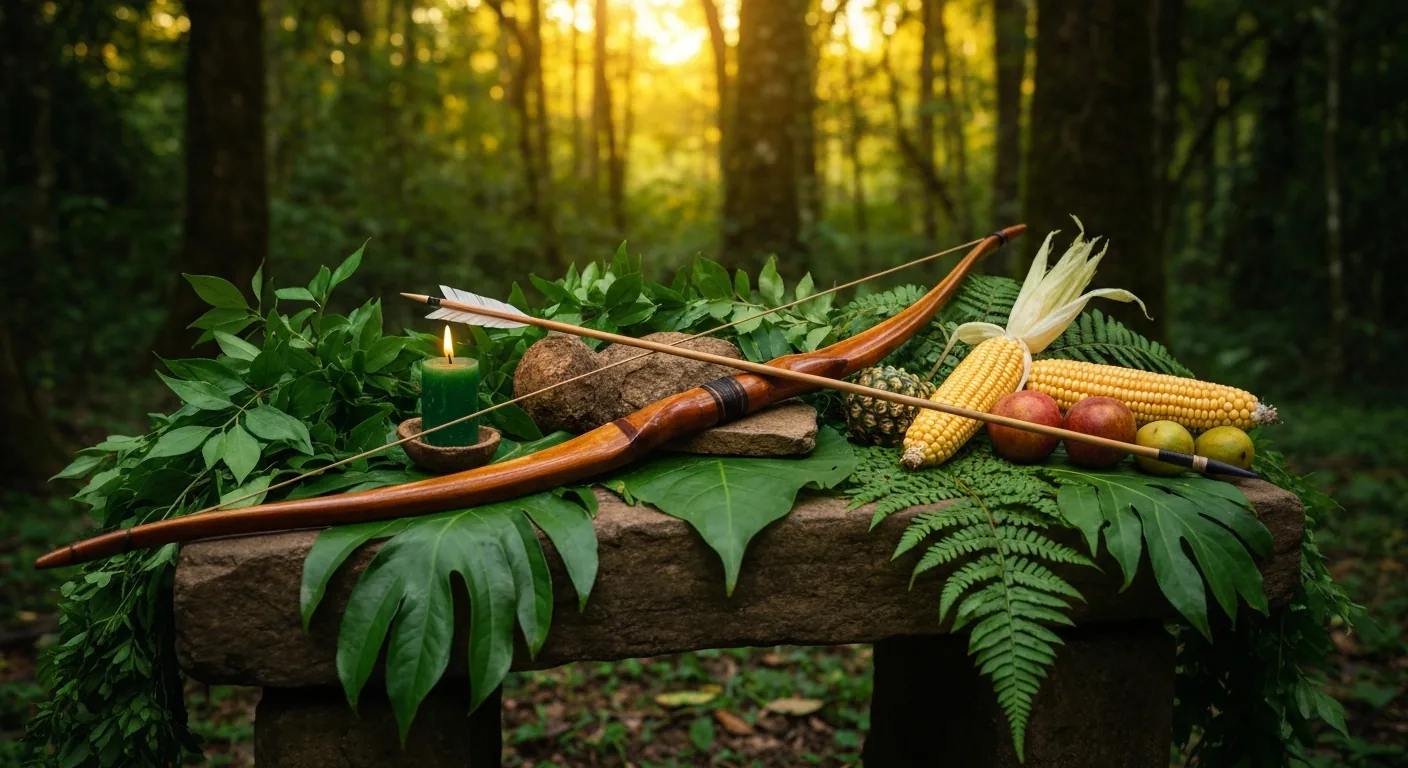
- Symbol: the bow and arrow, tools of the accurate hunter.
- Foods and offerings: preparations based on pork (ribs), farofas and miamiã (flour with honey), roasted beans and popcorn are frequently mentioned, but the correct offering is always the one the zelador da casa determines.
- Syncretism: Saint Sebastian, the martyr of the arrows.
Notice an important difference for those coming from outside: in Candomblé and Umbanda, Oxóssi is the orixá of Thursday and his greeting is “Okê arô”. In Batuque, the day and the greeting are different. It is not a contradiction, it is the signature of each tradition.
Otim: the hunter's card
Otim is the female orixá of the hunt, the companion of Odé. She is a warrior of the forest, but also a caretaker: her connection with plants, leaves, and harvests gives her an aspect of abundance and care for the life that sprouts from the earth.
- Dominion: the hunt by the side of Odé, the plantations, the healing leaves, the night and the moon (the best time for the hunter).
- Colors: vary significantly between the houses, appearing in combinations of deep blue, pink, and white, and also deep blue with orange. In the Cabinda nation, the use of three beads of each color is common.
- Day and greeting: accompany Odé, with the same greeting “Okê, Okebambo!”.
- Symbol: traditionally represented with a jar or quartinha of water on the head, a sign of one who carries the sustenance and the freshness of the forest.
- Foods: feeds on the fruits of the hunt, with a preference also for pork meat.
- Syncretism: Saint Bernadette in most houses; in some, Saint Efigênia.
The strength of Otim lies precisely in not being a supporting character. In Batuque, she is not "the wife of Odé" but a full orixá, a hunter by her own right, who shares the command of the forest in equality with the pair.
Odé and Otim vary according to the nation
If you compare two houses of Batuque, you will likely find small differences in the colors, the days, and the foods of Odé and Otim. This is normal and expected. Batuque is organized into nations Oyó, Ijexá, Cabinda, Jeje, and Nagô, among variants, and each one keeps its own foundations.
The preparation (the initiation) of the children of Odé and Otim is more associated with the Cabinda, Jeje, and Ijexá nations. Therefore, a detail that counts as a rule in one house may not count in another. In the same way that Bará in Batuque has qualities and cults that change from nation to nation, the hunter couple also follows the line of the orixá of each terreiro.
The practical guidance is simple: inform yourself, but trust your zelador. No article replaces the word of the mother or the pai de santo who cares for your head. What is here serves for you to understand and respect, not to reproduce obligations on your own.
Frequently asked questions
Who are Odé and Otim in Batuque?
They are the hunter orixás of the gaúcho Batuque, worshipped as an inseparable couple. Odé is the hunter and Otim, the huntress. Together, they represent the forest, abundance, and sustenance, occupying in Batuque the place that the hunter Oxóssi occupies in Candomblé and Umbanda.
Why does Oxóssi become two orixás in Batuque?
Because Batuque organizes part of its pantheon in pairs of orixás, and the hunter is one of them. It is not an incomplete Candomblé: it is a tradition unique to Rio Grande do Sul, with autonomous theology and liturgy, which expresses the energy of the hunt in two complementary orixás, Odé and Otim.
What is the color of Odé and Otim?
Odé usually wears navy blue and white (sometimes navy blue and pink). Otim's colors vary more between the houses: royal blue, pink, and white, or royal blue and orange. As with everything in Batuque, the exact combination depends on the nation and the house of the orixás.
What is the day and the greeting of Odé and Otim?
In most houses, the day is Monday; in the Cabinda nation, it is Friday. The greeting of the pair is “Okê, Okebambo!”. This differs from the Oxóssi of Candomblé and Umbanda, who is greeted as “Okê arô” and worshipped on Thursdays.
With which Catholic saints are Odé and Otim syncretized?
Odé is generally syncretized with Saint Sebastian. Otim is usually associated with Saint Bernadette and, in some houses, with Saint Efigênia. The syncretism, like the rest of the worship, can vary according to the tradition of each terreiro.
Where to buy statues, bead necklaces, and items for Odé and Otim
At Joia Mística Laroyê, you find everything to set your devotion to the hunter couple with respect and axé:
- Statues of Odé and Otim: for your altar and your assentamentos
- Bead necklaces and beads in the colors of the pair: navy blue, white, pink, and royal blue
- Ritual candles: to light in homage to the orixás of the forest
- Herbs and leaves: for baths and fumigations linked to the energy of the forest
- Decorative bow and arrow and alguidares: pieces of fundamento for those who belong to the orixá
Visit our physical store in Extrema, Minas Gerais and we ship to all of Brazil. Talk to us via WhatsApp and Joice will guide you on the right items for your house and your nation.
References
- Wikipédia: article about Batuque, Afro-Gaúcho religion
- Wikipedia: article about Otim, female orixá of the hunt