Green and Pink Candle
The leaf that heals and the affection that calms, under Oxóssi (Oshosi), the Caboclos, and the children of the Ibejada
Green and Pink Candle
7-day candle · stays lit for 7 days7 dias
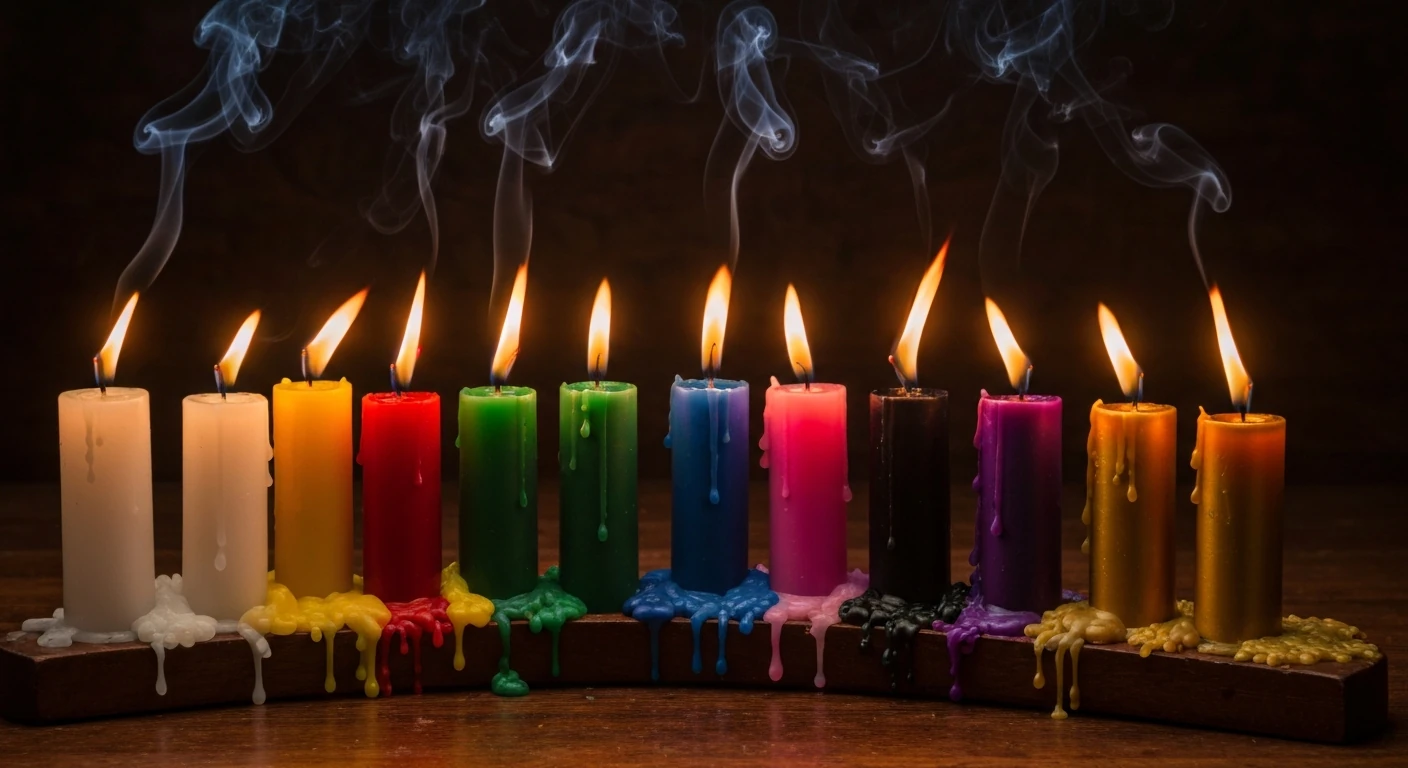
The green and pink candle is a bicolor with a horizontal division, lit in Umbanda and in home prayer when the request mixes two things: healing and affection. It is not the fixed color of a single orixá (orisha). It is the sum of two fundamentals that converse well, and therefore appears in requests where someone is hurt inside and needs, at the same time, medicine and a lap to rest.
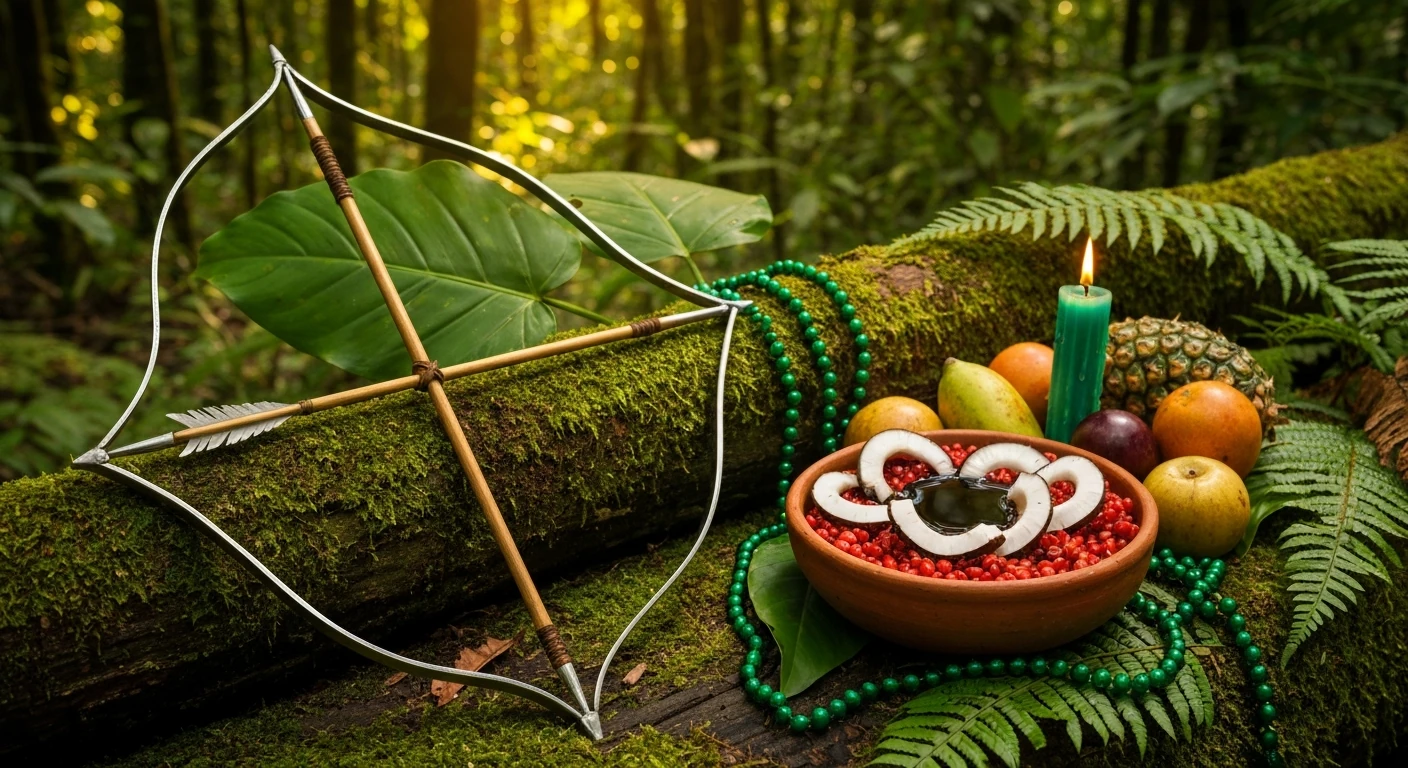
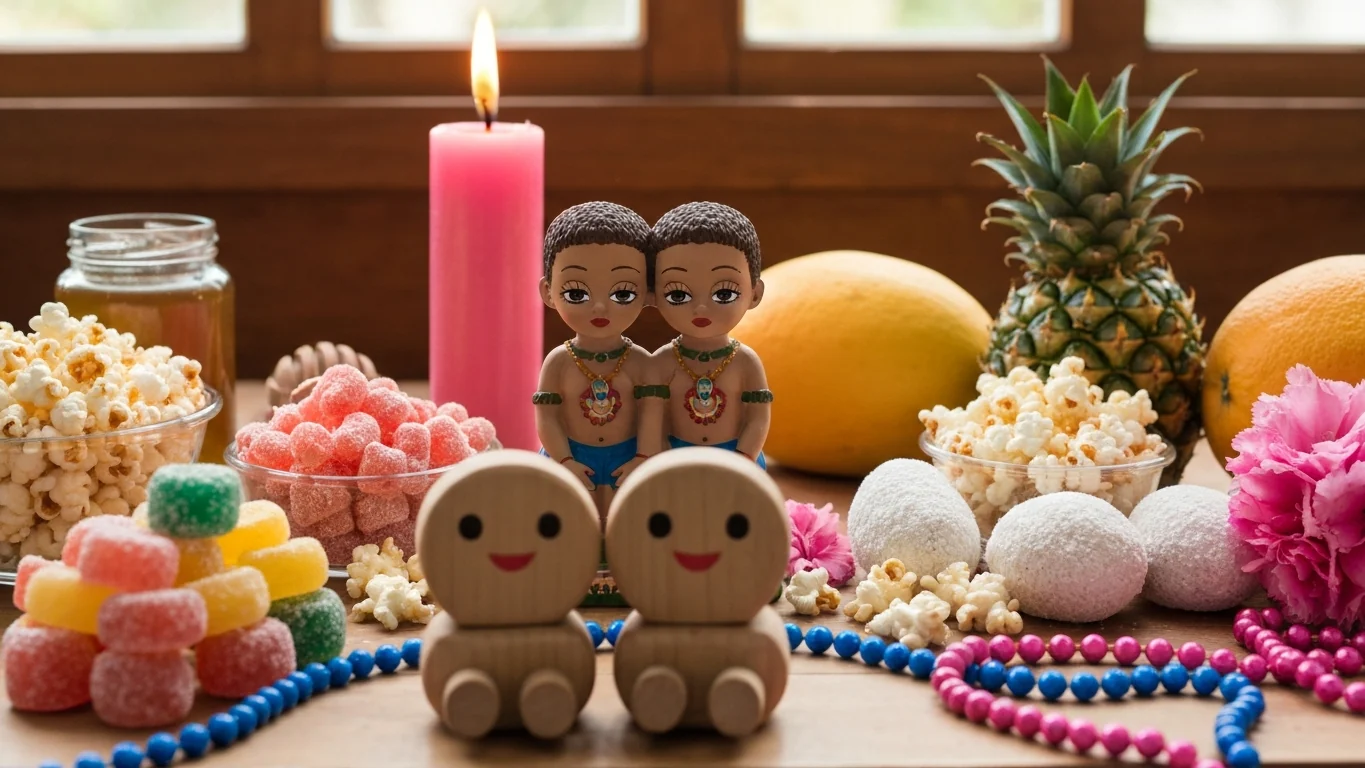
Green comes from the forest. In Umbanda it belongs to Oxóssi, whose day is Thursday, and to the Caboclos who work with leaf, ritual bath, and spiritual pass. Pink comes from the Ibejada: Ibeji, the sacred twins, and the Erês, the child spirits who arrive at the gira bringing laughter and sweets. Sunday is the day that most houses give to the Ibejada. Together, the two colors ask that the strength of those who know the herb be applied with the delicacy of those who care for a child. Each terreiro marks these colors in its own way, and some houses do not even use the combination.
At home, it is a gentle candle. It serves for the mother distressed with her child, for the adult who carries an old grudge, and for the family that forgot how to speak with affection. It does not undo spells, it does not cut spiritual attacks, and it does not make anyone change their mind. What it asks for is relief, patience, and an environment where one can recover.
What is it for
What is the purpose of the Green and Pink Candle
Half green, half pink: the leaf of Oxóssi and the Caboclos on top, the affection of the child spirits underneath. It is the candle for those who need to heal inside, care for a child, or return tenderness to a tired home.
-
Healing a wound that is not of the body
Separation, betrayal, loss of a loved one, a difficult childhood that returns to memory. Light it when the pain is from within and you want to ask for relief without a rush to forget.
-
Strength for a child who is sick
A child with a fever that will not pass, hospitalization, or long treatment. The candle joins the healing leaf of the Caboclos to the care of the Erês and accompanies, with faith, what the doctor is already doing.
-
Affection returned between parents and children
For the teenager who closed off, the father who only demands, the mother who can no longer talk. The prayer request is for patience from both sides and for a conversation that begins without accusation.
-
Starting over with more lightness
After a heavy phase, when life is returning to normal but the joy has not yet returned. The green asks for renewal and the pink reminds that it is possible to start over with sweetness.
-
Thanking the Caboclos and Erês
When a spiritual pass from a Caboclo helped or a child from the gira brought the missing answer, the green and pink candle serves as a thank you to both lines at once.
Who rules this candle
Orixás and spirits of the Green and Pink Candle
-

Oxóssi
Hunter of the woods and lord of sustenance
Green, in Umbanda, belongs to Oxóssi and the Caboclos of his line. He knows the woods and the leaves that heal, has Thursday as his day, and enters this candle with the part of medicine and renewal.
Know Oxóssi -
Ibeji and the erês
The sacred twins and the children of Aruanda
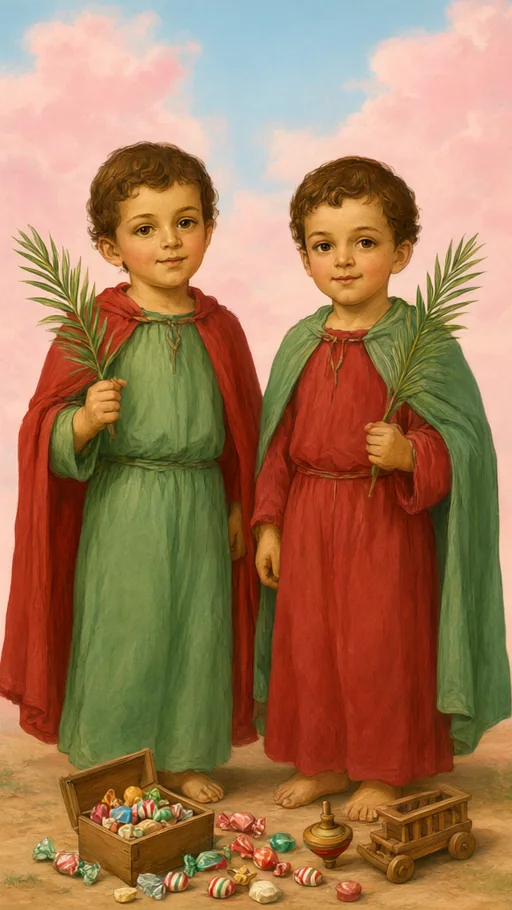
Pink is one of the most used colors for Ibejada, along with blue. Ibeji guards the little ones, has Sunday as his day, and the Erês bring joy to the gira. In the candle, they stand for tenderness and for the protection of children.
Also settled for
- Caboclos de Oxóssi
- Caboclas of the forest
- Erês (Children of Umbanda)
- Cosme and Damião
Prayer to light
Prayer of the green and pink candle to Oxóssi and the children
“Pai Oxóssi, who walks through the woods without making a sound and knows where each leaf grows, I light for you the green part of this candle. Seek for me the herb that closes the wound I carry and teach me to wait for the time of healing without hardening the heart. Caboclos of the woods, pass your hands over my head and over whoever is sick in this house. Children of Aruanda, the pink part is yours: bring back the laughter that disappeared from here, put affection where resentment remained, and care for the little ones of this family in sleep and on the path. Receive this light as one receives a simple gift, made with love. Okê Arô! Hail the children!”Light the candle and pray
Step by step
How to consecrate the Green and Pink Candle
- 1
Prepare a ritual bath of leaves before
If possible, take a warm ritual bath of fennel or lemon balm from the neck down. It is not mandatory, but it helps you arrive calmer and with a clearer head at the time of prayer.
- 2
Set up the saucer in a quiet place
A corner of the living room or bedroom, away from the walkway. Place the leaf branch on one side of the saucer and the cup of fresh water on the other: the leaf calls the forest, the fresh water calls the children.
- 3
Speak the name of the one in need
Hold the candle with both hands and say in a low voice the name of the person who needs healing or affection, even if it is you. Think about how they will be well, and not about the problem.
- 4
Light and pray without haste
Light it with a match, say that the candle is for Oxóssi, for the Caboclos and for the Erês, and perform the prayer. Then speak with your own words, in the simple way of someone speaking to family members.
- 5
Finish by smothering, never blowing
Let the candle burn until the end. If you need to leave, smother it with another saucer. At the end, the water goes back to a plant pot, the sweet goes to a child or a garden, and the wax goes to the trash, wrapped.
Precautions before lighting
- If the candle is for a child, it stays out of reach of them and of animals, on tableware, never near a curtain, crib, or fabric toy.
- In a prayer request for health, for a child or an adult, the candle accompanies the treatment and never replaces it. Always follow what the doctor instructed.
- Strong emotional pain, sadness that does not pass, or the desire to disappear require help from a psychologist or doctor. The candle supports, but it does not take that place.
- Gira de Erê, obrigação de Oxóssi and banho de folha with fundamento are instructions from the zelador of your terreiro. The house candle is a reza, not an obrigação.
Ceromancy
What the flame of the Green and Pink Candle shows
Traditional terreiro reading. Before interpreting, check if there is no wind, crooked wick, or poor quality candle.
- Good sign
Firm flame, with a soft glow
Many houses read this as a well-received request and an environment ready for recovery. It is what is expected from a healing candle lit in a windless corner.
- Good sign
Flame that moves joyfully
In a candle that has a part of the children, the live and jumping flame is usually understood as the presence of the Erês. It seems to play, without that nervous tremor.
- Attention
Wax that drips down the pink part
Some houses read this as a sadness that is still leaving. It is not a reason for fear. If you wish, repeat the candle on another Sunday and set aside some time to rest.
- Attention
Weak flame and a wick that drowns
First check the quality of the candle and the excess of wax. If the good candle insists on burning low, it is worth seeking a passe in a trusted terreiro.
- Observe
Colors that mix as they melt
It is common for the green wax to drip over the pink. Some see in this the healing reaching the heart, but most of the time it is just the way the candle burns.
Ritual bath and smoke cleansing (defumação)
Herbs that combine with the Green and Pink Candle
-

Anise / Fennel
Pimpinella anisum
Ibeji and Oxum herb that sweetens the environment. A warm ritual bath for the adult before lighting the green and pink candle; tea for a small child, only with the pediatrician's approval.
See the herb -

Alfavaca
Ocimum gratissimum
Leaf that Oxóssi and Oxum share. A fresh branch next to the saucer creates the bridge between the green part and the pink part of the prayer request.
See the herb -

Melissa
Melissa officinalis
Linked to joy and children. The lemon balm ritual bath helps those who are sad to arrive lighter at the moment of the prayer and the candle.
See the herb
Virtual Candle
Light the Green and Pink Candle now
Choose the type, write your request, and pay by PIX. The flame stays on the altar and you follow along through the link.
Place on the altarFrequently asked questions
Questions about the Green and Pink Candle
Which orixá is the green and pink candle for?
It does not belong to a single orixá. Green is for Oxóssi and the Caboclos in Umbanda, and pink is for the children, Ibeji and the Erês. The bicolor joins the two and is used when the prayer request involves healing and affection at the same time. Some houses do not work with this combination.
What is the best day to light the green and pink candle?
Sunday, a day that many terreiros dedicate to children, is the most used. If the prayer request is mainly for healing and directed to Oxóssi, Thursday also works. In case of need, such as a sick child, it can be lit on the day the family needs it.
What is the difference between the green and pink candle and the pink candle?
The pink candle deals only with affection: reconciliation, affection, protection of children. The green and pink adds the healing leaf of Oxóssi and the Caboclos, and therefore it is more requested when there is someone sick or an emotional wound that needs to heal.
Can I light the green and pink candle for a sick child?
You can, and it is one of the most common uses. Light it with the child's name, away from the room where they sleep, and pray for their recovery. The candle accompanies the family's faith, but medical treatment remains the primary focus and should not be replaced by it.
Can I blow out the green and pink candle and light it later?
If you need to leave, yes. Cover the flame with an inverted saucer until it goes out on its own, and when you return, relight it and repeat the prayer. Blowing it out is what should be avoided: many people from the terreiro understand that the breath undoes the prayer that was rising.
What to do with the water, the leaf, and the sweet after?
The water with sugar goes to the soil of a pot or the backyard. The leaf can be placed at the foot of a tree. The sweet is for the children: give it to a child in the neighborhood or leave it in a garden, without eating it. The leftover wax goes into the common trash, wrapped in paper.