Brown and White Candle
Justice without resentment and agreement in peace, with the stone of Xangô (Shango) under the white cloth of Oxalá (Obatala)
Brown and White Candle
7-day candle · stays lit for 7 days7 dias
Not every cause is resolved with someone leaving defeated. The brown and white candle is sought precisely by those who need a just outcome without losing family, a partner, or their own peace on the path. It appears often in Umbanda, in inventories, separations, and land disputes, when the truth must emerge, but coexistence needs to survive it.
The foundation comes from two orixás (orishas) who walk together in the itans. Xangô, king of Oyó, judges with the oxê and lives in the stone; Oxalá, the father of the white cloth, governs peace and patience. Tradition tells that Oxalá was wrongly imprisoned in the kingdom of Xangô, and that the king, upon discovering the injustice, dressed in white with his people to ask for forgiveness. From there comes the festival of the Waters of Oxalá and the idea of justice that recognizes its own error.
Therefore, Xangô's Wednesday and Oxalá's Friday serve for this candle, according to the house's custom. It is not a candle for fighting. Whoever lights it to humiliate the other side is asking the wrong color; the white on top warns that the scale only balances when anger stays on the outside.
What is it for
What is the purpose of the Brown and White Candle
Below, the brown of Xangô's quarry; above, the white of Oxalá. The brown and white candle requests justice that leaves no wounds: it serves for inheritance sharing, agreements between relatives, conflicts that need to end in peace, and decisions made with a clear conscience.
-
Inheritance and sharing without fighting between siblings
When the inventory threatens to separate the family, the candle requests that each one receives what is theirs and that no one leaves the table with resentment kept for the rest of their life.
-
Closing an agreement that turned sour
Dissolved partnership, divorce, debt between friends. Light it before the conversation or mediation, requesting fair words from both sides and a willingness to yield where necessary.
-
A just and impartial decision
For those waiting for a sentence, report, or opinion. The request is not to win at any price: it is that whoever decides sees the facts clearly and judges without pressure from any side.
-
Acting with ethics when you decide
Useful for those who occupy the role of judge in daily life: the boss who evaluates, the father who arbitrates, the building manager. It helps weigh the case calmly, without favoring whoever shouts the loudest.
-
Making peace after the cause
Once the process is over, the brown and white candle helps turn the page. It is the gesture of thanking Xangô for the decision and asking Oxalá that the anger goes away along with the wax.
Who rules this candle
Orixás and spirits of the Brown and White Candle
-

Xangô
King of Oyó, owner of the quarry and the oxê
The brown of the base is the stone where Xangô lives, a color that Umbanda consecrated to him alongside red and white. It is his the scale that weighs the cause, and Wednesday is the day to offer this part of the prayer request.
Know Xangô -

Oxalá
Father of the white cloth, lord of peace
The white at the top is of Oxalá, who asks for patience and forgiveness. In the itan of the Waters of Oxalá, it was Xangô who dressed in white to repair an injustice, and the candle keeps this lesson: to judge without hatred.
Know Oxalá
Also settled for
- Caboclos of Xangô, those of the quarry
- Pretos Velhos
Prayer to light
Prayer of the brown and white candle to Xangô and Oxalá
“Kaô, my Father Xangô. Epa Babá, my Father Oxalá. Before this candle I place the cause that takes away my sleep and the people who are on the other side of it. Xangô, who knows the weight of each word, put everything on your scale and do not let the lie touch the plate. Oxalá, who taught even the king to ask for forgiveness, wash my heart of anger before it decides for me. I want what is just, no more and no less. If there is a possible agreement, may I have the humility to accept it. If the family divides over the cause, may they join again after it. May this flame rise firm as the stone and clear as the cotton. Kaô Kabecilê! Epa Babá!”Light the candle and pray
Step by step
How to consecrate the Brown and White Candle
- 1
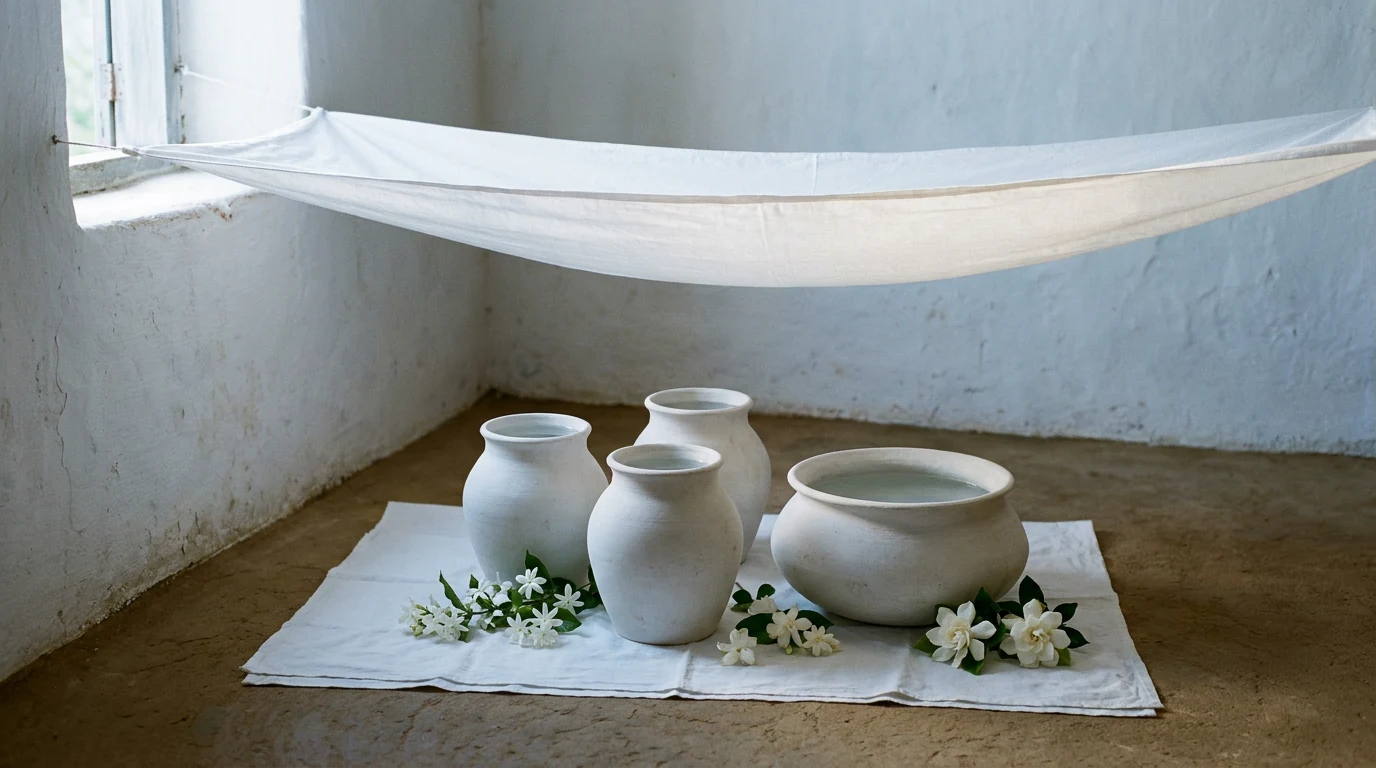
Cover the place with the white cloth
Spread the cloth on a firm table or shelf and place the plate on top. The white underneath everything is the part of Oxalá: the matter will be treated over a floor of peace.
- 2
Write the names involved
On the paper, place your name and those of the other parties, and underneath a phrase requesting justice for everyone. No one enters the paper as an enemy. Fold it and leave it in the center of the plate.
- 3
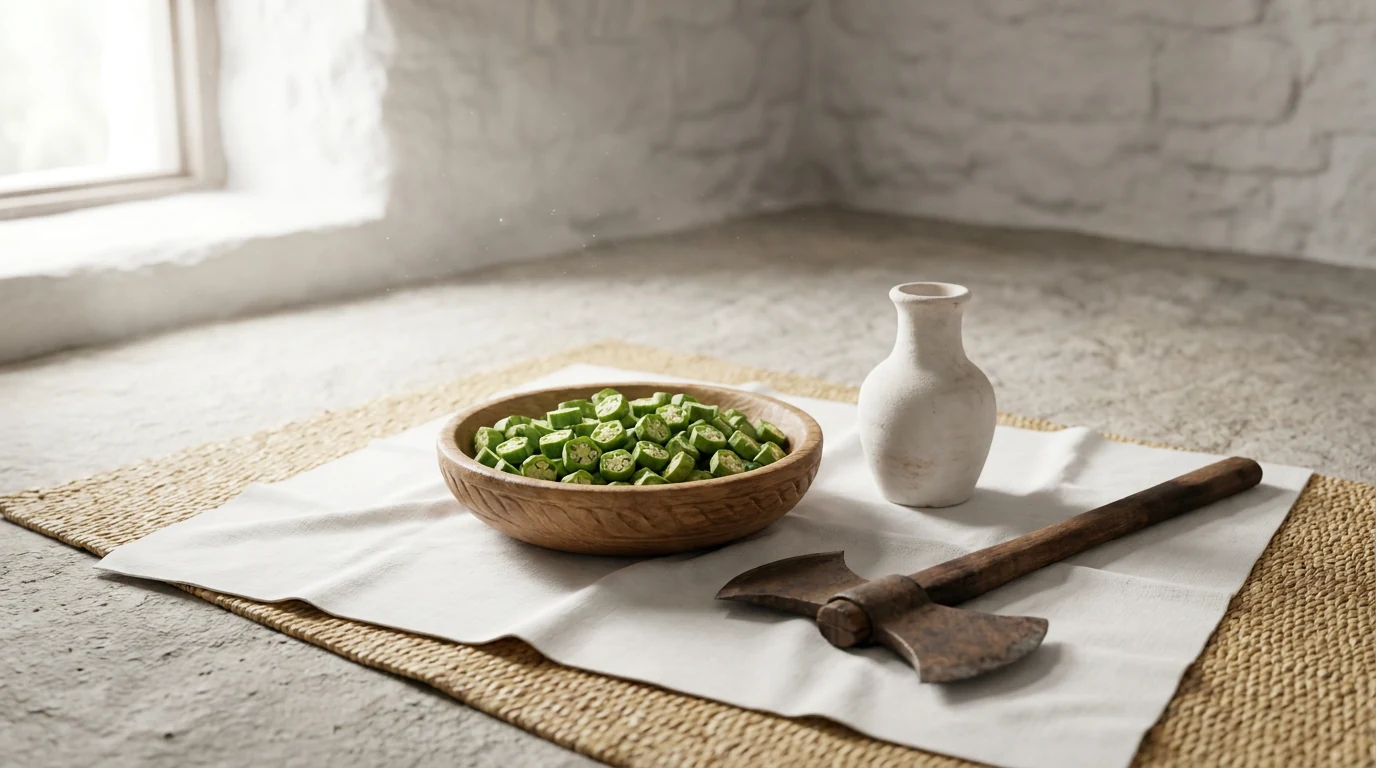
Place the stone and the bay leaf
The stone stays next to the paper, reminding of Xangô's quarry and the weight of truth. The three bay leaves go around, so that the outcome comes clean and with victory for whoever is right.
- 4
Light it greeting the two fathers
Pass the candle through your hands, place it firmly over the paper, and light it with a match. Say Kaô Kabecilê for Xangô and Epa Babá for Oxalá, say the prayer, and stay in silence for a few minutes.
- 5
Finish without haste and without blowing
Let it burn until the end; if it goes out, smother it with a saucer and relight it upon returning. Afterwards, the paper and wax will be wrapped for the trash, the stone returns to the earth, and the cloth is washed separately.
Precautions before lighting
- The 7-day candle stays lit for days: use a ceramic plate, keep it away from curtains, paper, children, and animals, and do not leave it burning in a locked room.
- This candle requests justice for all parties. Do not write anyone's name to harm, imprison, or punish: the request made with hatred does not match Xangô nor Oxalá.
- The candle accompanies the cause, but it does not replace a lawyer, mediator, document, or deadline. Take care of the practical side with the same attention as the prayer.
- Consecrating Xangô or Oxalá with an assentamento, ebó, or obrigação is a matter for the zelador of your terreiro. The home candle is a personal devotion.
Ceromancy
What the flame of the Brown and White Candle shows
Traditional terreiro reading. Before interpreting, check if there is no wind, crooked wick, or poor quality candle.
- Good sign
High and serene flame, without crackling
Many houses read this as a cause moving forward in peace: the scales are being balanced and the conversation between the parties tends to become easier in the coming days.
- Good sign
White wax descending cleanly
When the white part melts equally over the brown, the common reading is of spirits calming down and a solution coming through agreement, without needing more fighting.
- Attention
Agitated and noisy flame
It may indicate that the dispute is still hot, including within the one who lit it. Avoid discussing the cause for a few days, pray again, and seek to speak calmly.
- Attention
Dark smoke rising from the wick
Some readings speak of old resentment weighing on the case. A herbal bath and a second candle are worthwhile; if the sign persists, seek guidance in a trusted terreiro.
- Observe
Candle that goes out before its time
First check the wind, wick, and quality of the candle. If everything is correct, relight with a new match and repeat the request with the same words, without anxiety.
Ritual bath and smoke cleansing (defumação)
Herbs that combine with the Brown and White Candle
-

bay leaf
Laurus nobilis
Leaf that serves Xangô and Oxalá. Three leaves around the plate request the victory of truth, and a weak bay leaf tea in the ritual bath leaves the body ready for the ritual.
See the herb -

Tapete de Oxalá (Indian borage) / Boldo-Baiano
Alternanthera brasiliana
Oxalá's boldo cools the head. A ritual bath with the macerated leaves before lighting helps to enter a difficult conversation without taking the anger along.
See the herb -

Stonebreaker
Phyllanthus niruri
Linked to Xangô in Umbanda terreiros, in a ritual bath from the neck down. It gives steadiness to sustain what is right when negotiating or testifying, without losing composure.
See the herb
Virtual Candle
Light the Brown and White Candle now
Choose the type, write your request, and pay by PIX. The flame stays on the altar and you follow along through the link.
Place on the altarFrequently asked questions
Questions about the Brown and White Candle
What is the brown and white candle for?
It serves to request justice with peace. It unites Xangô, who judges, and Oxalá, who calms, and therefore it is lit for inheritance, sharing, divorce, dissolved partnership, and any cause in which you want a correct outcome without destroying the relationship with the other side.
What is the difference between the brown candle and the brown and white candle?
The brown is pure Xangô: firmeza, justice, and secure ground. The brown and white adds Oxalá, and the prayer request begins to include calm, forgiveness, and agreement. If the cause is against a stranger, the brown is enough; if it involves family or loved ones, the bicolor is usually the choice.
What is the best day to light the brown and white candle?
Wednesday, the day of Xangô, is the most used. Some houses prefer Friday, of Oxalá, when the focus is reconciliation. If there is a hearing or meeting scheduled, light the 7 day candle a few days before so that it is burning at the moment.
Can I blow out the brown and white candle and light it later?
You can smother it, but do not blow. The ideal is to let the flame go until the end, but if you need to leave, cover it with a saucer or a spoon and relight it when you return, resuming the prayer request. Blowing is understood as undoing the prayer with your own breath.
What should I do with the stone, the paper, and the leftover wax?
The paper and wax go into the common trash, wrapped. The stone can return to a garden, a pot, or a riverbank, as a return to nature. The white cloth is washed separately from other clothes and can be used again in a next firmeza.
Can I light a brown and white candle at home without being from a terreiro?
Yes. It is a devotion candle and anyone can light it with respect, asking for justice and peace for everyone. What is not done at home is to set up an assentamento for Xangô or perform an obrigação: that requires a terreiro leader and a house of axé.
Is the brown and white candle for Xangô Ayrá?
It is not a rule. Ayrá, the Xangô who wears white in Candomblé Ketu, helps to understand why Xangô and white go together, but the brown and white candle is a custom of Umbanda. Those who are of Ayrá should follow what the house itself teaches about color and offering.