Try searching for keywords such as the name of an orixá (Ogum, Oxum), an herb (Arruda, Alecrim), or a tradition (Umbanda).
↑↓Navigate↵AccessESCClose
0 found
Candle of Saint Rita of Cascia
Faith in impossible causes, peace in marriage, and the rose of Saint Rita of Cascia
Candle of Saint Rita of Cascia
7-day candle · stays lit for 7 days7 dias
Faith and intention
What is the meaning of lighting a virtual candle?
Whoever lights a candle never lights just wax and wick. They light a prayer request. The flame is the visible sign of something happening inside: the person stops, thinks of those they love, of what they need, of what they want to thank for, and delivers that to the sacred. That is why, in terreiros and in churches, it is said that what matters is the intention.
With the virtual candle, it is the same thing. You choose the candle carefully, write your prayer request in your own words, make your offering, and light it. Each step is a gesture of faith, and faith does not depend on the material of the candle. It is in you, at the moment you decide to light it and trust.
The candle stays lit on the altar for the time you chose, and you can return to look at the flame, pray again, and renew the prayer request. For those who live far away, cannot have fire at home, or need support in the rush of the day, it is a way to keep the flame of devotion burning.
edit_noteStep 1: Write the prayer request in your own words
volunteer_activismStep 2: Make your offering
local_fire_departmentStep 3: Light with faith and trust
The Saint Rita candle is for those who heard there is no way out and still want to pray. Rita of Cascia is called the saint of impossible causes, and in Brazil, devotion to her is enormous: there is a parish with her name in almost every city, a giant statue in Santa Cruz, in Rio Grande do Norte, and a line of people with a rose in hand every May 22.
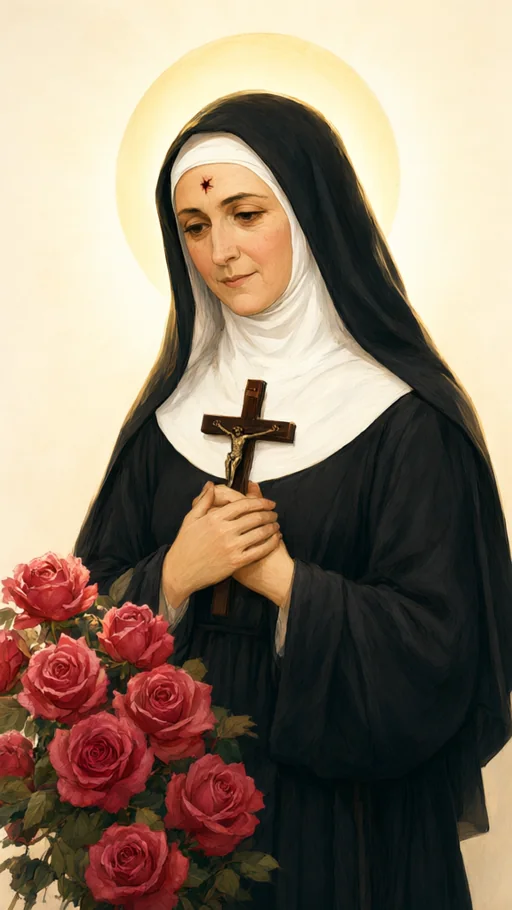
Rita was born in Roccaporena, near Cascia, in Italy, at the end of the 14th century. She married young to a violent man, became a widow when he was murdered, lost her two children, and only later entered the convent of the Augustinians of Cascia. Tradition says that a thorn from the crown of Christ wounded her forehead, and that in winter, already in bed, she asked for a rose from the garden of the old house. The rose was there, open in the cold. She died on May 22, 1457, and was canonized in 1900.
At home, this candle accompanies the difficult conversation, the couples therapy, the wait for the son's return, and the reconciliation in the family. It does not change anyone's will. It asks for patience, forgiveness, and strength for you to do your part. Those who have a terreiro also light Saint Rita, and every house knows where she fits in.
What is it for
What is the Santa Rita de Cássia candle for
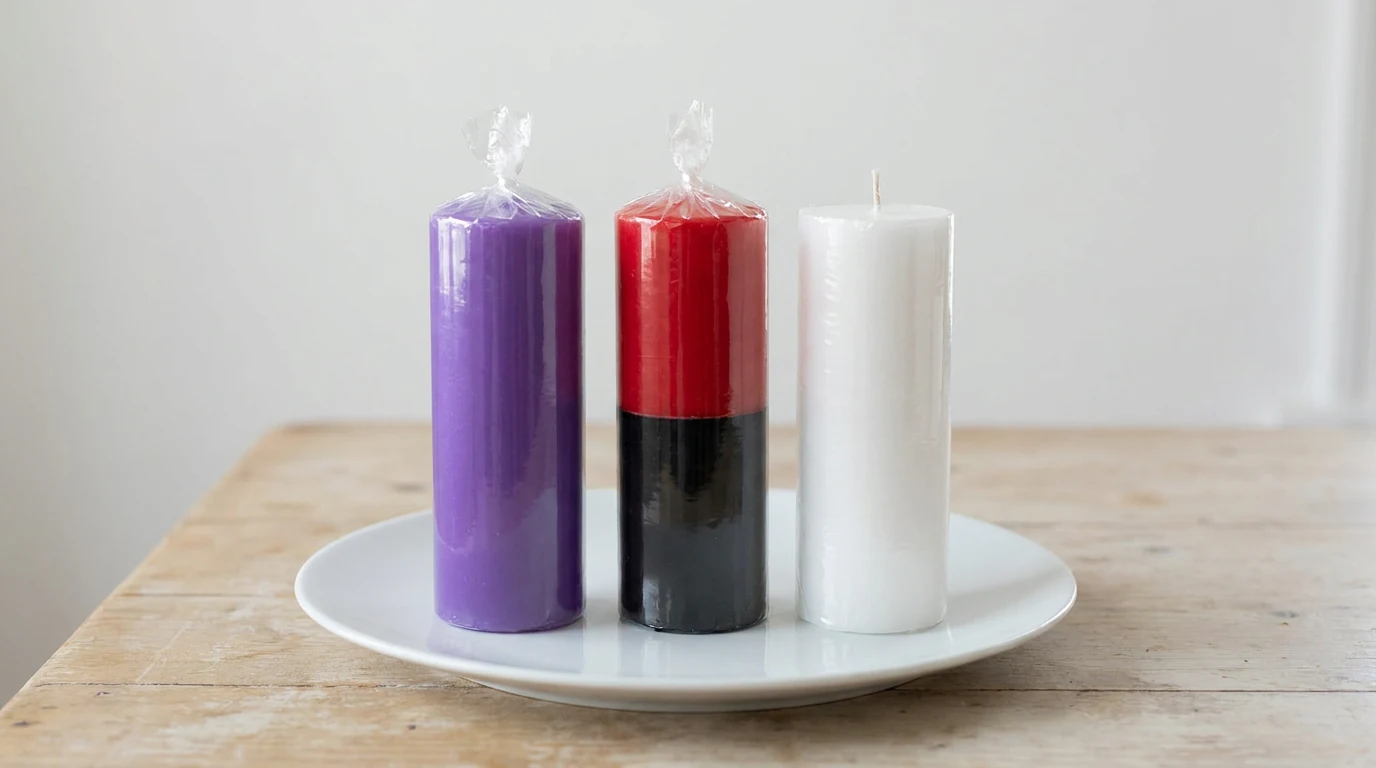
The Santa Rita de Cássia candle is white, like those of most saints in Brazil. It is lit for causes that seem impossible, for a marriage in crisis, for a family living in conflict, for a child who is lost, and to give thanks on May 22.
key01
Ask for a cause that seems impossible
When others have already given up, the Santa Rita candle asks for faith to continue. State clearly what the cause is and what you can still do for it.
handshake02
Peace in a marriage in crisis
Rita lived for years in a hard marriage and did not lose her faith. Light it asking for calmness to talk, humility from both sides, and help to find the right path.
family_restroom03
Reconcile the family
A brother who does not speak to his brother, a father fighting with a son, an inheritance that turned into a war. The candle asks for the first step of forgiveness, without forcing anyone to do anything.
child_care04
Pray for the child who is lost
Many mothers light it for Santa Rita for a child in addiction, on the street, or far from home. She lost both her children and understands this pain. Ask for protection and a path back.
celebration05
Give thanks on May 22
On the saint's day, parishes bless roses. Whoever received a grace takes a flower, lights the thank you candle, and tells others that it was worth having faith.
To whom it is dedicated
Devotion to Saint Rita
Saint Rita of Cascia
The saint of impossible causes
Wife, mother, widow, and Augustinian nun in 15th century Italy. She endured her husband's violence and the loss of her children without letting go of her faith. She appears in a black habit, with a thorn on her forehead, the crucifix, and the roses.
Also lit by
Devotees of Saint Rita
Mothers who pray for their children
Brotherhoods of Saint Rita
auto_stories
Prayer to light
Candle prayer of Saint Rita of Cascia for the impossible cause
“Saint Rita of Cascia, woman who knew the house at war, the mourning of a wife, and the longing of a mother, I come to you with a heavy heart. You know what it is to pray for years for something and see no answer. I light this white light and place in your hands the cause that takes away my sleep. Teach me to wait without hardening, to forgive without erasing myself, and to do my part without wanting to control anyone's life. Just as the rose bloomed in the winter of your garden, may something good bloom where today I only see cold. And if the answer is different, give me the peace to accept it. Long live Saint Rita! Amen.”
How to consecrate the Candle of Saint Rita of Cascia
1
Choose the corner of devotion
A firm small table or shelf, away from curtains and drafts. Clean the place and place the image of the saint. If you are praying for a marriage, it can be in the couple's bedroom.
2
Place the rose next to it
The rose is the sign of Saint Rita. Leave it in a glass with water near the candle. If it was blessed in a church, even better. Change the water every two days.
3
State the cause with sincerity
Speak in a low voice what the prayer request is and what you have already tried. If it is for another person, say her name and ask for her well-being, never that she does what you want.
4
Light and pray the prayer
Light it with a match and offer the candle to Saint Rita. Pray the prayer on this page and, if you wish, an Our Father and a Hail Mary. Many devotees do this for fifteen consecutive days.
5
Let it finish and keep the rose
Do not blow: cover it with a lid if you need to leave. The leftover wax will be wrapped for the trash. The rose, when dry, can be kept as a memento or returned to the earth.
health_and_safety
Precautions before lighting
errorA 7-day candle stays lit for many hours: leave it on ceramic or glass, away from curtains, paper, and out of reach of children and pets.
errorIf there is violence at home, the candle is not enough. Seek help: call 180 or 190. Praying for a marriage is never a reason to stay in danger.
errorIn addiction or in a child's illness, faith accompanies and does not replace the doctor, the treatment, and the support groups. Ask for help from those who know how to care.
errorSaint Rita is a Catholic devotion and does not have a fixed orixá (orisha). If you are from a terreiro and want to know if your house firms the saint, the zelador is the one who provides guidance.
Ceromancy
What the flame of the Saint Rita of Cascia candle shows
Traditional terreiro reading. Before interpreting, check if there is no wind, crooked wick, or poor quality candle.
local_fire_departmentGood sign
High, calm, and golden flame
Many devotees read it as a prayer request accepted. It is the message to proceed with patience, without giving up on the conversation or the prayer.
local_fire_departmentObserve
Crackling flame that releases sparks
It could be moisture in the wick. Some read it as a cause that will still move. Trim the tip, close the window, and continue the prayer calmly.
local_fire_departmentAttention
Small flame that struggles to rise
Some houses read it as resentment kept by the one who asks. Before lighting it again, think if there is someone you need to forgive or talk to.
local_fire_departmentAttention
Wax dripping from one side only
Almost always it is wind or a crooked candle. Some read it as effort coming from only one side. Adjust the candle and reflect if the prayer request is balanced.
local_fire_departmentGood sign
Clean cup at the end of the candle
The candle that burns completely is usually read as an accepted surrender. Give thanks and return on the next 22nd to renew your faith or share the grace.
Ritual bath and smoke cleansing (defumação)
Herbs that combine with the Saint Rita of Cascia candle
What is the Saint Rita of Cascia candle for?expand_more
It serves to ask for faith and strength in causes that seem impossible, peace in marriage, reconciliation in the family, and protection for a lost child. It is a popular Catholic devotion, also lit to give thanks for grace on May 22.
What is Saint Rita's day and when to light the candle?expand_more
Her day is May 22, the date of her death in Cascia, in 1457. Many devotees also pray on the 22nd of each month, and some perform the Saint Rita fortnight, fifteen days of prayer before the feast. There is no fixed day of the week.
Why is Saint Rita the saint of impossible causes?expand_more
Because of the life she led and the miracles told afterward. She was accepted into the convent after being refused, received the thorn on her forehead, and asked for a rose in the middle of winter. In Spain she won the title of saint of the impossible, and the fame reached Brazil.
Why does Saint Rita appear with roses and a thorn on her forehead?expand_more
The rose comes from the request she made in winter, already ill: her cousin went to the garden and found an open rose. The thorn is the wound she carried for years on her forehead, lived as a union with the suffering of Christ. For this reason, May 22 is the day of the blessing of the roses.
What is the difference between the Saint Rita candle and the Saint Jude Thaddeus candle?expand_more
Both are sought in times of hardship. Saint Rita is more remembered in domestic pains: marriage, children, a divided family. Saint Jude Thaddeus is prayed for difficult causes of work, debt, and Justice. Many people pray to both together.
Can I blow out the candle of Saint Rita and light it again?expand_more
You can, when you need to leave or sleep safely. Do not blow: smother the flame with a lid or a saucer and light it again later, resuming the prayer. At the end, the remaining wax will be wrapped in paper for the common trash.
Can I light the candle of Saint Rita for another person?expand_more
You can. It is very common for a mother to light it for her child or a wife for the marriage. Say the person's name and ask for their well-being. What is not done is asking to double someone's will: Saint Rita is a candle of peace, not of control.
Does a virtual candle have the same value as a wax candle?expand_more
What gives strength to the candle is the intention of the one who lights it. In wax or on a screen, you set aside a moment, think of your prayer request, deliver your offering, and light it with faith. The flame is the sign; the faith is yours and goes along with it. When the situation calls for firmeza in the terreiro, the virtual candle does not replace the zelador, but as a prayer and a prayer request, it is worth just as much as a candle lit at home.
Yellow for Oxum (Oshun), white for Iemanjá (Yemoja), red for Pombagira. The rose is the most versatile flower of the Afro-Brazilian herbarium. See how to use each color.
Promise to a saint: understand what the Church actually teaches, the traditional ways to pay, and the path provided for those who could not fulfill what they promised.
Does the 7-day candle need to have the plastic removed? Joice shows how to light it the right way, where to leave it, why it goes out by itself, and if it can be lit in the bedroom.