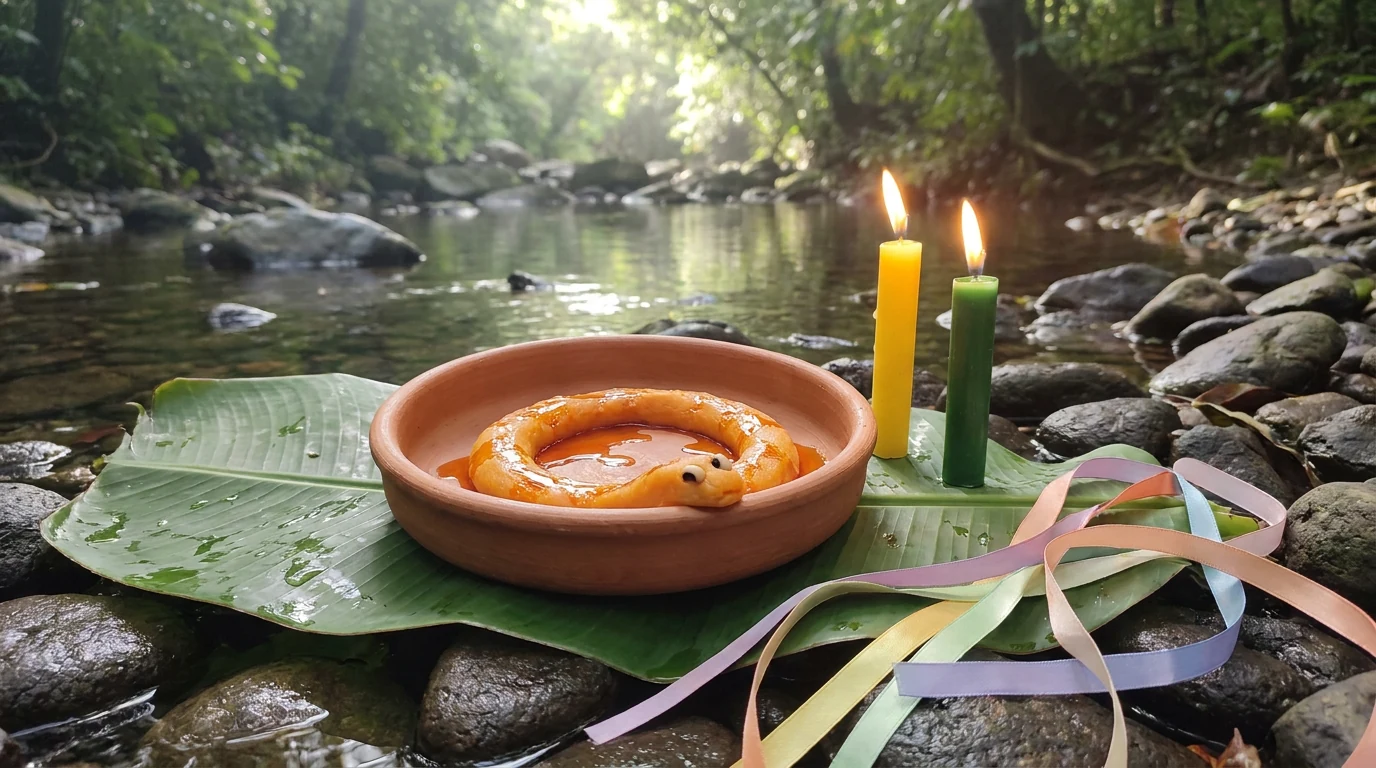
The offering for Oxumaré begins with sweet potato, cooked and mashed, which sociologist Reginaldo Prandi records as the favorite food of the orixá in Ketu Candomblé. In many houses, this mass takes the shape of a snake.
What changes from one house to another is the rest: what accompanies the dish, the day, the quizilas, and the place of delivery. Below is what goes in the alguidar, why the dish has the shape of a serpent, and how Umbanda prepares the agrado.
What to take for Oxumaré
The sweet potato appears in different houses and traditions. Prandi notes it in the Ketu Candomblé table. A terreiro of Ketu and Angola nation in Bocaiuva, Minas Gerais, studied by researcher Fábio da Silva Gonçalves, records sweet potato and white canjica as foods of Oxumaré. The FUCESP federation, from São Paulo, also lists sweet potato.
Colors: yellow, green, and black, and those of the rainbow | Symbol: two intertwined metal snakes | Greeting: Arroboboi
To prepare the dish at home, the shopping list is as follows:
- Sweet potato, cooked, peeled, and mashed, the base of the dish.
- Dendê oil, to drizzle over the dough.
- Feijão-fradinho, which in some houses marks the eyes of the serpent.
- Plantain fried in dendê, the oguedé, cited in a gastronomy study about the orixá.
- Banana leaf and clay alguidar to serve.
No source mentions the candle color for Oxumaré. Anyone who wants to light one can choose between his colors, yellow or green. The complete profile of the orixá is in who is Oxumaré.
Why the dish is shaped like a snake
Oxumaré presents as a serpent that bites its own tail and forms a closed circle. The researcher Vinícius Vasconcelos Castro summarizes this image, based on Pierre Verger, in the UFPB Diversidade Religiosa magazine.
The snake links Oxumaré to the jeje cult. Prandi records as correspondents the vodun Dã, called Bessém in jeje, and the inquice Angorô, from the angola nation. The entry about the vodun Dã describes it as a rainbow serpent. These are correspondences between nations, and each maintains its own cult.
That is why the dough turns into a snake. A gastronomy study from Recife cites the Serpent of Oxumaré among the ritual foods of the orixá. The house Àsé Dan Fè Èrò describes two serpents in a circle, with the tail of one meeting the head of the other and eyes made of feijão-fradinho.
The foundation food of the orixá is made by the house, by those who have the knowledge of it. The dish you prepare at home is an offering and a thank you.
The snake is a sacred animal in this cult. In the offering, it appears only in the form of the food.

In Candomblé and Umbanda: what changes
In Candomblé, each nation has its own rule. Besides sweet potato, Castro mentions foods of beans, corn, and shrimp cooked in dendê. The ketu and angola terreiro of Bocaiuva includes white canjica.
In Salvador is the Casa de Oxumaré, a jeje-nagô terreiro whose festival of the orixá takes place on the third Saturday of August. IPHAN approved the definitive heritage listing of the house, which is located in Federação.
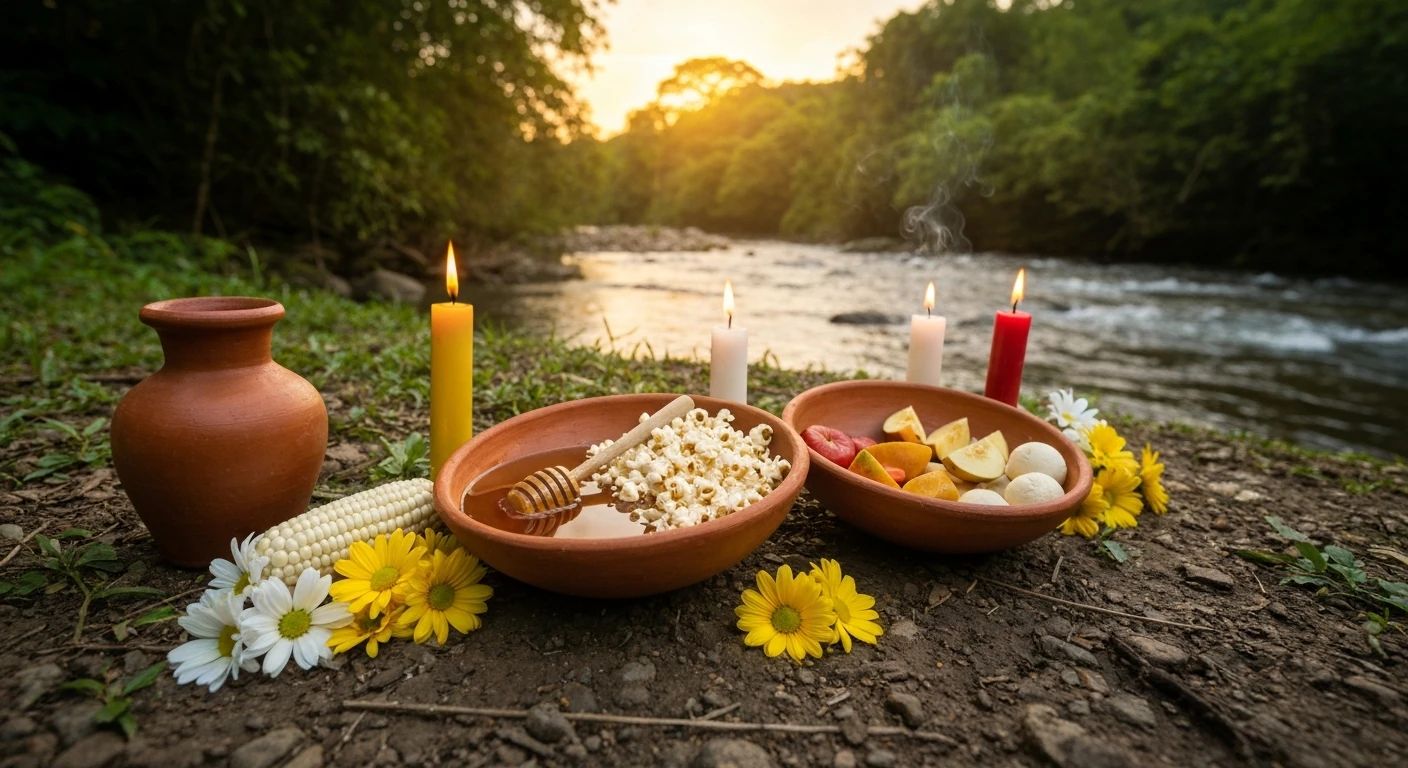
In Umbanda, the offering is usually more colorful. The Núcleo de Umbanda Águas de Oxum (Oshun) lists for Oxumaré alguidar, melon, passion fruit, sweet potato, rosé champagne, peanuts, waterfall water, and ribbons in the colors of the rainbow. FUCESP asks for flowers of all colors together.
| Tradition | What goes | Source |
|---|---|---|
| Candomblé queto | cooked and mashed sweet potato | Prandi |
| Candomblé ketu and angola (MG) | sweet potato and white canjica | Gonçalves |
| Umbanda (one house) | fruits, sweet potato, rosé champagne, ribbons | Águas de Oxum |
In Bahia, Oxumaré is celebrated on August 24, associated with Saint Bartholomew. This correspondence is historical and is in our text about Saint Bartholomew and Oxumaré.
The day and what to avoid
Tuesday is the most cited day. The IPHAN note in Bahia, Castro's article, and Wikipedia record Tuesday. Prandi's table for candomblé ketu notes Saturday. Both days appear in the sources, and your house says which one to follow.
The same happens with quizilas. In the ketu and angola terreiro of Bocaiuva, peanuts, starfruit, blackberries, and reptiles are quizila of Oxumaré and his children. The umbanda house Águas de Oxum puts peanuts in the offering. Before assembling the plate, ask your house. The general rules for each orixá are in quizilas in candomblé.
Oxumaré has metal in the tool, the two intertwined snakes. Nanã (Nana Buruku)'s rule, which refuses metal, does not apply to him, as shown by the offering for Nanã.
Where to deliver and what comes back with you
FUCESP indicates the forest, preferably near fresh water and springs. The umbanda house Águas de Oxum points to the waterfall.
Care with the place is part of the rite:
- Replace the plate with a leaf. The House of Oxumaré already asks for a leaf instead of a plate and a gourd instead of a bottle.
- Use clay and food, which dissolve in nature.
- Bring back what does not decompose. In an umbanda terreiro studied in Minas, collecting the offered material is mandatory when possible.
- No plastic near the water.
Prandi links Oxumaré to rain and the wealth that comes from harvests. The offering is a thank you and a prayer request, and no source promises an effect from it.
Frequently asked questions
What does Oxumaré eat?
The most recorded food is boiled and mashed sweet potato, noted by Prandi in the Ketu Candomblé. A Ketu and Angola house in Minas includes white canjica, and there are records of plantain fried in dendê and of beans, corn, and shrimp in dendê.
How to make the sweet potato offering for Oxumaré?
Cook, peel, and mash the sweet potato and drizzle with dendê. Serve in a clay alguidar. Some houses mold the dough into a serpent with eyes made of black-eyed peas. The fundamento food stays with the house.
What is the day of Oxumaré?
Tuesday is the most cited day. Prandi's table for Ketu Candomblé records Saturday. Follow the day of your house.
Where to buy for the Oxumaré offering
At Joia Mística Laroyê you will find:
- Clay alguidar: in sizes for a sweet potato plate.
- Dendê oil: to drizzle over the dough.
- Yellow and green candles: in solid colors.
- Colored ribbons: in rainbow colors, for Umbanda offerings (agrado).
The shop is located in Extrema, Minas Gerais. Call us on WhatsApp and we deliver to all of Brazil.
References
- Horizontes Antropológicos (SciELO): Prandi, os deuses africanos no Brasil, 1995
- UFMG: Gonçalves, food in the terreiros of Bocaiuva, 2017
- Religious Diversity (UFPB): Castro, the rainbow serpent, 2012
- Universo Recife: study on Oxumaré in gastronomy, 2015
- IPHAN Bahia: listing note for the heritage of Ilê Axé Oxumaré, 2014
- Correio: report on the Oxumaré festival, 2019
- FUCESP: Oxumaré record
- Núcleo de Umbanda Águas de Oxum: Oxumaré page
- Àsé Dan Fè Èrò: orixá food
- Wikipedia: Oxumaré entry
- Wikipedia: entry on the vodum Dã