The mastruz is one of the best known healing herbs in Brazil, and at the same time one of the most misused. The same leaf that people take as a health tea holds a compound that demands respect and a light hand.
This guide shows what mastruz is used for in Afro-Brazilian tradition and in popular medicine, how to prepare the ritual bath, the tea, and the smoke cleansing (defumação), and the serious precautions the plant requires. No promises of miraculous cures, but rather conscious use.
What is mastruz and its names
The mastruz is the plant Dysphania ambrosioides, previously classified as Chenopodium ambrosioides. It is an annual herb with a strong and striking scent, which grows easily in backyards and vacant lots throughout the country.
It goes by many names depending on the region. The most common are:
- Erva-de-santa-maria and mentruz, the most widespread names outside of the Northeast.
- Mastruço, matruz and mentraz, variations of the same name.
- Lombrigueira and erva-formigueira, nicknames that already reveal the oldest use against worms.
The erva-de-santa-maria entry on Wikipedia reminds us that the popular name is given to more than one species, so when buying or harvesting, it is worth confirming that it is Dysphania ambrosioides, the leaf with a strong scent and bitter taste.
Mastruz in Umbanda: the healing herb of Omulu
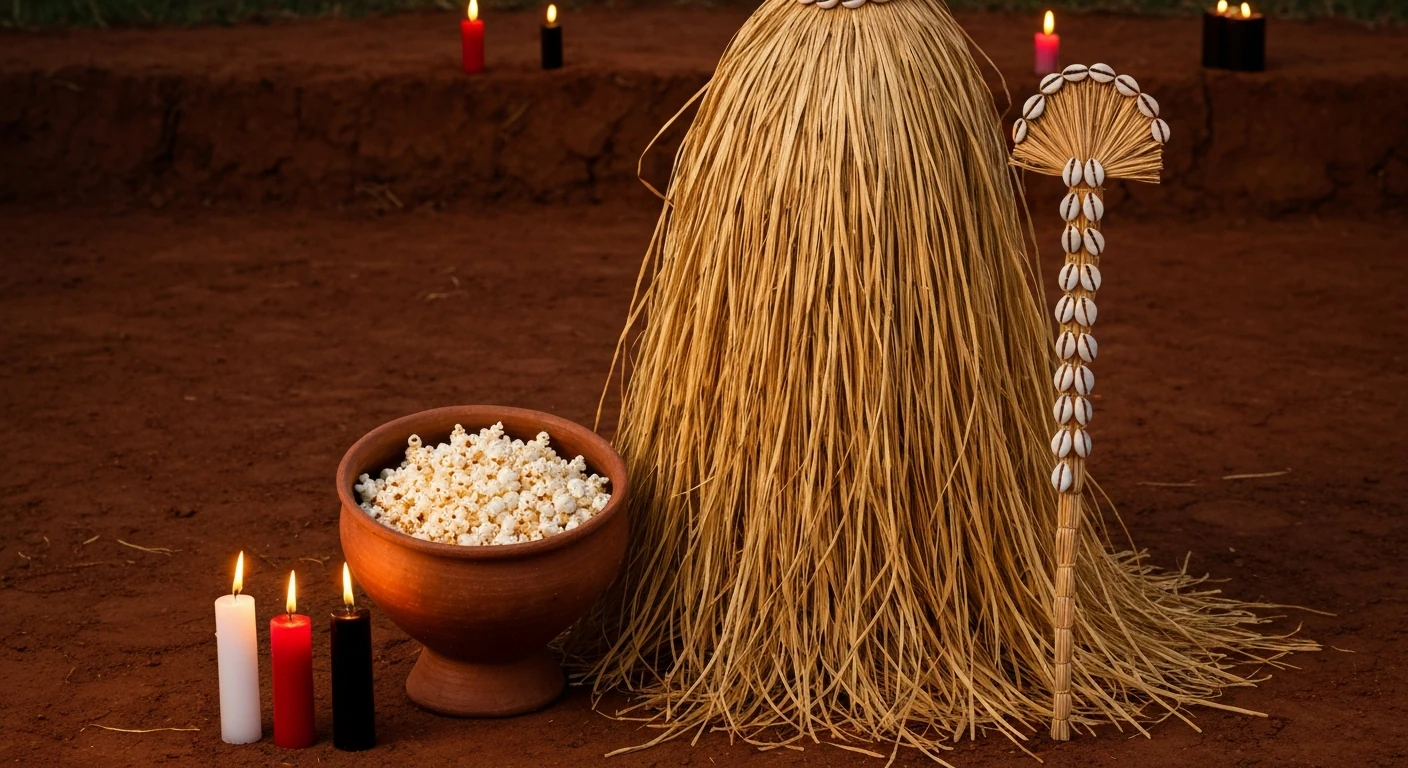
In the Afro-Brazilian tradition, mastruz is part of the healing herbarium. Therefore, there are houses that link it to Obaluaê and Omulu, the orixá of health and disease, the one who wounds and heals with the same hand. Those who wish to know the orixá before the herb can read who is Obaluaê and Omulu.
Mastruz is used in ritual baths of health and regeneration, to lift the astral of those who are sick or down, and also in the amaci, the ritual bath that firms and links the head to the spirit guide, explained in what is amaci. Its energy is of restoration, of recomposing the body and the field after a baque.
Omulu's healing is not the promise of a miracle. It is care, patience, and respect for the body's time. The herb helps to harmonize; it does not replace medicine or the doctor.
A note of honesty: the list of Omulu's herbs varies from house to house. Some include mastruz, others work with gervão, assa-peixe, or babosa. The custom of your terreiro always has the final word. August is usually the month dedicated to Obaluaê, a good time for health ritual work, as shown on the month of Obaluaê page.
What is mastruz used for in health
In popular medicine, mastruz has a long résumé, and a good part of it has already been studied. The phytotherapeutic base Fitoterapia Brasil gathers the most cited traditional uses of Dysphania ambrosioides.
- Vermifuge: is the oldest use. The compound ascaridol acts against intestinal worms, and hence comes the nickname lombrigueira.
- Healing agent: crushed leaves in a compress are used by the people to help close wounds and bruises.
- Anti-inflammatory: appears linked to the relief of joint pain, such as in cases of arthritis.
- Respiratory: the tea is traditionally used for cases of bronchitis and cough.
- Digestive: taken after heavy meals to aid digestion.
According to the Tua Saúde portal, tea is the safest form of use because it has a much lower concentration of the active principle than the essential oil. Even so, none of this replaces medical supervision. Mastruz accompanies a health treatment, it never takes its place.
How to use mastruz: ritual bath, tea, and smoke cleansing (defumação)
Mastruz appears in three main forms in the daily life of those who work with the herb.
Health ritual bath
- Boil 1 liter of water and turn off the heat as soon as it reaches a boil.
- Add a handful of fresh leaves of mastruz and cover for ten minutes.
- Strain and let it cool down. Take a common hygiene bath first.
- Pour from the neck down, never on the head, firming the intention of health and renewal.
- Do not rinse and dry yourself with a clean towel, without rubbing.
The head, the ori, has its own treatment in the amaci, done with guidance from the house. To choose the right company of other leaves, it is worth looking at the seven herbs ritual bath and the difference between hot and cold herbs.
Tea
The tea is made with one teaspoon of dried leaves for one cup of water boiled, covered for ten minutes. Take a maximum of half to one cup at a time and do not repeat for many consecutive days. Less is more with mastruz.
Smoke cleansing
Dried and burned with other herbs, the leaf enters smoke cleansings (defumação) for cleaning and health of the environment, in the same spirit as the smoke cleansing (defumação) for house cleaning.
Care and contraindications of mastruz
Here is the part that no homemade tea list should skip. Mastruz is potent precisely because it is strong, and too strong is harmful.
Attention: the ascaridol of mastruz is toxic in high doses. The essential oil of the plant can affect the liver, kidneys, and nervous system. Never use the essential oil on your own and never increase the dose thinking it will heal faster.
Keep these limits, all pointed out by phytotherapy sources:
- Pregnant and lactating women should not use. The plant can cause contractions and is contraindicated in pregnancy.
- Small children out. Sources mark a minimum age, so in doubt, do not give it to a small child.
- Those with liver, kidney, or hearing problems avoid. The toxicity of ascaridol weighs more in these cases.
- No prolonged use. A few days at a time, with intervals, never an endless daily tea.
Effects of excess include headache, nausea, vomiting and, in serious cases, liver and kidney damage. In case of any doubt, seek a doctor or pharmacist. The herb is an ally of care, not a shortcut.
Mastruz and wormwood (losna): two herbs of Omulu
The two leaves walk with Omulu, but they perform opposite ritual works, and confusing one with the other is a common mistake.
The wormwood (losna) is the herb of the cut. Bitter and severe, it purges, dries, and repels, suitable for heavy spiritual cleansing (descarrego) and breaking habits, as explained in the article about wormwood (losna). It is the firm hand of Omulu that tears away what rots.
The mastruz is the herb of restoration. After the wormwood (losna) cuts, the mastruz helps to recompose, close the wound, and lift the astral. It is the hand that heals. In a simple reading: the wormwood (losna) cleans the ground, the mastruz replants.
Frequently asked questions
What is mastruz for?
In tradition, mastruz serves as an herb of healing and regeneration linked to Obaluaê, used in health ritual baths (banhos), amaci, and smoke cleansing (defumação). In popular medicine, it is known as a dewormer, cicatrizant, and anti-inflammatory. Always as support for care, never as a substitute for a doctor.
Can mastruz be taken every day?
It is not recommended. Mastruz contains ascaridol, a compound toxic in high doses or prolonged use. The correct way is to take a little, for a few days, with intervals. Daily tea without end can overload the liver and kidneys. If in doubt, talk to a health professional.
What is the orixá of mastruz?
In many houses, mastruz is consecrated to Obaluaê and Omulu, the orixá of healing and health, due to the regeneration energy of the leaf. But the association varies from terreiro to terreiro, and some houses link it to other orixás. The custom of your house has the final word.
How to make a mastruz ritual bath (banho)?
Boil one liter of water, turn off the heat, and add a handful of fresh leaves. Cover for ten minutes, strain, and let it cool down. After a regular bath, pour from the neck down, firming the intention of health. Do not rinse and avoid the head, which has its own treatment.
Can a pregnant woman use mastruz?
No. Mastruz is contraindicated during pregnancy and breastfeeding because the plant can cause contractions and ascaridol is toxic. Pregnant women seeking a welcoming ritual bath should look for cool and mild herbs, always with guidance from the house and the doctor monitoring the pregnancy.
Where to buy mastruz and Omulu herbs
At Joia Mística Laroyê, you can find fresh and dry herbs for ritual bath, tea, and smoke cleansing:
- Mastruz and health herbs: leaves for ritual bath and Omulu smoke cleansing
- Losna and spiritual cleansing herbs: for deep cleansing before restoration
- Seven herbs ritual bath combos: ready, separated by purpose
- White candles of Omulu and Oxalá (Obatala): to set the intention of healing
- Incense burners and charcoal: for the health smoke cleansing of the environment
Visit our shop in Extrema, Minas Gerais or buy via WhatsApp with delivery to all of Brazil. Also check out our complete line of herbs.
References
- Fitoterapia Brasil: medicinal plant sheet for Dysphania ambrosioides, with uses and toxicity
- Tua Saúde: article about what mastruz is for, preparation, and contraindications
- Wikipedia: herb entry for erva-de-santa-maria, with the species Dysphania ambrosioides