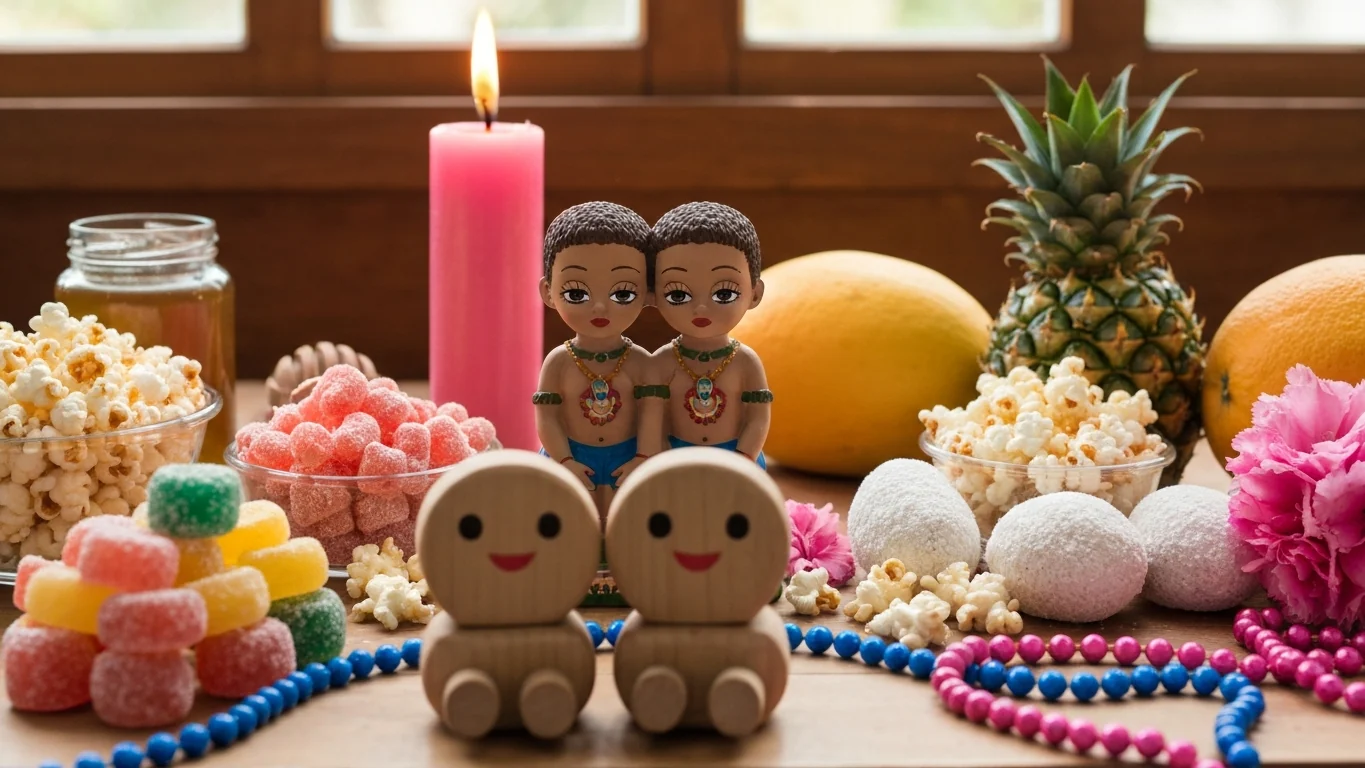
Pink and White Candle
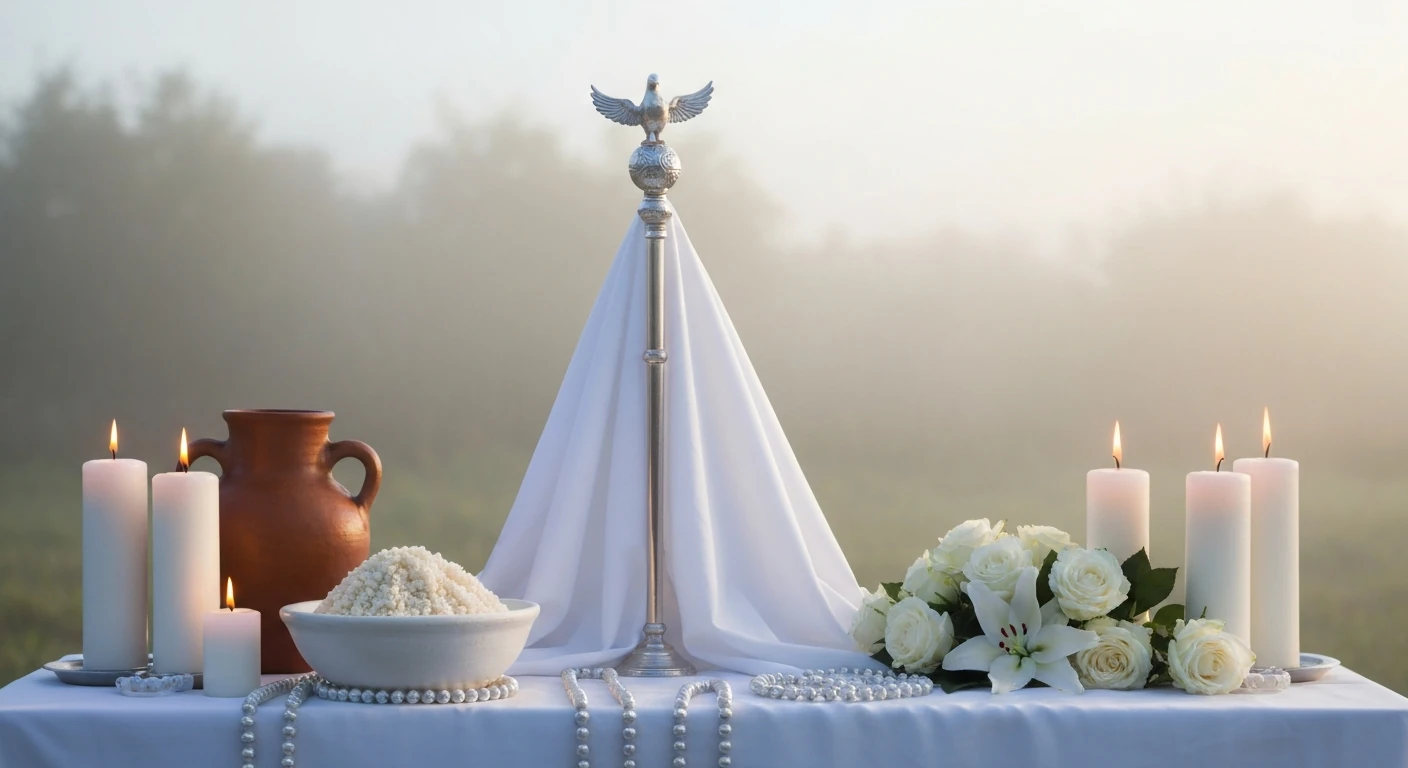
Blessing of children with Ibeji and the Erês, under the white mantle of Oxalá (Obatala)
Pink and White Candle
7-day candle · stays lit for 7 days7 dias
The pink and white candle is the choice of those who want to care for a child with faith: the baby who just arrived, the son who walks scared at night, the nephew who will be introduced to the family. It appears in the Ibejada giras of Umbanda, on the altars of Cosme and Damião, and in houses that never frequented a terreiro, always linked to protection, innocence, and selfless affection.
Each color carries a foundation. Pink belongs to the Children: Ibeji, the sacred twins, and the erês, who descend in the gira with laughter and sweetness. White is of Oxalá, the oldest orixá (orisha) of creation, to whom one asks for the head of each child. Together, the two halves ask that the joy of the little ones be guarded by the calm of the Pai Maior. Sunday is usually the day of the Children and Friday the day of Oxalá, and each house marks its preference.
Think of it as a blessing candle, not for fighting. It is not for cutting or for demanda, and it also does not take the place of the pediatrician, the baptism of your religion, or the conversation with those you love. What it does is to anchor a clean request, from someone who wishes someone well without expecting anything in return.
What is it for
What is the Pink and White Candle for
Half pink, half white: the sweetness of the erês and Ibeji meets the peace of Oxalá on the same wick. It is the candle requested to bless babies and children, to free the little ones from quebranto, to calm old hurts, and to ask for sincere affection.
-
Bless the newborn baby
During the first days at home, many families light the pink and white candle near the room, never inside the crib, asking that the Crianças and Oxalá care for the sleep and health of the newborn.
-
Remove quebranto and the evil eye from the child
When the little one becomes fussy, without hunger or rest after many visits, the candle enters along with the usual prayer and folk blessing (benzimento). If there is a fever or symptom, the first step is the doctor.
-
Calm hurts that come from childhood
For the adult who still carries abandonment, rejection, or a difficult childhood. The flame accompanies the prayer and helps to look at this history with more tenderness, without replacing the accompaniment of a therapist.
-
Sincere love, without second intentions
It is not a candle for conquest or for binding anyone. It serves for those who ask that the next people who arrive come with a clean heart, and for the couple who wants to regain trust.
-
Believe in people again
After betrayal, a blow, or disappointment with a friend, distrust of everyone remains. The white of Oxalá and the laughter of the Crianças remind us that there are still good people nearby.
Who rules this candle
Orixás and spirits of the Pink and White Candle
-
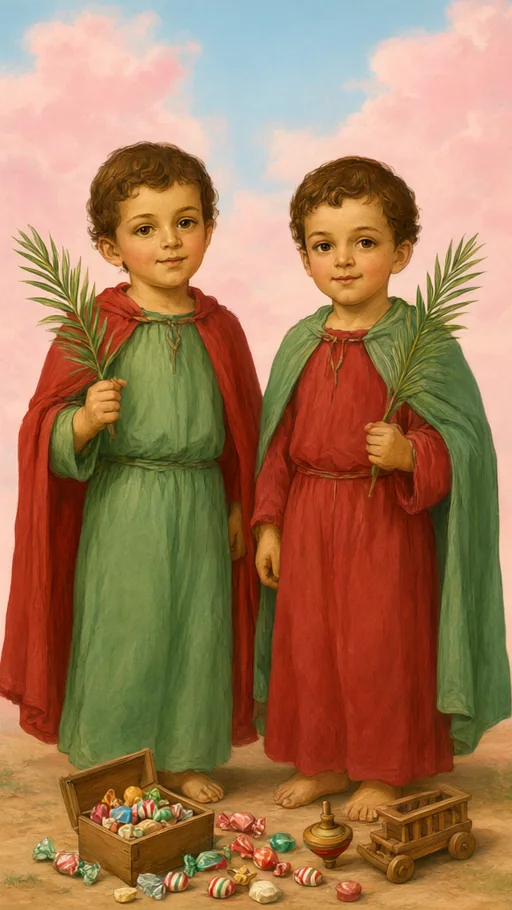
Ibeji and the erês
The sacred twins and the Ibejada
Pink is one of the colors most given to the Children, along with light blue. Ibeji guards the twins and the little ones, and the Erês bless quebranto and undo sadness while playing. The saints Cosme and Damião, on September 27, are their syncretism.
-

Oxalá
The Pai who guards the ori of the little ones
The white half is of Oxalá, lord of peace. Whoever prays for the child also prays for their head, the ori, and it is Oxalá who is sought when one wants judgment, calm, and health for those who are still growing. Friday is his day.
Know Oxalá
Also settled for
- Erês (Children Line)
- Cosme and Damião
- Doum
- Guardian Angel prayer
Prayer to light
Prayer of the pink and white candle to Ibeji and Oxalá
“Dear Ibejada, boys and girls of Aruanda, I light this pink and white light thinking of those who are small in this house. Watch over the sleep, the steps, and the scares of each child I love, and take away from them the evil eye and fear. Teach me also to laugh again, to trust without distrusting everything, and to like people without wanting anything in return. Pai Oxalá, who gave shape to our head with your hands, stretch your white cloth over this family. May innocence not be taken from those who still have it and may it return to those who lost it along the path. May this flame rise gently and carry my prayer request in the best way. Bejirô! Epa Babá!”Light the candle and pray
Step by step
How to consecrate the Pink and White Candle
- 1
Prepare a clear and safe place
A dresser or shelf out of reach of children, lined with a light cloth. If the candle is for a baby, leave it in the next room, never near the crib or the mosquito net.
- 2
Say the name of the person to be blessed
Hold the candle by the white half and say the full name of the child or the person for whom you pray. If it is for yourself, say your name and the age you were when the hurt began.
- 3
Set up the saucer with the fresh water
Place the candle on the saucer, the glass of sweetened water next to it, and the sweet nearby. The water with sugar calls the Erês; the white of the cloth and the saucer is the part of Oxalá in the prayer request.
- 4
Light and pray without haste
Light it with a match, greet the Crianças and the Pai and say the prayer. Then talk to them in your own way, simply as if speaking to a child, without demanding a deadline or result.
- 5
Close the ritual with sharing
Do not blow it out: smother it with a saucer if you need to leave and relight it upon your return. At the end, give the sweet to a child or leave it in a garden, pour the water on the ground and wrap the wax in paper.
Precautions before lighting
- A lit candle and a small child should not be in the same room without an adult watching. Use ceramic saucers, away from curtains, cribs, mosquito nets, and toys.
- Quebranto, crying, and lack of appetite can be signs of illness. The candle and the folk blessing (benzimento) accompany, but the one who examines the child is the pediatrician.
- Heavy childhood resentment deserves real care: the candle adds to it, and does not replace the accompaniment of a psychologist or a doctor.
- Terreiro baptism, Erê gira, and the obrigação of Ibeji or Oxalá are matters for the leader of your house. The candle at home does not play that role.
Ceromancy
What the flame of the Pink and White Candle shows
Traditional terreiro reading. Before interpreting, check if there is no wind, crooked wick, or poor quality candle.
- Good sign
Clear, straight flame without smoke
It is the most common reading of an accepted blessing. The clean burn shows that the request came from a peaceful heart and that the environment is ready for protection.
- Good sign
Flame that plays and spins
In an Erê candle, many houses see the light movement, without nervous popping, like the Children arriving to play. Continue praying with joy.
- Observe
Change of rhythm when changing color
The two-color candle burns one half and then the other. Some read the passage as the request moving from the Erês to Oxalá. Calmer or stronger, it is part of the burn.
- Attention
Black soot on the saucer or on the glass
Some houses read it as the weight of envy or quebranto being burned. Repeat the candle next Sunday and, if the child continues weak, take them to a doctor and to a terreiro.
- Attention
Wax running only to one side
First check the wind and if the plate is level. If not, some read it as one side of the family needing more care. Pray for that part as well.
Ritual bath and smoke cleansing (defumação)
Herbs that combine with the Pink and White Candle
-

chamomile
Matricaria chamomilla
Herb of Oxalá and of Ibeji. A warm tea left to cool becomes a ritual bath from the neck down, before the prayer, for whoever will make a request for the child.
See the herb -

White Rose
Rosa alba
White rose petals scattered around the plate unite the two colors of the candle: the affection of the rose and the peace of the white in the same offering.
See the herb -

Lavender (alfazema)
Lavandula angustifolia
A few drops of lavender water on the cloth lining the place perfume the firmeza and accompany the request for calm sleep for the little ones.
See the herb
Virtual Candle
Light the Pink and White Candle now
Choose the type, write your request, and pay by PIX. The flame stays on the altar and you follow along through the link.
Place on the altarFrequently asked questions
Questions about the Pink and White Candle
Which orixá is the pink and white candle for?
It unites two forces: the pink of Ibeji and of the Erês, the Children, and the white of Oxalá. Therefore, it is lit when the request involves a child, innocence, and protection at the same time. The colors of the Children vary from house to house: many use pink and light blue, and there are terreiros that follow another marking, so it is worth asking your zelador.
Can I light a pink and white candle to protect my baby?
You can, and this is one of the most traditional uses. Light it in a room next to the bedroom, in a high place, and always with someone at home. The candle accompanies the care for the baby, but consultation, vaccination, and a pediatrician continue to be the first care.
What is the best day to light the pink and white candle?
Sunday, which many houses dedicate to the Children, or Friday, the day of Oxalá. September 27, the feast of Cosme and Damião, is also very common. Outside of these dates, it can be lit when a baby arrives or a child needs protection.
What is the difference between the pink candle and the pink and white candle?
The pink one works on affection and reconciliation inside the home. The pink and white adds the blessing of Oxalá, and therefore leans towards child protection, purity, and healing of old hurts. For family fights, the pink; to bless someone, the bicolor.
Can I blow out the pink and white candle in the middle?
The best thing is to let it burn until the end. If you need to leave, do not blow it out: smother it with a saucer or a spoon and light it again when you return, repeating the name of the person being blessed. Never leave the house with a lit candle near a child.
What to do with the sweet, the water, and the leftover wax?
The sweet is to give to a child or leave in a garden, never to throw away. The sweetened water returns to the earth of a pot or the backyard. The leftover wax can go into the common trash, wrapped in paper, and the saucer is washed.