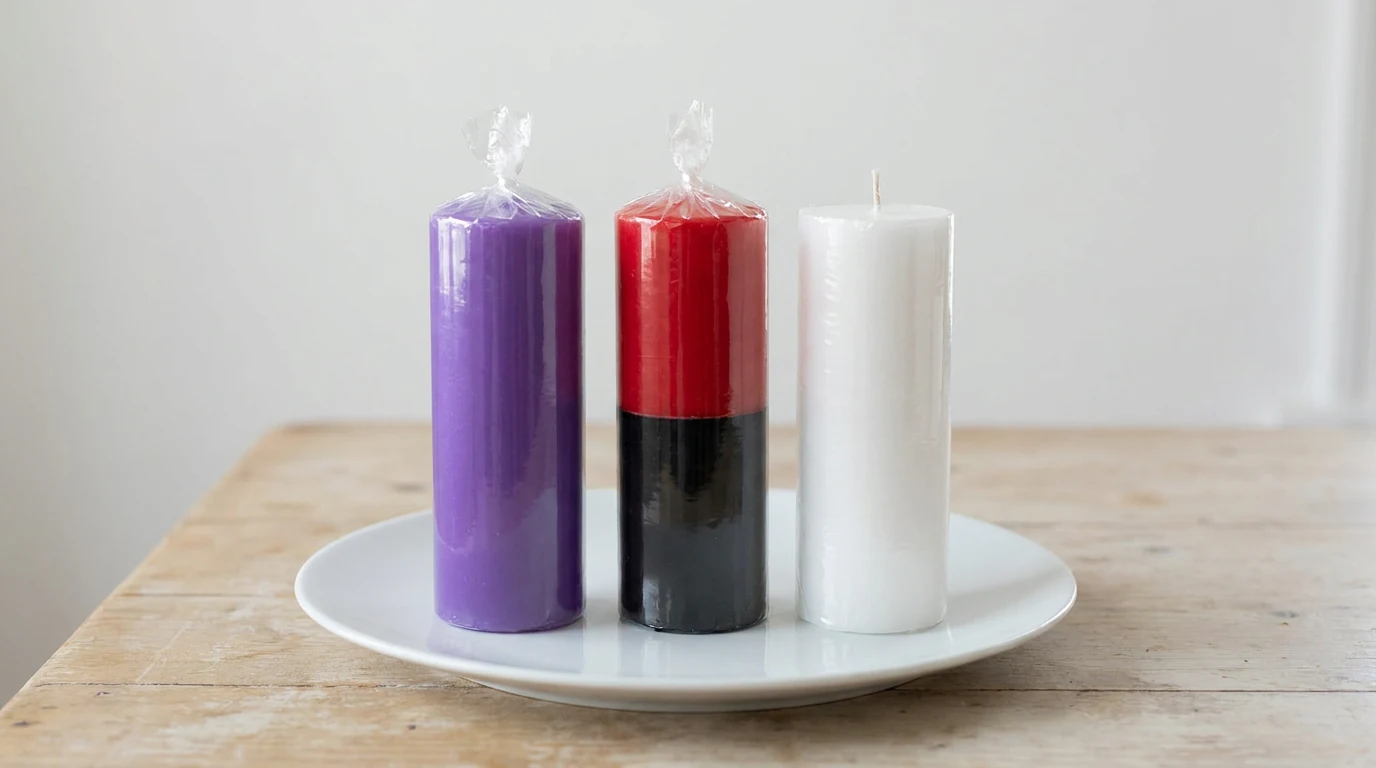
Orange and Brown Candle
Loyalty, honor in work and truth in relationships, with the strength of Obá (Oba) and Xangô (Shango)
Orange and Brown Candle
7-day candle · stays lit for 7 days7 dias
The orange and brown candle is usually taken home by those who were hurt by falsehood. A colleague who spread lies, a partner who disappeared after giving their word, a partner who promised and did not fulfill. Unlike single-color candles, it carries two requests that speak to each other: courage to defend oneself and justice so that the truth comes to light. In Umbanda, it is sought above all on Wednesdays.
Orange belongs to Obá, the warrior of the turbulent waters, whose most cited colors are red and yellow which, together, give this tone. Brown is Xangô's quarry in Umbanda, since in Candomblé ketu the king of Oyó wears red and white. The two share Wednesday and an ancient story: Obá was Xangô's wife and, in the itan of the ear, paid dearly for trusting someone who did not deserve it. Hence the candle's connection to loyalty.
It is worth being honest about the origin: the combination is more of a shop and terreiro custom than a closed foundation, and there are houses that do not even work with it. At home, it is not for punishing those who betrayed you. What it sustains is your posture: speaking the truth, demanding what was agreed upon, and not giving up your own dignity.
What is it for
What is the Orange and Brown Candle for
Half orange, half brown, this candle joins the warrior fire of Obá to the stone of Xangô. It is lit to defend the name against gossip and slander, to request loyalty in a relationship or a partnership, and to sustain those who act with truth.
-
Gossip and intrigue at work
When your name is circulating by word of mouth in the company, light the candle and ask that the lie loses its strength. Along with it, do your work well and record everything in writing.
-
Loyalty in a partnership or collaboration
For those who started a business with someone and began to have suspicions. The flame asks for transparency between the parties and courage to put the accounts and agreements on the table.
-
Fidelity and respect in the couple
Indicated for relationships that want to be grounded in sincerity. It does not bind anyone: it asks that both be loyal and that the truth appears, whatever it may be.
-
Clearing the name after a slander
If someone spread something false about you, the candle of Xangô and Obá asks that justice arrives and that the facts speak louder than the rumor. Patience is part of the request.
-
Strength to defend what is yours
For the woman and the man who are tired of bowing their heads. Obá gives the courage to take a stand, and Xangô reminds that the defense must be done with integrity.
Who rules this candle
Orixás and spirits of the Orange and Brown Candle
-
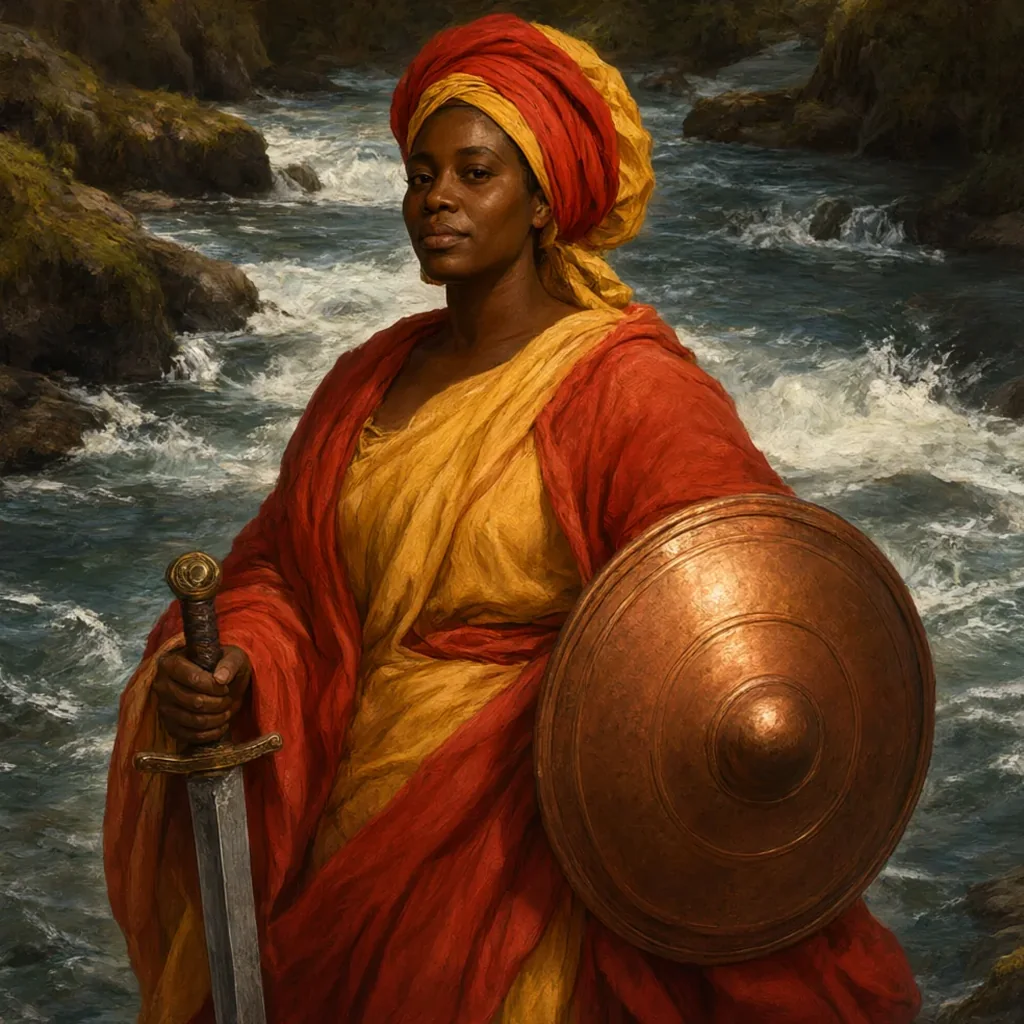
Obá
Warrior of the turbulent waters
The orange of the candle comes from the mixture of red and yellow, the most cited colors of Obá. She is the orixá (orisha) of loyalty carried to the end, of the woman who works, fights, and does not fade for anyone.
Knowing Obá -

Xangô
King of Oyó, lord of the quarry
In Umbanda, brown is the color of Xangô, linked to the stone and the scale. He shares Wednesday with Obá, who was his wife, and enters the candle as the judge who separates truth from lies.
Know Xangô
Also settled for
- Caboclos of the quarry
- Boiadeiros
- Warrior Caboclas
Prayer to light
Orange and brown candle prayer to Obá and Xangô
“Mãe Obá, warrior who does not fear the current, I light this flame asking for your courage. Teach me to stand tall when they speak of me behind my back and to respond with the truth, without losing my dignity. Pai Xangô, king of the quarry, place your scale over my life. May lies find no place and may every word given be fulfilled, mine first. Remove from me the falsehood of those who smile and betray, and give me eyes to see who walks with me with a clean heart. I do not ask for revenge, I ask for justice. May this light burn firm as rock and run strong as the river. Obá Xirê! Kaô Kabecilê!”Light the candle and pray
Step by step
How to consecrate the Orange and Brown Candle
- 1
Write what needs to come to light
On a piece of paper, write the situation in a few words: the name of the company, the society, or the relationship. Avoid writing the name of who harmed you; the focus is the truth, not the person.
- 2
Set up the base on the plate
Fold the paper, place it on the plate, and put the stone on top of it, remembering the quarry of Xangô. Scatter the bay leaves around, without touching the spot where the candle will stay.
- 3
Set the candle next to the stone
Hold the candle with both hands, think about the situation you wrote, and say the prayer request in a low voice. Settle the cup on the plate next to the stone, on a surface that does not shake.
- 4
Light them while greeting the two
Light it with a match and call Obá and Xangô by the greeting. Pray the prayer and then speak with your own words. Be honest also about the part that was your responsibility in the story.
- 5
Finish without blowing
Let the candle finish on its own. The paper can be torn and thrown in the trash, the bay leaf goes into the soil of a pot, and the stone is washed and kept, or returned to nature.
Precautions before lighting
- A 7-day candle stays lit for many days: leave it on tableware, away from curtains and loose paper, and out of reach of children and pets.
- This candle asks for truth. Do not light it to harm who betrayed you, to separate a couple, or to bend someone's will.
- Obá and Xangô have their own foundation in each house. Assentamento, obligation, or ebó are matters for the leader of your terreiro, not for the candle at home.
- When slander turns into a lawsuit, seek a lawyer as well. The candle accompanies the cause, but the defense in Court needs someone who understands the law.
Ceromancy
What the flame of the Orange and Brown Candle shows
Traditional terreiro reading. Before interpreting, check if there is no wind, crooked wick, or poor quality candle.
- Good sign
Straight and full flame
Many houses read this as a request held firmly: the truth is on your side and the protection is settled. Continue acting with the same integrity.
- Good sign
Flame that grows suddenly
It is usually read as a quick response, a sign that something hidden is about to appear. Stay attentive to conversations in the coming days.
- Attention
Crackles and sparks on the wick
It may indicate a fight or gossip surrounding the situation. Do not respond on impulse: wait for the candle to finish and choose the right time to speak.
- Attention
Cup darkened by soot
Points to a heavy load of envy or lies being burned. If it happens in several candles in a row, seek guidance in a trusted terreiro.
- Observe
Wax dripping from only one side
First check if the cup is level and away from the wind. Some houses read this as a request that is still pending on one side of the scale.
Ritual bath and smoke cleansing (defumação)
Herbs that combine with the Orange and Brown Candle
-

Stonebreaker
Phyllanthus niruri
Linked to Xangô in Umbanda terreiros, by the name that recalls the quarry. A warm ritual bath before lighting helps to settle the head and request justice calmly, without anger.
See the herb -

bay leaf
Laurus nobilis
Victory leaf linked to Xangô. The dry leaves around the plate accompany the prayer request to clear the name and overcome slander.
See the herb -

Para-Raio / Saint Barbara
Melia azedarach
Protection plant for the house of Xangô. A branch at the entrance of the house or workplace during the seven days reinforces the defense against gossip.
See the herb
Virtual Candle
Light the Orange and Brown Candle now
Choose the type, write your request, and pay by PIX. The flame stays on the altar and you follow along through the link.
Place on the altarFrequently asked questions
Questions about the Orange and Brown Candle
What is the orange and brown candle for?
It serves to request loyalty and truth: to protect the name against gossip and slander, to strengthen trust in a partnership or couple, and to gain courage to defend oneself. It unites the orange of Obá, loyal warrior, with the brown of Xangô, the orixá of justice.
What is the best day to light the orange and brown candle?
Wednesday, which in Umbanda is the day of both Obá and Xangô. Obá's day varies according to tradition, so, if you attend a terreiro, confirm with the zelador. For an urgent request, the candle can be lit on any day.
What is the difference between the orange and brown candle and the brown candle?
Pure brown is for Xangô and speaks of justice in a broad sense: lawsuit, inheritance, decision. The bicolor adds Obá and pulls the request toward loyalty between people, such as intrigue at work, betrayal in a partnership, or falsehood in a relationship.
Can I blow out the 7-day candle and light it again?
The best thing is not to blow it out. If you need to travel or be away for a long time, smother the flame with a saucer, without blowing, and relight it when you return, repeating the request. Blowing is understood in many houses as undoing the prayer with one's own breath.
What to do with the cup and the remains when the candle ends?
Wait for the glass to cool, remove the rest of the wax and throw it in the common trash, wrapped in paper. The cup can go to recycling. The paper of the prayer request is torn, the bay leaf returns to the soil of a pot, and the stone is washed before being stored.
Can I light the orange and brown candle to bring someone back?
It is not her ritual work. The candle asks for truth and loyalty, and that applies to both sides. She can help see clearly if the relationship has a future, but she does not bind or force anyone. Overpowering someone's will is not part of the fundamento of Obá or Xangô.
Can I light this candle at home without it being from a terreiro?
You can. Just a firm and secure place, respect, and the prayer request made with honesty. Whoever is a child of Obá or Xangô and has a house of axé should speak with the leader of the house first, because each terreiro has its own way of caring for the orixás.