In the Gaucho Batuque, few Orixás are as respected as Xapanã. Lord of health and diseases, he is the Orixá who can both bring illness and cure it, the owner of the broom that sweeps the evils from our paths. He is the same Orixá that Candomblé and Umbanda call Obaluaê or Omolu.
This guide shows who Xapanã is in batuque, his dual nature of disease and cure, the colors, the day, the greeting, the offerings, and the syncretism with Saint Lazarus and Saint Roch.
Who is Xapanã in Batuque
Xapanã, also called Sapatá, is the Orixá of health and diseases in batuque, the great African-rooted religion of Rio Grande do Sul. He is the lord of plagues and contagious ailments, with a special connection to skin diseases. Nothing escapes his domain: he holds the key to both falling ill and healing.
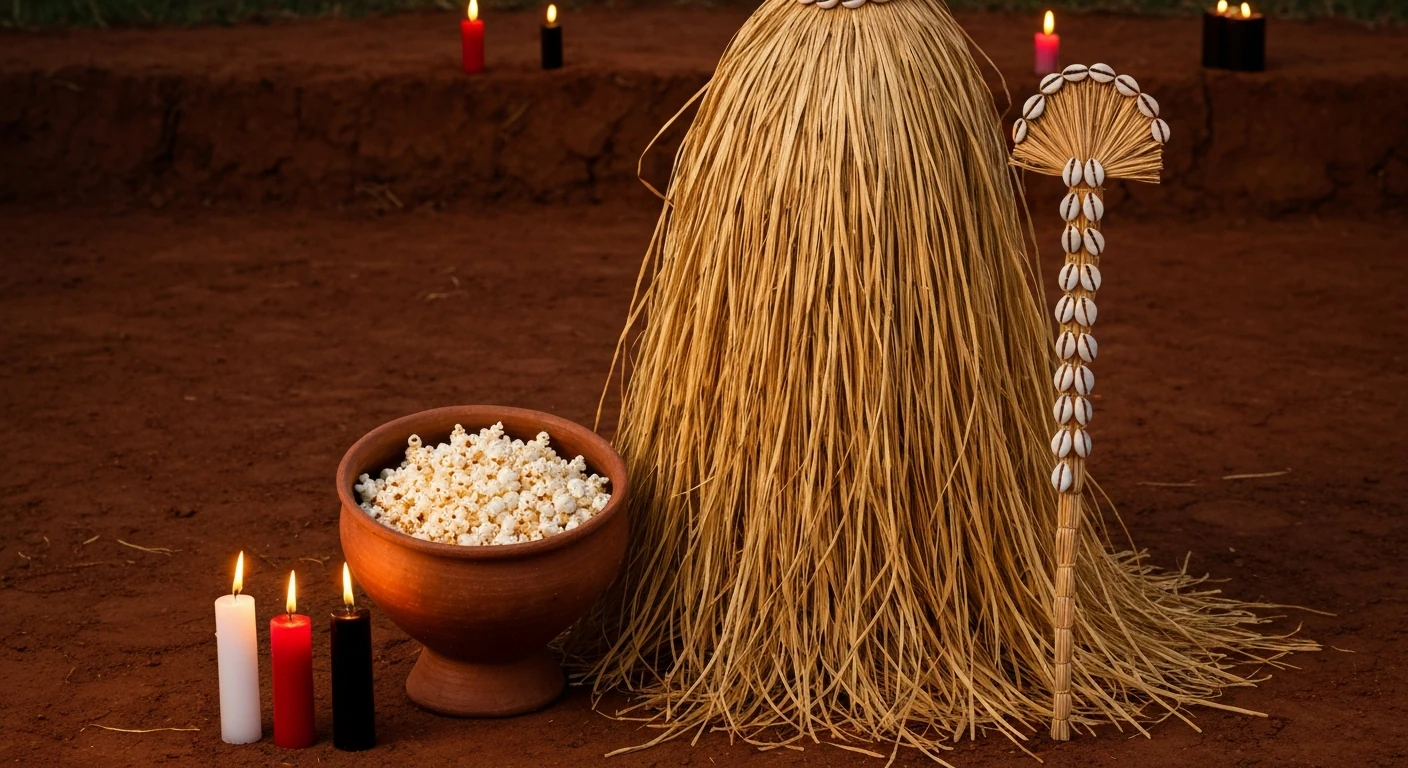
In his representation, Xapanã appears covered by the palha da costa, the fiber that hides the wounds of the warrior face. This mantle of straw holds a profound meaning: the Orixá hides from us that which human eyes should not face directly, and protects us with this gesture of seclusion.
The name Xapanã is surrounded by reverence. In many houses, it is avoided to pronounce it casually, preferring to address him as Obaluaê or Omolu. In batuque, however, Xapanã is the name by which this old and wise Orixá is called and greeted with respect.
The Orixá of health, disease, and cure
The strength of Xapanã lies in his dual nature. He is at the same time the one who can send disease and the one who cures. There is no contradiction in this for the Afro-Brazilian tradition: the one who understands the root of evil is precisely the one who knows how to remove it.
That is why Xapanã is known as the owner of the broom. With it, he sweeps away dense energies, diseases, and what hinders the path. He is the legitimate owner of cleansing, the orixá who cleanses the body and spirit of those who surrender to his care.
Xapanã is not punishment or fear. He is the orixá who teaches that health and disease are part of the same life, and that healing requires patience, respect, and faith. Those who fear him out of prejudice have not yet met the father of health.
Turning to Xapanã is seeking healing, firmeza, and deep cleansing. He is an old orixá, of ancient wisdom, who walks slowly but resolves at the root.
Colors, day, greeting, and offerings of Xapanã
Xapanã's profile changes slightly depending on the house and the nation of the batuque, which is natural in the tradition. In general, the most cited points are:
- Colors: red and black in the more warrior qualities, and lilac or purple in the Sapatá quality.
- Day of the week: Wednesday.
- Number: the 7 and its multiples.
- Greeting: "Abao!", in the batuque. In Candomblé and Umbanda, Obaluaê is greeted by "Atotô!".
- Offerings: popcorn (the flower of Xapanã), roasted beans, and roasted peanuts.
The popcorn, popped without oil, is the food most linked to Xapanã. It represents the skin that opens and heals, the healing that blooms from the hard seed. Offering popcorn to Xapanã is a simple gesture full of meaning (fundamento), always according to the guidance of your house.
It is always worth confirming the profile and the form of the offering with the leader of your terreiro, because each house of batuque has its own precept.
Xapanã, Obaluaê and Omolu: the same orixá, different names
A common doubt is whether Xapanã, Obaluaê and Omolu are the same orixá. The answer is yes: it is the same divine force, called by different names according to tradition.
In the batuque of Rio Grande do Sul, he is Xapanã or Sapatá. In candomblé and umbanda, he is Obaluaê (the younger orixá, linked to healing) and Omolu (the older one, linked to the earth and ancestors). They are faces of the same mystery: the orixá who dominates health, disease, and the passage of life.
This diversity of names is a wealth, not a confusion. Each African-rooted tradition worships the orixás with its own language, its own drum rhythms, and its own foundations. Knowing the orixás of batuque helps to understand how this same ancestral energy reached the South of Brazil with its own identity.
The syncretism of Xapanã
As happened with all the orixás during colonization, Xapanã was associated with Catholic saints so that the worship could survive repression. The most common syncretisms are with Saint Lazarus, Saint Roch and Our Lord of the Steps, varying according to the house and the nation.
The connection with Saint Lazarus is the strongest and makes perfect sense: in the Catholic tradition, Lazarus is linked to the wounds and the healing of skin diseases, exactly the domain of Xapanã. We explain this bridge in detail in the article about Saint Lazarus and Obaluaê.
It is important to remember that syncretism was a historical strategy of resistance, and not an equivalence between the orixá and the saint. Xapanã and Saint Lazarus are distinct figures, each in its own tradition, united only by the history of survival of the Afro-Brazilian faith.
Frequently asked questions
Who is Xapanã in batuque?
Xapanã, also called Sapatá, is the orixá of health and diseases in the gaúcho batuque. Lord of plagues and skin ailments, he can both cause and cure illness. He is the owner of the broom, which sweeps away the evils of the paths, and corresponds to Obaluaê and Omolu of Candomblé and Umbanda.
What is the greeting and day of Xapanã?
In batuque, the greeting of Xapanã is "Abao!", and his day of the week is Wednesday. His number is 7 and its multiples. It is worth noting that, in Candomblé and Umbanda, the same orixá, called Obaluaê, is greeted by "Atotô!". Each tradition has its own way of showing reverence.
Is Xapanã the same as Obaluaê and Omolu?
Yes. Xapanã is the name that the batuque of Rio Grande do Sul gives to the orixá that Candomblé and Umbanda call Obaluaê and Omolu. It is the same divine force linked to health, disease, and healing, worshipped by different names and foundations in each Afro-Brazilian tradition.
What are the offerings of Xapanã?
The offering most linked to Xapanã is popcorn, popped without oil, which represents the skin that heals. Roasted beans and roasted peanuts are also common. Offerings must always follow the precept of your batuque house, delivered with respect and guidance from the terreiro leader.
With which saint is Xapanã syncretized?
Xapanã is syncretized mainly with Saint Lazarus, linked to sores and skin diseases, and also with Saint Roch and Our Lord of the Steps, depending on the house. This syncretism was born as a strategy of resistance during colonization, and it does not mean that the orixá and the saint are the same figure.
Where to find items for Xapanã
At Joia Mística Laroyê, you find what you need to worship Xapanã with respect to the foundation of your batuque house:
- Statues and assentamentos of Xapanã and Obaluaê: for the altar
- Candles in the colors of the Orixá: red, black, and lilac
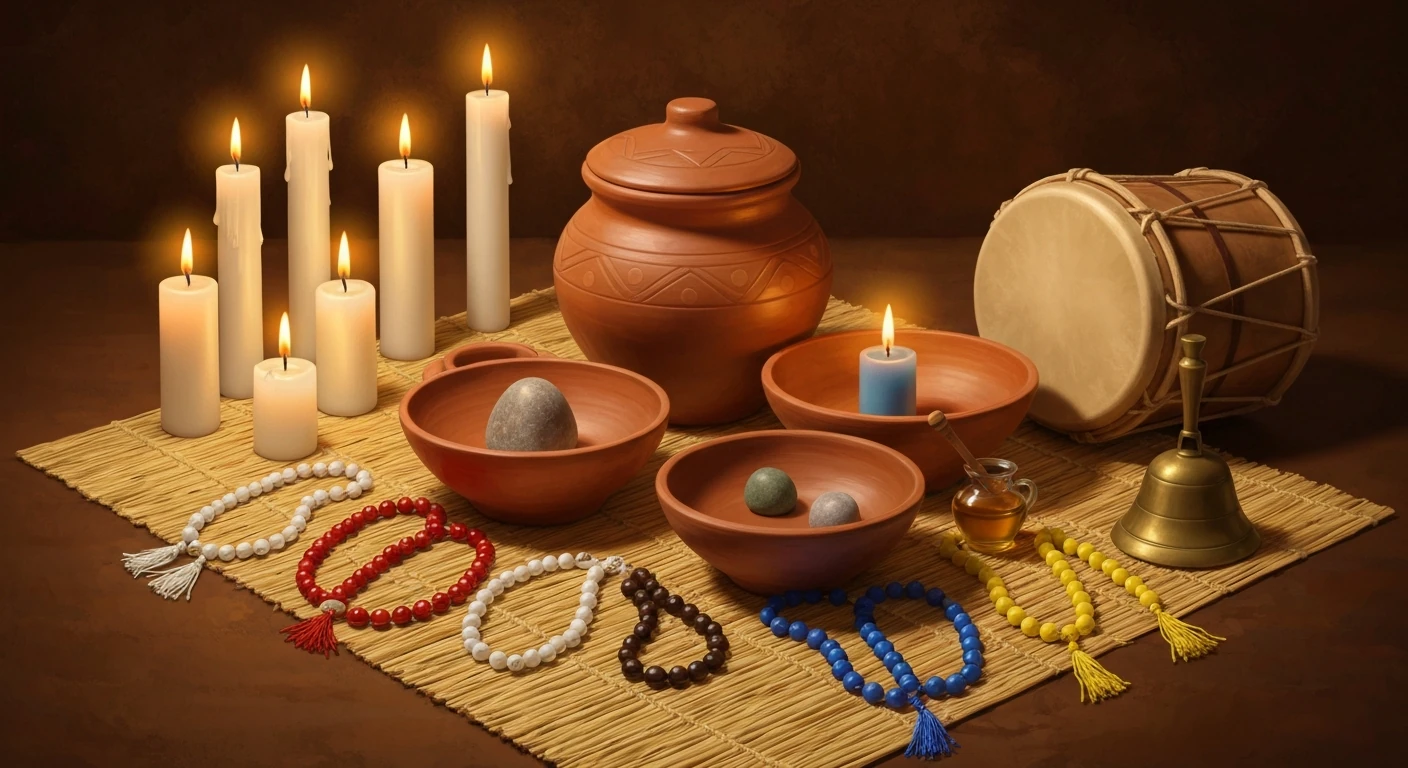
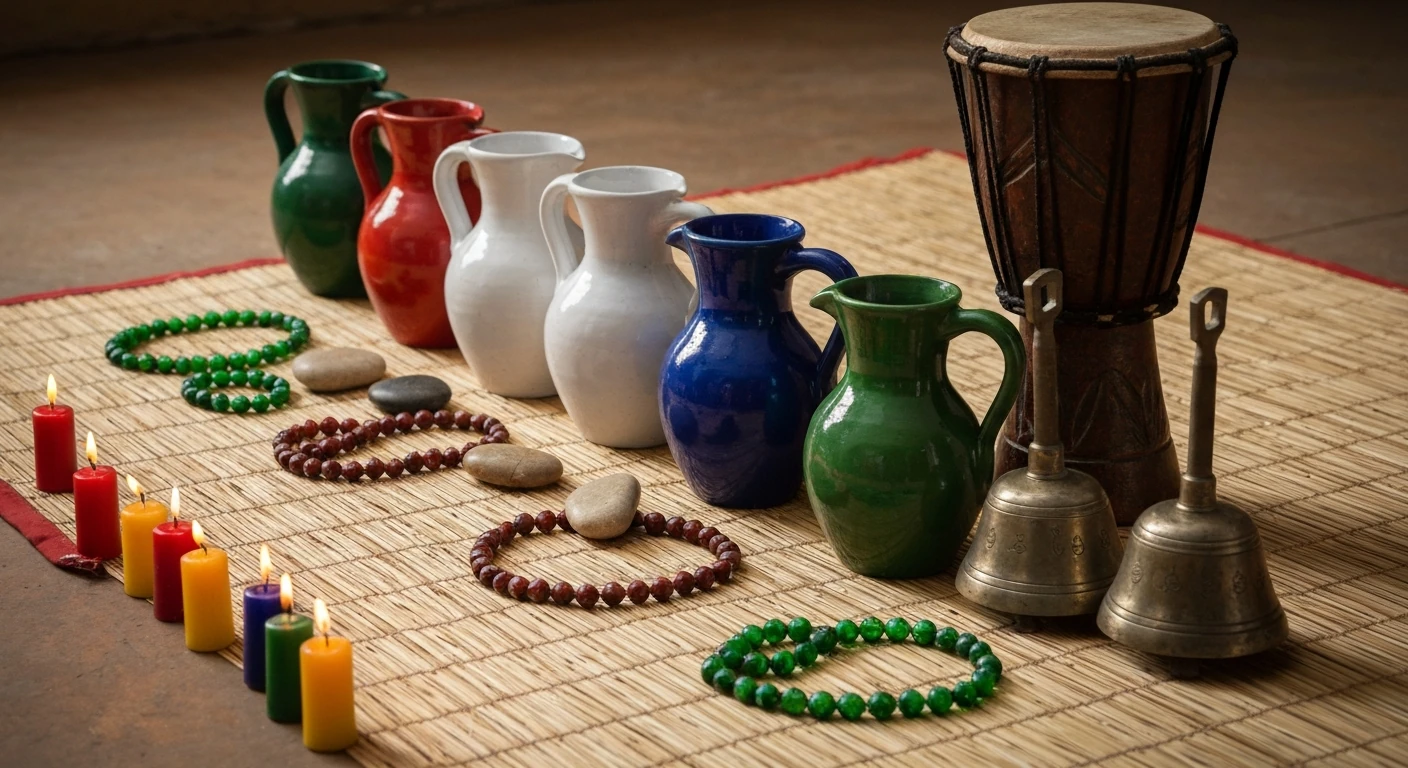
- Bead necklaces and threads: assembled according to the precept of Xapanã
- Palha da costa and offering items: to prepare what the house directs
- Herbs for cleansing: to complement the spiritual cleansing (descarrego), such as those linked to Omolu
Visit our physical store in Extrema-MG or receive at home with delivery to all of Brazil. Do you have questions about the offering or the precept of Xapanã? Talk to us via WhatsApp and receive guidance with care and axé.
References
- Historiando Axé: article about the gaúcho Batuque
- Wikipedia: entry about Xapanã