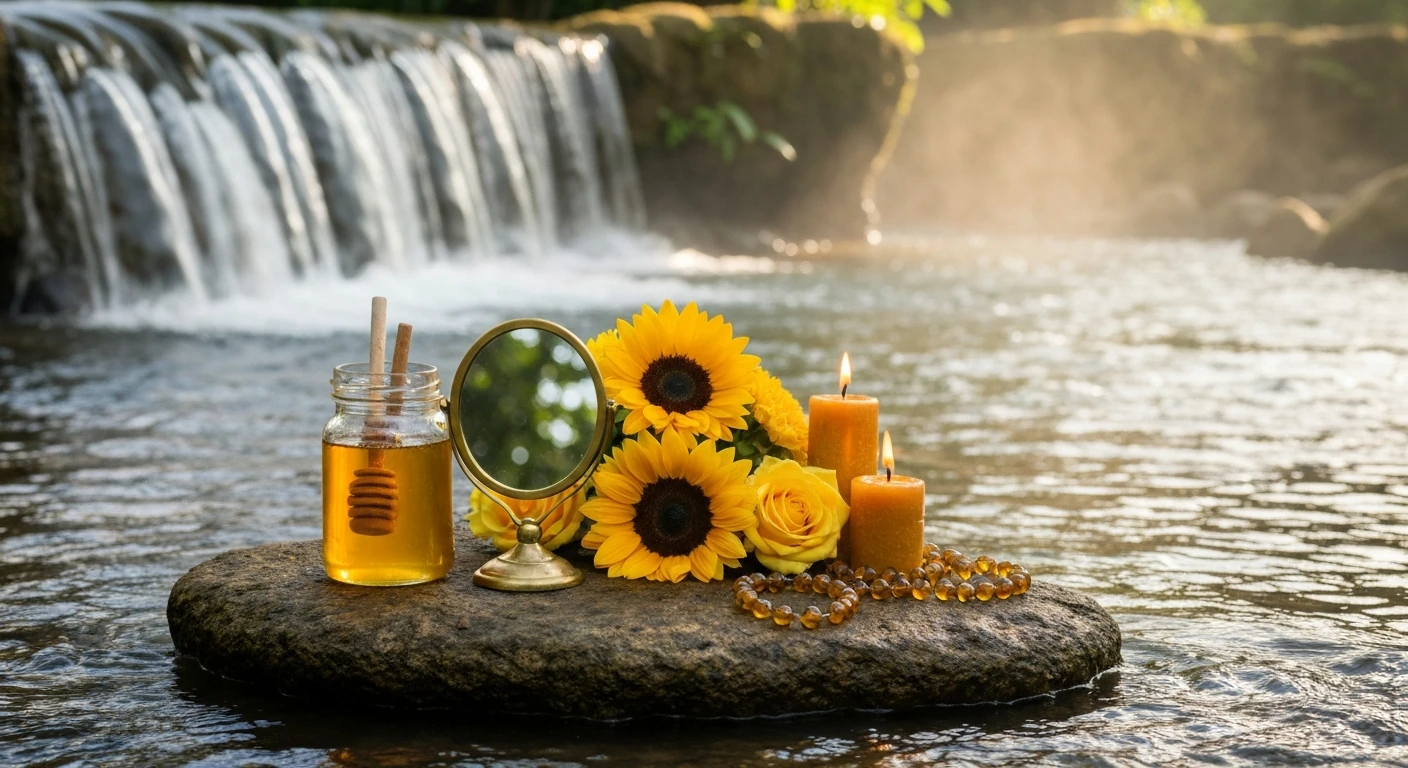
Few leaves of the Brazilian herbarium carry as much naming confusion as erva-doce. It is in the kitchen, in baby tea, at the fair, and in the quartinha of the congá. And, most of the time, the package you take home is not the species the label promises.
In the terreiro, this herb occupies a precise place. It is a leaf for adoçamento, for approach and for calm. It does not cut or discharge. It comes later, when the field has already been cleaned and needs to receive something good.
Erva-doce or fennel: what the fair actually sells
The true erva-doce is Pimpinella anisum, from the Apiaceae family. It is the plant also known as anise, and its essential oil has anethole as the main component. This is the compound responsible for the sweet scent that everyone recognizes.
The problem appears in commerce. What most Brazilian fairs and markets sell as erva-doce is fennel, Foeniculum vulgare. Embrapa has already addressed this swap in an article published in Revista Cultivar, signed by researcher Luciana Marques de Carvalho, from Embrapa Tabuleiros Costeiros.
The two plants belong to the same family and share anethole. That is why the aroma is deceptive. The practical difference is in the appearance:
- Pimpinella anisum: small and herbaceous plant, harvested mainly for its small seed.
- Foeniculum vulgare: tall plant, with a thick stalk and hair-thin leaves, with an edible bulb at the base.
For ritual use, the terreiro tradition treated both as equivalent for centuries. The axé follows the use, and the use consecrated the aromatic leaf of sweet flavor. Still, it is worth asking for the scientific name when the preparation requires precision.
Whose is the erva-doce: Oxum, Ibeji and the axé of Ossaim
In the most common leaf lists in Umbanda, anise appears linked to Oxum, orixá of fresh waters, gold, and sweetness. The association is direct: a herb with a sweet flavor and soft aroma, for ritual work of attraction and harmony.
The Crianças line also claims the leaf. Because it is mild and non-aggressive, anise is used in baby ritual baths and in preparations for the emotional field of those who are feeling irritated. The same reasoning applies to chamomile.
Orixás: Oxum and Crianças line | Temperature: mild | Element: water | Function: sweetening ritual and attraction | Use: ritual bath, smoke cleansing (defumação), and kitchen of the orixá
In Candomblé, no leaf is for free use. Every leaf responds to Ossaim, owner of the secret of the ewé. Without his word, a leaf is just brush. In Ketu and Nagô, this system is well documented. In Angola nation houses, the leaves are organized around the inquices, and Catendê occupies the corresponding place.
Ewê ô! Ossaim guards the secret of the leaves. Whoever cares for their orixá is the one who says what serves for their ori.
It is worth remembering that this classification varies from house to house. An internet list does not replace the foundation of your terreiro.
What is anise used for in ritual baths
Anise is a second-stage leaf. It was not made to remove dense loads. It serves for the next moment, when the body is already clean and the field needs sweetness.
The most common uses in the terreiros are these:
- Sweetening ritual bath: for those who are walking around with a rough temper or in friction with family and at work.
- Attraction ritual bath: is usually combined with cinnamon and honey in Oxum preparations.
- Calm ritual bath: used after poorly slept nights or periods of anxiety.
- Light smoke cleansing: the dried seeds burn with a soft aroma, good for a child's room.
- Warm head compositions: enter some houses, always under the guidance of the leader.
If the complaint is energetic weight, a feeling of surveillance, or a stuck obstacle, this is not the path. In this case, the sequence begins with a hot leaf. The complete classification is in hot and cold herbs.
How to prepare the anise or fennel ritual bath
The preparation is simple and does not require anything rare. The main care is in the water temperature.
- Boil one liter of water and turn off the heat before adding the leaf.
- Add two tablespoons of anise or fennel, seeds, or fresh sprigs.
- Cover for 15 minutes with the pot covered, so as not to lose the aromatic oil.
- Strain and wait to cool until it reaches a comfortable temperature.
- Take the hygiene bath first, with soap, and rinse normally.
- Pour the preparation from the neck down, calmly, asking for what needs to be asked.
- Do not rinse after and dry the body without rubbing the towel.
The head only receives a leaf ritual bath by indication from whoever cares for your orixá. This is the limit that separates the body bath from the amaci, and it exists by fundamento.
Many people ask about the best day. Saturday is the most cited day for Oxum in Umbanda houses, and a large part of the sweetening ritual preparations follow this calendar. Even so, the day varies by nation and by house.
Anise or fennel in the kitchen of the orixá and in offerings
The leaf does not live only in the bath basin. Anise or fennel appears frequently in cakes, sweets, and porridges served in offerings of Oxum and of the Children. The sweet flavor combines with the profile of these energies.
In the simplest offerings, it enters preparations with honey, cinnamon, and fruits. In some houses, warm tea accompanies the quartinha of sweet water at the assentamento. It is a small and daily gesture of maintaining the axé.
This weight of leaves in the religion is not an impression. A systematic review published in the Revista Brasileira de Gestão Ambiental e Sustentabilidade gathered 24 ethnobotany studies in Afro-Brazilian religions. The authors cataloged 466 cited species, of which 353 were botanically identified, distributed in 65 families.
Careful steps that avoid frustration
Bath herb is for external use. Nothing written here is a health recommendation, and tea is a matter for a professional in the area, not a spirituality blog.
Three precautions solve almost all problems:
- Buy by the scientific name when the recipe is demanding. Popular names are a lottery in Brazil.
- Do not replace cleansing with a sweetening ritual. Sweetening a dirty field is lost ritual work.
- Do not expect a deadline or a closed promise. The bath prepares the field and organizes the intention.
The ritual is not a transaction. It is preparation, and the result depends on everything you do after leaving the bathroom.
Frequently asked questions
Are anise and fennel the same thing?
Botanically no. Anise is Pimpinella anisum and fennel is Foeniculum vulgare. Both belong to the Apiaceae family and have anethole in the essential oil, which explains the similar aroma. In Brazilian commerce, fennel is almost always sold as anise.
Which orixá is anise a leaf for?
In the most common Umbanda lists, it belongs to Oxum and the line of the Children. It is a warm leaf, for sweetening and attraction. In Candomblé, every leaf responds to the axé of Ossaim, and the attribution by orixá changes according to the nation and the foundation of each house.
Can I take an anise ritual bath every day?
There is no traditional prohibition for a body bath. Even so, a leaf bath is not a hygiene routine. The common practice is to use it when there is a clear purpose, respecting the interval indicated in your terreiro. From the head down, always.
Is an anise ritual bath good for spiritual cleansing (descarrego)?
It is not. Anise is a warm leaf for attraction, not for cutting. For heavy loads, the sequence begins with hot leaves like rue, guinea hen weed, or pepper tree. Sweetening comes after the cleansing, never in its place.
Can a child take an anise ritual bath?
It is one of the most traditional uses of the leaf, precisely because it is mild and has no cutting action. Many houses indicate the warm bath to calm restless babies. Even so, talk first with whoever cares for your spiritual house and observe any reaction on the skin.
Where to buy anise and Oxum items
At Joia Mística Laroyê, you find items to assemble your preparations with provenance:
- Dried anise and fresh sprigs: for ritual bath, smoke cleansing, and cozinha de santo (orixá kitchen)
- Oxum herbs: basil, mint, colônia, and cinnamon sticks
- Yellow and gold candles: for firmeza and requests linked to the Orixá
- Quartinhas, alguidares, and fans: ceramic and metal pieces for consecrated foundation (assentamento) and congá
- Pure honey and natural smudges: for sweetening ritual compositions
Visit our physical store in Extrema-MG or contact us on WhatsApp with shipping to all of Brazil.
References
- Carvalho, L. M. de, Embrapa Tabuleiros Costeiros, in Revista Cultivar: anise is Foeniculum vulgare or Pimpinella anisum
- Wikipedia Free Encyclopedia: Pimpinella anisum entry, family, and essential oil composition
- Purcino, Lucena and Jardim (2022), Revista Brasileira de Gestão Ambiental e Sustentabilidade: systematic review of ethnobotany in Afro-Brazilian religions
- Wikipedia Free Encyclopedia: Ossaim entry, the Orixá of the leaves and its correspondences by nation