Wicca is the religion of modern witchcraft, created in England by the Briton Gerald Gardner, who published Witchcraft Today in 1954. The Wiccan worships the Goddess and the Horned God, celebrates nature in eight festivals per year and follows a central rule: do no harm.
What is Wicca?
Wicca is a neopagan religion that sees the sacred in nature. It revolves around the Goddess, the God, and the seasons of the year. It was the first neopagan group to set itself as a religion, back in the 1950s. For historian Ronald Hutton, from the University of Bristol, it is "the only religion that England has ever given to the world."
Founder: Gerald Gardner (1884 to 1964) | First book: Witchcraft Today, 1954 | Divinities: the Goddess and the God | Festivals: eight sabbats | Central rule: the Wiccan Rede
Who follows the religion is Wiccan or Wiccan. There is no single sacred book, clergy, or central headquarters. Each group, the coven, has its own tradition. Many people practice alone.
Who created Wicca?
Who created Wicca was Gerald Gardner, a British civil servant born in 1884. The English law against witchcraft, from 1736, only fell in 1951. Three years later, Gardner published Witchcraft Today. In 1959 came The Meaning of Witchcraft. Both books are the basis of modern witchcraft.
The other central figure is Doreen Valiente. She was the first High Priestess of the Gardner coven, from 1953 to 1957. She wrote or revised a large part of the initial rites. To her are attributed the Wicca Rede and the most well-known Charge of the Goddess. In this text, the Goddess is "the beauty of the green earth, the white moon among the stars."
Gardner said that Wicca was a Stone Age religion that survived in secret. He followed Margaret Murray, who relied on confessions extracted under torture by the Inquisition. Scholars refuted Murray. Today, most wiccans recognize that there is little evidence of a continuous pre-Christian tradition. Even so, Gardner continues to be the "father of Wicca".
In Brazil, Wicca began to be disseminated at the turn of the 1980s to the 1990s, in São Paulo.
What are the gods of Wicca?
The gods of Wicca are two: the Goddess and the Horned God.
- The Goddess is the Earth itself, which generates and nurtures life. Many times she is triple, like the phases of the Moon: Maiden, Mother, and Crone.
- The Horned God, or just the God, is the consort of the Goddess and her complementary opposite. He is the Sun, the lord of the forest and the wheat, and accompanies the cycle of the seasons.
The horns link the God to the fertility of nature. And he is not the Christian devil.
In practice: on the altar, two candles represent the Goddess and the God. The color changes from tradition to tradition.
What are the rules of Wicca?
The rules of Wicca are few. There is no central institution that imposes them. Two apply to almost all groups:
- The Wicca Rede: "An' it harm no soul, do what thou wilt." It is freedom with responsibility: everything is permitted, except causing harm.
- The Triple Law: everything that is done, for good or for evil, returns three times to the one who did it.
The meaning of "three" changes from group to group. A priest heard by UFJF speaks in three scales: the person affected, who they change afterwards, and the world. Therefore, Wicca does not combine with a spell to trap someone.
The Wheel of the Year and the eight sabbats
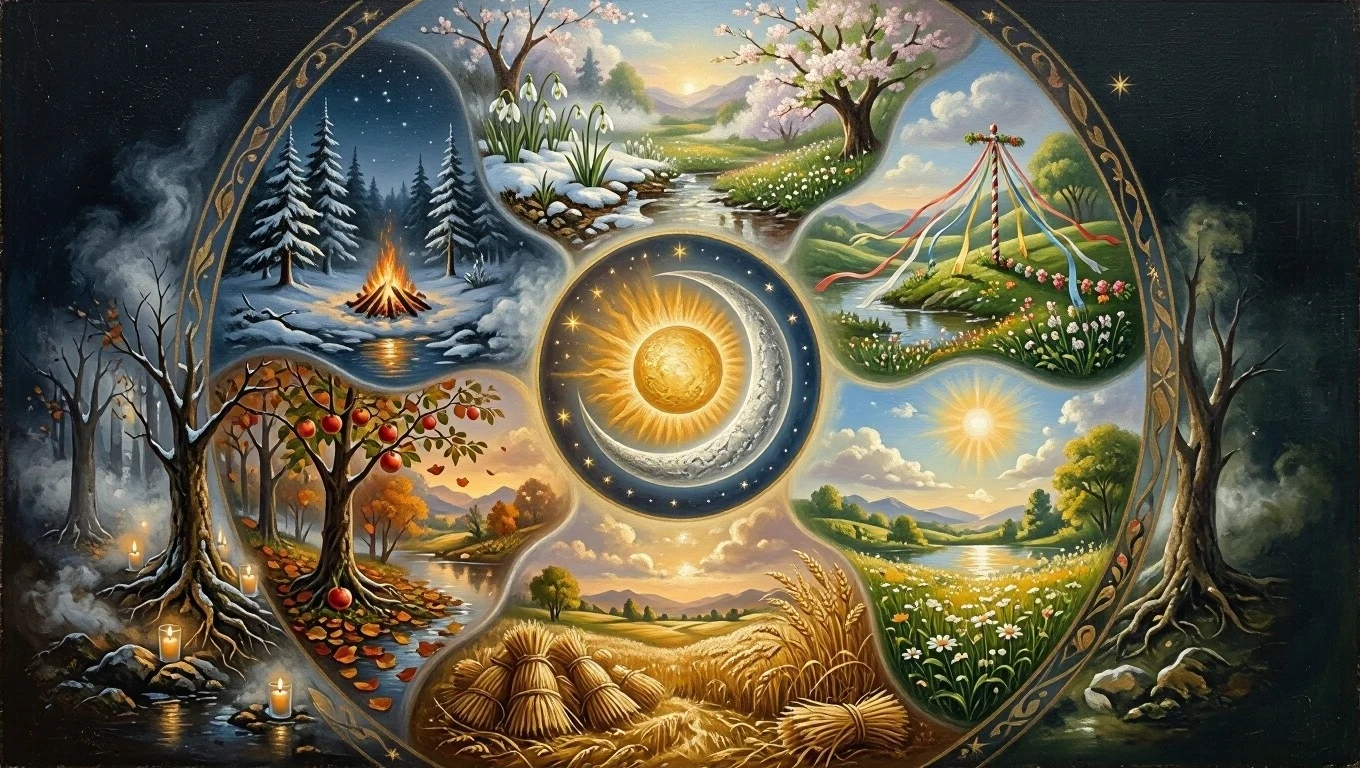
The Wheel of the Year is the Wiccan calendar of eight festivals, the sabbats. Four mark the agricultural cycle: Imbolc, Beltane, Lughnasadh, and Samhain. The other four fall on the solstices and equinoxes: Yule, Ostara, Litha, and Mabon. The calendar was closed in the 1980s.
The Wheel counts the cycle of the Goddess, the Earth, and the God, the Sun, from season to season. There are also the esbats, the coven meetings on the full moon.
Hutton, cited by researcher Janluis Duarte, remembers that no ancient people celebrated the eight festivals together. The Wheel joins festivals of different peoples.
When are the sabbats in Brazil?
In Brazil, it depends on the group. Gardner's books already suggested reversing the dates in the southern hemisphere. Those who follow the seasons celebrate Yule in June and Litha in December. Those who follow the Northern Wheel keep the dates of the books. The complete table of the two Wheels is in the article on Yule, the winter solstice sabbat.
The Wiccan altar and the elements
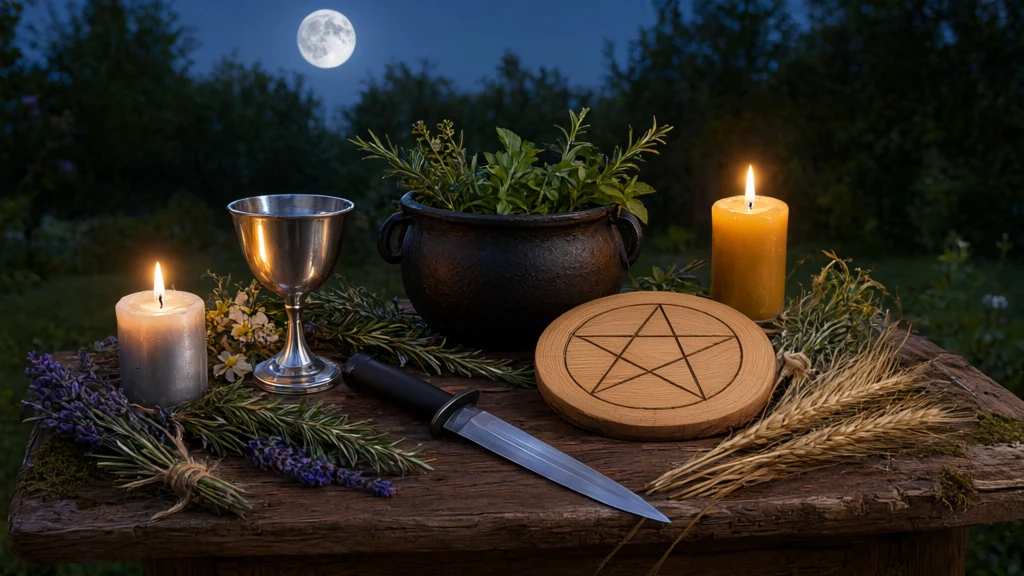
The Wiccan altar gathers the four elements and the spirit, and each instrument represents one of them:
| Instrument | Element | Place on the altar |
|---|---|---|
| Athame (black-handled dagger, without a blade) | air | east |
| Staff or wand | fire | south |
| Chalice or cup | water | west |
| Pentacle | earth | north |
| Rope | spirit | unites all |
For Doreen Valiente, the rope is the spirit that keeps everything together. Thus, the 5 elements of magic are earth, water, fire, air, and spirit. In the center are a small cauldron and the two candles of the Goddess and the God. Incense is indispensable. The ritual begins with the circle, traced by calling the four elements.
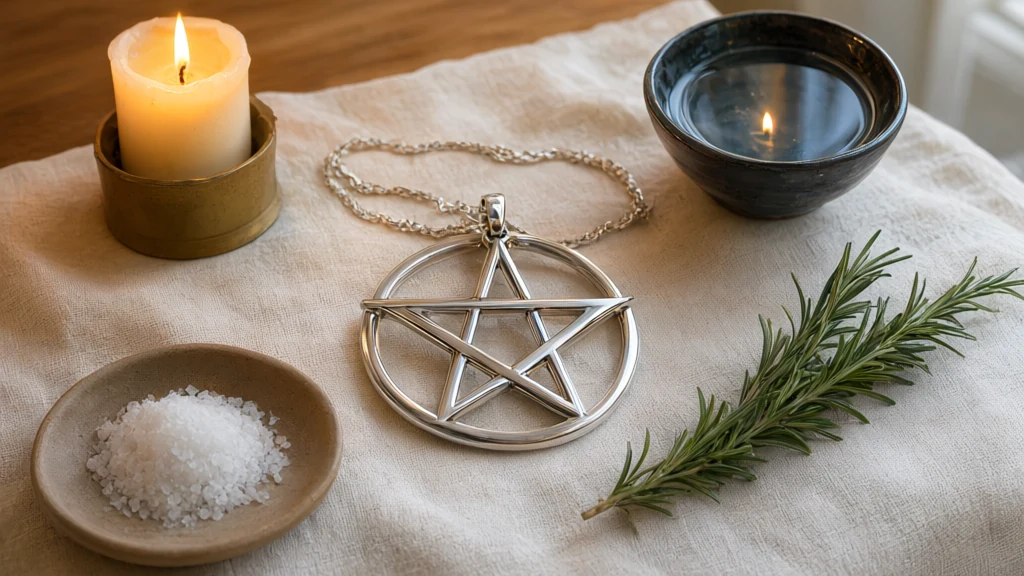
The pentacle is a five-pointed star inside a circle. The meaning of each point is in the article on the pentagram.
Are Wicca and witchcraft the same thing?
No. Every Wiccan considers themselves a witch, but not every witch is a Wiccan. Traditional Witchcraft, for example, does not see witchcraft as a religion. For it, it is a path that coexists with other beliefs. In Rio de Janeiro, a UERJ study found eclectic covens that no longer even call themselves Wiccans.
A white witch works with herbs, candles, crystals, and tarot for good. She may be a Wiccan or not. Wicca is a religion with its own gods and sabbats. Natural magic is a practice of people of many beliefs.
How to start in Wicca
In the beginning, one only entered Wicca initiated by a coven. Since the 1970s, books have accepted self-initiation. Writer Scott Cunningham summarized: "no initiation is necessary." Today, the Wiccan can study alone or join a coven, which by tradition does not exceed 13 people.
To take the first steps with respect:
- Read the founders and the history: Gardner, Valiente, and Hutton. Separate myth from fact.
- Follow the nature of your window: note the phases of the Moon and the seasons of the place where you live.
- Set up a simple altar in a corner of the house: a white candle, a glass of water, a saucer of salt or earth, and an incense already cover the four elements.
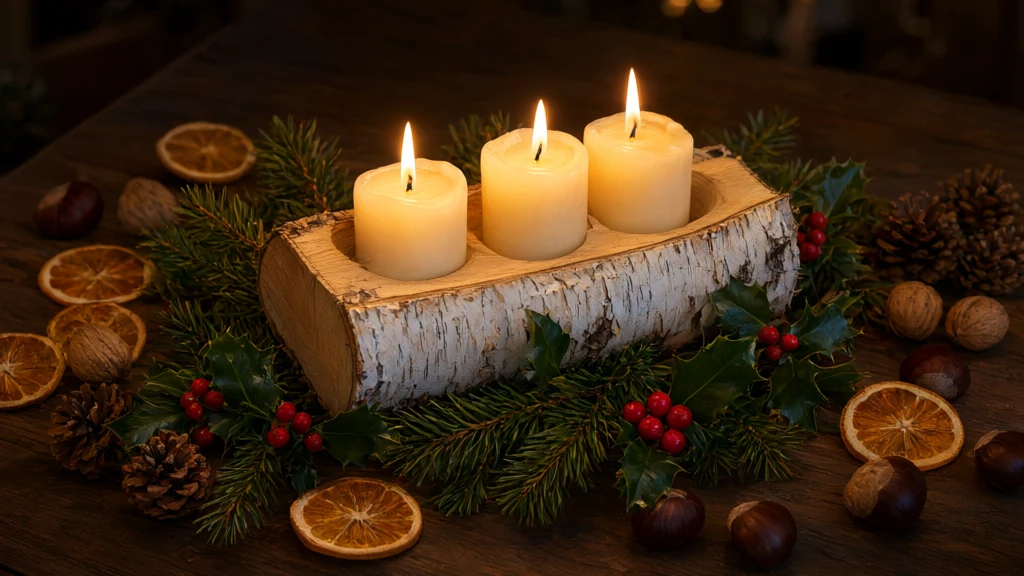
- Celebrate the next sabbat of your Circle with a candle and a moment of silence.
- Write your notebook, which many call the Book of Shadows: what you did, felt, and learned.
- If you want a group, look for a coven calmly and be suspicious of those who promise power or results.
Intention for the first altar: "May I learn from the earth, the water, the fire, and the air. May my magic only bring good."
Be careful with the candle: firm support, at least 30 centimeters away from anything flammable, and outside the bedroom. To choose the color, see how to use candles in rituals or take the which candle to light test. At the shop in Extrema (MG), Joice, tarot reader and white witch, helps choose the candle, the incense, and the chalice for the first altar. You can chat via WhatsApp.
Frequently asked questions
Is Wicca a religion?
Yes. Wicca is a neopagan religion with its own deities, the Goddess and the God, a calendar of eight festivals, and an ethic, the Wiccan Rede. It has no sacred book or central clergy: each coven follows its own tradition, and many practice alone. It was the first neopagan group to set itself as a religion, in the 1950s.
What does it mean to be a Wiccan?
Being a Wiccan means following the religion created by Gerald Gardner: worshipping the Goddess and the God, celebrating the Wheel of the Year, and living by the Wiccan Rede, without causing harm. A Wiccan can be initiated in a coven or practice alone. Every Wiccan considers themselves a witch, but the word Wiccan only applies to those who follow the religion.
Is Wicca an ancient religion?
No. Wicca was born in England in the 1940s and 1950s, with Gerald Gardner and Doreen Valiente. It uses ancient symbols and festivals, but the idea of a continuous religion since the Stone Age was refuted by historians. Most Wiccans today recognize that there is little evidence of this continuity.
What are the 5 elements of magic?
The five elements of magic are earth, water, fire, air, and spirit. In Wicca, each has an instrument on the altar: the pentacle is the earth, the chalice is the water, the wand is the fire, and the athame is the air. The cord, or the top point of the pentagram, represents the spirit.
References
- UnB: Janluis Duarte, thesis on neopagan witchcraft in Brazil, 2013
- UFJF: Dartagnan Abdias Silva, There are witches in the city, dissertation, 2017
- UERJ: Welington Pinheiro da Silva, Witchcraft and project identity, dissertation, 2014
- Encyclopedia of Religion: Joanne E. Pearson, entry "Wicca", 2005
- Times Higher Education: Simon Coleman, review of The Triumph of the Moon, by Ronald Hutton
- U.S. Fire Administration: Candle fire safety