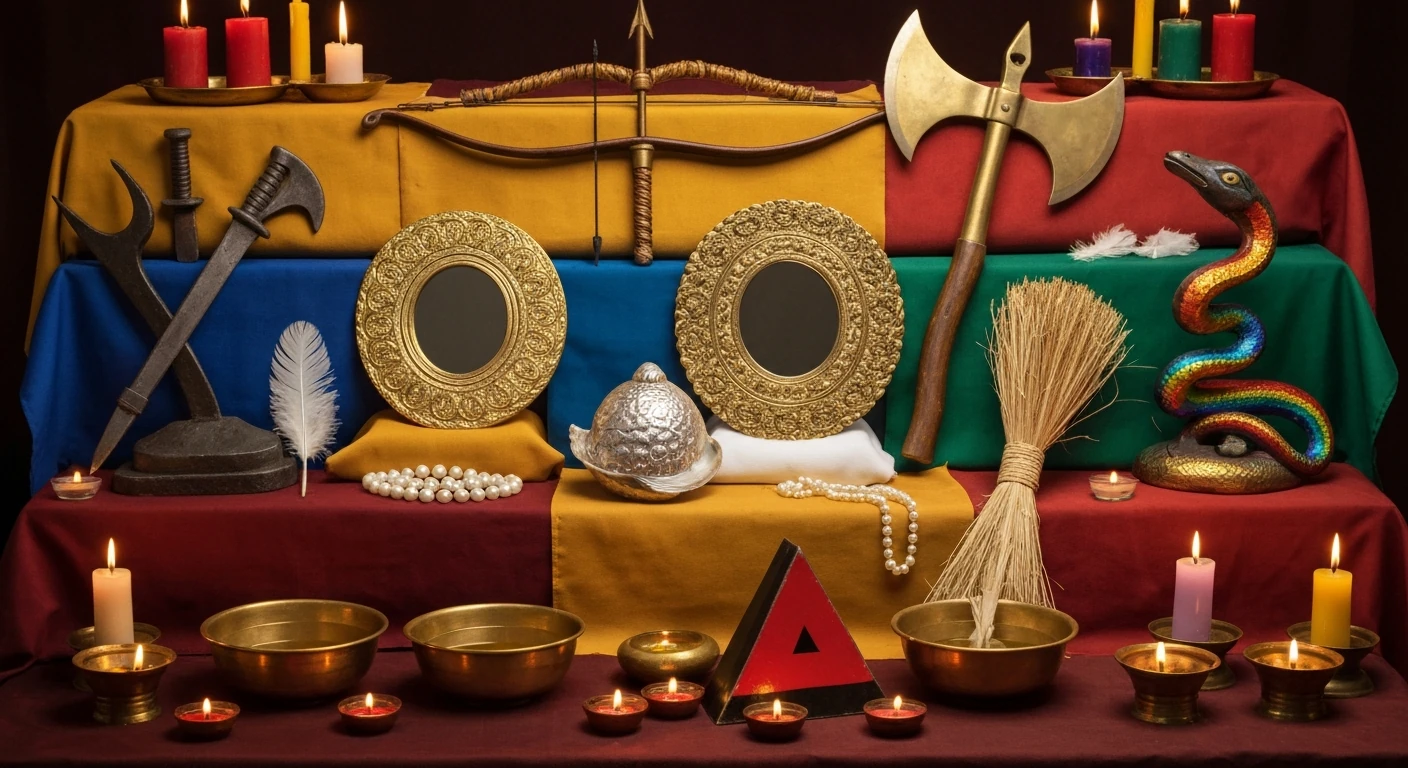
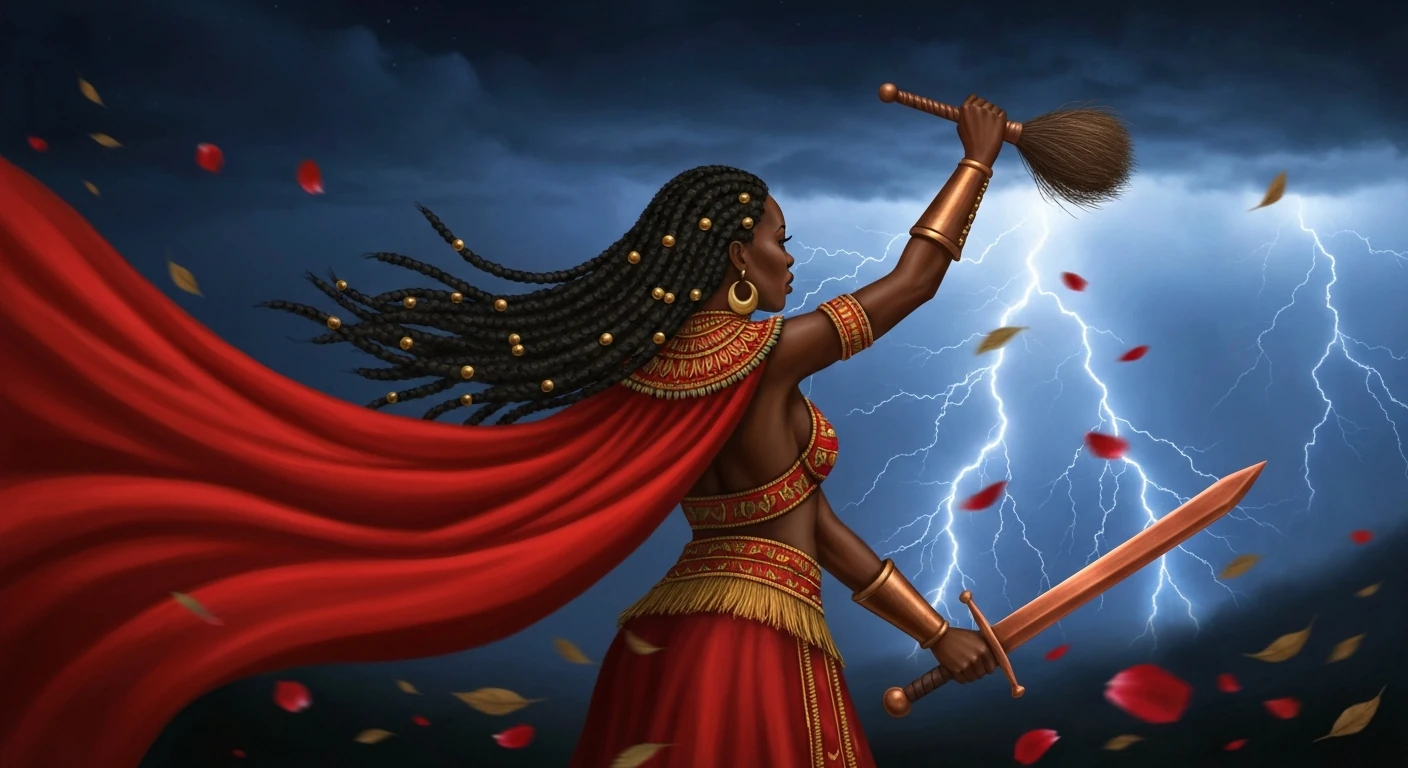
The tarot of the orixás is an oracle that translates the wisdom of the orixás into the language of cards. Each card carries the strength of a divinity, its colors, its symbols, and its message. Different from traditional European tarot, it was born looking at Brazilian axé, and therefore speaks directly to those who already live African-rooted spirituality.
But there is a confusion that needs to be cleared up right at the beginning: the tarot of the orixás is not the cowrie-shell divination, and it does not replace the sacred oracle of the terreiro. In this guide, you will understand what it truly is, how it works, what each card reveals, and how to care for your deck with respect.
What is the tarot of the orixás
The tarot of the orixás is a contemporary cartomantic oracle, created in Brazil during the 1990s, which associates each card with an orixá from the pantheon worshipped in Umbanda and Candomblé. The author most cited as a reference for the deck is Eneida Duarte Gaspar, with the work Tarô dos Orixás (Pallas Editora), although today there are several versions signed by different authors.
The idea behind it is simple and beautiful: use the symbolic structure of tarot with its universal archetypes to reflect the energies of the orixás. When a card appears in a reading, it does not just speak of an event; it speaks of the quality of axé that governs that moment in the seeker's life. If the card linked to Oxum appears, for example, the theme usually revolves around affection, self-esteem, and prosperity. If the one for Ogum appears, the subject is opening paths, work, and struggle.
It is important to keep one word in mind from the start: the tarot of the orixás is a tool for self-knowledge and guidance, not a terreiro ritual. It helps to think, to locate oneself, to see what was blurred; it does not promise to solve life nor predict luck with guarantee.
Tarot of the orixás vs cowrie-shell divination: the essential difference
This is the part that generates the most doubt, so let us go slowly. The tarot of the orixás and the cowrie-shell divination are different things, with distinct origins and functions.
The cowrie-shell divination, also called merindilogun, is the traditional oracle of Candomblé, heir to the Ifá system of the Yoruba peoples of Nigeria and Benin. It is performed with sixteen cowrie shells cast over the mat or the peji, and each fall refers to an odu, a sign of destiny linked to specific orixás. It is conducted by the babalorixá or the ialorixá, with initiation and foundation; it is not a reading for anyone to do. The Ifá system, the basis of the cowrie-shell divination, is so ancient and relevant that it was recognized by UNESCO as Intangible Cultural Heritage of Humanity in 2005.
The tarot of the orixás, on the other hand, is an editorial product of the 20th century, inspired by the orixás but built on the logic of European tarot. Anyone who studies the deck can consult it. It does not access the religious foundations reserved for liturgy, it does not indicate ebó, and it does not speak "through the mouth" of the orixá in the liturgical sense.
| Aspect | Tarot of the orixás | Cowrie-shell divination (merindilogun) |
|---|---|---|
| Nature | Contemporary cartomantic oracle | Traditional liturgical oracle |
| Origin | Brazil, 1990s | Yoruba Africa, millennial (Ifá system) |
| Who conducts | Any student of the deck | Initiated babalorixá / ialorixá |
| Instrument | 22 (or more) illustrated cards | 16 cowrie shells on the mat |
| Function | Self-knowledge, guidance | Ritual communication with the orixás |
Think of it this way: the tarot of the orixás is a symbolic gateway to the universe of the orixás; the cowrie-shell divination is the sacred oracle of the terreiro. One does not cancel out the other, but they are also not confused.
To better understand the traditions behind these orixás, it is worth reading first what the orixás are and the difference between umbanda and candomblé. (You can also find the historical foundation of the cowrie-shell divination in the collaborative encyclopedia, useful for those who want to go deeper.)
How many cards does the tarot of the orixás have
Here comes another answer that depends on the deck and not on a single, official model.
- 22 cards the most popular version, formed only by the Major Arcana, each one linked to an orixá or spirit. It is the edition by Eneida Duarte Gaspar and also the one by Monica Buonfiglio, among others.
- 77 cards The Sacred Tarot of the Orixás, by Zolrak and Durkon (1995), with a strong numerological component: cards of the orixás, cards of symbols (such as Karma and Guardian Angel) and cards of the four elements.
- 78 cards versions that follow the complete structure of the Marseille tarot, with Major and Minor Arcana.
Therefore, when buying a deck, it is worth checking which model it follows: the number of cards changes the way of playing and the level of detail in the reading. For those who are starting, the 22 cards version is the most direct and the most used.
The orixás and the arcana: what each card reveals
In the tarot of the orixás, each major arcana card lends its archetype to an orixá. The reading considers the orixá itself, but also the colors, the setting, and the objects of Yoruba culture present on the card. The table below gathers the most cited correspondences but attention: they vary from one deck to another. There is no single canonical table, and this is natural in a contemporary oracle.
| Arcana | Orixá (most common correspondence) | Theme |
|---|---|---|
| The Magician | Ossaim (Osanyin) | leaves, healing, secret of the herbs |
| The Empress | Iemanjá | motherhood, welcoming, fertility |
| The Emperor | Xangô | justice, authority, decision |
| The Chariot | Ogum | ritual work, conquest, opening of paths |
| Strength | Iansã (Oyá) | courage, change, wind |
| Temperance | Oxumaré (Oshumare) | cycles, balance, transformation |
| The Star | Oxum | love, prosperity, self-esteem |
| The Sun | Ibejis | joy, new beginnings, inner child |
Some correspondences are very stable between the decks: Oxum almost always appears in The Star, Ogum in The Chariot, Xangô in The Emperor. Others change: Oxalá (Obatala) can appear both in The Hierophant (in the young form, Oxaguiã) and in The World (in the old form, Oxalufã), and the orixá of Time, Iroko, is sometimes The Tower, and sometimes The Fool.
It is also worth noting that these decks mix layers: alongside the orixás, pretos-velhos and ancestry (Babá Egum) appear, which are not orixás, but spirits and lines of force of Umbanda. This reinforces the syncretic and contemporary character of the oracle. If you want to know the energies behind each name, start with the articles in the orixás section of the blog, such as the guide on who is Iansã.
A word about Exu and the Devil card
In most decks, Exu appears associated with the arcana card The Devil, and this scares those who do not know. So it is necessary to say clearly: Exu is not the demon. The correspondence exists only because of the European archetype of the card, which speaks of instinct, materiality, and vital force, never because Exu has any relation with the Christian devil.
Exu is the orixá of paths and communication between worlds. He is the first to receive an offering in any ritual, which opens the gates so that the axé can circulate. When the Exu card appears in a reading, the message is usually about movement, choices, and what needs to be unlocked, and not about a "bad thing". Treating this card with respect is part of reading the tarot of the orixás with seriousness.
How a reading works: the spread methods
The decks usually come with a booklet that teaches different ways to draw the cards. The three most common are:
- Three cards the simplest spread, great for starting. The first card shows the energy of the past that still influences; the second, the present moment; the third, the tendency for the coming months.
- Five cards an intermediate reading, which details the situation, the obstacles, and the possible paths better.
- Mandala the most complete method, in which the cards are arranged in a circle for a broad view of the matter.
Before any spread, focus on the question. The oracle responds better to open questions ("what do I need to see about my work?") than to "yes or no" questions. And remember: the card guides, it does not condemn nor guarantee an outcome. The reading is a starting point for reflection, not a sentence.
How to consecrate and care for your deck
Among tarot consultants, it is a tradition to prepare the deck before using it for the first time. It is not a terreiro foundation, but a symbolic care that helps create a connection with the oracle. The most common practices are:
- Reserving an exclusive white towel, used only to open the cards.
- Choosing a calm and clean environment, preferably at night.
- Ringing a metal or crystal bell before each consultation to mark the beginning of the moment.
- Some place, in the corners of the towel, symbols of the four elements: a glass of water (water), a flower or plant (earth), a lit candle (fire), and incense (air).
Tip: always keep your deck wrapped in the same cloth and in a quiet place. Caring for the object is also caring for your intention, and well-kept cards last for years.
To light the candles during the consecration or the reading, it is worth understanding the meaning of each color in our guide about ritual candles.
Frequently asked questions
Is the tarot of the orixás the same as cowrie-shell divination?
No. The cowrie-shell divination (merindilogun) is the traditional liturgical oracle of Candomblé, conducted by initiated babalorixá or ialorixá, heir to the Ifá system. The tarot of the orixás is a contemporary card oracle, of Afro-Brazilian inspiration, that any student can consult. They are different tools, with different functions.
How many cards does the tarot of the orixás have?
It depends on the deck. The most common version has 22 cards (only the Major Arcana), but there are 77 card editions (Zolrak and Durkon) and 78 card editions, which follow the complete structure of the Marseille tarot. For those who are starting, the 22 card version is the most practical.
Do I need to be of an Afro religion to use the tarot of the orixás?
It is not mandatory, but it is fundamental to have respect for the traditions that inspire the deck. Studying who the orixás are, understanding that it does not replace cowrie-shell divination, and treating each card, including the one of Exu, without prejudice is the minimum for a serious reading.
Does the tarot of the orixás predict the future?
It points out trends and energies of the moment, not a fixed and guaranteed destiny. The proposal is for self-knowledge and guidance: the card shows what deserves attention, and the decision remains yours. Be wary of any reading that promises a certain result or an exact deadline.
How to choose my first deck?
Start with the 22 card version, which is simpler to learn, and prefer decks with an explanatory booklet in Portuguese. Clear illustrations of the orixás help a lot at the beginning. With time, you can explore larger editions, such as the 77 card ones.
Where to buy your tarot of the orixás
At Joia Mística Laroyê, you find everything to start and care for your oracle:
- Tarot of the orixás decks 22 card editions with an explanatory booklet, ideal for beginners
- White towels for reading exclusive for opening the cards
- Metal and crystal bells to mark the beginning of each consultation
- Candles and incense for the consecration and the reading environment
- Statues and bead necklaces of orixás to set up your study space
Want to go beyond the cards? Joia Mística also offers tarot reading and spiritual guidance with personalized service. Visit our shop at R. Benedito Zingari, 460 Bela Vista, Extrema-MG, or talk to us via WhatsApp with delivery to all of Brazil. Also check out our tarot page to see the available options.
References
- UNESCO: Ifá divination system, recognized as Intangible Cultural Heritage of Humanity
- Wikipedia: entry on cowrie-shell divination